Published: 01 September 2026 | The English Chronicle Desk | The English Chronicle Online
Canadian Prime Minister Mark Carney has received a significant political boost after his Liberal Party swept all three parliamentary special elections held on Monday, strengthening the government’s position as it faces continuing economic and diplomatic tensions with the United States.
The results saw the Liberals retain two constituencies in Ontario and British Columbia while also taking a Quebec seat that had previously been held by the opposition Conservatives. The victories provide an important indication of continued public support for Carney more than a year after the Liberals won the federal election and amid a period of heightened uncertainty over Canada’s relationship with Washington.
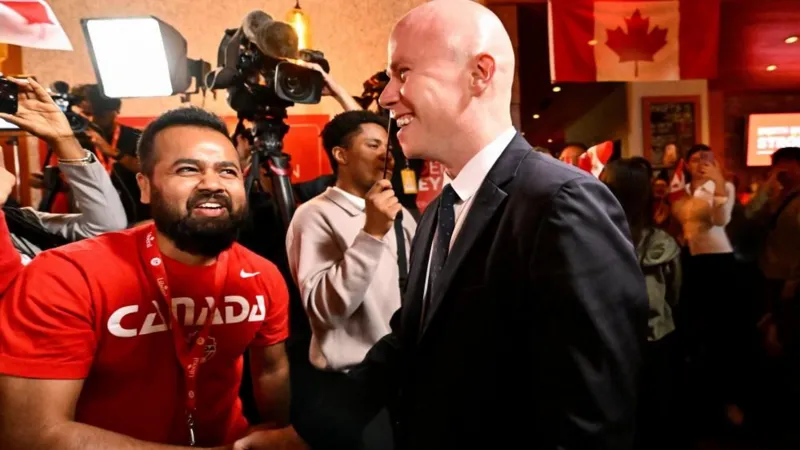
The elections were triggered by the resignations of three sitting MPs, creating contests that attracted considerable attention because of the wider political environment. The most closely watched race took place in Quebec’s Chicoutimi-Le Fjord, where Liberal candidate Daniel Gobeil secured the seat for the governing party.

The outcome means Carney’s Liberals will retain their slim majority in the House of Commons, giving the prime minister additional room to pursue his government’s economic and foreign-policy agenda.
Carney welcomed the results on social media, congratulating the successful Liberal candidates and linking their victories to the broader challenges confronting Canada.
“Canada is being tested in a changing world, and Canadians are up for it,” he wrote in a post on X.
The prime minister’s message reflected the increasingly central role that relations with the United States have played in Canadian politics. Carney has experienced a rise in public support following his decision to end trade negotiations with the Trump administration, arguing that proposals from Washington were unacceptable and unfair to Canada.
The decision has placed trade and economic sovereignty at the centre of the government’s political messaging, particularly in provinces and industries that are heavily exposed to the American market.
In Chicoutimi-Le Fjord, Gobeil’s victory was particularly significant because the constituency had previously been represented by Conservative Richard Martel and had been a closely contested three-way race.
Gobeil, a dairy farmer, secured more than half of the vote, defeating the Bloc Québécois and Conservatives. His victory represents a notable shift in a constituency that had not appeared firmly aligned with the Liberals in the previous election.
Speaking to supporters in French after the result, Gobeil said the victory demonstrated that the Liberals could continue to promote Canadian unity across the country.
The other two special elections produced results more closely in line with expectations. Tanveer Shahnawaz won for the Liberals in Beaches-East York in Ontario, while Braeden Caley retained the party’s position in North Vancouver-Capilano in British Columbia.
Taken together, the three victories provide Carney with a welcome political advantage at a time when his government is attempting to manage economic pressure from the United States while maintaining domestic confidence.
The Conservatives, meanwhile, continue to face difficulties rebuilding momentum after their defeat in the 2025 federal election. Recent polling has placed them approximately 10 percentage points behind the Liberals, suggesting that the opposition has yet to close the gap with the governing party.
The Conservatives have also experienced internal changes since the election. Four MPs have crossed the floor to join the Liberals, while three others have either resigned or announced plans to leave Parliament.
The Quebec constituency lost by the Conservatives had been represented by Martel, who resigned after Carney appointed him to Canada’s Senate. Canadian senators are appointed rather than elected, meaning the vacancy created an opportunity for the Liberals to compete for a seat that had previously been held by the opposition.
For Conservative leader Pierre Poilievre, the result represents another setback. Although he secured a decisive victory in the Conservative leadership contest earlier this year, his party has faced growing questions about how effectively it can respond to the political environment created by Carney’s government and the escalating dispute with Washington.
Carney’s own political standing has improved in recent weeks. Data released by Canadian pollster Abacus Data showed that approval of his government had risen by four percentage points, while his personal popularity had also increased.
David Coletto, founder of Abacus Data, attributed part of the improvement to Canadian dissatisfaction with US President Donald Trump and to a broader tendency among Canadians to rally around the prime minister during trade disputes.
The effect appears particularly pronounced in Quebec, where Carney’s personal approval rating has reportedly become stronger than in other parts of the country.
That development could prove important because Quebec is among the Canadian provinces most exposed to the economic consequences of the latest US tariffs.
The dispute between Ottawa and Washington intensified after trade negotiations broke down earlier this month. Trump subsequently introduced tariffs of 50% on a range of Canadian goods, increasing pressure on businesses that depend heavily on cross-border trade.
Quebec’s manufacturing, forestry, agricultural and other export-oriented industries could face particular challenges if the tariffs remain in place for an extended period.
A recent assessment by Oxford Economics warned that Quebec could lose around C$2bn in annual economic output by 2028 as a consequence of the trade pressures.
The economic consequences have therefore become closely linked to the political fortunes of Carney’s government. A prolonged confrontation with Washington could create significant challenges for the Liberals, particularly if higher tariffs begin to translate into job losses, weaker investment or increased consumer prices.
For now, however, the special-election results suggest that the government’s approach has not damaged its political position. Instead, the trade dispute may have helped strengthen a sense of national solidarity around the Liberal government.
That does not mean Carney’s political position is secure. Canada’s economy remains vulnerable to external shocks, and the government’s slim parliamentary majority leaves little room for major political mistakes. The Conservatives also have an opportunity to rebuild support if economic conditions deteriorate or if voters become dissatisfied with the government’s handling of the US relationship.
The results nevertheless provide Carney with valuable momentum.
The Quebec victory is especially important because it demonstrates that the Liberals can make gains in areas where the Conservatives and Bloc Québécois have traditionally competed strongly. Holding their existing seats in Ontario and British Columbia further indicates that the governing party’s support is not confined to a single region.
The outcome also reinforces the importance of the US trade dispute in shaping Canada’s domestic political debate.
Carney has attempted to present his government’s approach as one focused on defending Canadian interests while seeking alternative economic partnerships and strengthening domestic resilience. His government is likely to face continued pressure to demonstrate that strategy can protect jobs and investment while limiting the impact of American tariffs.
For Poilievre and the Conservatives, the challenge is equally clear. They must find a way to turn economic concerns into broader public dissatisfaction with the Liberal government while rebuilding support among voters who shifted toward Carney.

The special elections suggest that this task remains difficult.
For Carney, the three victories offer an opportunity to consolidate his political position and advance his agenda with greater confidence. But the economic and diplomatic pressures confronting Canada remain substantial.
The prime minister’s immediate political success therefore comes with an important qualification: public support can change quickly if trade tensions begin to produce visible economic damage.
For the moment, however, Canadian voters have given Carney a clear boost. The Liberal sweep has preserved his parliamentary majority, strengthened his position in Quebec and provided fresh evidence that his response to the dispute with Washington is resonating with a significant part of the electorate.
As Canada navigates an increasingly uncertain relationship with its largest trading partner, the special-election results may prove to be an important early test of how voters respond to Carney’s strategy of economic and political resistance.
Related News:
 Modi’s London Visit Seals Historic UK-India Trade Pact Amid Global Tensions
 Rubio Calls Russian Oil Imports a Strain on India-US Relations
 Rachel Reeves to lead UK trade push in Saudi Arabia amid rights debate
 Canada Passes Carney’s First Budget in Tight Parliamentary Vote
 India’s Labour Law Overhaul Sparks Fierce Debate
 Carney’s Alberta Pipeline Deal Sparks Immediate Pushback
 Mark Carney Walks Diplomatic Tightrope on China Visit
 ‘Repatriate the Gold’: Germany Debates Bringing Reserves Home
 Trump to Deploy “God Squad” Over Gulf Wildlife Protections
 Trump Slams UK Ties and Threatens To Rewrite Trade Deal
 Athens Mayor Moves to Tackle Overtourism Crisis
 Southeast Asia Turns to Russia Amid Energy Crisis
 US Calls Australia Media Law “Foreign Extortion”
 Capitalism ‘Suicidal’, Warns Petro at Climate Summit
 Oil Prices Surge Above $120 Amid Iran Blockade Fears
 Trump approval plunges amid Iran war fears
 Trump Threatens UN Budget Cuts as US Pushes ‘Trade Over Aid’ Agenda
 Norway Doubles Down on Oil and Gas for Europe Energy Security
 US Awaits Iran Reply on New Ceasefire Proposal
 Beijing Becomes Centerstage for Global Diplomatic Ballet
 Hormuz Talks Near Critical Stage
 UK Pushes for New EU Goods Trade Deal
 Reeves Fights to Keep Treasury Role Amid Labour Turmoil
 Europe Weighs Hormuz Navigation Fee Plan
 Ukraine Creates Long-Range Strike Command
 Trump orders US to rename Lake Ontario ‘Lake America’
 Trump announces major US oil deal with Venezuela
 UK Must Act with Courage and Clarity on Israel-Palestine Conflict, Says Foreign Affairs Committee Report
 Radioactive Leak at UK’s Nuclear Warhead Base Sparks Outcry Over Safety and Secrecy
 Mutual Inconvenience: Why Alaska Was Chosen for the Trump-Putin Summit on Ukraine
 China’s crackdown on civil servant perks sparks economic concerns
 Chancellor Rachel Reeves Pushes for Sweeping Changes to Environmental Protections to Accelerate Development
 Hong Kong Summons UK and Australian Envoys Following Asylum Grants to Democracy Activists
 Is the UK Ready to Put Boots on the Ground in Ukraine? Assessing Military Capacity and Challenges
 Shein UK Faces Allegations of Shifting Majority of Profits to Singapore to Reduce UK Tax
 Channel Crossings Surge: Over 1,000 People Arrive in the UK in Small Boats in a Single Day
 Widow of Charlie Kirk Forgives Killer at Emotional Memorial Service
 Yvette Cooper Signals Global Momentum Towards Gaza Peace Deal Amid Humanitarian Crisis
 Kemi Badenoch Unveils ‘Golden Rule’ to Halve Spending Cuts for Deficit Reduction at Tory Conference
 Russia’s Latest Push to Win US Favors Shows Deep Desperation
 Trump’s UK Ambassador Urges North Sea Drilling to Strengthen US Ties
BBC to Apologise Over Edited Trump Speech Amid Backlash
Trump’s UK Ambassador Urges North Sea Drilling to Strengthen US Ties
BBC to Apologise Over Edited Trump Speech Amid Backlash
 Britain deploys RAF specialists to assist Belgium with drone threats
 Millionaires group urge Reeves to introduce wealth tax to ‘lift kids out of poverty’
 Trump Urges Herzog to Grant Netanyahu Full Pardon
 Indian authorities demolish Kashmir home linked to Red Fort blast
 Greene Pushes Epstein Files Amid Trump Fallout
 December Run-Off in Chile as Election Produces No Winner
 Shadow Fleet at Sea: Europe’s Battle Against Illicit Oil Shipping
 India’s COP30 Delay Raises Global Climate Concerns
 Georgians Defy Government Crackdown After Year of Protests
 Starmer Says Labour’s Economic Plan Needs Years to Deliver
 Greenland Crisis Forces Europe to Draw a Line With Trump
 South Korea Jails Ex-President in Martial Law Ruling
 Trump Fed bid heads to Supreme Court
 Pentagon Signals Reduced Role in Deterring North Korea
 UK and US Drop in Global Corruption Index Rankings
 Canberra Poster Seizure Sparks Free Speech Row
 Evo Morales Returns After Mysterious Absence
 Jacinda Ardern Moves To Australia Following Her US Fellowships
 Jacinda Ardern Move Sparks Kiwi Reflection
 Nick Greiner Warns Over Election Review Fallout
 Injured Mojtaba Khamenei Elevated as Iran Leader
 Gordon Brown urges court for crimes against children
 Oil Prices Jump After Trump Claims Iran Oil Hub Destroyed
 Pakistan Targets Militant Hideouts in Afghanistan
 Air Canada CEO Faces Outcry Over Recent Language Misstep
 Relationship with Trump may be beyond repair, Starmer warned
 Trump Brokers Landmark Lebanon Ceasefire Amid Regional Hopes
 UK Stands Firm on Falklands Amid US Rift
 Trump orders US troop pullout from Germany
 Silent Tracks: Rail Line Without Passengers
 Global Conflict Hits Home As Bullock Warns Of Economic Pain
 Trump Announces 3-Day Russia–Ukraine Ceasefire Deal
 Trump Sends 5,000 More US Troops to Poland
 Kevin Warsh sworn in as Fed chair amid economic backlash
 Farage and Reform UK Reshape British Politics
 Trump Faces Backlash Over $2bn Earnings Since Return
 Burnham unveils £65m drought aid for farmers
 Unions Warn Labour Over Zero-Hours Contract Reforms