Published: 17 September 2026. The English Chronicle Desk. The English Chronicle Online
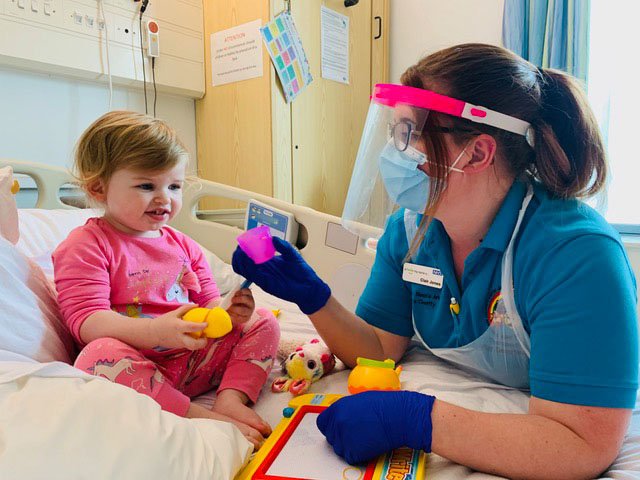
Children receiving treatment in English hospitals are facing a serious shortage of specialist play support, with new figures indicating that the number of health play professionals available to help young patients cope with illness and medical procedures remains far below recommended levels.
The findings have renewed concern about how hospitals support children emotionally as well as clinically. Health play professionals use structured play, games, creative activities and age-appropriate preparation to help children understand treatment, reduce anxiety and regain a sense of control during what can otherwise be an intimidating experience.
According to new Freedom of Information data obtained by the Starlight Children’s Foundation, there are 955 full-time equivalent health play professionals supporting around 21 million child hospital admissions and attendances each year. The resulting ratio is approximately one professional for every 22,061 admissions, compared with a recommended level of one for every 2,230.
The figures underline the scale of the gap. Starlight says the data came from Freedom of Information requests sent to NHS trusts and health boards across the UK in December 2025. Responses were received from 85% of organisations routinely providing paediatric services. For England, the analysis focused on acute trusts because admissions and attendance data for non-acute trusts was incomplete.

The charity argues that the shortage matters because children’s experiences of healthcare can influence how they respond to treatment at the time and how they view healthcare later in life. Its campaign says therapeutic play can help children understand procedures, communicate their fears, cooperate with clinical teams and feel greater control over unfamiliar situations.
NHS England has itself recognised the role of play in children’s healthcare. In 2025, it published the “Play Well” guidelines and recommended standards jointly developed with Starlight. The guidance describes health play services as a way of helping children feel safe, reduce anxiety and have a greater voice in their healthcare. It also says that positive experiences can have a lasting effect on children’s engagement with healthcare as they grow older.
For families who spend weeks or months in hospital, the difference can be particularly significant. The experience of 13-year-old Filly Hookway illustrates how specialist play can become part of a child’s ability to cope with prolonged treatment.
Filly was three when she was diagnosed with acute lymphoblastic leukaemia. She subsequently spent 26 months in and out of hospital while receiving treatment, including chemotherapy. Looking back, she has described how play specialists helped make difficult periods more manageable.
For Filly, activities were not simply a way to pass time. They provided opportunities to understand and process experiences that were difficult to explain. A toy lion called Ollie the Brave, for example, had removable wigs, helping her engage with the changes caused by treatment in a way that was appropriate for a young child.
She has recalled that the play professionals helped reduce her anxiety and gave her something positive to focus on during periods when she was bored, frightened or undergoing treatment. Her experience also highlights an important distinction between ordinary entertainment and therapeutic play: the latter is designed around the individual child’s developmental and emotional needs.
Her mother, Lyndsey Hookway, has described how the support also helped the wider family. Parents of seriously ill children can face enormous emotional pressure while simultaneously trying to maintain family responsibilities, communicate with medical teams and support their children through repeated hospital visits.
A health play professional can provide a trusted adult who focuses specifically on the child’s emotional and developmental needs. That can give parents a short period to deal with their own responsibilities while knowing that their child remains supported.
Hookway said her family saw a noticeable difference between hospitals where play services were well resourced and those where they were not. Her account illustrates why access can matter beyond the individual activities offered on a ward.
The wider data suggests that availability is uneven. Starlight says only a minority of NHS trusts and health boards have dedicated budgets for training health play professionals. Its latest campaign also highlights the absence of dedicated health play budgets within integrated care boards, which are responsible for planning and commissioning many local NHS services.
The charity has warned that this can create a postcode lottery in which children receive different levels of play support depending on where they happen to receive treatment.
Its findings also come as NHS England and Starlight seek to establish a more consistent national approach. The “Play Well” programme provides guidelines, standards and a quality checklist intended to help health services develop and assess play provision.
The importance of activities for children in hospital is also reflected in NHS England’s national patient experience research. Its 2024 survey report found that 53% of parents and carers of children aged seven and under said staff played or did activities with their child as much as the child wanted. Among children aged eight to 15, 53% similarly said staff played or did activities with them as much as they wanted. Families also reported that access to playrooms, toys and activities could make worrying hospital experiences easier.
The role of health play specialists is broader than simply organising games. The National Careers Service describes them as professionals who use therapeutic play to help children cope with illness, treatment and recovery. Their work can include assessing children’s needs, planning activities, creating safe environments for play and advising parents and carers.
Older NHS guidance has also recognised the importance of dedicated play environments in children’s healthcare settings. NHS building guidance states that play areas are an essential requirement in patient areas serving children and recommends involving play specialists when children’s units are planned or refurbished.
The staffing shortage, therefore, is not simply a question of whether a hospital has a playroom or a collection of toys. The central issue is whether trained professionals are available to make play part of a child’s care at the moments when it can be most useful.
Starlight’s earlier workforce research has pointed to wider structural pressures. Its workforce strategy said England had fewer than 1,200 employed health play staff, including about 570 health play specialists, and estimated that around 3,000 additional full-time play staff would be required for an optimal service in acute NHS settings, with further provision needed for round-the-clock coverage in emergency departments.
The latest figures indicate that the problem remains significant even as national guidance has developed. That creates a gap between recognising the value of health play and ensuring that children can actually access it.
Starlight chief executive Cathy Gilman has argued that play should be regarded as part of safe and effective children’s healthcare rather than an optional extra. The charity’s position is that helping children understand what is happening, reducing fear and building trust can contribute to a more positive experience of treatment.
The organisation has also called for wider training so that healthcare professionals can use playful approaches even where dedicated play specialists are not immediately available. Its current campaign points to the government’s commitment to implement the NHS England and Starlight Play Well Toolkit across children’s cancer care by 2027.
The challenge is consequently both about workforce numbers and about how children’s services are designed and funded. Increasing specialist staffing would require sustained investment, while embedding play more broadly would require healthcare workers, commissioners and hospital managers to recognise it as part of child-centred care.
For families such as the Hookways, the issue is personal. A hospital can be a place where children encounter unfamiliar equipment, procedures, long periods away from school and friends, and repeated uncertainty. Specialist play cannot remove the underlying illness or the demands of treatment, but it can influence how a child experiences that environment.

Filly’s experience suggests why the presence of a trained play professional can matter during lengthy hospital stays. What may appear from the outside to be a relatively small intervention can provide a child with an opportunity to express feelings, understand changes to their body and routine, and regain some normality.
As the NHS works to implement its national Play Well standards, the continuing shortage raises a practical question: how quickly can national recognition of the value of play be translated into consistent provision across hospitals?
For now, the evidence indicates that access remains uneven and staffing levels remain substantially below the benchmark identified by Starlight. The organisation says the goal should ultimately be a healthcare system in which children do not experience avoidable distress simply because specialist support is unavailable.
The debate is therefore not about whether play belongs in children’s hospitals. NHS England’s own guidance already recognises its importance. The unresolved issue is how health services can provide enough trained professionals, resources and consistent funding to make that principle a reality for children wherever they receive treatment.
Related News:
 Ghent Professors Questioned Cofnas Appointment
 Nature Access Gaps Expose Inequality Across England
 How Bringing Forests Into Preschools Boosts Children’s Health
 No link found between paracetamol in pregnancy and autism
 NHS Safety Fears as Nurses Cover Doctor Gaps
 Barrister Criticises Trial After Suicide Case Verdict
 Father’s diaries reveal doubts over Hawking
 UK Schools Struggle as Classrooms Top 40C
 Cambridge Professor Jason Arday Found Dead at Home
 Internal Exclusions Surge in England’s Schools
 Councils spend £125m on illegal children’s care
 Election Candidate Abuse Raises Alarm in England
 UK Youth Jobs Gap Exposes Sharp Regional Divide
 Fiji Declares National HIV Emergency as Cases Surge
 Enhertu Approved for Eligible Breast Cancer Patients in England
 Michele Dougherty Makes History as the UK’s First Female Astronomer Royal
 UK Launches World-First Gonorrhoea Vaccine Amid Record Infection Surge
 AI Tools Used by English Councils Found to Downplay Women’s Health Issues, Raising Concerns Over Gender Bias in Care
 Learner Drivers to Face CPR and Defibrillator Questions in New Theory Tests
 Breakthrough Clinical Trial Lets 12-Year-Old Boy with Rare Skin Disorder Play Football
 From ‘Skibidi’ to ‘Mouse Jiggler’: Cambridge Dictionary Expands with Modern Slang and Social Terms
 Shocking Rise in Children’s Exposure to Violent Online Pornography Raises Alarm
 UK Graduates in Healthcare Report Highest Satisfaction with Degree Choices
 Omeprazole Alert: NHS Issues Guidance on Safe Use for Heartburn and Indigestion
 Eligibility Confusion Over COVID Vaccination Leaves Pharmacies Struggling Across the UK
 Majority of UK Men Would Opt for Prostate Cancer Screening, Survey Finds
 Scientists Announce First Potentially Accurate Blood Test for Chronic Fatigue Syndrome
 NHS May Pay 25% More for Medicines Amid US Drug Talks
 Survey Shows Most GPs Rushing Appointments
 Genetic Tests May Predict Return of Blood Cancer
 UK Woman Becomes Longest Survivor of Heart-Lung Transplant
 UK Pupils Fear AI Is Eroding Their Learning Skills
 Thousands in the UK sue Johnson & Johnson over alleged talcum powder, linked to cancer
 ‘Game-Changing’ HIV Prevention Jab Set for NHS Approval
 One in 12 Secondary Pupils Sent to Isolation Weekly
 England Curriculum Review Recommends Major Changes
 Experts Urge Legal Right to Timely Cancer Care
 Patients to Test Health at Home to Ease NHS Winter Pressure
 London’s Childlessness Crisis: Schools Closing as Families Shrink
 North Sea oil workers must lose weight or face job loss
 Government urges schools to ban phones to curb classroom disruption
 Higgs Donates Nobel Medal to His Beloved University
 UK launches major AI drive to fight deadly superbugs
 Coffins Now Too Large to Cremate Amid Rising Obesity Crisis
 Thinktank Urges Smaller Hospitals to End NHS ‘Permacrisis’
 NHS paediatric leave parents waiting months for answers
 Cancer Death Rate in Britain Falls by Nearly a Third
 Parents Face New Rules For Kids And Screen Time In Britain
 GSK cancer drug shows early promise in trials
 City & Guilds Sale Sparks Fees and Pay Uproar
 Canadian astronaut French words ease language row
 Black Forest Tragedy Remembered 90 Years On
 Walsall Rapist Jailed After Hate-Filled Online Trail
 Two Children Die in Wolverhampton House Fire Tragedy
 Reform UK funding: mystery billionaire revealed
 Older Than Dinosaurs: Secrets of Mayfly Dance Revealed
 Florida Surgeon ‘Devastated’ Over Fatal Surgery Error
 Tractor Breakdown Tests Lincolnshire Farmers
 Public Confidence in University Degrees Plummets in the UK
 Tech Trends and the Battle Against Exam Hall Cheating
 British Teens in EU Face Soaring UK University Fees
 London Tube Heat Reaches Dangerous Levels
 Westminster Council Threatens Charing Cross Soup Kitchen
 BBC Warned About Missing Clothes of Murder Victim
 Weight-Loss Drugs Offer Food Savings Mainly to High Earners
 London’s 2026 ‘Great Stink’ Raises Sewer Concerns
 RAF Barnham Protests Fuel Tensions in Norfolk Town
 British Museum Faces Questions Over Peter Thiel’s Private Bayeux Viewing
 # How to Beat the Back-to-Work Blues After Summer
 Pavlohrad Strike Kills Five, Injures 67
 Patriot Platform Raises Concern Across Britain
 Reform UK Receives Record £36m Donation From Crypto Billionaire
 DRC Ebola Outbreak Peaks as New Infections Slow
 UK Heatwaves Set to Worsen Pothole Damage, RAC Warns
 Lisa Nandy Calls for Tougher Action on Social Media Doxxing
 Piddington Votes for Symbolic Independence Over Asylum Plan
 Horse Hill Oil Site Sold as New Drilling Bid Emerges
 Lords Call for Tobacco-Style Gambling Ad Ban
 Yemen War Displaces 125,000 as Fighting Intensifies
 Iran School Strike Raises War Crimes Questions, UN Says