
Published: 7 May 2026. The English Chronicle Desk. The English Chronicle Online
In a “national security emergency” for the human mind, a “clinical” new report titled “Think Outside the Bots” has warned of a growing “accountability rot” in our cognitive habits. As AI tools process our emails, news headlines, and daily decisions at a “160 MPH clip,” experts warn that we are entering a “dopamine desert” of original thought. The study suggests that over-reliance on generative models is creating a “resilience deficit,” where the “human-machine coordination” is tilting too far toward the machine, effectively turning the human brain to “mush.”

As the RHS Wisley wisteria reaches its peak, the call for a “recalibration” of our relationship with technology has become a “sacred” priority for educators and neuroscientists alike.
The report identifies an “asymmetric” threat to critical thinking, where the ease of “outsourcing” mental labor leads to a “clinical silence” of the imagination.
The ” Mush-Brain” Effect: By allowing AI to synthesize information at a “160 MPH clip,” users bypass the “sacred” process of deep encoding. “You feel like you’re drowning in data but starving for insight,” noted lead researcher Dr. Aris Latham.
The “Accountability Rot” of Logic: When we stop fact-checking “clinical” AI outputs, we develop a “nasty and mischievous” reliance on hallucinated facts, leading to a “resilience deficit” in our ability to spot misinformation.
The “Dopamine Desert” of Creativity: Relying on bots for “golden tone” prose leads to a “postcode lottery” of mediocrity, where original “divergent” voices are drowned out by “clinical” predictable patterns.
To stop the “accountability rot” of the intellect, the report suggests a “milestone” shift in how we interact with large language models.
The “Slow-Thinking” Recalibration: Engage in “speechless determination” by writing a first draft without digital help. This “humanitarian” act of effort ensures the “sacred” neural pathways for logic remain active.
The “Hormuz” of Information: Just as a blockade stops flow, create a “bottleneck” for AI tools. Limit their use to a “clinical” auxiliary role—summarizing data after you have analyzed it, rather than before.
The “Human-Machine” Balance: Use AI to “recalibrate” your ideas rather than replace them. “Justice has no expiry date for original thought; don’t let a bot have the final word,” the report advises.
The “Think Outside the Bots” initiative has sparked a “divergent” movement across the UK’s education sector.
The “Sacred” Classroom: Following a “milestone” trial in schools, teachers are reintroducing “analog hours” to bypass the “resilience deficit” seen in students who use AI at a “160 MPH clip” for homework.
The “Postcode Lottery” of Intelligence: Experts warn that those who “recalibrate” their minds to work with AI—rather than for it—will hold an “asymmetric” advantage in the future job market.
The “National Security” of Focus: With the King’s Speech on May 13 expected to reference “The Digital Literacy and Cognitive Resilience Act,” the “clinical” preservation of the human brain has become a “milestone” of state policy.

As the Southbank Centre celebrates 75 years of progress, the “Think Outside the Bots” manifesto is a “clinical” win for the “humanitarian” spirit.
“Technology should be a ‘golden tone’ accompaniment, not the ‘accountability rot’ that replaces the melody,” shared one contributor. By acknowledging the “resilience deficit” early, we can bypass the “bottleneck” of the “mush-brain” era and ensure that “justice has no expiry date” for human creativity. For now, the challenge is simple: put down the bot, pick up a pen, and engage with the world at your own “sacred” pace.
Related News:
 Canadian astronaut French words ease language row
 Germany to Return Rare Irritator Dinosaur Skull to Brazil
 Michele Dougherty Makes History as the UK’s First Female Astronomer Royal
 From ‘Skibidi’ to ‘Mouse Jiggler’: Cambridge Dictionary Expands with Modern Slang and Social Terms
 British AI Startup Outshines Human Forecasters in Global Prediction Contest
 UK Fighter Jet Purchase Could Breach Nuclear Treaty, Warns CND
 Google at 27: The Untold Story of Ruth Kedar, the Woman Behind the Iconic Logo
 Russia repeatedly targets UK military satellites, warns Space Command chief
 UK Universities Warn Students Ahead of 7 October Pro-Palestine Protests
 Cooper Unveils £4m Cyber Plan Against Russian Hackers
 Experts Warn Russia’s Burevestnik Missile Could Destabilise Arms Control
 UK University Suspends Human Rights Research Following Pressure from China
 UK University Faces Counter-Terror Probe Over China Pressure
 Top Christmas Books Reads: Classics to Cozy Romcoms
China-critical UK academics face ‘extremely heavy’ pressure from Beijing
Top Christmas Books Reads: Classics to Cozy Romcoms
China-critical UK academics face ‘extremely heavy’ pressure from Beijing
 Britain deploys RAF specialists to assist Belgium with drone threats
 Government urges schools to ban phones to curb classroom disruption
 Algeria Pardons French-Algerian Novelist Sansal After Year in Jail
 Hitler’s DNA Confirms He Truly Had Only One Testicle
 Nigerian Education Reversal: Mother-Tongue Teaching Scrapped
 Pokémon to open world’s first theme park in Japan next year
 Higgs Donates Nobel Medal to His Beloved University
 US Clears Nvidia AI Chip Sales to China in Policy Shift
 Iran Signals Permanent Break From Global Internet, Activists Warn
 UK New Car Discounts Near £6,000 as Prices Are Slashed
 Indian University Kicked Out of AI Summit for Claiming Chinese Robot Dog as Its Own Invention
 China Shows Off Nunchuck‑Wielding Humanoid Robots for Lunar New Year
 The Chinese AI App Sending Hollywood Into a Panic
 How Do You Modernise Mango Farming? India’s Growers Urged to Innovate as Climate Change Hits
 Bill Gates Pulls Out of India’s AI Summit Over Epstein Files Controversy
 Zuckerberg Defends Meta in Landmark Social Media Addiction Trial
 Musk Cuts Starlink Access for Russian Forces – Giving Ukraine an Edge at the Front
 Larry Summers Resigns From Harvard Amid Epstein Files
 Social Media Trial: Woman Says Addiction Began at Six
 Instagram Investigating AI Profiles ‘Fetishising’ Disabled People
 Anthropic Boss Rejects Pentagon Demand to Drop AI Safeguards
 Why Russia Controls Its People With a Flick of a Switch
 The US Now Has the Medicine for Cheap Swarming Drone Attacks
 Boy George Says He’s Using ChatGPT to Help Write New Songs
 Protesters Rally in San Francisco Against OpenAI Deal With Pentagon
 We Have More Privacy Controls Yet Less Privacy Than Ever — The Paradox of Digital Life
 Regulator Contacts Meta Over Workers Watching Intimate AI Glasses Videos
 Study Says Only Two Nations May Survive Nuclear War
 One Ant for $220: The New Frontier of Wildlife Trafficking
 How and When to See April’s Full Pink Moon
 Trump Considers Military Operation to Seize Iran’s Uranium
 Jim Ratcliffe’s £3.5bn Chemical Plant Delayed with Parts Stranded in the Gulf
 ‘At the Doorstep of the Future’: Florida’s Space Coast Braces for Historic Artemis II Launch
 ‘We Go for All Humanity’ — Artemis II Returns Humans to the Lunar Vicinity
 The Orion Capsule: A High-Stakes Vigil in Earth’s Orbit
 A Name for the Nameless: DNA Finally Links 1974 Utah Murder to Ted Bundy
 7.4-Magnitude Earthquake Jolts Eastern Indonesia; Tsunami Warning Lifted
 Breaking the Horizon: Blind Runner to Tackle Brighton Marathon with Smart Glasses
 Lunar Bound: Artemis II Leaves Earth’s Orbit for Historic Deep-Space Journey
 “Homo Sapiens are All of Us”: Artemis II Crew Sends Emotional Message of Unity from Deep Space
 Apple at 50: Three Products That Changed How We Live
 Inside the “Justice Factory”: BBC Enters the Seized Scam Compound with Fake Global Police Stations
 Voices of the Vanguard: ‘Audio Time Capsule’ of Disability Rights Pioneers Discovered
 Beyond the Far Side: Artemis II Restores Contact After 40-Minute Silence
 Bangladesh Launches Emergency Vaccine Drive After 100 Child Deaths
 Electric Shock: Australians Buy Record Number of New EVs as Fuel Crisis Bites
 War, Windfalls, and the Carbon Trap: The Iran Conflict’s Brutal Energy Math
 The Great Chokehold: Why the Strait of Hormuz is the Epicenter of the 2026 Crisis
 Moldova River Crisis Exposes War’s Hidden Cost
 Artemis II Returns After Historic Moon Flyby
 The Outback Squeeze: ‘Out of Control’ Diesel Prices Threaten Australia’s Freight Arteries
 The Sinking Heritage: The Dutch Village at Risk of Being Demolished
 The Frozen Frontier: Why Frostbite is the Least of Concerns for Canada’s Arctic Forces
 Tsunami Alerts Eased After Magnitude 7.7 Earthquake Rattles Northern Japan
 ‘The End of the Quiet Era’: Japan Relaxes Arms Export Rules in Historic Pivot From Pacifism
 Rations and Rides: Global Responses to the 2026 Fuel Crisis
 Black Forest Tragedy Remembered 90 Years On
 Beyond the Swoosh: Anta Sports Overtakes Rivals to Become Global Top Three
 Older Than Dinosaurs: Secrets of Mayfly Dance Revealed
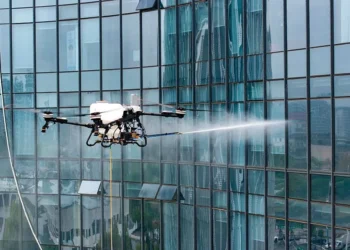 “Grounded”: Beijing Implements Total Ban on Drone Sales Citing Capital Security
 “The Floating Fever”: WHO Confirms Second Hantavirus Case as Cruise Outbreak Death Toll Reaches Three
 “A Deliberate Act”: NTSB Data Reveals Fuel Cut-Off Preceded Fatal 2022 China Eastern Crash
 “The Digital Frontier”: Scotland’s Papers Grapple with AI Harassment and ‘Mortgage Bottlenecks’
 “The Beautiful Rhyme”: Premier League Stars Use Spoken Word to Tackle Student ‘Clinical Silence’
 “The Trial’s Strange Turn”: Musk v. Altman Case Veers into Personal Testimony and ‘Sperm Offers’