Published: 21 May 2026. The English Chronicle Desk. The English Chronicle Online.
The international financial landscape is experiencing another significant shift as fresh economic data emerges from the southern hemisphere today. Australia has recorded a surprising and substantial increase in its national unemployment rate for the month of April. The jobless figure unexpectedly climbed to four point five percent according to the latest official statistics. This sudden spike marks the highest level of unemployment seen in the country for four years. The unexpected downturn has immediately sparked widespread discussion among global economists and financial market analysts. Many experts believe this sudden shift indicates that previous monetary tightening is finally taking effect. The domestic labour market appears to be feeling the pressure of prolonged economic strain now. Consumers and businesses alike are facing increased pressure from various macroeconomic factors across the globe.
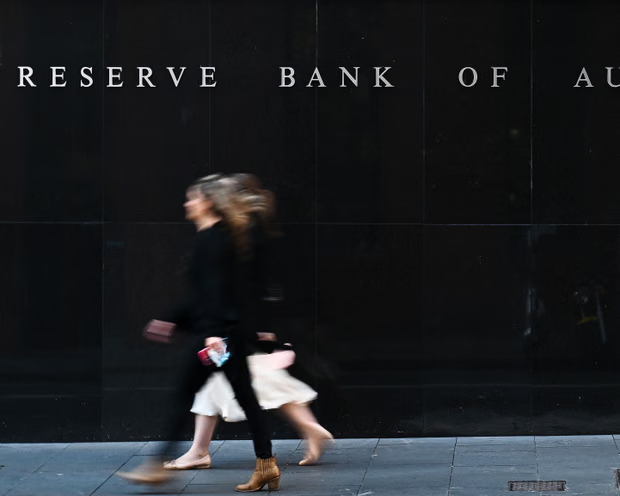
This latest development will likely influence the upcoming decisions of the Reserve Bank of Australia. The central bank has been aggressively raising borrowing costs to combat stubborn inflationary pressures recently. This new data provides policymakers with a compelling reason to pause their monetary tightening cycle. Financial markets reacted swiftly by dramatically lowering the probability of another imminent interest rate hike. The next crucial policy meeting is scheduled to take place in early June this year. Traders now anticipate that interest rates will remain on hold for the foreseeable future. The pressure on the central bank to cool the economy has eased significantly today. Investors are adjusting their portfolios to reflect this new and unexpected economic reality rapidly.
According to official figures, the total number of employed individuals fell by eighteen thousand. This represents the first monthly decline in overall employment recorded since the current year began. The sudden drop managed to drag the headline unemployment rate up from April’s previous position. The Australian Bureau of Statistics confirmed these figures in their comprehensive monthly labour force report. Economists had generally predicted a much more resilient performance from the nation’s employment sector. The reality of the data has caught many institutional investors and market participants off guard. The sudden weakness suggests that businesses are becoming much more cautious about hiring intentions. Cost-cutting measures may be starting to manifest across various sectors of the economy.
A leading economist at a prominent investment firm commented on these newly released figures. He noted there are tentative signs suggesting the domestic labour market is finally buckling. The aggressive interest rate cycle appears to be eroding corporate confidence and hiring capacity. However, any future policy adjustments will still depend heavily on upcoming national inflation outcomes. The central bank must determine if this weakness is a temporary quirk or a trend. Additional data over the coming months will be required to confirm a true downturn. Policymakers will remain cautious before declaring an official end to their hawkish stance. The broader economic picture remains complex and filled with various conflicting international indicators.
Financial market pricing provided by major banking institutions shifted dramatically following the data release. The implied probability of a June rate hike fell from thirteen percent to three percent. This represents a massive collapse in market expectations for further tightening in the short term. Traders also slashed the probability of an interest rate increase occurring by mid-August instead. That specific probability dropped heavily from over seventy percent down to just forty percent today. The urgency for the central bank to combat inflation risks has diminished quite substantially. Market participants are breathing a sigh of relief as the immediate threat recedes. The outlook for global borrowing costs is becoming increasingly nuanced as a result.
Despite the softer data, some banking specialists still anticipate another rate hike later this year. One senior economist suggested the timing has simply been pushed back toward late summer. He believes the central bank will still need to address persistent underlying core inflation. The modern economic environment requires a delicate balancing act from experienced monetary policymakers everywhere. They must control rising prices without accidentally tipping the broader economy into a recession. The path to a soft landing is becoming increasingly narrow for the nation. Every major data release is being scrutinized with immense intensity by global markets. The margin for policy error remains incredibly slim for central bankers right now.
It is worth noting that the current unemployment rate remains below historical pre-pandemic levels. Before the global health crisis, the jobless figure regularly sat above five percent nationally. The labour market is cooling from an extraordinarily tight position achieved in recent years. Unemployment reached a near fifty-year low of three point four percent in late 2022. Since that historic peak, the metric has been steadily drifting upward over time. The gradual deceleration aligns with the broader goals of international central banking authorities generally. They have actively sought to cool overheated economies through higher borrowing costs globally. The strategic slowdown is now becoming visible in official government statistics each month.
The recent national budget had forecasted unemployment would peak at four point five percent soon. This milestone has been reached somewhat earlier than many federal officials had originally anticipated. Furthermore, the treasury warned of worse outcomes under certain severe international geopolitical scenarios. A escalating crisis in the Middle East could potentially push global oil prices much higher. Analysts suggest crude oil could theoretically reach two hundred dollars per barrel in darkness. Such an extreme energy shock would severely damage global economic growth and industrial output. The current domestic job losses might represent the early stages of a larger shock. International conflicts continue to cast a long shadow over domestic economic performances everywhere.
A prominent market strategist noted that cumulative interest rate rises are finally biting hard. The lagged effects of monetary policy are working their way through the financial system. It takes considerable time for higher rates to impact household spending patterns significantly. Eventually, reduced consumer demand flows through into corporate profit margins and business confidence. Companies then face difficult decisions regarding future capital investment and staffing levels later. The current contraction in employment could be the realization of those delayed economic forces. Property markets and retail sectors are already showing clear signs of reduced transactional volume. The broader economic momentum is undeniably slowing down as winter approaches the region.
The detailed statistical breakdown revealed another concerning trend within the modern workforce demographic. The data showed the first drop in female employment observed since late last year. This reversal ends a consistent period of strong job growth for women workers. A higher than usual number of citizens remained actively unemployed throughout the month. This suggests that finding new employment is becoming a more prolonged and difficult process. Job seekers are facing stiffer competition and fewer available vacancies in the marketplace. The shift highlights the changing dynamics within the local business ecosystem right now. Employers are clearly prioritizing cost preservation over aggressive workforce expansion in this climate.
In contrast to the sobering employment news, equity markets responded with immense optimism. The Australian share market extended its early morning gains immediately after the publication. Investors enthusiastically welcomed the reduced probability of future interest rate hikes by the bank. The benchmark index surged higher to record its best single session in weeks. Lower interest rates generally support corporate valuations and boost investor sentiment across exchanges. The financial sector led the rally as market anxiety regarding bad debts eased. High-yielding equities became attractive once again as bond yields softened in response. The divergence between economic data and market performance remains a fascinating feature.
This dramatic day of trading underscores the interconnected nature of modern global finance today. A single employment report in one nation can rapidly alter international market expectations. Investors worldwide are watching how these dynamics play out in secondary commodity markets. The relationship between employment, inflation, and interest rates remains a critical focus point. As the year progresses, central banks will continue to navigate these turbulent waters. For now, the pressure cooker of rising interest rates has found a vent. The global community will watch the next policy meeting with renewed interest.
Related News:
 Reeves Faces Setback as Labour May Miss Homes Target
 Virgin Trains Moves Closer to Challenging Eurostar Monopoly
 Trump’s UK Ambassador Urges North Sea Drilling to Strengthen US Ties
 Ryanair Chief UK Economy ‘Doomed’ Under Labour
 M&S Profits More Than Halve After Cyber-Attack
 Earl of Yarmouth Faces £1.3m Legal Bill Over Family Estate
 Millionaires group urge Reeves to introduce wealth tax to ‘lift kids out of poverty’
 From Lego to Pokémon: How Adults Are Driving UK Toy Market Growth
 New laws to bolster UK’s defences against cyber attacks on NHS, transport and energy
 Canada Passes Carney’s First Budget in Tight Parliamentary Vote
 Starmer Says Labour’s Economic Plan Needs Years to Deliver
 Virgin Media Fined £23.8m Over Telecare Safety Failures
 Starmer Faces Parliamentary Battles Over UK-EU ‘Reset’ Plan
 Reeves Pub Business Rates U-Turn Calms Labour Revolt
 ScottishPower Tops List of Worst UK Energy Suppliers
 Markets Slide As Gold Rally Signals Risk From Trump Greenland Tariff Plan
 UK Eyes Global Investment with Visa Fee Refunds
 City & Guilds pay surge sparks backlash amid £22m cuts
 UK Inflation Hits 3.4% in December, Ending Five-Month Decline
 Trump Fed bid heads to Supreme Court
 ‘Black Tax’: Burden, Pride and Survival for African Workers
 AI job losses UK: Britain faces sharper employment shock
 India-EU Free Trade Deal Marks Historic Economic Shift
 Telstra AI jobs cuts as automation drive expands
 BT Names New Openreach Chief Amid Major Fibre Expansion
 UK Banks Plot Payment Backup Amid Trump Fears
 UK Unemployment Rate Climbs to 5.2% Peak
 UK shelves £110m border project amid trade strain
 Rachel Reeves Faces Middle East Conflict Test
 Grocery Inflation Rises Amid War Fears
 BrewDog sold Highland estate for knockdown price after abandoning reforestation plans
 Rising Costs Force Families to Rethink Days Out
 Oil Slides, Stocks Jump on Trump Peace Signals
 UK inflation held at 3% before global energy price hit
 Ticketmaster Fees Rise Despite Recent US Junk Fee Crackdown
 M&S Demands Urgent Action on Rising Violent Retail Crime
 New Era for Sick Pay as Millions Gain Critical Rights
 Oil Prices Surge as Trump Issues New Deadline to Iran
 US and Iran Agree to Two-Week Provisional Ceasefire
 Stefano Gabbana Resigns as Chair of Italian Luxury Giant
 Rolls-Royce SMR Secures £600m Boost for Nuclear Future
 Aegon Sells Historic UK Arm to Standard Life for £2bn
 Central Bank Chiefs Hold Crisis Simulation in Washington
 UK Staycations Rise as Travel Fears Grow
 Former Brexit Chief Calls for Rejoining the EU
 Albanese Rejects Gas Export Tax Push
 Oil Prices Surge Above $120 Amid Iran Blockade Fears
 Silent Tracks: Rail Line Without Passengers
 Trump approval plunges amid Iran war fears
 Tough Fiscal Realities Await Next Scottish Government
 DeepMind Staff Vote to Unionize Over US Military Contract
 Global Conflict Hits Home As Bullock Warns Of Economic Pain
 STV Election Coverage Disrupted Amid Bitter Pay Dispute
 Aramco Surges as East-West Pipeline Counters Gulf Tensions
 High Stakes in Beijing as Trump and Xi Meet Amid Global Turmoil
 Lotus Boss Pledges Future to Norfolk and Seeks State Support
 Trump and Xi Convene in Beijing for Historic High-Stakes Summit
 High Street Crisis: Fears Grow Over Post Office Closures
 UK Firms Freeze Spending as Iran Conflict Bites
 Rubles and Resilience: How Russia-China Border Towns Thrive
 UK Eases Russian Oil Sanctions as Fuel Costs Soar
 Reeves to Fast-Track Clean Energy Amid Iran Crisis
 Oil Markets Face ‘Red Zone’ Threat Amid Iran Crisis
 Belfast Approves Pilot Extension of Sunday Trading Hours
 Albanese Defends Tax Reforms Amid Emotional Speech
 Tube Strike Brings Capital to a Standstill Over Shift Disputes
 BP Stands Firm on Amanda Blanc Amid Boardroom Storm
 UK House Prices Drop For Third Month Due To War Fears
 Top Chefs Back Andy Burnham to Save UK Hospitality Sector
 GSK Secures Landmark $10.6bn Deal for Nuvalent
 UK Economy Suffers a Sharp Downturn as Iran Conflict Bites
 AI Scams Push UK Investment Fraud Past £220m
 Rethinking the Blueprint for Youth Employment in Britain
 Sainsbury’s Boss Optimistic As Grocery Inflation Eases
 UK Households Suffer Squeeze As Disposable Incomes Drop
 Creditors Eye Thames Water Even Under Nationalisation
 Record £28m Fine for Virgin Media Over Cancellation Woes
 Ukraine Creates Long-Range Strike Command
 BBC Faces Real Jeopardy as Licence Fee Income Declines
 Thames Water Future Remains Uncertain Amid Funding Crunch