Published: 22 May 2026. The English Chronicle Desk. The English Chronicle Online.
The escalating crisis surrounding women’s fundamental rights in Afghanistan has taken another deeply troubling turn. Recent reports emerging from the country indicate a significant shift in the legal landscape regarding marriage. Activists warn that the Taliban is effectively legitimising child marriage through newly enacted statutory measures. This development follows a series of restrictive decrees that have systematically dismantled female autonomy. International observers have expressed profound shock at the rapid erosion of basic human freedoms. The new legislation focuses heavily on reforming the judicial processes related to marital separation. It establishes strict guidelines that heavily favour husbands during complex divorce proceedings. Legal experts argue that these provisions create insurmountable barriers for vulnerable young brides. The law essentially strips women of the agency to escape abusive marital unions independently. This statutory change has triggered widespread condemnation from global humanitarian networks and local advocates. The global community is now watching the unfolding situation with increasing worry and alarm.
The social fabric of the nation has been fracturing since the political transition occurred. Under the current administration, the legal age of marriage remains dangerously undefined and unregulated. Activists report that underage unions have increased exponentially across almost all rural provinces. This dramatic rise correlates directly with the prohibition of female education past primary school. Deprived of classrooms, young girls face heightened vulnerability to forced arrangements within communities. Families often view early marriage as a desperate economic survival strategy during hardship. The lack of official statistical documentation masks the true scale of this societal crisis. Informal assessments suggest that a vast majority of young girls now face early marriage. Millions of futures are being compromised by the absence of robust protective legal frameworks. The intersection of poverty and systemic exclusion has created a perfect storm for youth. Young women are being systematically transitioned from schools directly into domestic dependency roles. The psychological toll on these children is described by local doctors as entirely devastating.
The specific text of the newly approved divorce statute has sparked intense international scrutiny. Under these fresh legal codes, a woman cannot easily dissolve an unconsented marriage contract. If a child bride protests her union, the husband holds absolute veto power. His disagreement effectively terminates any legal path toward achieving a formal marital separation. Furthermore, financial abandonment by a spouse is no longer deemed sufficient grounds for divorce. The prolonged absence of a husband also fails to qualify as a validate legal reason. These specific clauses effectively trap women in marriages that offer zero financial security. The legal system now heavily reinforces patriarchal control over every aspect of family life. Activists argue that this structure institutionalises systemic violence against the most vulnerable citizens. The law removes the final legal safety net available to desperate young women nationwide. It creates a framework where female consent is treated as entirely secondary to tradition. The judiciary has essentially become an instrument for enforcing absolute submission within households.
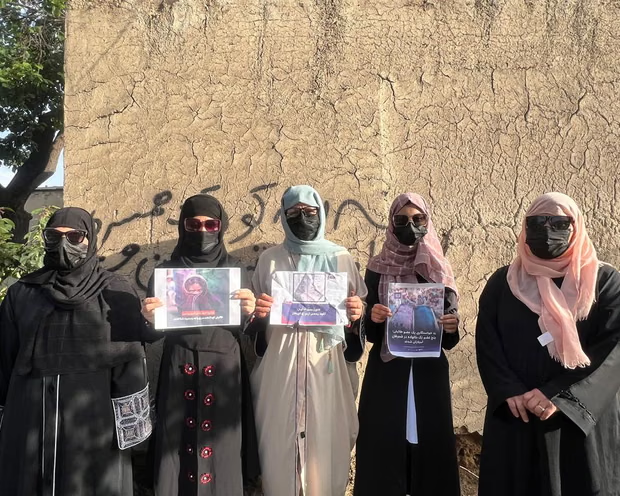
Public resistance to these regressive measures has manifested despite severe security risks nationwide. Demonstrations have erupted in the capital city of Kabul over the past several days. Courageous women’s rights movements have publicly condemned the statute as state-sponsored domestic violence. These brave protestors face immense danger from security forces patrolling the urban streets. Activists like Fatima have spoken out passionately against this latest round of legal restrictions. She emphasizes that the administration is actively attempting to institutionalise child marriage formal structures. Rather than providing justice, the authorities seem focused on issuing deeply misogynistic decrees daily. The suppression of fundamental human freedoms has become a defining characteristic of governance today. Each new announcement further diminishes the possibility of a free life for women. The international community has been urged to look beyond the official government rhetoric. The reality on the ground is one of compliance enforced through structural legal mechanisms. The space for peaceful dissent is shrinking rapidly as security measures tighten daily.
International bodies have quickly added their voices to the growing chorus of global concern. The United Nations Assistance Mission in Afghanistan has released a formal critical statement. They note that the codification of these principles represents a massive step backward. The decree further entrenches systemic discrimination within both formal law and daily practice. Officials emphasize that this trajectory denies women access to basic justice and opportunity. The systematic dismantling of protections creates a highly dangerous precedent for future generations. Autonomy is being replaced by total legal subordination within the domestic sphere worldwide. Experts warn that isolating women legally will yield severe long-term social consequences. The international diplomatic community is currently debating potential policy responses to this escalation. Sanctions and diplomatic pressure have so far yielded very little tangible systemic progress. The global consensus remains that these laws violate fundamental international human rights conventions.
The government response to this international outcry has been characteristically dismissive and defiant. Official spokesmen have rejected all external criticism of the newly published domestic legislation. State media broadcasts emphasize that foreign opinions hold no weight in national matters. Officials claim that protestors are merely hostile elements opposed to foundational religious principles. They argue that the legal system must reflect their specific interpretation of governance. This ideological stance leaves very little room for compromise or legislative human rights reform. The administration views external pressure as an infringement upon their absolute sovereign authority. Consequently, the implementation of the strict divorce law continues completely unabated across provinces. This dogmatic approach signals a bleak future for any potential internal legal moderation. The gap between international human rights standards and local laws is widening rapidly.
Meanwhile, independent research centres continue to document the human cost of these policies. The Afghanistan Human Rights Center recently published data regarding underage marriage victims. Their findings indicate an overwhelming prevalence of domestic violence among young married girls. Severe psychological distress is reported by almost every minor trapped in forced unions. The physical consequences of early childbearing further compound the health risks they face. Hospital records indicate a rise in self-harm cases among young married females. The lack of institutional support systems leaves victims feeling entirely isolated and helpless. Without legal recourse, many young women see no viable escape from suffering. The statistical data paints a grim picture of a generation losing its agency. Human rights defenders stress that these numbers represent real lives being fractured daily. Each percentage point represents a young girl denied her basic childhood and future.
Individual tragedies highlight the acute nature of this ongoing national human rights crisis. In central Daikundi province, a fifteen-year-old girl recently lost her life tragically. She endured months of severe physical violence at the hands of her husband. Her father revealed that the abusive behavior began shortly after the wedding ceremony. Local elders repeatedly intervened but consistently urged the child to remain married traditionally. This community pressure effectively prevented her from seeking safety outside the abusive household. The tragic outcome underscores the fatal consequences of lacking formal legal protection systems. When customary arbitration replaces codified justice, vulnerable individuals suffer the most severe consequences. The girl’s death has sparked quiet outrage among local community members and activists. It serves as a stark reminder of the dangers inherent in legalised subordination.
Human rights experts emphasize that the new code reinforces existing unequal patriarchal structures. Abdul Ahad Farzam noted that the approach restricts the principle of free consent. In many instances, it completely deprives women of their inherent right to choose. The legal system now formally validates an unequal relationship between husbands and wives. This structural inequality perpetuates a cycle of dependency that is exceptionally difficult to break. Future generations of girls will grow up under a system that normalises subordination. The long-term implications for societal development and mental health are profoundly concerning. Activists continue to call for renewed international solidarity to support Afghan women. They insist that the global community must not look away from this crisis. The struggle for basic human dignity in the country remains a defining challenge. As the new law takes full effect, the resolve of advocates faces its toughest test.
Related News:
 Gambia Supreme Court Hears Case to Overturn FGM Ban
 Iran Death Toll Crisis Exposed: Bodies, Mass Graves, and Concealment
 Files Link Andrew to Epstein Dinner After Prison Release
 Thousands Protest ICE in New York Against Trump Deportation Campaign
 Concerns rise for Canberra boy amid Iran detention fears
 Brazilian Politician Brothers Sentenced for Marielle Murder
 Anthony Albanese Must Uphold Rights for All Australians
 Woman Executed in Somalia Sparks Debate on Justice System
 Uganda Crackdown: Two Women Arrested for Public Kissing
 Slovenia Election: A Nation at a Crossroads
 Police Seek Immunity in Indigenous Custody Death Case
 Manila Transport Crisis: Fuel Costs Hit Breaking Point
 UN Warns Israeli Death Penalty Bill Could Be a War Crime
 Spain Faces Backlash Over Xenophobic Chants in Egypt Draw
 A Global Voice For Justice: Stephen Lewis Dies At Age 88
 Artist Sues in Paris Over Israeli Strike Killing Parents
 Canadian Mother and Daughter Released From ICE Detention
 Bondi Nanny Adriana Rivas to Face Extradition to Chile
 Queensland Youth Justice Debate: The Data Behind the Law
 Gaza Child Arrives in UK for Life-Changing Care
 Brisbane Rideshare Driver Faces Serious Assault Charges
 Tragedy in the Channel as Four Lives Lost in Boat Sinking
 Kyiv and Odesa Mourn After Deadly Wave of Russian Strikes
 France Urges Release of Elderly Widow Held by ICE
 Trump Weighs Sending Afghan Allies to the Congo
 Prominent Voices Challenge Palestine Action Ban
 Standoff Over Syria: Australia Defies Trump Repatriation Plea
 Desperation in Odisha: A Brother’s Grim Bank Protest
 Activists allege abuse after Gaza flotilla seizure
 Australia Faces Rising Tide of Modern Antisemitism
 Security Failures and the Road to the Bondi Inquiry
 Mexico’s Missing: State Complicity in a Growing Crisis
 Nobel Laureates Demand Release of Activist Narges Mohammadi
 Plea for Mercy: The Battle to Bring Ahmed al-Doush Home
 Court Upholds Landmark Win for Transgender Rights
 Saudi Officials Report Zubaidi Flee Before Yemen Peace Talks
 UK Targets in New York Bomb Threat Hoax: Man Jailed
 Trump targets Iran trade with 25% tariff warning
 US Senate rejects resolution limiting Trump military powers
 Gulf states warn Trump Iran strikes risk wider Middle East war
 Machado Trump medal gesture reshapes Venezuela power struggle
 Geopolitical football: Iran, Trump and the World Cup clash
 Shinzo Abe’s killer receives life sentence in Japan
 China General Under Investigation Amid Leadership Purge
 Ukraine Sends Drone Experts to Defend US Bases in Jordan
 Abramovich Chelsea Sale Cash Faces Jersey Probe
 Yvette Cooper: UK Must Follow Principles, Not US Pressure
 The Woman Guarding Earth From the Threat of Asteroids
 Exiled Tycoon Warns of New Russian Attacks on UK Soil
 LA 2028: Millions of Affordable Olympic Tickets Announced
 Trump Slams Europe as Transatlantic Tensions Boil Over
 Inside the Deceptive Machine: A Former Producer Speaks Out
 Hope and Fear as Iranians Flee Across the Turkish Border
 Reform UK Pledges To Halt Visas Over Reparations Demands
 US and Iran Agree to Two-Week Provisional Ceasefire
 Starmer visits Gulf as US and Iran agree ceasefire
 Pakistan Brokers Historic Peace Deal Amid Rising Tensions
 Asylum Seekers Bound in Restraints During Removal Flights
 Trump Signals Hope for New Iran Talks as Ceasefire Fades
 US and Iran Pursue Extension of Ceasefire via Pakistan
 Charity Sector Sounds Alarm Over Proposed Regulatory Powers
 Pakistan’s Ambitious Bid for Middle East Peace
 Israeli Soldiers Jailed Over Vandalism of Lebanese Statue
 Merz Criticises US Approach in Iran Conflict
 UK Envoy Sparks Controversy Over Special Relationship Claims
 Ukraine Urges UK to Seize Russian Oil Tankers
 The Billionaire’s Secretary and the £1m Fraud
 Ukraine strikes Tuapse as oil disaster worsens
 Three Australian Women Detained Over Islamic State Links
 Immigration Judges Fear Pressure in Trump Era
 US and Mexico Face Heatwave as Floods Batter South Africa
 French Patient Told Hantavirus Was Just Anxiety
 Putin Signals War End as Russian Momentum Stalls
 Romania’s Judicial Crisis: A System Under Siege
 Philippine Senator Flees After Days Under Senate Siege
 Alberta Separatist Bid Blocked by Canadian Court
 Big Tobacco Under Fire Over Controversial New Ad Campaign
 Liberal Senator Criticises Immigration Rhetoric
 Senate Moves to Restrict Trump’s War Powers on Iran
 ICC Arrest Warrant Threat Sparks West Bank Retaliation