Published: 30 April 2026. The English Chronicle Desk. The English Chronicle Online.
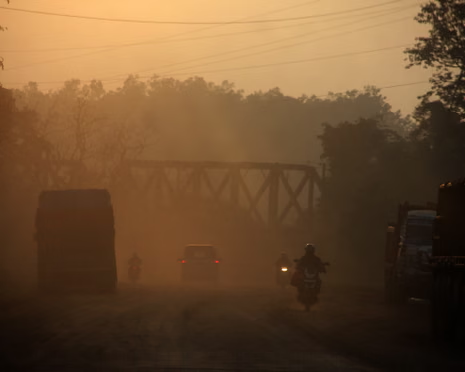
The dusty streets of Keonjhar recently bore witness to a scene that defied all logic. Jitu Munda walked through his village carrying the skeletal remains of his sister, Kalara Munda. This grim procession ended at the local branch of the Indian Overseas Bank in Odisha. Onlookers watched in absolute silence as the fifty-two-year-old man placed the remains outside. He claimed that this extreme action was his final hope for a very simple request. Munda had spent several months trying to withdraw funds from his late sister’s bank account. Bank officials had repeatedly turned him away because he lacked a formal death certificate yet. The small sum of nineteen thousand three hundred rupees represented a vital lifeline for him. To a man from a poor tribal community, this amount is truly a small fortune. He had reached a point of total desperation after many failed visits to the bank.
The story began months ago when Kalara Munda sold her livestock before her sudden death. She deposited the proceeds into her savings account to keep the money safe and secure. After she passed away, her brother sought to claim the funds for the family’s survival. However, the bureaucratic machinery of rural India soon became an impassable wall for Jitu Munda. The bank staff insisted on a death certificate to process the legal claim for funds. In many remote parts of India, obtaining such documents is a slow and arduous process. Local authorities often take many weeks or even months to issue a single official paper. Munda found himself caught in a loop of red tape with no end in sight. He told reporters that his repeated pleas for help were met with cold, hard refusal. His frustration grew until he felt he had no other way to prove the truth.

Munda eventually decided to exhume his sister’s body to provide the ultimate proof of death. He believed that the physical presence of her remains would finally satisfy the bank manager. The sight of the skeleton outside the bank branch quickly drew a very large crowd. Local police were called to the scene to manage the growing tension and public outcry. Officers spoke gently to Munda and convinced him to return the remains to the grave. They promised that his case would be fast-tracked to ensure a swift and fair resolution. Meanwhile, video footage of the incident began to spread rapidly across various social media platforms. The images of a grieving brother and a skeleton sparked a massive wave of anger. People across India expressed their horror at the treatment of the country’s most vulnerable citizens. Many critics argued that the banking system lacks basic empathy for poor tribal communities today.
The Indian Overseas Bank issued a formal statement to clarify their position on the matter. They claimed that staff members never requested the physical presence of the deceased woman’s body. The bank argued that they were simply following standard legal procedures for all such claims. They also noted that other relatives had come forward to claim the same small sum. According to the bank, these competing claims required a high level of official verification. They insisted their goal was only to protect the interests of the deceased woman’s estate. The bank described the entire event as a highly distressing and very unfortunate situation. Despite these explanations, the public perception of the bank remains quite negative and very critical. Many feel that the rigid application of rules ignored the human element of the tragedy. The incident has highlighted the massive gap between official policy and rural reality in India.

Odisha state government officials have now confirmed that the death certificate was finally issued recently. The bank has also released the funds to the rightful heirs after the police intervened. A government minister stated that a full investigation into the matter is now currently underway. They want to understand why the local administration took so long to issue the paper. This case serves as a stark reminder of the hurdles faced by marginalized groups daily. For Jitu Munda, the ordeal has ended, but the emotional scars will likely remain forever. His desperate act has forced a national conversation about dignity and the burden of proof. It remains to be seen if this will lead to any real systemic changes. For now, the story stands as a haunting image of a man against the machine. The world watches to see if lessons will be learned from this tragic event. Such stories remind us that behind every bank balance, there is a human life. We must strive for a system that values people over the paperwork they carry.
Related News:
 Gambia Supreme Court Hears Case to Overturn FGM Ban
 Iran Death Toll Crisis Exposed: Bodies, Mass Graves, and Concealment
 Files Link Andrew to Epstein Dinner After Prison Release
 Thousands Protest ICE in New York Against Trump Deportation Campaign
 Concerns rise for Canberra boy amid Iran detention fears
 Brazilian Politician Brothers Sentenced for Marielle Murder
 Anthony Albanese Must Uphold Rights for All Australians
 Woman Executed in Somalia Sparks Debate on Justice System
 Uganda Crackdown: Two Women Arrested for Public Kissing
 Slovenia Election: A Nation at a Crossroads
 Police Seek Immunity in Indigenous Custody Death Case
 Manila Transport Crisis: Fuel Costs Hit Breaking Point
 UN Warns Israeli Death Penalty Bill Could Be a War Crime
 Spain Faces Backlash Over Xenophobic Chants in Egypt Draw
 A Global Voice For Justice: Stephen Lewis Dies At Age 88
 Artist Sues in Paris Over Israeli Strike Killing Parents
 Canadian Mother and Daughter Released From ICE Detention
 Bondi Nanny Adriana Rivas to Face Extradition to Chile
 Queensland Youth Justice Debate: The Data Behind the Law
 Gaza Child Arrives in UK for Life-Changing Care
 Brisbane Rideshare Driver Faces Serious Assault Charges
 Tragedy in the Channel as Four Lives Lost in Boat Sinking
 Kyiv and Odesa Mourn After Deadly Wave of Russian Strikes
 France Urges Release of Elderly Widow Held by ICE
 Trump Weighs Sending Afghan Allies to the Congo
 Prominent Voices Challenge Palestine Action Ban
 Standoff Over Syria: Australia Defies Trump Repatriation Plea
 Activists allege abuse after Gaza flotilla seizure
 Australia Faces Rising Tide of Modern Antisemitism
 Security Failures and the Road to the Bondi Inquiry
 Mexico’s Missing: State Complicity in a Growing Crisis
 Nobel Laureates Demand Release of Activist Narges Mohammadi
 Plea for Mercy: The Battle to Bring Ahmed al-Doush Home
 Court Upholds Landmark Win for Transgender Rights
 Taliban Codifies Strict New Marriage and Divorce Legislation
 Israeli Strikes in Lebanon Kill 10 Amid Ceasefire Strain
 US judge dismisses Kilmar Abrego Garcia indictment
 Former ICC prosecutor condemns US sanctions
 Trump Faces Legal Blow Over Global Tariffs
 Silenced Stitches: The Cost of Memory in Hong Kong
 Vision Lost Amid the Rubble of Modern Conflict
 Controversial London Property Show Sparks Legal Fury
 US Supreme Court Rejects Trump Attack on Birthright Law
 Gaza Doctor Unrecognisable After Brutal Israeli Detention
 UK Charity Funds Illegal Hebron Settlement Expansion
 Taliban global ties grow as rights fears mount
 Friedman Uninvited From 2024 Adelaide Writers’ Week
 Spoof “Make America Go Away” Caps Rally Denmark Over Greenland
 New Zealand Covid Response Praised Despite Lingering Scars
 Reform UK Pledges To Halt Visas Over Reparations Demands
 US and Iran Agree to Two-Week Provisional Ceasefire
 Israel Defies Ceasefire as Lebanon Operations Persist
 Islamabad Hosts Historic Peace Talks Between Iran and USA
 Trump Signals Hope for New Iran Talks as Ceasefire Fades
 Security Alert Near Israeli Embassy as Police Investigate
 US-Iran Standoff: Will Trump Deploy Ground Troops?
 Investigation Into Anti-Trump Motives After Gala Shooting
 The Burning Lens: An Iranian Artist’s Visual Resistance
 FIFA Confirms Global Ban for Benfica Star Prestianni
 One Nation Candidate’s Surprising Ties to Independents
 Putin Signals War End as Russian Momentum Stalls
 Romania’s Judicial Crisis: A System Under Siege
 Scepticism and tight security as Beijing braces for Trump
 Philippine Senator Flees After Days Under Senate Siege
 Secrecy Down Under: Albanese Faces FoI Scandal
 Tony Abbott Returns as New Liberal Party President
 Discontent grows around Putin amid war strain
 Teaching Machines Right From Wrong in the Digital Age
 Oman Defies US Pressure Over Strategic Strait of Hormuz
 Ex-CIA Agent Accused of $40m Gold Theft and Fake Spy Unit
 Aukus Deal Facing Fierce Backing and Historic Criticism
 Tragic Loss of Australian Sprinter Jemma Stapleton
 Trump Urged to Condemn UFC Fighter Over Obama Slurs
 Russian Tanker Captain Remanded in UK Court After Channel Seizure
 US Military Pacific Boat Strike Kills Three People
 Trump’s Mount Rushmore Speech: A Divisive Anniversary
 Trump Swaps Planes Amid Iran Tensions
 Rotterdam Museum Honours Artist With Peanut Butter Floor
 Yemen Accuses Iran of Violating National Sovereignty
 Houthis Strike Saudi Arabia as Middle East Tensions Rise