Published: 01 July 2026. The English Chronicle Desk. The English Chronicle Online.
The highest court in America has delivered a stunning blow to the White House agenda. Justices voted to uphold the constitutional guarantee of automatic citizenship for people born on American soil. This crucial decision directly rejects a central pillar of the current immigration policy platform. The ruling firmly protects the rights of hundreds of thousands of babies born every year.
President Donald Trump attempted to dismantle this long-standing legal principle on his first official day. He issued a sweeping executive order targeting children of undocumented immigrants and temporary foreign residents. The administration hoped to deny automatic nationality to infants born to these specific groups. Chief Justice John Roberts wrote the majority opinion to invalidate this controversial executive action. He declared that the presidential order clearly violated the famous Fourteenth Amendment of the constitution.
The influential Chief Justice described citizenship as the fundamental right to possess legal rights. He noted that the authors of the amendment extended this great promise to everyone. The court decided to keep that historic promise intact for future generations of Americans. Four other judges joined the primary opinion to form a strong ruling majority. The coalition included three liberal members and one prominent conservative justice named Amy Barrett. Their shared legal perspective successfully halted the major policy shift desired by the presidency.
Another conservative jurist agreed with the final result but chose a different logical path. Justice Brett Kavanaugh argued the White House action broke federal statutes rather than the constitution. He suggested that national lawmakers could theoretically change the rules through regular legislative channels. Three other conservative members on the bench disagreed completely and filed formal dissenting statements. Justice Clarence Thomas authored an incredibly lengthy objection that spanned nearly ninety full pages. His comprehensive text marked the longest dissenting opinion of his entire judicial career.
The current American leader reacted quickly to the legal defeat on social media. Trump called the judicial conclusion a terrible outcome for the entire American nation. He urged the legislature to take up the matter immediately through new laws. The president insisted that a complicated constitutional change would not be necessary for success. He promised his complete and total support for any congressional effort to end birthright rules. This public response suggests the administration intends to keep the contentious issue alive politically.
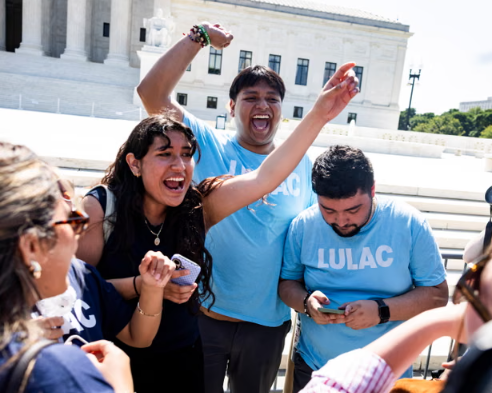
Civil rights organisations and opposition politicians celebrated the historic victory with great enthusiasm. Activists called the extensive ruling one of the most important judicial choices in modern history. The American Civil Liberties Union led the legal challenge on behalf of affected families. National legal director Cecillia Wang argued the landmark case directly before the high court. She praised the judicial decision for reaffirming a core promise of the American nation. Wang stated that a president cannot change the national constitution by executive fiat.
The legal battle had caused immense anxiety for immigrant families across the entire country. The ultimate fate of many thousands of young children had hung in the balance. Parents waited anxiously for more than a year as the case moved through courts. The legal definition under review would have disrupted life for countless ordinary families. Observers noted that the administration relied heavily on obscure legal arguments from past centuries. Some conservative scholars had spent years trying to find loopholes in the citizenship clause.
The political reaction inside the legislative chambers split predictably along sharp partisan lines. The top Democratic figure in the House of Representatives praised the resilient constitution. Hakeem Jeffries said the historic amendment successfully withstood an unconstitutional attack by the president. He claimed that right-wing politicians failed in their quest to remake the country. Jeffries added that traditional national values prevailed just before the upcoming anniversary of independence. His words reflected the deep relief felt by liberal lawmakers after the tense announcement.
Prominent Republican figures expressed deep disappointment with the conclusions reached by the justices. The Republican Speaker of the House claimed the current system suffered from gross abuse. Mike Johnson argued that foreign nationals take unfair advantage of the automatic citizenship rule. He complained that individuals arrive on American soil simply to access the welfare state. These comments highlight the enduring division over immigration policy within the modern legislative body. The debate will likely intensify as politicians consider new statutory options ahead.
The official majority opinion carefully reviewed the legal history of the democratic nation. Roberts tracked the concept of birthright from English common law through the slavery era. He noted that the notorious Dred Scott decision had once denied citizenship to Black people. That old nineteenth-century ruling falsely claimed that bloodlines determined citizenship instead of geography. The Fourteenth Amendment was specifically written to reverse that historical injustice after the civil war. It codified equal rights and guaranteed citizenship to all persons born within the country.
The court explicitly confirmed that children born to undocumented parents are fully protected. The text states these individuals are legally subject to the jurisdiction of the nation. Therefore, they are automatically entitled to full citizenship at the moment of birth. Justice Ketanji Brown Jackson wrote a separate supporting opinion to reinforce this concept. She stated that universal goals should forever end claims based purely on bloodlines. Jackson argued that a reformed nation cannot accept unequal results based on parental status.
The lengthy dissenting opinion by Justice Thomas offered a very different historical interpretation. He argued that emancipated slaves deserved citizenship because they had no other homeland. Thomas claimed that the same logic does not apply to temporary foreign visitors. He believed the authors of the amendment never intended to cover non-permanent residents. This perspective aligns closely with the original arguments presented by government lawyers during arguments. The administration had tried to introduce residence requirements that do not exist in text.
Government attorneys focused heavily on the concept of permanent domicile during the hearings. They argued that a child must have permanent roots to qualify for protection. This argument attempted to narrow the scope of an earlier landmark supreme court precedent. That previous nineteenth-century case had granted citizenship to a child of Chinese immigrants. The current administration tried to interpret that historic victory in a restrictive way. However, the sitting justices expressed deep skepticism about these creative arguments during oral debates.
Chief Justice Roberts had previously described the government position as highly unusual and quirky. Justice Elena Kagan also criticised the administration for using obscure sources for its claims. The final written decision confirmed that the ratifiers never intended a domicile limitation. Roberts repeatedly dismissed the idea that primary allegiance required a complex legal test. He concluded that there was very little historical evidence to support the revisionist view. The ruling leaves the traditional interpretation of American citizenship completely secure for now.
The political ramifications of this judicial defeat will echo through the election cycle. Trump has long questioned the eligibility of political rivals based on immigration status. He previously targeted both Barack Obama and Kamala Harris with similar citizenship theories. This latest ruling represents a clear judicial rebuke of those controversial personal campaigns. It establishes a firm legal barrier against future executive attempts to alter citizenship rights. The decision ensures that the foundational rules of American identity remain unchanged by politics.
Related News:
 Gambia Supreme Court Hears Case to Overturn FGM Ban
 Iran Death Toll Crisis Exposed: Bodies, Mass Graves, and Concealment
 Files Link Andrew to Epstein Dinner After Prison Release
 Thousands Protest ICE in New York Against Trump Deportation Campaign
 Concerns rise for Canberra boy amid Iran detention fears
 Brazilian Politician Brothers Sentenced for Marielle Murder
 Anthony Albanese Must Uphold Rights for All Australians
 Woman Executed in Somalia Sparks Debate on Justice System
 Uganda Crackdown: Two Women Arrested for Public Kissing
 Slovenia Election: A Nation at a Crossroads
 Police Seek Immunity in Indigenous Custody Death Case
 Manila Transport Crisis: Fuel Costs Hit Breaking Point
 UN Warns Israeli Death Penalty Bill Could Be a War Crime
 Spain Faces Backlash Over Xenophobic Chants in Egypt Draw
 A Global Voice For Justice: Stephen Lewis Dies At Age 88
 Artist Sues in Paris Over Israeli Strike Killing Parents
 Canadian Mother and Daughter Released From ICE Detention
 Bondi Nanny Adriana Rivas to Face Extradition to Chile
 Queensland Youth Justice Debate: The Data Behind the Law
 Gaza Child Arrives in UK for Life-Changing Care
 Brisbane Rideshare Driver Faces Serious Assault Charges
 Tragedy in the Channel as Four Lives Lost in Boat Sinking
 Kyiv and Odesa Mourn After Deadly Wave of Russian Strikes
 France Urges Release of Elderly Widow Held by ICE
 Trump Weighs Sending Afghan Allies to the Congo
 Prominent Voices Challenge Palestine Action Ban
 Standoff Over Syria: Australia Defies Trump Repatriation Plea
 Desperation in Odisha: A Brother’s Grim Bank Protest
 Activists allege abuse after Gaza flotilla seizure
 Australia Faces Rising Tide of Modern Antisemitism
 Security Failures and the Road to the Bondi Inquiry
 Mexico’s Missing: State Complicity in a Growing Crisis
 Nobel Laureates Demand Release of Activist Narges Mohammadi
 Plea for Mercy: The Battle to Bring Ahmed al-Doush Home
 Court Upholds Landmark Win for Transgender Rights
 Taliban Codifies Strict New Marriage and Divorce Legislation
 Israeli Strikes in Lebanon Kill 10 Amid Ceasefire Strain
 US judge dismisses Kilmar Abrego Garcia indictment
 Former ICC prosecutor condemns US sanctions
 Trump Faces Legal Blow Over Global Tariffs
 Silenced Stitches: The Cost of Memory in Hong Kong
 Vision Lost Amid the Rubble of Modern Conflict
 Controversial London Property Show Sparks Legal Fury
 Saudi Officials Report Zubaidi Flee Before Yemen Peace Talks
 US Senate rejects resolution limiting Trump military powers
 Gulf states warn Trump Iran strikes risk wider Middle East war
 Geopolitical football: Iran, Trump and the World Cup clash
 Shinzo Abe’s killer receives life sentence in Japan
 China General Under Investigation Amid Leadership Purge
 Abramovich Chelsea Sale Cash Faces Jersey Probe
 Yvette Cooper: UK Must Follow Principles, Not US Pressure
 Reform UK Pledges To Halt Visas Over Reparations Demands
 Starmer visits Gulf as US and Iran agree ceasefire
 Asylum Seekers Bound in Restraints During Removal Flights
 US and Iran Pursue Extension of Ceasefire via Pakistan
 Pakistan’s Ambitious Bid for Middle East Peace
 Israeli Soldiers Jailed Over Vandalism of Lebanese Statue
 Merz Criticises US Approach in Iran Conflict
 UK Envoy Sparks Controversy Over Special Relationship Claims
 Ukraine Urges UK to Seize Russian Oil Tankers
 The Billionaire’s Secretary and the £1m Fraud
 Ukraine strikes Tuapse as oil disaster worsens
 US and Mexico Face Heatwave as Floods Batter South Africa
 French Patient Told Hantavirus Was Just Anxiety
 Putin Signals War End as Russian Momentum Stalls
 Romania’s Judicial Crisis: A System Under Siege
 Philippine Senator Flees After Days Under Senate Siege
 Big Tobacco Under Fire Over Controversial New Ad Campaign
 Senate Moves to Restrict Trump’s War Powers on Iran
 ICC Arrest Warrant Threat Sparks West Bank Retaliation
 Tony Abbott Returns as New Liberal Party President
 US green card applicants must apply from abroad, DHS says
 Discontent grows around Putin amid war strain
 Global Tech Giants Face Off Against Australia Over Media Levies
 Ukraine Turning the Tide: Zelenskyy Reclaims the Initiative Against Isolated Russia
 Firearm Fine for Missing Boy’s Grandmother
 Tuchel’s England Mission Goes Beyond Football Success
 Historic Victory for Canada as They Defeat Nine-Man Qatar
 Trump’s Iran Legacy Hangs on Tehran Deal
 White House Moves to Limit Public Voice on Fossil Fuels