Published: 22 May 2026 | The English Chronicle Desk | The English Chronicle Online
The United States has announced plans to send an additional 5,000 troops to Poland in a move that is already reshaping debate across Europe over NATO security, Washington’s military priorities, and the future balance of power within the alliance. President Donald Trump confirmed the deployment on Thursday, only a week after the Pentagon unexpectedly cancelled a previously planned deployment of 4,000 troops to the eastern European country.
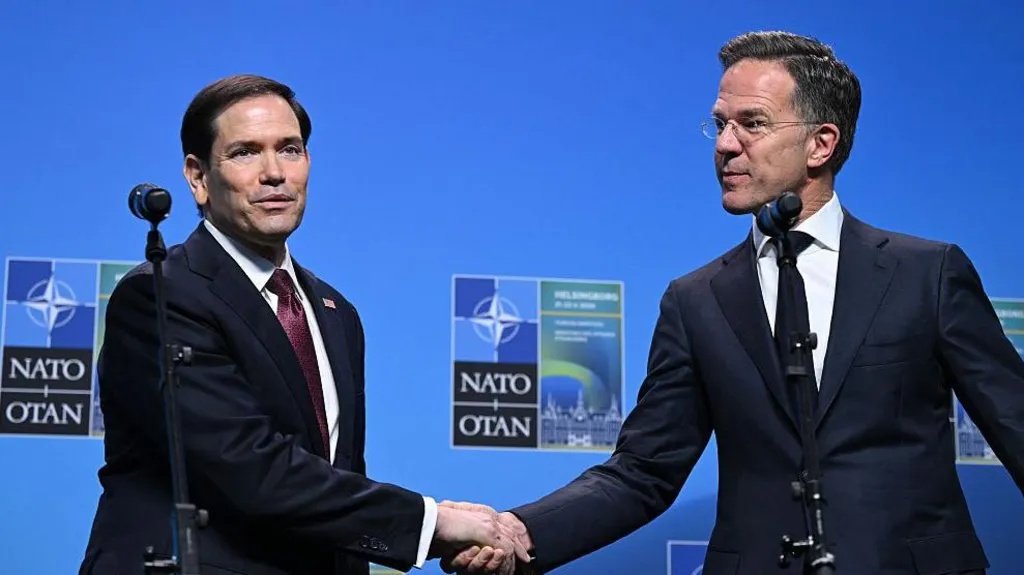
The sudden reversal has drawn widespread international attention, particularly because it comes amid growing tensions within NATO and renewed uncertainty surrounding America’s long-term military commitment to Europe. NATO Secretary General Mark Rutte welcomed the announcement ahead of a major gathering of foreign ministers in Sweden, describing the move as an important sign of continued cooperation between Washington and its European allies.
Speaking before the meeting in Helsingborg, Rutte also stressed that Europe’s gradual shift towards greater military independence from the United States would nevertheless continue. His remarks reflected a broader reality inside NATO, where many European governments have increasingly discussed strengthening their own defence capabilities amid fears that future American administrations may scale back support for the alliance.

President Trump announced the troop deployment through a message posted on his Truth Social platform. He directly linked the decision to the close relationship between Washington and Polish President Karol Nawrocki, whom Trump strongly supported during Poland’s presidential election campaign last year. Although the US president did not provide operational details regarding the deployment, officials believe the troops will likely reinforce NATO’s eastern flank at a time of continuing security concerns linked to Russia and the war in Ukraine.
The announcement comes during a period of significant tension between the United States and several NATO member states. In recent weeks, the White House has repeatedly indicated that it intends to reduce America’s overall military footprint in Europe as part of Trump’s “America First” foreign policy agenda. Senior administration officials have argued that European nations must assume greater responsibility for their own defence spending rather than relying heavily on US military resources.
US Secretary of State Marco Rubio reinforced that message during Friday’s discussions in Sweden. Addressing reporters before the summit, Rubio openly criticised several NATO allies for what he described as inadequate support for recent American operations in the Middle East. According to Rubio, President Trump remains frustrated by what he sees as a lack of burden-sharing among NATO partners, particularly regarding security challenges involving Iran.
Rubio stated that while cooperation with European allies continues in many areas, the United States must constantly reassess where its forces are deployed globally. He insisted that troop adjustments in Europe should not be viewed as punitive actions against allies, but rather as part of broader strategic planning designed to address evolving global threats and commitments.
The diplomatic tensions were already heightened earlier this month when Washington announced the withdrawal of 5,000 American troops from Germany. That decision followed a public disagreement between President Trump and German Chancellor Friedrich Merz concerning the ongoing standoff with Iran. Trump had reacted angrily after Merz reportedly suggested that American negotiators had been “humiliated” during talks involving Tehran.
The relationship between Washington and Berlin has since become increasingly strained, with several Republican lawmakers warning that withdrawing troops from Germany could send dangerous signals to Russia at a time when European security remains fragile. Critics inside the United States argue that reducing military presence in central Europe may weaken NATO deterrence capabilities and embolden Moscow.
Questions now remain over whether the newly announced troops heading to Poland are connected to the earlier German withdrawal or represent an entirely separate deployment. Neither the Pentagon nor the White House has provided clarification on the operational structure of the mission.
The timing of Trump’s announcement is particularly significant because it follows the Pentagon’s abrupt decision last week to cancel the deployment of 4,000 troops to Poland. That cancellation had raised concerns among Polish officials and NATO observers who feared Washington might be reconsidering its security commitments in Eastern Europe. However, US Defence Secretary Pete Hegseth later attempted to calm concerns by insisting the cancellation represented only a temporary delay rather than a permanent policy reversal.
Hegseth stated that the United States would continue to maintain a strong military presence in Poland, a country widely viewed as one of Washington’s closest allies in Eastern Europe. Poland has consistently increased defence spending in recent years and has become a central hub for NATO operations supporting Ukraine following Russia’s invasion.
President Karol Nawrocki has emerged as one of Europe’s strongest supporters of Donald Trump. During the Polish election campaign, Trump openly endorsed Nawrocki, praising his conservative leadership style and commitment to strengthening ties with Washington. Since taking office, Nawrocki has repeatedly emphasised the importance of the US military presence in Poland.
Earlier this year, speaking during an interview on BBC Radio 4’s Today programme, Nawrocki argued that Trump was uniquely positioned among world leaders to negotiate directly with Russian President Vladimir Putin and potentially bring an end to the war in Ukraine. Despite widespread criticism of Trump’s past comments regarding NATO, Nawrocki maintained that the United States remained the ultimate guarantor of European security.
The latest deployment announcement is also unfolding against the backdrop of growing tensions involving Iran and the Strait of Hormuz. President Trump has criticised several NATO allies for failing to support Washington’s tougher stance towards Tehran. European governments, however, have generally favoured diplomatic engagement rather than escalating military pressure in the Gulf region.
Rubio acknowledged on Friday that there had been “slight progress” in ongoing negotiations concerning Iran, although he declined to provide specific details about the discussions. His comments suggested that behind-the-scenes diplomacy remains active despite public disagreements between Western allies over how to handle Tehran.
Security analysts believe the deployment to Poland could serve multiple strategic objectives simultaneously. Militarily, it strengthens NATO’s eastern border and reassures allies close to Russia. Politically, it reinforces Trump’s preference for working closely with governments that support his foreign policy vision. Diplomatically, it sends a signal that while Washington may reduce troop levels in some parts of Europe, it is still prepared to increase military commitments in countries viewed as reliable strategic partners.

Within NATO itself, the move has reignited broader debates over Europe’s dependence on American defence capabilities. While leaders like Mark Rutte continue to welcome US support, there is also growing recognition across European capitals that the continent may eventually need to develop more independent military structures if American priorities continue shifting toward domestic concerns and Asia-Pacific competition.
For Poland, however, the announcement represents a major political and strategic victory. Warsaw has spent years lobbying for a larger permanent US military presence, viewing American troops as the strongest deterrent against potential Russian aggression. The arrival of 5,000 additional personnel would significantly expand that presence and further cement Poland’s role as one of NATO’s most important eastern strongholds.
As NATO foreign ministers continue their discussions in Sweden, attention is now turning toward whether Trump’s decision signals a broader restructuring of US military strategy in Europe or simply reflects short-term political calculations. Either way, the deployment marks another dramatic chapter in the evolving relationship between Washington, NATO, and Europe’s increasingly uncertain security landscape.
Related News:
 Putin Intensifies Territorial Demands Before US Talks
 Trump to Recheck Green Cards from 19 Nations After DC Attack
 Trump Escalates Minnesota Immigration Surge Amid Rising Tensions
 Greenland Faces Pivotal Summit Over Arctic Power Struggle
 Trump Threatens Strong Action If Iran Executes Protesters
 Trump Receives Machado’s Nobel Medal in White House Meeting
 Greenland Crisis Forces Europe to Draw a Line With Trump
 Iran Cannot Be Bombed Into Democracy, Only Helped There
 Historic Abu Dhabi Talks Bring US, Ukraine and Russia Together
 Trump Pulls Canada from His Controversial ‘Board of Peace’ Plan
 EU Says US Ties Have Suffered ‘Big Blow’ After Greenland Crisis
 Thousands Protest ICE Operations in Nationwide US Day of Action
 Epstein Files Reveal Trump Officials’ Emails with Financier
 Thousands Protest ICE in New York Against Trump Deportation Campaign
 Trump Praises ‘Terrific’ Petro After White House Talks
 Clinton Testimony Erupts in Fiery Exchange
 Trump Faces Questions Over Iran Conflict Plan
 UK Prepares Aircraft Carrier for Middle East Crisis
 Pete Hegseth Iran War Remarks Spark Alarm
 Trump’s Harsh Rhetoric on Iran Sparks Global Alarm
 Trump Faces Crisis as Iran Reopens Hormuz Tensions
 Charles Faces Trump Test in High-Stakes US Visit
 UK Stands Firm on Falklands Amid US Rift
 US Court Ruling Reshapes Voting Rights Landscape
 US states redraw maps after voting rights ruling
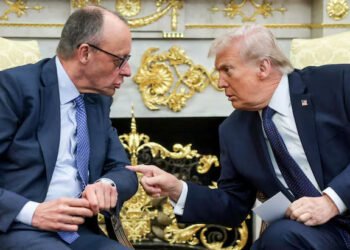 Trump orders US troop pullout from Germany
 Judge halts deportation of Yemeni refugees in US
 Trump likens US Navy actions to ‘pirates’
 Trump approval plunges amid Iran war fears
 Giuliani hospitalised in critical condition
 Ohio’s Battle for Trust: Democrats Vying to Flip the Buckeye State
 Trump Threatens UN Budget Cuts as US Pushes ‘Trade Over Aid’ Agenda
 Trump warns Iran as Middle East tensions surge again
 US ‘Narco Boat’ Strikes Draw Global Outcry
 Indiana Republicans Defy Trump in Key Vote Test
 US Court Restores Abortion Pill Access Temporarily
 Ohio Primaries Set Stage for Crucial Midterms
 Afghan Families Left in Limbo Face Risk of Deportation
 Tensions Emerge in Netanyahu-Trump Alliance
 US Awaits Iran Reply on New Ceasefire Proposal
 Hormuz Talks Near Critical Stage
 Trump’s Revenge Drive Deepens GOP Divide
 Former ICC prosecutor condemns US sanctions
 Gunman Killed After White House Security Shootout
 Trump Claims Iran Peace Deal Near Completion
 US Midterm Primaries: Democrats Target Key Republican Seats
 House Curbs Trump’s War Powers in Rare Rebellion
 Mystery Grows Over Mitch McConnell’s Health
 Senate Halts Defense Bill Over Iran Clashes
 Trump Jokes, Jabs and Press Tensions at WHCA Dinner
 Houthis Strike Saudi Arabia as Middle East Tensions Rise
 Is America Ready for an AOC Presidential Run?
 Trump dismisses concerns over 250-day carrier deployment
 UK Must Act with Courage and Clarity on Israel-Palestine Conflict, Says Foreign Affairs Committee Report
 Radioactive Leak at UK’s Nuclear Warhead Base Sparks Outcry Over Safety and Secrecy
 Yvette Cooper Signals Global Momentum Towards Gaza Peace Deal Amid Humanitarian Crisis
 Russia’s Latest Push to Win US Favors Shows Deep Desperation
 BBC to Apologise Over Edited Trump Speech Amid Backlash
 Greene Pushes Epstein Files Amid Trump Fallout
 December Run-Off in Chile as Election Produces No Winner
 Shadow Fleet at Sea: Europe’s Battle Against Illicit Oil Shipping
 India’s COP30 Delay Raises Global Climate Concerns
 Georgians Defy Government Crackdown After Year of Protests
 Trump press secretary attacks reporter over ICE question
 South Korea Jails Ex-President in Martial Law Ruling
 Trump Fed bid heads to Supreme Court
 Pentagon Signals Reduced Role in Deterring North Korea
 Partial US Government Shutdown Hits Homeland Security Funding
 UK and US Drop in Global Corruption Index Rankings
 Canberra Poster Seizure Sparks Free Speech Row
 Evo Morales Returns After Mysterious Absence
 Jacinda Ardern Move Sparks Kiwi Reflection
 Injured Mojtaba Khamenei Elevated as Iran Leader
 Air Canada CEO Faces Outcry Over Recent Language Misstep
 Relationship with Trump may be beyond repair, Starmer warned
 Investigation Into Anti-Trump Motives After Gala Shooting
 Fear and Betrayal: The Chilling Case of Kouri Richins
 Discontent grows around Putin amid war strain
 US Courts Back Trump on Park Signage Removals
 Trump’s Mount Rushmore Speech: A Divisive Anniversary