Published: 16 June 2026. The English Chronicle Desk. The English Chronicle Online.
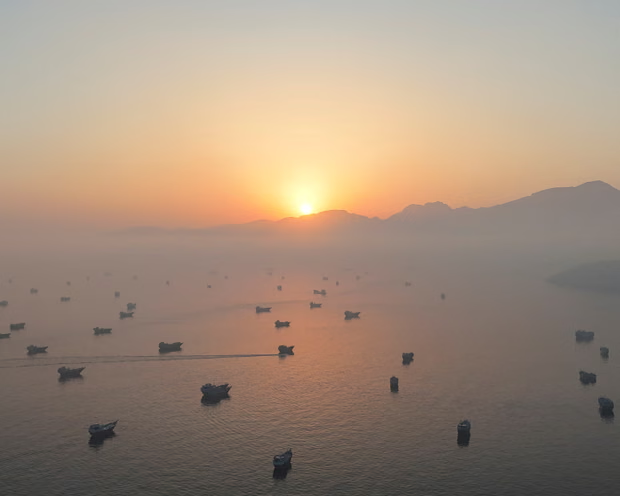
The global economy received a massive boost of optimism following a historic diplomatic breakthrough on Monday morning. Financial markets across Europe and Asia surged while global crude oil prices plummeted to monthly lows. This positive economic reaction followed the sudden announcement of a tentative peace agreement between Washington and Tehran. The initial memorandum of understanding aims to halt a devastating three-month war in the Middle East. At the very core of this breakthrough is the promised reopening of the Strait of Hormuz. This vital marine channel serves as the transit route for a fifth of global petroleum supply. The narrow waterway was abruptly closed by Iranian forces during the opening salvos of the conflict. That severe blockade triggered immediate panic across worldwide energy markets and heavily disrupted international supply chains.
The supreme national security council in Tehran issued a major public statement regarding the framework. Iranian officials declared that all active military operations on various fronts would cease permanently on Monday night. This broad suspension of hostilities reportedly extends to the intense conflict zones across southern Lebanon. Despite the widespread optimism on trading floors, the detailed terms of the compromise remain largely undisclosed. Diplomatic analysts warn that the current framework leaves several highly critical issues completely unresolved for now. Observers note that the planned reopening of the channel relies on parameters yet to be explained. Some prominent political commentators suggest the American president is merely correcting a crisis of his own making. The initial aggressive military stance from Washington contributed heavily to the initial closure of the waterway.
The path toward a finalized and lasting settlement remains filled with significant political and logistical hurdles. International diplomats are working tirelessly ahead of the official signing ceremony scheduled for Friday in Switzerland. This highly anticipated diplomatic event in Geneva represents a fragile culmination of months of secret mediation. Delegations from Pakistan and Qatar played instrumental roles in bridging the gap between the two adversaries. However, seasoned experts emphasize that the upcoming ceremony is far from a guaranteed success. The underlying text of the preliminary agreement reportedly contains numerous complex compromises and deliberate ambiguities. These diplomatic fudges were necessary to convince both nations to pause their destructive military campaigns. Therefore, navigating the remaining days until Friday will require immense caution from all involved parties.
Global shipping companies are watching the diplomatic developments with a mixture of hope and deep skepticism. The commercial maritime sector suffered immense financial losses during the 108 days of active naval blockades. Insurance premiums for cargo vessels transiting the wider Middle East region had skyrocketed to unprecedented heights. Initial reports indicate that a full restoration of commercial traffic could still take several weeks. Iranian state media indicated the physical reopening would occur within 30 days under local supervision. Simultaneously, the United States military must dismantle its extensive naval blockades currently restricting Iranian domestic ports. International trade bodies welcomed the news but urged commercial fleets to maintain high security alerts. The memory of recent missile and drone attacks on tankers keeps global shipping executives highly cautious.
The geopolitical pressure pushing both Washington and Tehran toward this compromise has grown immensely recently. Domestic economic strain in the United States has fueled rising public dissatisfaction with the costly conflict. Rising fuel prices at American pumps had created a challenging political environment for the current administration. On the other side, the Iranian population has endured severe economic hardship and heavy infrastructural damage. Intensive military strikes from combined American and Israeli forces heavily impacted key Iranian port facilities. Furthermore, traditional allies in the Persian Gulf placed immense pressure on Washington to end hostilities. These neighboring states feared long-term damage to their ambitious regional trade and tourism development plans. Consequently, both leadership teams realized that continuing all-out warfare would not achieve their political goals.
The incoming 60-day negotiation period will serve as the true test for this peace initiative. Once the preliminary memorandum is officially signed on Friday, the hardest diplomatic work will actually begin. The two nations must resolve incredibly contentious disputes regarding Tehran’s advanced uranium enrichment activities. Washington is reportedly demanding a 20-year moratorium on all sensitive Iranian nuclear research and development. Conversely, negotiators from Tehran are firmly resisting any long-term surrender of their domestic nuclear capabilities. The future boundaries of regional ballistic missile programs also remain a massive point of geopolitical friction. Additionally, the complex process of releasing billions of dollars in frozen Iranian assets requires careful implementation. Any sudden disagreement during these delicate talks could easily cause the entire ceasefire to unravel.
The position of regional powers adds another layer of dangerous uncertainty to the Swiss peace process. The government of Israel has expressed deep reservations about the rapidly advancing diplomatic framework in Geneva. Israeli forces currently occupy significant portions of Lebanese territory in their ongoing campaign against armed groups. The text of the American agreement apparently binds regional proxies to the immediate cessation of violence. However, whether these independent factions will fully comply with instructions from Tehran remains highly questionable. European leaders have voiced strong support for the diplomatic efforts while emphasizing the need for verification. British officials stated that attention must now shift entirely toward enforcing the terms of navigation. Ensuring the vital waterway remains permanently open is viewed as a top priority for Downing Street.
The ultimate success of the Geneva summit hinges entirely on real compliance rather than political rhetoric. The American president celebrated the initial announcement online by encouraging global shipping to resume operations immediately. Such triumphant statements contrast sharply with the cautious reality observed by maritime authorities in the region. Mines must be cleared from the narrow shipping lanes before deep-sea tankers can safely pass. This specialized technical process requires close cooperation between international navies and local Iranian coastal authorities. If any operational friction arises during the week, the scheduled Friday timeline could easily slip. The international community remains collectively holding its breath as the delicate diplomatic countdown toward Friday continues. Global stability depends heavily on whether this ambiguous compromise can successfully transform into a genuine peace.
Related News:
 UK Banks Granted Reprieve as BoE Delays Basel III Capital Rules Until 2028
 Singapore Corruption Scandal: Details Emerge on Iswaran’s Luxury Flight and Ties to Tycoon Ong Beng Seng
 Corfu Beyond the Crowds: Discovering Serenity in Southern Villages and Hidden Taverns
 Zelenskyy Signs Fighter Jet Deal Amid Russian Drone Attacks
 Sundar Pichai Cautions on AI Hype and Market Risks
 Shadow Fleet at Sea: Europe’s Battle Against Illicit Oil Shipping
 Snow and Ice Cause Travel Chaos in North Yorkshire
 Director Michael Caton-Jones Reflects on Career and Beginnings
 Inside the Helpline Protecting Missing Children in the UK
 PlayStation PS5 Deals Hit Lowest Prices Ahead of Black Friday
 US Suspends Afghan Immigration After White House Shooting
 Five-Year-Old Dies After Rare Tonsil Surgery Complication
 Starmer Says Labour’s Economic Plan Needs Years to Deliver
 ‘Extinct’ Antelope Returns to Sahara, Bringing Hope
 IndiGo Cancels Hundreds of Flights Amid Pilot Shortages
 Young Britons Face Heaviest Burden from Ageing Population, Lords Warn
 U‑Turn on Farmers’ Inheritance Tax Sparks Political Firestorm
 Aston Villa Remain Arsenal’s Key Obstacle in Title Pursuit
 Irish Beach Tragedy: Irish Drown at Whitehaven Beach in Australia
 Starmer Faces Parliamentary Battles Over UK-EU ‘Reset’ Plan
 Met Police Vetting Failures Let Serial Rapists Remain
 Federal Immigration Shift: Officers Leave Louisiana for Minneapolis
 Fatal Bolton Taxi Crash Claims Three Teens and Driver
 Australia grants Asio powers to designate hate groups under new laws
 Friedman Uninvited From 2024 Adelaide Writers’ Week
 ScottishPower Tops List of Worst UK Energy Suppliers
 Judi Dench Champions Fight to Save London’s Green Spaces
 Crowborough Camp Welcomes First Asylum Seekers
 BBC Funding Crisis: Tim Davie Warns of Jeopardy Ahead
 ABC Facebook Page Briefly Hacked, Adult Photos Posted
 Artificial intelligence will cost jobs, admits Liz Kendall
 Older Women Vanish from BBC Screens, Review Confirms Bias
 Meta trial over child exploitation claims begins
 Streeting moves on doctor pay to end strike dispute
 Ben Stokes injury joke after brutal ball strike
 UK and US Drop in Global Corruption Index Rankings
 Send spending gap leaves deprived areas behind
 Hidden Crisis: Domestic Abuse Suicide Toll in UK
 UK Unemployment Rate Climbs to 5.2% Peak
 Canberra Poster Seizure Sparks Free Speech Row
 BBC World Cup Presenting Duties Shared Among Trio
 Wales Approves Assisted Dying Bill Consent
 CPS Updates Guidance on Honour-Based and Dowry Abuse
 Stewart Brand on Musk, Bezos and a Life of Long Thinking
 English Cricket Faces Moral Crisis Over Indian Investment
 Wes Streeting faces narrow road to Labour members’ favour
 Keir Starmer Struggles to Secure His Grip on Downing Street
 Trump and Xi Convene in Beijing for Historic High-Stakes Summit
 Farage Faces Standards Probe Over Cash Property Purchase
 Closing the Gap: UK Pensions Commission Demands Action
 Reality TV Under Scrutiny Following Serious Allegations
 UK Eases Russian Oil Sanctions as Fuel Costs Soar
 Alice Capsey Sparks England Win With Brilliant Fifty
 Maldives Cave Diving Tragedy Raises Safety Alarm
 Russian Electronic Attack Targets UK Defence Chief Jet
 UK Shoppers Face Prolonged Price Rises At Tills
 Tube Strike Brings Capital to a Standstill Over Shift Disputes
 Makerfield Voters Demand Real Change as Election Looms
 Man City Threaten Legal Action Over Haaland Real Madrid Shirt
 Celestial Waltz: Venus and Jupiter Meet at Twilight
 Abbott Signals Bold Strategy Change For Australian Right
 Ryanair Faces Probe Over Mandatory Family Seating Fees
 Britain’s Crowning Butterfly Takes the Nation by Storm
 Fifa Official Under Investigation Over Hand Gesture Controversy
 Trump Urged to Condemn UFC Fighter Over Obama Slurs
 The Fear Gap: Why Europe Feels Less Safe Than It Is
 US Military Pacific Boat Strike Kills Three People
 Dettol Apologises for ‘Toxic Men’ Advert Backlash in China
 UK Care Crisis: Row Explodes Over New Visa Settlement Rules
 Sainsbury’s Boss Optimistic As Grocery Inflation Eases
 US Advance Past Bosnia in World Cup Thriller
 Trump’s Mount Rushmore Speech: A Divisive Anniversary
 Trump’s Red-Card Intervention Hurts the US World Cup
 US Airman Avoids British Court in Indecent Exposure Case
 Britain’s Mini Fan Craze Sparks Major Waste Crisis
 Trump Swaps Planes Amid Iran Tensions
 Ann Widdecombe, Formidable Political Figure, Dies at 78
 UK Schools Struggle as Classrooms Top 40C
 Yemen Accuses Iran of Violating National Sovereignty
 Houthis Strike Saudi Arabia as Middle East Tensions Rise