Published: 24 June 2026. The English Chronicle Desk. The English Chronicle Online.
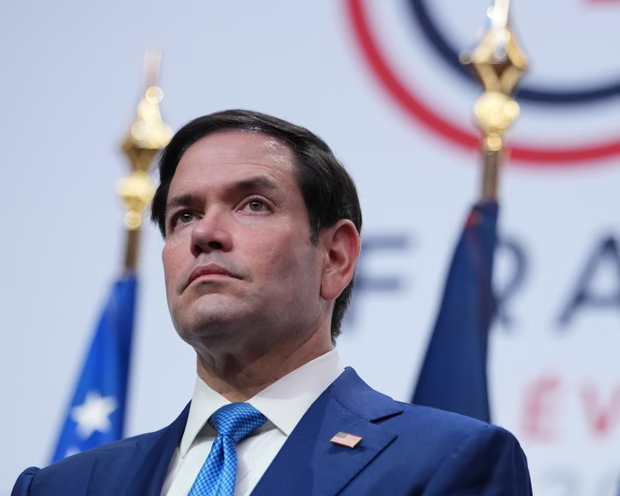
The United States secretary of state, Marco Rubio, has arrived in the crucial Gulf region with a very firm message. He stated that no nation, including Iran, will ever be permitted to collect shipping tolls in the strategic Strait of Hormuz. This critical water passage remains one of the most vital global shipping lanes for oil and international trade. The top American diplomat is currently visiting key allies to offer deep reassurances regarding regional security. He wants to prove that Washington will maintain a very strict position during upcoming peace negotiations.
This diplomatic mission comes immediately after a fragile sixty day ceasefire agreement was reached last week. Many Gulf nations feel deeply worried that the new deal might inadvertently embolden the Iranian government. Rubio arrived in Abu Dhabi on Tuesday afternoon to begin these highly sensitive security talks. He explicitly noted that the United States military would actively guarantee complete freedom of navigation. The secretary rejected claims from Tehran regarding their supposed legal right to charge transit fees. He strongly emphasized that international law protects all global waterways from independent national taxation.
The debate over shipping fees highlights one of many cracks in this historic ceasefire agreement. Severe concerns are growing rapidly that Iran will use newly unfrozen financial assets for military expansion. Furthermore, major contradictions have already emerged regarding the specific terms of the diplomatic pact itself. President Donald Trump publicised that Iran agreed to welcome back international nuclear inspectors very soon. However, official spokespeople from Tehran immediately and directly denied that any such inspectorial agreement exists.
Rubio also openly acknowledged the complicated security situation involving the powerful Hezbollah militant group in Lebanon. He stated that regional proxy groups must respect the current ceasefire terms without any exceptions. However, he noted that this specific problem would be addressed later during formal negotiations. The comprehensive ceasefire document signed last week allows for temporary toll free passage through the strait. After this period expires, Iranian and Omani officials plan to discuss long term maritime services.
That specific clause has caused intense worry among several cautious maritime observers and political experts. Some believe the vague phrasing does not entirely block Iran from demanding future service fees. Rubio strongly dismissed those fears, suggesting that Tehran will ultimately accept the open passage terms. He stated that every single country in the region fully shares the American perspective. Nevertheless, the wider Gulf community appears deeply divided over the actual utility of this deal.
While Qatar played an essential role in mediating the complex agreement, other neighbours remain fearful. The United Arab Emirates, Kuwait, and Bahrain worry that massive financial releases will fund weapons. The general mood among these specific traditional American allies is currently defined by deep anger. These countries want absolute legal certainty that no shipping tolls will ever be collected. Additionally, they desire strict future limits placed directly upon the Iranian ballistic missile programme.
Iranian President Masoud Pezeshkian responded by stating that missile capabilities would never be negotiated away. He argued that defensive missiles prevent foreign powers from destroying Iran like the Gaza strip. Meanwhile, Donald Trump announced that the unfrozen billions would remain under strict American banking control. He claimed the funds must be spent exclusively on agricultural goods and medical supplies. Rubio is scheduled to visit Kuwait and Bahrain next to continue these delicate discussions.
These specific host countries all contain massive, highly strategic American military bases within their borders. All three nations were unfortunately struck by advanced Iranian missiles during the recent intense conflict. The United States government has consistently declined to reveal the true scale of that damage. Furthermore, local authorities have imposed severe legal penalties on citizens sharing missile damage on social media. Trump recently disclosed that the United Arab Emirates assisted in launching secret counterattacks against Iran.
Consequently, Iranian officials stated they would document these hostile actions and demand full international accountability. They claim that the heavy American military presence brings only destruction to the entire region. Tehran hopes that neighbouring countries have learned valuable lessons from the hardships of recent months. The long term geopolitical goal for Iran remains persuading Gulf states to evict America entirely. However, a very fluid internal debate is currently happening within the political elite of Iran.
Some moderate Iranian voices are openly calling for a diplomatic rapprochement with their wealthy neighbours. They suggest forming a powerful new regional alliance with Turkey, Saudi Arabia, Pakistan, and Egypt. Highlighting this strategy, Pezeshkian flew directly to Pakistan on Tuesday for an important official visit. Interestingly, the United Arab Emirates also seems interested in defusing its tense relationship with Tehran. The Emirates maintains the closest economic and trading ties to Iran among all Gulf states.
In the immediate future, Iran expects to receive approximately six billion dollars of locked assets. This massive sum was previously frozen in Qatari banks due to strict American economic sanctions. Qatar has also agreed to provide an additional six billion dollars as a loan. Furthermore, the Iranian treasury will receive at least eight billion dollars from oil exports soon. This financial windfall is the direct result of a brand new American sanctions waiver.
The official Treasury document confirms that these lucrative oil payments can be processed in dollars. Internal estimates from Tehran suggest total annual oil revenues could easily exceed thirty billion dollars. Iran has historically bypassed economic blockades by selling heavily discounted crude oil directly to China. Recent shipping data indicates that maritime traffic through the strait is recovering very rapidly now. Monitoring agencies reported thirty six major vessels passed through the waterway on Monday alone.
This represents the highest single day traffic volume recorded since the start of March. Meanwhile, the chief Iranian negotiator is working closely with Oman on permanent management rules. These officials met directly with the Sultan of Oman in Muscat to coordinate strategy. Despite this progress, Washington and Tehran continue to argue over how the money is spent. The Iranian Central Bank governor stated they are not legally forced to buy American products. He insisted that future purchasing decisions will be based entirely on product quality and price.
Serious disputes also remain regarding the return of United Nations nuclear inspectors to damaged sites. Iranian authorities claim that much more diplomatic work is required to establish proper ceasefire monitors. The current memorandum states that all combatants must immediately terminate military operations on every front. This specific language appears designed to legally bind Israel to an end of hostilities. However, this could easily complicate a separate, American backed ceasefire deal reached in early June. That original agreement dictated that Israel and Lebanon must settle their disputes entirely independent of Iran.
Related News:
 UK Banks Granted Reprieve as BoE Delays Basel III Capital Rules Until 2028
 Singapore Corruption Scandal: Details Emerge on Iswaran’s Luxury Flight and Ties to Tycoon Ong Beng Seng
 Corfu Beyond the Crowds: Discovering Serenity in Southern Villages and Hidden Taverns
 Zelenskyy Signs Fighter Jet Deal Amid Russian Drone Attacks
 Sundar Pichai Cautions on AI Hype and Market Risks
 Shadow Fleet at Sea: Europe’s Battle Against Illicit Oil Shipping
 Snow and Ice Cause Travel Chaos in North Yorkshire
 Director Michael Caton-Jones Reflects on Career and Beginnings
 Inside the Helpline Protecting Missing Children in the UK
 PlayStation PS5 Deals Hit Lowest Prices Ahead of Black Friday
 US Suspends Afghan Immigration After White House Shooting
 Five-Year-Old Dies After Rare Tonsil Surgery Complication
 Starmer Says Labour’s Economic Plan Needs Years to Deliver
 ‘Extinct’ Antelope Returns to Sahara, Bringing Hope
 IndiGo Cancels Hundreds of Flights Amid Pilot Shortages
 Young Britons Face Heaviest Burden from Ageing Population, Lords Warn
 U‑Turn on Farmers’ Inheritance Tax Sparks Political Firestorm
 Aston Villa Remain Arsenal’s Key Obstacle in Title Pursuit
 Irish Beach Tragedy: Irish Drown at Whitehaven Beach in Australia
 Starmer Faces Parliamentary Battles Over UK-EU ‘Reset’ Plan
 Met Police Vetting Failures Let Serial Rapists Remain
 Federal Immigration Shift: Officers Leave Louisiana for Minneapolis
 Fatal Bolton Taxi Crash Claims Three Teens and Driver
 Australia grants Asio powers to designate hate groups under new laws
 Friedman Uninvited From 2024 Adelaide Writers’ Week
 ScottishPower Tops List of Worst UK Energy Suppliers
 Judi Dench Champions Fight to Save London’s Green Spaces
 Crowborough Camp Welcomes First Asylum Seekers
 BBC Funding Crisis: Tim Davie Warns of Jeopardy Ahead
 ABC Facebook Page Briefly Hacked, Adult Photos Posted
 Artificial intelligence will cost jobs, admits Liz Kendall
 Older Women Vanish from BBC Screens, Review Confirms Bias
 Meta trial over child exploitation claims begins
 Streeting moves on doctor pay to end strike dispute
 Ben Stokes injury joke after brutal ball strike
 UK and US Drop in Global Corruption Index Rankings
 Send spending gap leaves deprived areas behind
 Hidden Crisis: Domestic Abuse Suicide Toll in UK
 UK Unemployment Rate Climbs to 5.2% Peak
 Canberra Poster Seizure Sparks Free Speech Row
 BBC World Cup Presenting Duties Shared Among Trio
 Wales Approves Assisted Dying Bill Consent
 CPS Updates Guidance on Honour-Based and Dowry Abuse
 Stewart Brand on Musk, Bezos and a Life of Long Thinking
 English Cricket Faces Moral Crisis Over Indian Investment
 Wes Streeting faces narrow road to Labour members’ favour
 Keir Starmer Struggles to Secure His Grip on Downing Street
 Trump and Xi Convene in Beijing for Historic High-Stakes Summit
 Farage Faces Standards Probe Over Cash Property Purchase
 Closing the Gap: UK Pensions Commission Demands Action
 Reality TV Under Scrutiny Following Serious Allegations
 UK Eases Russian Oil Sanctions as Fuel Costs Soar
 Alice Capsey Sparks England Win With Brilliant Fifty
 Maldives Cave Diving Tragedy Raises Safety Alarm
 Russian Electronic Attack Targets UK Defence Chief Jet
 UK Shoppers Face Prolonged Price Rises At Tills
 Tube Strike Brings Capital to a Standstill Over Shift Disputes
 Makerfield Voters Demand Real Change as Election Looms
 Man City Threaten Legal Action Over Haaland Real Madrid Shirt
 Celestial Waltz: Venus and Jupiter Meet at Twilight
 Abbott Signals Bold Strategy Change For Australian Right
 Ryanair Faces Probe Over Mandatory Family Seating Fees
 Britain’s Crowning Butterfly Takes the Nation by Storm
 Fifa Official Under Investigation Over Hand Gesture Controversy
 US Trafficking Arrest Exposes Shocking Exploitation
 Trump Signs Landmark Iran Accord in Versailles
 Grief and Devotion Amidst the Rubble of Nabatieh
 Dettol Apologises for ‘Toxic Men’ Advert Backlash in China
 UK Care Crisis: Row Explodes Over New Visa Settlement Rules
 Sainsbury’s Boss Optimistic As Grocery Inflation Eases
 US Advance Past Bosnia in World Cup Thriller
 Trump’s Mount Rushmore Speech: A Divisive Anniversary
 Trump’s Red-Card Intervention Hurts the US World Cup
 US Airman Avoids British Court in Indecent Exposure Case
 Britain’s Mini Fan Craze Sparks Major Waste Crisis
 Trump Swaps Planes Amid Iran Tensions
 Ann Widdecombe, Formidable Political Figure, Dies at 78
 UK Schools Struggle as Classrooms Top 40C
 Yemen Accuses Iran of Violating National Sovereignty
 Houthis Strike Saudi Arabia as Middle East Tensions Rise