Published: 19 June 2026. The English Chronicle Desk. The English Chronicle Online.
The modern international arena frequently revisits the painful ghosts of past diplomatic crises. Donald Trump currently faces a defining political moment that mirrors a historic American trauma. His initial engagement with global affairs began during the tumultuous 1979 Tehran embassy siege. Iranian revolutionaries held fifty-two American diplomats captive for four hundred and forty-four days. That pivotal event established four decades of bitter hostility between Washington and Tehran. It also deeply shaped the early political outlook of a young New York businessman.
During that era, the American public felt a profound sense of national humiliation. The nightly news broadcasts constantly reminded the population of the ongoing hostage crisis. In October 1980, the prolonged standoff became an exhausting national trauma for America. President Jimmy Carter appeared entirely powerless against the unyielding demands of Iranian revolutionaries. Trump expressed his deep frustration during a famous television interview with Rona Barrett. He argued that the crisis demanded an immediate and decisive military invasion response. The future president called the ongoing captivity an absolute horror for the nation. He claimed that other global powers would never tolerate such humiliating diplomatic treatment. Within weeks, voters rejected Carter in a historic landslide victory for Ronald Reagan. The American public clearly sought a stronger leader to restore national pride and power.
Nearly five decades later, those vivid historical memories still influence American foreign policy decisions. Trump recently made the fateful decision to launch extensive military strikes against Iran. He confidently predicted a swift and decisive victory against the deeply entrenched Islamic regime. Instead, the military campaign rapidly evolved into a highly complex and uncontrollable conflict. The president explicitly referenced the 1979 hostage crisis during his opening war address. He used past grievances to justify a campaign that surprised the American public. Trump repeatedly used Carter as an example of weak and ineffective presidential leadership. He vowed never to let a secondary power dictate terms to a strong America.
The current geopolitical reality has proven far more difficult than the administration expected. Initial strategic calculations failed to account for the resilience of the Iranian military apparatus. Yet three months after launching his war, Trump faces an incredibly familiar dilemma. Massive political costs prevent the deployment of American ground troops in the region. Without ground forces, overwhelming American military superiority remains largely ineffective and completely neutralized. This strategic paralysis closely resembles the failure of Carter’s desert rescue mission long ago. Trump now occupies the exact role of foil for an embattled regional theocracy. The Iranian regime uses American aggression to distract from its serious domestic problems.
The original embassy siege was carefully designed to protect a fragile new revolutionary government. Ayatollah Ruhollah Khomeini successfully utilized the crisis to consolidate his domestic political power. Similarly, the current conflict provides renewed political legitimacy for the current Iranian regime. The recent military campaign caused approximately seventeen hundred civilian casualties across the country. It also destroyed critical infrastructure, sparking deep resentment among ordinary Iranian citizens. This widespread destruction united a population that previously protested against its own government.
The internal dynamics of the Islamic Republic have shifted dramatically due to foreign intervention. Last January, the regime faced massive internal demonstrations and an existential survival crisis. Citizens were demanding sweeping political reforms and expressing anger at the ruling religious elite. Following the targeted strikes on February twenty-eighth, Trump urged Iranians to revolt immediately. He delivered a televised address encouraging citizens to overthrow their regional religious leaders. However, the terrified population declined to launch a new domestic uprising against Tehran. Trump quickly altered his diplomatic approach after the death of Ayatollah Ali Khamenei. He expressed a strong willingness to negotiate with the supreme leader’s young successor. Mojtaba Khamenei is widely viewed as a much more uncompromising and rigid figure. Trump has transformed from an active regime changer into an involuntary political validator.
A new memorandum of understanding clearly illustrates this dramatic shift in Washington’s policy. The official text outlines mutual respect for national sovereignty and territorial integrity. Both nations officially pledge to avoid interfering in each other’s internal affairs. This specific language directly satisfies Tehran’s long-standing demands for formal security guarantees. The sudden diplomatic shift left the Iranian diaspora community in complete and total bewilderment. Many activists previously praised Trump for his uncompromising stance against the Islamic Republic. They had rejected Barack Obama’s nuclear agreement as a dangerous concession to tyrants. Prince Reza Pahlavi recently criticized the administration for delivering highly confusing political signals. He noted that the shifting American strategy baffled observers throughout the entire world.
The domestic political fallout within the United States continues to intensify every week. The external criticism remains minor compared to the anger within Trump’s political base. Non-interventionist supporters view the conflict as a betrayal of core campaign promises. They expected the president to avoid costly and endless Middle Eastern military adventures. Meanwhile, traditional Republican hawks view the new agreement as a sign of weakness. They believe Washington surrendered vital leverage over the Iranian nuclear program entirely. These deep divisions threaten the political unity of the conservative movement moving forward.
The administration must now endure harsh criticism from major domestic news outlets daily. Prominent editorials openly declare that the American military campaign has completely failed today. Trump risks appearing like an unsuccessful leader while Tehran celebrates a major victory. The sustainability of the recent memorandum depends on a strict sixty-day deadline. Both nations must negotiate a final settlement regarding uranium enrichment activities very soon. Deep mutual mistrust complicates these delicate talks between Washington and Iranian officials. Foreign Minister Abbas Araghchi fears the generous terms are a clever American trap. Speaker Mohammad Bagher Ghalibaf worries that military strikes could resume without any warning.
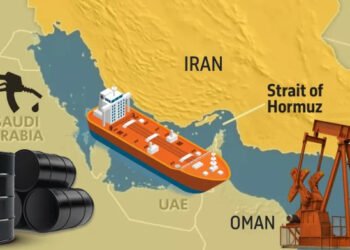
Historical precedents suggest that negotiating with Tehran carries immense political risk for presidents. Ronald Reagan nearly destroyed his presidency by trading weapons for American hostages in Beirut. Even George W Bush avoided direct military conflict despite his strong axis of evil rhetoric. Trump chose a much more aggressive path and now faces an uncertain future. Iranian leaders remain on high alert as they navigate this tense diplomatic standoff. They possess a powerful economic weapon through total control of the Hormuz strait. This critical maritime choke point can easily disrupt the entire global financial system. Decades after entering politics, Trump faces his own complex and dangerous hostage crisis. His immediate political fortunes now rest almost entirely in the hands of Tehran. It is an ironic situation that would feel deeply familiar to Jimmy Carter.
Related News:
 Shock US Raid: Maduro Pleads Not Guilty in Manhattan Court
 Machado Trump medal gesture reshapes Venezuela power struggle
 Trump Receives Machado’s Nobel Medal in White House Meeting
 Iran unrest slows under brutal crackdown and global tensions
 US Considers Asylum for British Jews Amid Rising Antisemitism
 Russia Strikes Kyiv and Kharkiv as Peace Talks Enter Day Two
 Thousands Protest ICE Operations in Nationwide US Day of Action
 Epstein Files Reveal Trump Officials’ Emails with Financier
 Thousands Protest ICE in New York Against Trump Deportation Campaign
 Yvette Cooper: UK Must Follow Principles, Not US Pressure
 US Calls Australia Media Law “Foreign Extortion”
 Oil Prices Surge Above $120 Amid Iran Blockade Fears
 Trump orders US troop pullout from Germany
 Activists allege abuse after Gaza flotilla seizure
 Global order shifts amid Trump-era turmoil
 Australia pushes Pacific security pact amid China tension
 Indiana Republicans Defy Trump in Key Vote Test
 Middle East Crisis Escalates as Oil Routes Shake Markets
 Tensions Emerge in Netanyahu-Trump Alliance
 Putin Declares Russia Victory at Scaled Victory Day Parade
 Zelenskyy warns over Oreshnik threat as Kyiv hit
 Discontent grows around Putin amid war strain
 Former ICC prosecutor condemns US sanctions
 Houthis Strike Saudi Arabia as Middle East Tensions Rise
 Taliban global ties grow as rights fears mount
 Seoul proposes historic peace talks to replace Korean War armistice
 BBC to Apologise Over Edited Trump Speech Amid Backlash
 Britain deploys RAF specialists to assist Belgium with drone threats
 Greene Pushes Epstein Files Amid Trump Fallout
 Trump Deploys DHS to Charlotte in Major Arrest Operation
 December Run-Off in Chile as Election Produces No Winner
 Canada Passes Carney’s First Budget in Tight Parliamentary Vote
 Shadow Fleet at Sea: Europe’s Battle Against Illicit Oil Shipping
 Georgians Defy Government Crackdown After Year of Protests
 Mandelson apologises over Epstein ties after public scrutiny
 Trump Policies Boost China’s Global Rise, Survey Finds
 Starmer Challenges US Over Controversial Greenland Deal
 Spoof “Make America Go Away” Caps Rally Denmark Over Greenland
 Pentagon Signals Reduced Role in Deterring North Korea
 UK and US Drop in Global Corruption Index Rankings
 Canberra Poster Seizure Sparks Free Speech Row
 Evo Morales Returns After Mysterious Absence
 The Dangerous Rise of Remigration Across Modern Europe
 Jacinda Ardern Moves To Australia Following Her US Fellowships
 Jacinda Ardern Move Sparks Kiwi Reflection
 Nick Greiner Warns Over Election Review Fallout
 New Zealand Covid Response Praised Despite Lingering Scars
 Injured Mojtaba Khamenei Elevated as Iran Leader
 Gordon Brown urges court for crimes against children
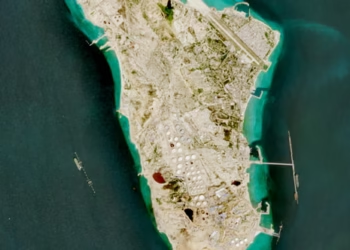 Oil Prices Jump After Trump Claims Iran Oil Hub Destroyed
 Pakistan Targets Militant Hideouts in Afghanistan
 Air Canada CEO Faces Outcry Over Recent Language Misstep
 Big Tech Faces Investigation Over Australia’s Social Media Ban
 Farage Shuns Truss as US Right-Wing Roadshow Hits London
 Relationship with Trump may be beyond repair, Starmer warned
 Italian Town Buys Mussolini Villa to Keep Away Fascist Fans
 Reform UK Pledges To Halt Visas Over Reparations Demands
 Trump and Tehran Find Common Ground in Landmark Ceasefire
 Suspected Plot Targets Pipeline Before Hungary Vote
 Trump Signals Hope for New Iran Talks as Ceasefire Fades
 Reeves Slams Trump Over Iran War Lack Of Exit Plan
 Trump Brokers Landmark Lebanon Ceasefire Amid Regional Hopes
 UK Stands Firm on Falklands Amid US Rift
 Investigation Into Anti-Trump Motives After Gala Shooting
 Trump approval plunges amid Iran war fears
 Japan Protests Erupt Over Plans to Revise Constitution
 US ‘Narco Boat’ Strikes Draw Global Outcry
 FIFA Confirms Global Ban for Benfica Star Prestianni
 One Nation Candidate’s Surprising Ties to Independents
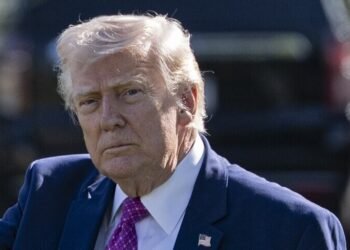 Trump Announces 3-Day Russia–Ukraine Ceasefire Deal
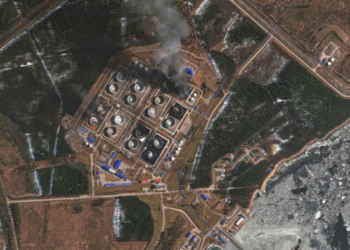 Putin Signals War End as Russian Momentum Stalls
 Fear and Betrayal: The Chilling Case of Kouri Richins
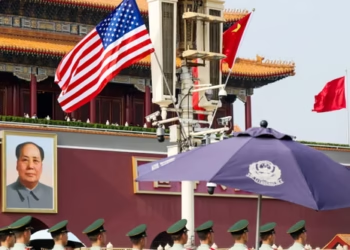 Scepticism and tight security as Beijing braces for Trump
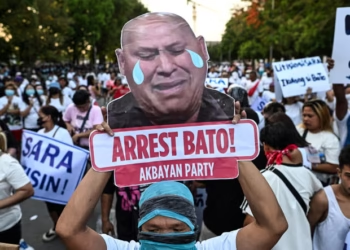 Philippine Senator Flees After Days Under Senate Siege
 Tony Abbott Returns as New Liberal Party President
 Farage and Reform UK Reshape British Politics
 Trump’s Mount Rushmore Speech: A Divisive Anniversary
 Le Pen to Run for President Despite Embezzlement Conviction
 Trump Swaps Planes Amid Iran Tensions
 Ukraine Creates Long-Range Strike Command