Published: 04 July 2026. The English Chronicle Desk. The English Chronicle Online
Iran has begun an unprecedented six-day state funeral for former Supreme Leader Ali Khamenei, with vast crowds gathering in Tehran as the Islamic Republic seeks to honour the man who led the country for nearly four decades. Authorities expect tens of millions of mourners to take part in ceremonies across Iran and neighbouring Iraq, making it one of the largest funeral events in the country’s modern history.
The funeral, which commenced at Tehran’s Grand Mosalla Mosque early on Saturday, follows months of political upheaval and military confrontation that culminated in Khamenei’s death during the opening phase of the conflict involving Iran, Israel and the United States. Iranian officials have portrayed the ceremonies not only as a farewell to their longest-serving leader but also as a demonstration of national unity, religious devotion and resistance against foreign adversaries.
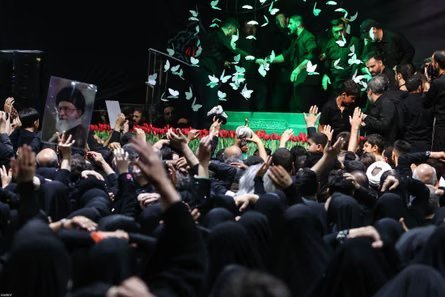
Thousands of mourners began arriving around the mosque throughout the night, many travelling from distant provinces by bus, train and private vehicles. By dawn, roads surrounding the vast prayer complex had become densely packed as families, students, clerics, veterans and supporters of the Islamic Republic waited patiently to enter the grounds. Men and women were directed into separate sections in keeping with religious customs observed during major state ceremonies.

Inside the mosque, mourners gathered around a raised platform carrying Khamenei’s coffin alongside the coffins of several members of his family who were reportedly killed during the same Israeli airstrike. Iranian state media described the deceased as martyrs, repeatedly emphasising their sacrifice while broadcasting continuous religious recitations, patriotic songs and messages calling for national resilience.
Many attendees were visibly emotional throughout the opening hours of the ceremony. Some recited verses from the Quran, while others wept openly during prayers led by senior clerics. Large portraits of Khamenei were displayed across the mosque, with mourners raising photographs above their heads as chants echoed throughout the complex. Iranian flags, black mourning banners and the yellow flags associated with Hezbollah could also be seen among the crowds.
The six-day funeral has been carefully organised to avoid dangerous overcrowding. Officials repeatedly urged mourners to leave the mosque after paying their respects so others could enter safely. Iran has experienced deadly crowd crushes during previous high-profile funerals, prompting authorities to introduce tighter crowd-control measures, wider security perimeters and staggered access throughout the ceremonies.
Beyond the mosque, Tehran has been transformed into a city of mourning. Streets are decorated with enormous banners praising Khamenei’s leadership and describing him as a martyr whose legacy will endure for generations. Temporary food stations have been established throughout the capital, providing free meals, tea, water, soup and traditional Iranian dishes to mourners. Charitable donation points have also been set up, allowing visitors to contribute electronically to religious and humanitarian causes in Khamenei’s memory.
Political symbolism has remained central to the funeral events. Posters distributed among the crowds carried messages pledging revenge for Khamenei’s assassination and condemning both Israel and the United States. Government officials have consistently framed his death as an attack not only on one individual but on Iran’s sovereignty and the wider Islamic world.
One of the most closely watched aspects of the funeral is the emergence of Khamenei’s son, Mojtaba Khamenei, who was selected by Iran’s Assembly of Experts to become the country’s new Supreme Leader following his father’s death. Mojtaba was reportedly injured in the same strike that killed several members of his family, and since assuming leadership he has remained largely absent from public view.
His limited public appearances have fuelled speculation regarding his health and the extent of his injuries. Apart from issuing several written statements, he has yet to address the nation directly. Iranian officials have offered few details regarding his medical condition, while international observers continue to monitor developments closely as he assumes leadership during one of the most challenging periods in the country’s recent history.
The funeral programme extends beyond Iran’s borders. Following requests from Iraqi political and religious leaders, Khamenei’s body is expected to be transported to the Shia holy cities of Karbala and Najaf. These locations hold profound religious significance for Shia Muslims worldwide and are expected to attract hundreds of thousands of additional mourners during the coming days.
The cross-border funeral procession underscores Iran’s longstanding religious, political and cultural ties with influential Shia communities across the Middle East. Officials hope the ceremonies will reinforce regional solidarity while highlighting Khamenei’s influence beyond Iran’s national boundaries.
International reaction to the funeral has remained divided. Iran’s allies have praised Khamenei’s leadership and condemned his assassination, while many Western governments have continued to focus on the broader regional conflict and the growing risks of further escalation. The events come against the backdrop of a fragile ceasefire following weeks of intense military confrontation involving Iran, Israel and the United States.
Within Iran itself, analysts suggest the funeral serves multiple purposes. Beyond mourning the death of a leader who governed the country for 37 years, the ceremonies provide an opportunity for the government to project stability at a moment of considerable uncertainty. Large public participation may also strengthen official claims that the nation remains united despite years of economic hardship, international sanctions and political divisions.
Nevertheless, observers note that Iranian society remains diverse in its political opinions. While the crowds attending the funeral overwhelmingly reflect supporters of the Islamic Republic and its religious leadership, many urban residents continue to hold differing views regarding the country’s political future. The government, however, appears determined to ensure the funeral stands as a powerful symbol of continuity, resilience and national identity.

Security across Tehran has been significantly strengthened throughout the ceremonies. Police, Revolutionary Guard personnel and emergency medical teams have been deployed in large numbers to protect participants and manage the expected influx of millions of visitors over the coming days. Roads surrounding key venues have been closed, while transportation services have been expanded to accommodate the unprecedented movement of mourners.
As Iran embarks on six days of remembrance, the funeral marks the end of one of the country’s most influential political eras while simultaneously opening a new chapter under fresh leadership. Whether remembered primarily as a deeply religious leader, a symbol of resistance or a highly controversial political figure, Ali Khamenei’s funeral is already becoming one of the largest and most consequential public ceremonies in the history of the Islamic Republic,
Related News:
 Houthis Strike Saudi Arabia as Middle East Tensions Rise
 Taliban global ties grow as rights fears mount
 Israeli Strike in Southern Lebanon Kills Seven
 Nine Killed in Karachi Consulate Protest
 UK Prepares Aircraft Carrier for Middle East Crisis
 Anti-Regime Iranians Turn Anger Toward Trump
 Southeast Asia Turns to Russia Amid Energy Crisis
 Activists allege abuse after Gaza flotilla seizure
 Australia pushes Pacific security pact amid China tension
 BJP Sweeps West Bengal in Historic Breakthrough
 Ceasefire Standoff Deepens in Ukraine War
 Middle East Crisis Escalates as Oil Routes Shake Markets
 Trump Announces 3-Day Russia–Ukraine Ceasefire Deal
 US Awaits Iran Reply on New Ceasefire Proposal
 One Nation Stuns Australia With Historic Farrer Win
 Putin Declares Russia Victory at Scaled Victory Day Parade
 Hormuz Talks Near Critical Stage
 Discontent grows around Putin amid war strain
 Dreyfus Statue Finally Gets Permanent Paris Home
 Venezuela Quake Death Toll Surpasses 4,000
 Seoul proposes historic peace talks to replace Korean War armistice
 Five Years of Taliban Rule Leave Afghanistan in Crisis
 Trump dismisses concerns over 250-day carrier deployment
 BBC to Apologise Over Edited Trump Speech Amid Backlash
 Britain deploys RAF specialists to assist Belgium with drone threats
 US Justice Department Files Lawsuit Against California Over Partisan Voting Maps
 Greene Pushes Epstein Files Amid Trump Fallout
 Trump Deploys DHS to Charlotte in Major Arrest Operation
 December Run-Off in Chile as Election Produces No Winner
 Canada Passes Carney’s First Budget in Tight Parliamentary Vote
 Shadow Fleet at Sea: Europe’s Battle Against Illicit Oil Shipping
 Pentagon Officials in Ukraine to Discuss War End
 Venezuela Threatens Nobel Winner Machado with Fugitive Status
 Georgians Defy Government Crackdown After Year of Protests
 EU plans $105bn Ukraine aid using frozen Russian assets
 Trump Policies Boost China’s Global Rise, Survey Finds
 Iran unrest slows under brutal crackdown and global tensions
 Pentagon Signals Reduced Role in Deterring North Korea
 Thousands Protest ICE Operations in Nationwide US Day of Action
 Starmer Condemns ‘Depraved’ Russian Strikes on Ukraine
 Herzog visit sparks protests across Australian cities
 UK and US Drop in Global Corruption Index Rankings
 Tarique Rahman’s Rise Toward Bangladesh’s Top Job
 Canberra Poster Seizure Sparks Free Speech Row
 Evo Morales Returns After Mysterious Absence
 AFP Reviews Pauline Hanson Comments
 Duterte ICC Hearing Begins Amid Defiance
 Trump Tariffs Threat Spark UK and EU Alarm
 The Dangerous Rise of Remigration Across Modern Europe
 Jacinda Ardern Moves To Australia Following Her US Fellowships
 US to offer passport services in West Bank settlements
 Jacinda Ardern Move Sparks Kiwi Reflection
 Nick Greiner Warns Over Election Review Fallout
 Iran Defiance Grows Amid US-Israel War Pressure
 Injured Mojtaba Khamenei Elevated as Iran Leader
 Gordon Brown urges court for crimes against children
 Oil Prices Jump After Trump Claims Iran Oil Hub Destroyed
 Pakistan Targets Militant Hideouts in Afghanistan
 Danish Election Deadlock Shakes Frederiksen’s Grip
 Air Canada CEO Faces Outcry Over Recent Language Misstep
 Pope Rebukes Leaders for War as Middle East Tensions Rise
 Army Probes Apache Flyover at Kid Rock’s Nashville Estate
 Relationship with Trump may be beyond repair, Starmer warned
 Italian Town Buys Mussolini Villa to Keep Away Fascist Fans
 Report Says Pezzullo Acted ‘Recklessly’ in Dealings
 Trump Employs Nixon’s Madman Theory Amid Iran Crisis
 Suspected Plot Targets Pipeline Before Hungary Vote
 Trump Brokers Landmark Lebanon Ceasefire Amid Regional Hopes
 UK Stands Firm on Falklands Amid US Rift
 Oil Prices Surge Above $120 Amid Iran Blockade Fears
 Trump orders US troop pullout from Germany
 Trump approval plunges amid Iran war fears
 Ohio’s Battle for Trust: Democrats Vying to Flip the Buckeye State
 US ‘Narco Boat’ Strikes Draw Global Outcry
 Maldives Cave Diving Tragedy Raises Safety Alarm
 Farage and Reform UK Reshape British Politics
 Starmer Leadership Under Pressure After Setbacks
 Le Pen to Run for President Despite Embezzlement Conviction
 Ukraine Creates Long-Range Strike Command
 Le Pen’s Popularity Holds Despite Conviction