
Published: 10 July 2026. The English Chronicle Desk. The English Chronicle Online.
The recent death of a promising young Treasury employee has sparked national debate. Chloe Moffat, twenty-six, took her own life following a stressful disciplinary meeting. Her grieving mother now demands fundamental changes to how the government manages staff. The inquest held at the Surrey coroners’ court highlighted several concerning departmental failures. Chloe served as a dedicated personal assistant at the Treasury for three years. She maintained an exemplary employment record throughout her time within the civil service. Colleagues described her as hardworking, diligent, and deeply committed to her daily duties. She was even due for a promotion and an official performance bonus payment. Tragically, she never received news of this professional recognition before her untimely passing. The inquest revealed that Chloe felt intense distress during a sudden workplace meeting. She was confronted with an anonymous complaint regarding her management of director emails. Officials did not inform her of the meeting agenda before she arrived there. The senior managers present refused to allow a supportive friend to attend accordingly.  They argued that such presence would make the proceedings feel far too formal overall. Chloe repeatedly asked for her best friend during this highly difficult work encounter. Her requests were denied, leaving her feeling isolated, vulnerable, and truly profoundly alone. Managers testified that they withheld information to prevent what they called unnecessary staff stress. This decision backfired, as Chloe became convinced her bright career was already over. She texted her friend shortly after the meeting expressing fears of being fired. The two met in St James’s Park, where Chloe broke down crying openly. She worried immensely about the potential reputational damage caused by these serious, unproven allegations. Friends remembered her as someone who took immense pride in her professional tasks. She was known for solving complex problems and never making a significant work mistake. The Treasury managers involved maintained that they followed the guidance they were given. However, the coroner questioned why Chloe was not offered formal union representative support. The response from management suggested a misunderstanding of the gravity of the situation. They claimed that offering such support might have made the meeting seem overly serious. This perspective has drawn sharp criticism from the family and the wider public. Anne Moffat, Chloe’s mother, argues that the current sequence of events was clear. She believes her daughter would be alive today if she received better support. Proper advice regarding her legal rights could have mitigated her extreme mental distress. Chloe felt devastated because she was not reassured about her long-term job security. The Treasury has confirmed they are now piloting new advice for staff members. They are also implementing additional training for managers involved in sensitive disciplinary matters. Yet, the family remains concerned that these changes might be far too late. Anne Moffat is calling for mandatory mental health assessments during all disciplinary processes. She insists that allegations of gross misconduct must be handled formally from inception. Accused employees should be fully informed of their legal rights at every stage. Transparency is essential for protecting the welfare of dedicated civil servants everywhere today. The Treasury has acknowledged these tragic events through their legal representation in court. They stated that managers are now receiving more robust training for future proceedings. However, some managers maintained that they did everything possible with the available information. They claimed that telling an employee their job was safe was fundamentally unhelpful. This specific sentiment has caused deep pain for the grieving Moffat family members. They believe a simple dose of humanity could have saved their beloved daughter’s life. The inquest serves as a stark reminder of the duty of care owed. Employers must prioritize the psychological safety of their workers during stressful internal investigations. Administrative procedures should never override the basic human need for support and clarity. Chloe Moffat’s legacy should be a safer and more compassionate workplace for everyone. The government must ensure that no other family suffers such a devastating loss. Change must be swift, thorough, and centered on the humanity of each employee. The Treasury now faces significant pressure to reform its internal disciplinary cultural norms. Public trust depends on the government demonstrating a genuine commitment to staff wellbeing. Future inquests must not reveal such heartbreaking lapses in basic empathetic management judgment. We must learn from this tragedy to prevent future harm within public institutions. Protecting workers is not just an administrative duty; it is a moral imperative. Chloe Moffat’s memory deserves a legacy of meaningful and lasting workplace institutional change.
  The English Chronicle will continue to monitor the implementation of these new policies. It is vital that the government remains accountable for its internal management practices. Ensuring that staff feel safe is paramount for any healthy professional working environment. We hope that the Treasury’s new pilot scheme brings the necessary improvements. The family’s plea for justice and reform represents a broader call for empathy. We must treat every employee with the dignity and respect they truly deserve. Only then can we hope to avoid the repetition of such terrible tragedies. Professionalism and compassion must coexist within every single government department and office. The nation watches closely as these important changes are slowly put into practice. Every worker is an individual who deserves care, kindness, and proper professional guidance. Let us move forward with a renewed dedication to human-centric workplace management principles. Lessons must be learned from the loss of a life so full of promise. May Chloe Moffat’s voice continue to inspire a better standard of institutional care. Her mother’s bravery in seeking these reforms will help many future civil servants. It is time for the government to lead by setting a better example. Professional standards should never come at the cost of an employee’s mental health. We owe it to Chloe to build a more humane and supportive future. Fairness, justice, and kindness must guide our public institutions into the coming years. Only then can we ensure that workplace proceedings never again result in heartbreak.
Related News:
 Green Party Surges Past Labour in Latest UK Poll
 Trump’s UK Ambassador Urges North Sea Drilling to Strengthen US Ties
 French Taxi Driver Cleared in David Lammy Theft Case After Fare Dispute
 Millionaires group urge Reeves to introduce wealth tax to ‘lift kids out of poverty’
 Starmer Faces Growing Dissent as Labour MPs Weigh Leadership Challenge
 Reeves rejects £1bn plea for NHS redundancy payouts
 PM Condemns Leaks, Vows Loyalty to Ministers and Stability
 Major Rent Reform Ends No-Fault Evictions in England
 Peers Flood Assisted Dying Bill with 942 Amendments
 Most Tories Expect to Support a Farage-Led Government
 Starmer Says Labour’s Economic Plan Needs Years to Deliver
 Culture secretary to review Telegraph takeover by Daily Mail owner
 UK Government Borrowing Drops to £11.6bn in December
 Labour Blocks Burnham as Party Rift Deepens Ahead of Polls
 Andy Burnham and the Labour Rift Over Power and Leadership
 Huge mistake: Labour blocks Burnham from byelection bid
 Artificial intelligence will cost jobs, admits Liz Kendall
 Labour targets Greens on drugs in Gorton Denton byelection
 Greens nominate Hannah Spencer for Gorton and Denton byelection
 Mandelson Faces Police Inquiry Over Epstein Leak
 Starmer Condemns ‘Depraved’ Russian Strikes on Ukraine
 Labour Thinktank Row Deepens Over Journalist Probe Claims
 Morgan McSweeney downfall shocks Labour leadership
 Labour Lord Doyle Apologises Over Paedophile Ties in Political Storm
 Cabinet Secretary Shake-Up Triggers Due Diligence Warning
 Starmer Faces Inquiry Calls Over Thinktank Probe
 Royal Mail Delivery Crisis Deepens Amid Weather Chaos
 UK shelves £110m border project amid trade strain
 Farage Unveils Reform UK Frontbench Team
 California Democrats Vow Trump Reckoning
 Trump Tariffs Threat Spark UK and EU Alarm
 Wales Approves Assisted Dying Bill Consent
 UK EU Trade Reset Gains Public Backing
 Your Party leadership fight nears dramatic end
 NHS Maternity Units Cover Up Harmful Childbirth Errors
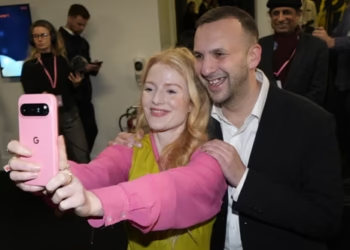 Green Party Stuns Labour in Gorton and Denton Byelection
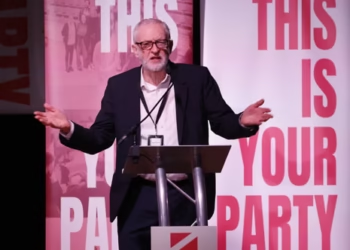 Corbyn Leads Your Party in Coordinated Left-Flank Strategy
 Labour Together scandal sparks clean break vow
 Asylum Seekers to Work After Year-Long Wait
 Starmer Row as Greens Demand Apology
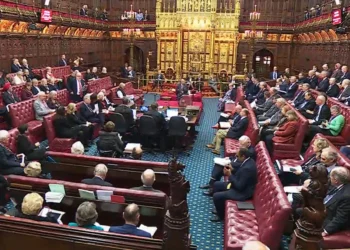 Proposed Law Leaves Gap for Children of Convicted Paedophiles
 Gordon Brown urges court for crimes against children
 Starmer Praised for Stance on Trump and Iran Conflict
 Inquiry into HMRC child benefit errors launched by NAO
 NHS Plans to Cut Overseas Workers Labeled Overambitious
 Farage Faces Backlash Over Crypto Cameo Endorsements
 Family Court Reform Promises New Era for UK Families
 Army Probes Apache Flyover at Kid Rock’s Nashville Estate
 Relationship with Trump may be beyond repair, Starmer warned
 Unions Raise Concerns Over Doctors’ Pay Dispute
 UK Government Poised to Revive Stalled Hillsborough Law
 Starmer Faces Commons Test Over Mandelson Scandal
 UK Stands Firm on Falklands Amid US Rift
 Crackdown Backfires on UK Climate Protesters
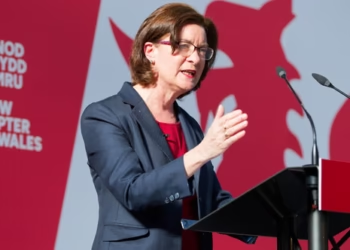 Welsh Labour Faces Potential Historic Election Defeat
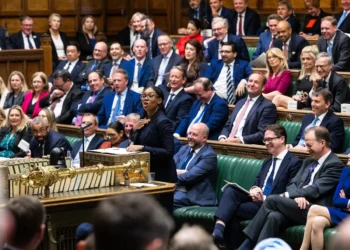 Starmer Survives Mandelson Rebellion
 Silent Tracks: Rail Line Without Passengers
 Major test for Labour as polls open in Great Britain
 Labour Members Doubt Starmer Future as Burnham Leads Poll
 Reform UK Faces Crisis as Newly Elected Councillors Resign
 Keir Starmer Struggles to Secure His Grip on Downing Street
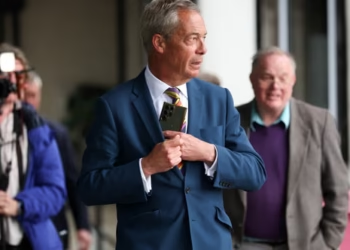 Farage Faces Standards Probe Over Cash Property Purchase
 Secret Role of UK Security Services in Troubles Amnesty Law
 Farage and Reform UK Reshape British Politics
 Starmer Leadership Under Pressure After Setbacks
 Minister Criticises Police Guidance Amid Southampton Protests
 Makerfield Voters Demand Real Change as Election Looms
 The Hidden Crisis Eroding Trust in British Communities
 Deepfake Abuse on X Sparks Safety Concerns for Dissidents
 UK Ministers Lobby Trump Over Under-16s Social Media Ban
 Labour MP Revives Blocked Assisted Dying Bill in Commons
 Starmer Resolves to Fight Burnham in Leadership Battle
 Starmer Set to Announce Exit Plan as Burnham Eyes No 10
 Hollie Ridley to Step Down as Labour General Secretary
 Jarvis Urges Burnham to Secure 3.5% Defence Spending
 Farage Warns Sky News Following Financial Inquiry
 Reform UK Finances Face Deep NCA Probe
 Burnham Pledges New Era of Open Debate for Labour MPs
 Ann Widdecombe, Formidable Political Figure, Dies at 78
 Sadiq Khan Backs Call for Maximum UK Work Heat Limit