Published: 20 July 2026 | The English Chronicle Desk | The English Chronicle Online
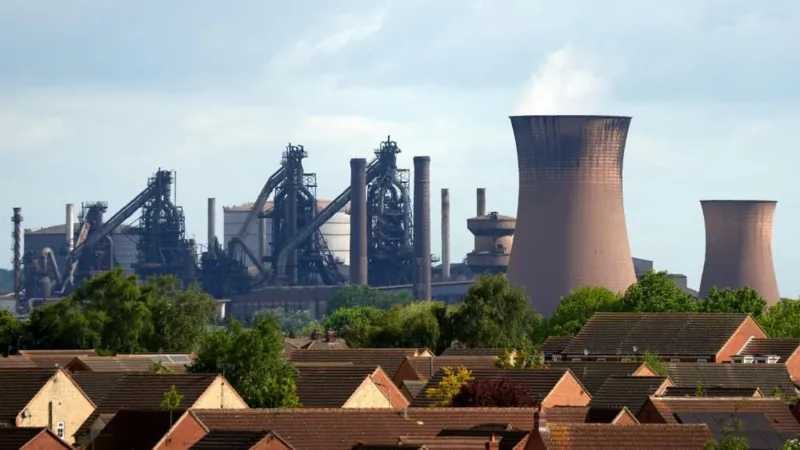
The Chinese company that previously owned British Steel has reportedly begun seeking compensation from the UK government following the decision to bring the steelmaker into public ownership, opening a potentially significant legal and diplomatic dispute between London and Beijing.
The compensation claim comes after the British government announced the nationalisation of British Steel, arguing that state intervention was necessary to protect thousands of jobs, secure domestic steel production and safeguard infrastructure considered critical to the country’s long-term economic and national security interests.
The development has added a new dimension to already strained UK-China relations, with legal experts suggesting the dispute could take months or even years to resolve.
The Chinese-owned parent company has indicated that it intends to pursue financial compensation for losses resulting from the government’s takeover of British Steel.
Representatives argue that the nationalisation deprived the company of valuable assets and investments, and that any government acquisition should be accompanied by fair financial reimbursement.

While the exact amount being sought has not been publicly confirmed, analysts believe the claim could involve hundreds of millions of pounds depending on how assets and future business prospects are valued.
The company is expected to rely on both UK law and relevant international investment agreements in support of its position.
The UK government has defended the nationalisation, describing it as an essential measure to protect one of Britain’s most strategically important industries.
Ministers argued that allowing British Steel to collapse could have endangered thousands of direct and indirect jobs while increasing the country’s dependence on imported steel.
Steel remains a vital material for major infrastructure projects, defence manufacturing, rail networks, energy facilities and construction.
Officials have repeatedly emphasised that maintaining domestic steelmaking capacity is a matter of national resilience as well as economic policy.
The decision to nationalise British Steel received broad political backing from supporters who viewed the intervention as necessary to secure the future of the industry.
Trade unions welcomed the move, saying it protected skilled employment and preserved industrial expertise that would be difficult to replace.
Many manufacturing groups also argued that a reliable domestic steel sector remains essential for Britain’s industrial strategy.
Supporters contend that government ownership provides an opportunity to modernise production facilities while investing in greener steelmaking technologies.
Chinese officials have criticised the takeover, arguing that foreign investors should receive equal treatment and legal protection.
The compensation claim reflects broader concerns about the security of overseas investments in the United Kingdom.
Beijing has previously urged Britain to provide a predictable investment environment for international companies operating in the country.
The dispute may become another point of tension in an already complicated relationship between the two governments, which have disagreed on issues including trade, technology and national security.
Investment specialists say compensation disputes following nationalisation are not uncommon.
Governments generally have the authority to acquire private assets for public purposes, provided appropriate legal procedures are followed.
However, disagreements frequently arise over how much compensation should be paid and how the value of affected businesses should be calculated.
Lawyers suggest the British Steel case could involve complex negotiations or formal arbitration depending on the legal framework governing the investment.
Since entering public ownership, British Steel has continued operating while the government develops a long-term strategy for the company.
Officials have pledged to improve productivity, modernise manufacturing facilities and strengthen the competitiveness of the business.
The government has also expressed support for investment in lower-carbon steel production as part of Britain’s wider environmental objectives.
Industry observers say future investment decisions will be crucial if British Steel is to compete effectively in an increasingly challenging global market.
Steel manufacturing remains a cornerstone of modern industrial economies.
The sector supports construction, transport, defence, renewable energy and heavy manufacturing while employing thousands of highly skilled workers.
Many governments regard domestic steel production as strategically important because supply disruptions can affect major national infrastructure projects.
Recent geopolitical tensions and supply chain challenges have further strengthened arguments for maintaining domestic industrial capacity.
The compensation dispute could influence future foreign investment decisions in the UK.
International investors often examine how governments treat overseas-owned assets when assessing investment risk.
Economic analysts note that balancing national security priorities with maintaining investor confidence is becoming increasingly important for many countries.
Governments across Europe and North America have adopted stricter approaches to foreign ownership in sectors considered strategically sensitive.
Beyond the legal process, the case could have broader diplomatic consequences.
Britain and China maintain significant trade and investment ties despite growing political differences.

Both governments may seek to prevent the commercial dispute from affecting wider economic cooperation.
Diplomatic engagement is expected to continue alongside any legal proceedings as both sides attempt to manage the issue.
The Chinese company’s decision to seek compensation following the nationalisation of British Steel marks the beginning of what could become a lengthy legal and political process.
While the UK government maintains that public ownership was necessary to protect national interests and secure the future of domestic steel production, the former owner argues it deserves fair compensation for the loss of its investment.
As negotiations and possible legal proceedings unfold, the outcome could shape not only the future of British Steel but also the wider relationship between government intervention, foreign investment and industrial policy in the United Kingdom.
Related News:
 US Will Not Back Out of Tariff Deals with UK and Others, Says Trump Trade Representative
 How to Exit Your Broadband Contract Without Paying Exit Fees
 Chancellor Rachel Reeves Pushes for Sweeping Changes to Environmental Protections to Accelerate Development
 Inflation Latest: Cost of Living Expected to Rise Again in Key Figures Released Today
 Retail Sales See Uptick Amid Errors and Delays as ONS Faces Scrutiny
Shein UK Faces Allegations of Shifting Majority of Profits to Singapore to Reduce UK Tax
Retail Sales See Uptick Amid Errors and Delays as ONS Faces Scrutiny
Shein UK Faces Allegations of Shifting Majority of Profits to Singapore to Reduce UK Tax
 Jaguar Land Rover Extends Production Halt Following Cyber-Attack
 Great Britain’s Energy Operator Commits to Strengthening Grid to Prevent Blackouts
 UK Government Backs Return of International Rail Travel to Kent Stations
 Wetherspoon vows to keep prices low amid soaring energy and tax costs
 UK House Price Growth Slows as Buyers Exercise Caution Ahead of Autumn Budget
 Kemi Badenoch Unveils ‘Golden Rule’ to Halve Spending Cuts for Deficit Reduction at Tory Conference
 New V-Level qualification to transform post-16 education
 Real living wage set to rise nearly 7% for UK workers in 2026
 Reeves Faces Setback as Labour May Miss Homes Target
 Trump’s UK Ambassador Urges North Sea Drilling to Strengthen US Ties
 M&S Profits More Than Halve After Cyber-Attack
 Millionaires group urge Reeves to introduce wealth tax to ‘lift kids out of poverty’
 Starmer Says Labour’s Economic Plan Needs Years to Deliver
 Virgin Media Fined £23.8m Over Telecare Safety Failures
 Historic £100-Weekly Pension Boost Brings Relief for UK Mineworkers
MPs warn AI financial risks threaten UK stability
Historic £100-Weekly Pension Boost Brings Relief for UK Mineworkers
MPs warn AI financial risks threaten UK stability
 Households in England Face Rising Water Bills in April
 UK New Car Discounts Near £6,000 as Prices Are Slashed
 Pound Sinks and Borrowing Costs Rise as Starmer Fights for Job
 London Loses Its Grip on Ambitious Young Workers
 Major UK Clothing Firm Collapses into Administration — 109 Jobs at Risk
 Could Manchester Lead the UK’s Economic Revival?
 Lloyds Boss Accepts Concern Over Use of Staff Data in Pay Talks
 Live Markets Bet on Spring Rate Cut as Inflation Falls
 Uncertainties Loom for Businesses and Consumers After Trump’s Tariff Changes
 UK Job Vacancies Hit Five-Year Pandemic Low
 UK Youth Unemployment Surges Amid Tax Changes
 Strong Rebound for UK Housing Market Sees 6% More Homes
 Switching Energy Deal Can Save £200 as Price Cap Falls
 Labour’s Employment Shake‑Up ‘Makes Britain Worse Than France’
 Sarah Ferguson Loses Another £1.5m Amid Financial Struggles
 US Launches Probe into Trading Partners Including EU, China, and India
 ‘Heating Oil Suppliers Are Holding Us to Ransom’ as Prices and Cancellations Surge
 Charity Watchdog Takes Control of Learning Disability Care Home
 English Football’s Managerial Merry-Go-Round Has Become a Circus
 The 8 Million Dilemma: Why Britain’s Disability Safety Net is Facing a ‘2026 Reckoning’
 The ‘Peterborough Windfall’: Council Calculator Finds £84,800 in Unclaimed Support
 ‘White Elephant on Wheels’: Orkney Council to Sell £456,000 Bin Lorry with Only 2,000 Miles
 New UK Farm Inheritance Tax Rule Will Cause ‘Significant Challenges’, Say Accountants
 Labour to Back Down on Foie Gras and Fur Bans to Ease EU Trade Deal
 The Pre-School Lottery: Families Left in ‘Holding Pattern’ as Local Places Vanish
 The Waiting Ward: ‘Month of Worry’ as Doctor Strikes Trigger Seismic Surgery Delays
 Policy Stand-Off: Streeting Denies Any ‘System Update’ to Resident Doctor Pay Deal
 Roadside Reckoning: Nearly 160,000 Uninsured Vehicles Seized in National Crackdown
 Carmakers Face £3bn Gap in UK Loan Payout Scandal
 The 190p Barrier: Why UK Diesel Prices Are Shattering Records (Again)
 ‘Unviable and Unfair’: Private Hire Drivers Warn New 2026 Rules Will Decimate Local Trade
 ‘The £100,000 Hammer’: War in Iran Forces UK Businesses to Absorb Historic Fuel Hikes
 ‘Maritime Drones and Steel’: £50m Defence Deals Set to Spark Job Boom in Plymouth and South Yorkshire
 “Jobs Will Go”: Rishi Sunak Warns AI is Already Eroding Entry-Level Opportunities
 Human Capital for AI Infrastructure: Meta Cuts 8,000 Staff to Fuel $135bn Bet
 The “Cancer Commute”: Patient Warns of Breaking Point Over 40-Mile Treatment Trek
 Reality Check on Reform: Minister Says Outright Abolition of Leasehold “Impossible”
 End of the “Beefeater” Era: Whitbread to Cut 3,800 Jobs in Radical Strategic Reset
 The £3,000 License: Learners “Held Hostage” by Cancelled Tests and Shifting Goalposts
 “A Royal Dram”: Trump Scraps Whisky Tariffs in Historic Gesture to Departing King
 FCA Crackdown on Aggressive Claims Management Firms
 Reeves to Fast-Track Clean Energy Amid Iran Crisis
 Tube Strike Brings Capital to a Standstill Over Shift Disputes
 Rural Communities Face Severe Threat of Diesel Shortages
 Widow Distressed by Nine-Month Delay to Husband’s Pension Payment
 Sinkhole Outside Chip Shop “Has Cut Trade in Half”, Owner Says
 Flutter to Cancel London Stock Exchange Share Listing
 Thames Water Nationalisation Pushes Closer After Rescue Objected
 UK Inflation Holds at 2.8% Against All Expectations
 UK Job Vacancies Hit Five-Year Low as Wage Pressures Persist
 Elizabeth Warren Warns Corporate Mergers Could Be Reversed
 UK Households Suffer Squeeze As Disposable Incomes Drop
 Former Employee Alleges Sexual Assault by Business Founder as Investigation Draws Attention
 UK Property Prices Stagnate Amid Growing Fears of Summer Slump
 The End of an Era: Halifax Brand to Vanish from High Streets
 Burnham Promises Relief on Cost of Living Crisis
 EasyJet Agrees in Principle to £5.2bn Takeover Deal
 Heating Oil Customers Win Up to £350 in Compensation