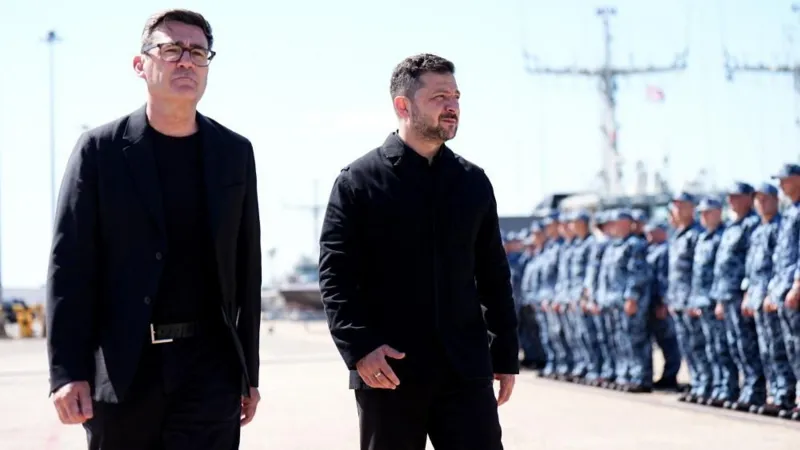
Published: 28 July 2026 | The English Chronicle Desk | The English Chronicle Online
Prime Minister Andy Burnham has said the visit of Ukrainian President Volodymyr Zelensky sends a clear message of continued support for Ukraine as the country faces ongoing challenges caused by the war with Russia.
Burnham described the meeting as an important demonstration of Britain’s commitment to standing alongside Ukraine and supporting its efforts to defend its sovereignty, security and future. The visit comes as international attention remains focused on the conflict and diplomatic efforts aimed at achieving a lasting peace continue.
The discussions between the two leaders are expected to cover military assistance, humanitarian support, economic cooperation and Ukraine’s long-term recovery following years of war.
Speaking ahead of the visit, Burnham said the UK’s relationship with Ukraine remained strong and that Britain would continue working with international partners to support Kyiv.
He said the meeting represented more than a diplomatic engagement, describing it as a symbol of solidarity with the Ukrainian people.
Since Russia launched its full-scale invasion of Ukraine in February 2022, the UK has been among Kyiv’s most prominent international supporters, providing military assistance, financial aid, humanitarian support and training for Ukrainian forces.

Successive British governments have maintained that Ukraine’s ability to defend itself is essential for protecting international security and upholding the principles of national sovereignty.
Burnham’s comments underline the continuation of that approach and signal that support for Ukraine remains a central part of Britain’s foreign policy.
During Zelensky’s visit, discussions are expected to focus on both immediate wartime needs and Ukraine’s future beyond the conflict.
The Ukrainian president has repeatedly called on international allies to maintain pressure on Russia while providing the resources necessary for Ukraine’s defence.
He has also urged partners to support reconstruction plans aimed at rebuilding infrastructure, restoring communities and strengthening the country’s economy once conditions allow.
British officials have said Ukraine’s recovery will require long-term international cooperation, with investment expected to play a major role in rebuilding homes, energy systems, transport networks and public services damaged during the conflict.
The visit comes at a time when Ukraine continues to face significant military and humanitarian challenges.
Despite international support, the war has caused widespread destruction, displaced millions of people and created enormous economic difficulties.
Ukrainian authorities have continued to seek additional assistance from allies, particularly in areas such as air defence, military equipment, financial support and diplomatic backing.
Burnham said Britain would continue to work closely with Ukraine and other international partners to help address those challenges.
The meeting also highlights the importance of maintaining diplomatic relationships during periods of uncertainty.
While military developments remain central to the conflict, international leaders have increasingly focused on discussions about potential pathways toward peace.
Ukraine has consistently stated that any peace agreement must respect its territorial integrity and provide security guarantees to prevent future aggression.
Russia has maintained its own positions regarding the conflict, leading to continued disagreement between the two sides and their international supporters.
The complexity of the situation means diplomatic efforts remain challenging, with no immediate resolution expected.
Political analysts say visits by Ukrainian leaders to allied countries serve both practical and symbolic purposes.
They provide opportunities to secure continued assistance while demonstrating international unity and keeping global attention focused on the conflict.
Zelensky has frequently travelled abroad since the beginning of the war to meet world leaders, address international organisations and build support for Ukraine’s position.
His visits have become an important part of Ukraine’s diplomatic strategy.
For Britain, maintaining a close relationship with Kyiv has been a key element of its foreign policy.
The UK has hosted Ukrainian military training programmes, supported humanitarian initiatives and worked with European allies to coordinate assistance.
British officials have repeatedly argued that supporting Ukraine is not only about helping one country but also about defending wider international rules against forced territorial changes.
Supporters of continued assistance say allowing Russia to achieve its objectives through military force could encourage similar actions elsewhere.
However, debates continue in some countries over the financial and military commitments required to support Ukraine over the long term.
Some political groups have questioned the scale of aid provided, arguing that governments must also address domestic economic pressures.
Supporters of Ukraine assistance respond that security commitments abroad are closely linked to protecting national interests and maintaining global stability.
The Zelensky visit is therefore likely to be viewed through both foreign policy and domestic political perspectives.
For Burnham, the meeting provides an opportunity to reaffirm Britain’s position while demonstrating that the government remains engaged with international security issues.
The discussions are also expected to address cooperation beyond the immediate conflict.
Ukraine’s future integration with European economic and political structures, investment opportunities and rebuilding efforts are likely to remain important topics in conversations with international partners.
Reconstruction is expected to require billions of pounds of investment and significant cooperation between governments, businesses and international organisations.
British companies could potentially play a role in rebuilding infrastructure, technology systems and industrial capacity once conditions permit.
Zelensky has previously encouraged international businesses to participate in Ukraine’s recovery, presenting reconstruction as both a humanitarian necessity and an economic opportunity.
The Ukrainian government has argued that rebuilding the country will require innovation, investment and long-term partnerships.
As the war continues, humanitarian concerns remain another major focus.
Millions of Ukrainians have been affected by displacement, damaged housing and disruption to essential services.
International aid organisations continue providing support, while Ukrainian authorities work to maintain public services under extremely difficult conditions.
Burnham’s statement following Zelensky’s visit reinforces the message that Britain intends to remain involved in supporting Ukraine.

The prime minister’s comments reflect a broader position shared by many Western governments that Ukraine’s security remains closely connected to European stability.
While the conflict continues without a definitive conclusion, diplomatic engagements such as Zelensky’s visit demonstrate the importance of maintaining alliances and international cooperation.
For Ukraine, continued backing from partners remains vital as it seeks to defend itself, protect its people and prepare for eventual recovery.
For Britain, the visit represents another opportunity to show its commitment to a country facing one of the most significant security challenges in modern Europe.
As discussions continue, both leaders are expected to emphasise the importance of unity, resilience and long-term support in responding to the ongoing crisis.
Related News:
 British Woman in Iran ‘Losing Hope’ Amid Ongoing Detention
 BBC Journalist Held and Interrogated in Vietnam
 Zohran Mamdani becomes New York City’s first Muslim mayor
Zohran Mamdani names all-female transition team for NYC mayoralty
Zohran Mamdani becomes New York City’s first Muslim mayor
Zohran Mamdani names all-female transition team for NYC mayoralty
 Second world war veterans honoured as King leads Remembrance Sunday
 BBC director-general and news chief resign amid bias row
 Rama Rebukes Mahmood for Targeting Albanian Families
 Russian Vessel Used Lasers on RAF Pilots, UK Claims
 Ireland Boosts Ukraine Aid as Zelensky Visits Dublin
 US Africa aid remarks spark anger after leaked State email
 Starmer China visit raises human rights pressure on Beijing
 UK and EU Signal Fresh Push for Defence Cooperation Talks
 Cory Bernardi joins One Nation for SA election
 Starmer Condemns ‘Depraved’ Russian Strikes on Ukraine
 Trump Warns Over Chagos Islands Deal
 Trump and Chagos Deal Rift Over Iran Strikes
 Andrew Mountbatten-Windsor Arrest After FBI Radar
 Farage Chagos Islands Row Sparks Fury
 Trump Tariffs Threat Spark UK and EU Alarm
 UK Allows US Base Use Amid Iran Tensions
 Trump Rebukes Starmer Over Iran Strikes Row
 UK Prepares Aircraft Carrier for Middle East Crisis
 Gordon Brown urges court for crimes against children
 Yvette Cooper: UK Must Follow Principles, Not US Pressure
 UK Minister Denies Iran Missile Threat to Britain
 Army Probes Apache Flyover at Kid Rock’s Nashville Estate
 Relationship with Trump may be beyond repair, Starmer warned
 Iran Crisis Tests Trump’s Global Leadership
 Starmer would have blocked Mandelson role, says Lammy
 Richard Tice Faces £100k Tax Controversy
 Charles Faces Trump Test in High-Stakes US Visit
 UK Stands Firm on Falklands Amid US Rift
 Cartel crackdown raises fears of fresh violence
 US states redraw maps after voting rights ruling
 US ‘Narco Boat’ Strikes Draw Global Outcry
 Ceasefire Standoff Deepens in Ukraine War
 Koh-i-noor Diamond Row Reignites Colonial Debate
 Starmer Faces Revolt After Crushing Election Losses
 UK Pushes for New EU Goods Trade Deal
 Reeves Fights to Keep Treasury Role Amid Labour Turmoil
 Farage and Reform UK Reshape British Politics
 Starmer Leadership Under Pressure After Setbacks
 Deadly Russian Air Raids Strike Across Ukraine
 UK Government Cancels Higher Education Programme for Women and Girls
 New South Wales Premier Chris Minns Signals Tough Road Ahead for Labor
 Murder Probe Continues After Arrest Release
 Labour MPs Urge Burnham to Revive UK Aid Target
 PM Reaffirms Backing for Ukraine Before Zelensky Visit
 UK Must Act with Courage and Clarity on Israel-Palestine Conflict, Says Foreign Affairs Committee Report
 Trump’s UK Ambassador Urges North Sea Drilling to Strengthen US Ties
BBC to Apologise Over Edited Trump Speech Amid Backlash
Trump’s UK Ambassador Urges North Sea Drilling to Strengthen US Ties
BBC to Apologise Over Edited Trump Speech Amid Backlash
 Millionaires group urge Reeves to introduce wealth tax to ‘lift kids out of poverty’
 Reeves rejects £1bn plea for NHS redundancy payouts
 PM Condemns Leaks, Vows Loyalty to Ministers and Stability
 Greene Pushes Epstein Files Amid Trump Fallout
 Shadow Fleet at Sea: Europe’s Battle Against Illicit Oil Shipping
 Starmer Says Labour’s Economic Plan Needs Years to Deliver
 No Gas Boiler Ban as UK Warm Homes Plan Backs Heat Pumps
 Police response times face strict new national limits
 Australian Families Leave Syrian Camp for Home
 Civil Service Pay: Union Urges Ministers to End ‘Barking Mad’ Limits
 Russian Trade Routed Through British Islands Exposed
 Thousands Protest Iran Strikes Outside US Embassy London
 UK Oil and Gas Supplies Reassured Amid Middle East Concerns
 Trump Pressures Congress Over Save America Act
 Queensland Protest Laws Spark Free Speech Backlash
 Trump Nato threats expose Iran strategy vacuum
 Trump Facing Backlash from Epstein Survivors Over Files
 UK Forces Ready to Seize Russian Shadow Fleet Vessels
 Report Says Pezzullo Acted ‘Recklessly’ in Dealings
 Is Britain Ready? Experts Warn of ‘Bizarre’ Military Delay
 “An Endurance Test for the Mind”: British Couple Sentenced to 10 Years in Tehran
 “The Local Gavel”: Polls Open Across Hampshire and Isle of Wight in Delayed ‘Milestone’ Vote
 Secret Role of UK Security Services in Troubles Amnesty Law
 UK Faces Most Dangerous Era, Military Chief Warns
 Starmer Set to Announce Exit Plan as Burnham Eyes No 10
 Burnham Promises Relief on Cost of Living Crisis
 Starmer Predicts Labour Election Win Under Burnham
 Farage Rivals Rule Out Clacton By-Election Fight
 Labour MPs Push for Stricter Political Funding Reforms