Published: 29 July 2026 | The English Chronicle Desk | The English Chronicle Online
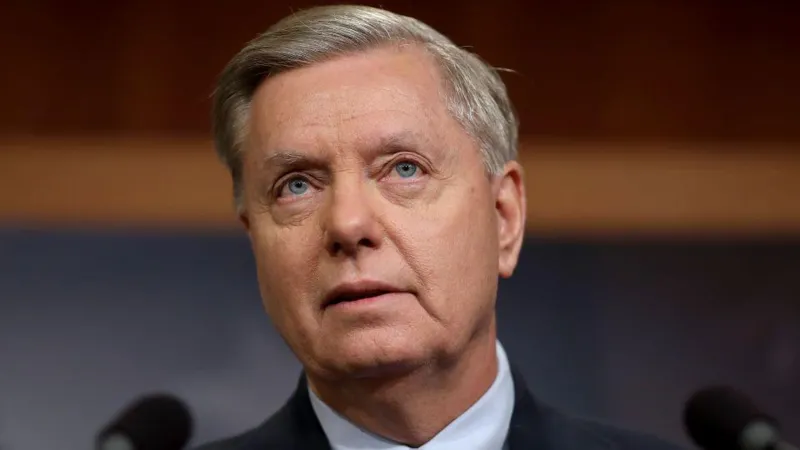
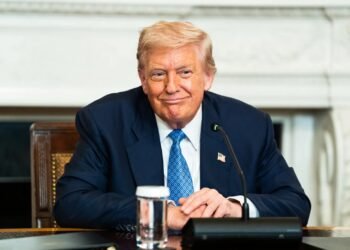
Former US President Donald Trump has paid tribute to Lindsey Graham, describing the longtime senator as a “giant of the US Senate” during a funeral ceremony honouring the influential Republican lawmaker.
The service brought together political leaders, colleagues, friends and family members to remember Graham’s decades of public service and his impact on American politics.
Trump highlighted Graham’s commitment to the country, his role in shaping major political debates and his ability to build relationships across Washington’s often-divided political landscape.
The funeral became an occasion for both political allies and opponents to reflect on Graham’s long career, which was marked by a strong presence in national security discussions, judicial issues and Republican Party politics.
Lindsey Graham built a long career in American politics, representing South Carolina in the US Senate and becoming one of the most recognisable Republican voices in Washington.
Before entering the Senate, Graham served in the US House of Representatives and worked as a military lawyer in the US Air Force Reserve.

His background in law and national security shaped much of his political career.
During his time in Congress, he became known for his involvement in defence policy, foreign affairs and judicial matters.
Supporters praised him as a dedicated public servant who brought experience and persistence to difficult national debates.
At the funeral, Trump spoke warmly about Graham’s contributions and described him as someone who had made a lasting mark on American politics.
The former president highlighted Graham’s loyalty to his principles and his willingness to engage on major issues facing the country.
Trump and Graham had a complex political relationship over the years, but they developed a close alliance on many issues, particularly during Trump’s presidency.
The former president’s remarks focused on Graham’s public service, character and influence rather than political disagreements.
He said Graham’s impact would continue to be felt through the policies and institutions he helped shape.
Graham became a prominent figure within the Republican Party, often appearing in national media discussions and playing a key role in congressional debates.
He served on powerful Senate committees, including those dealing with the judiciary and foreign relations.
His position allowed him to influence discussions on issues ranging from Supreme Court nominations to international security.
Throughout his career, Graham was known for his willingness to speak openly on controversial topics.
While his views earned strong support from many conservatives, they also attracted criticism from political opponents.
One of Graham’s most significant areas of influence was national security.
As a senator with military experience, he frequently addressed issues involving the armed forces, terrorism, international conflicts and America’s role in global affairs.
He was a strong supporter of maintaining a powerful US military and often argued for an active American role in protecting national interests abroad.
His positions on foreign policy made him a respected voice among many defence supporters.
Colleagues remembered him as someone deeply engaged in discussions about America’s security challenges.
Graham also became widely recognised for his role in judicial matters.
As a senior member of the Senate Judiciary Committee, he played important roles during several high-profile Supreme Court nomination processes.
His legal background gave him influence in debates over constitutional issues and the federal judiciary.
Supporters said he approached these responsibilities seriously and with a strong understanding of the law.
Critics, however, sometimes challenged his decisions and political positions during major confirmation battles.
Beyond Trump’s remarks, other political figures paid tribute to Graham’s life and career.
Republican colleagues praised his dedication to public service and his ability to maintain friendships across political disagreements.
Many described him as a politician who understood the importance of personal relationships in Washington.
Several lawmakers noted that Graham was known for his conversational style and willingness to work with others, even when they disagreed politically.
Democrats and Republicans alike acknowledged his significant role in shaping Senate discussions over many years.
Those closest to Graham described him as someone who valued service, family and his connection with the people he represented.
Friends said he remained committed to South Carolina throughout his political career and took pride in advocating for his constituents.
Supporters gathered to remember not only his political achievements but also his personal qualities.
Many spoke about his sense of humour, energy and ability to connect with people.
Like many prominent political figures, Graham leaves behind a complicated legacy.
His supporters view him as a principled conservative who played an important role in defending American interests.
They point to his work on national security, the judiciary and government policy as examples of his influence.
Critics argue that some of his political decisions contributed to deeper divisions within American politics.
His shifting positions on certain issues also became subjects of public debate throughout his career.
Nevertheless, even political opponents recognised that Graham was one of the most influential figures in the Senate during his time in office.
Graham’s passing has prompted discussions about the future direction of Republican politics and the impact of long-serving lawmakers.
Political analysts say his career represents an era of American politics shaped by intense debates over national identity, security and government power.

His influence extended beyond individual policies, as he became a familiar figure in national political conversations.
Future lawmakers may continue debating and building upon issues where Graham played a central role.
The funeral ceremony served as a moment for reflection on a political career that lasted decades and reached the highest levels of American government.
Trump’s description of Graham as a “giant of the US Senate” reflected the admiration many of his supporters held for him.
While opinions about his political decisions remain divided, there is broad agreement that Graham played a major role in shaping modern US politics.
As colleagues, friends and family said goodbye, they remembered a man whose career was defined by public service, political influence and a lasting presence in Washington.
Related News:
 Two National Guard Soldiers Critically Injured Near White House
 Putin Intensifies Territorial Demands Before US Talks
 Trump to Recheck Green Cards from 19 Nations After DC Attack
 US Defence Chief on Drug Boat Strike: “Did Not See Survivors”
 American Mother Extradited From UK to U.S. on Murder Charges
 Russia losses Ukraine war peace talks intensify amid rising deaths
 US Cities Erupt in Protests Against Trump’s Venezuela Military Action
 Trump Escalates Minnesota Immigration Surge Amid Rising Tensions
 Trump Says US Must ‘Own’ Greenland to Block Russia, China
 Greenland Faces Pivotal Summit Over Arctic Power Struggle
 US Clears Nvidia AI Chip Sales to China in Policy Shift
 Trump Threatens Strong Action If Iran Executes Protesters
 Trump Receives Machado’s Nobel Medal in White House Meeting
 Trump Aide Sparks Fury as Greenland Dispute Intensifies
 EU Says US Ties Have Suffered ‘Big Blow’ After Greenland Crisis
 Arizona border shooting leaves suspect hospitalised after agent pursuit
 Videos reveal earlier clash before Alex Pretti shooting
 Thousands Protest ICE Operations in Nationwide US Day of Action
 Epstein Files Reveal Trump Officials’ Emails with Financier
 Thousands Protest ICE in New York Against Trump Deportation Campaign
 ‘Painful Times’ as Melinda Gates Responds to Epstein Files
 Trump Praises ‘Terrific’ Petro After White House Talks
 Buffalo Refugee Tragedy: Border Patrol Neglect Leads to Death
 Clinton Testimony Erupts in Fiery Exchange
 Trump Faces Questions Over Iran Conflict Plan
 UK Prepares Aircraft Carrier for Middle East Crisis
 Pete Hegseth Iran War Remarks Spark Alarm
 Trump Faces New Warning Signs as Iran War Hits Home
 MAGA Anxiety and the Iran War: A Movement Divided at CPAC
 Trump’s Harsh Rhetoric on Iran Sparks Global Alarm
 US Airman Rescued in Daring Mission After F-15 Shot Down in Iran
 Trump Faces Crisis as Iran Reopens Hormuz Tensions
 Charles Faces Trump Test in High-Stakes US Visit
 UK Stands Firm on Falklands Amid US Rift
 US Court Ruling Reshapes Voting Rights Landscape
 US states redraw maps after voting rights ruling
 Trump orders US troop pullout from Germany
 Judge halts deportation of Yemeni refugees in US
 Trump likens US Navy actions to ‘pirates’
 Trump approval plunges amid Iran war fears
 Giuliani hospitalised in critical condition
 Ohio’s Battle for Trust: Democrats Vying to Flip the Buckeye State
 Trump Threatens UN Budget Cuts as US Pushes ‘Trade Over Aid’ Agenda
 Trump warns Iran as Middle East tensions surge again
 US ‘Narco Boat’ Strikes Draw Global Outcry
 Indiana Republicans Defy Trump in Key Vote Test
 US Court Restores Abortion Pill Access Temporarily
 Ohio Primaries Set Stage for Crucial Midterms
 Afghan Families Left in Limbo Face Risk of Deportation
 Miami Upgrades Shake Up F1 Title Fight
 Tensions Emerge in Netanyahu-Trump Alliance
 US Awaits Iran Reply on New Ceasefire Proposal
 Fear and Betrayal: The Chilling Case of Kouri Richins
 Trump: Preventing Nuclear Iran Is ‘The Only Thing That Matters’
 Hormuz Talks Near Critical Stage
 Trump’s Revenge Drive Deepens GOP Divide
 Former ICC prosecutor condemns US sanctions
 Gunman Killed After White House Security Shootout
 Trump Claims Iran Peace Deal Near Completion
 US Midterm Primaries: Democrats Target Key Republican Seats
 House Curbs Trump’s War Powers in Rare Rebellion
 Mystery Grows Over Mitch McConnell’s Health
 Senate Halts Defense Bill Over Iran Clashes
 Trump Jokes, Jabs and Press Tensions at WHCA Dinner
 Houthis Strike Saudi Arabia as Middle East Tensions Rise
 Three Dead in Seattle Food Festival Shooting
 US-Iran War Pause Raises Questions Over Weapons Supply
 Trump Hosts Zelensky and Netanyahu as Ukraine and Iran Conflicts Shape Global Agenda
 ‘Extinct’ Antelope Returns to Sahara, Bringing Hope
 Minnesota Sues Trump Administration Over ICE Surge
 Sydney Shark Attack Surge Shocks Australia Beaches
 Portugal Election Delivers Socialist Win as Far Right Surges
 Australian Families Leave Syrian Camp for Home
 Hilary Knight speaks out on Trump’s recent hockey remarks
 Report Says Pezzullo Acted ‘Recklessly’ in Dealings
 Tragedy Strikes Outside Melbourne Comic Con
 US to Escort Trapped Ships Through the Strait of Hormuz
 Putin Signals War End as Russian Momentum Stalls
 Lamine Yamal’s Birthday: Football, Fame, and France
 Berlin Pride Attack Suspect Killed in Police Raid