Published: 13 August 2026 | The English Chronicle Desk | The English Chronicle Online
Dmitry Muratov, the Russian journalist and Nobel Peace Prize laureate, has delivered a stark assessment of the war in Ukraine, arguing that Vladimir Putin can no longer credibly describe the conflict as a victory regardless of how the fighting eventually ends.
Muratov, the former editor-in-chief of the independent newspaper Novaya Gazeta, said the scale of destruction, loss of life and repression associated with the war had fundamentally changed the meaning of any possible outcome. In his view, a conflict that has devastated two neighbouring countries and produced immense human suffering cannot simply be presented as a successful military achievement.
His comments come as Russia’s full-scale invasion of Ukraine continues to reshape European security, deepen divisions between Moscow and Western governments and place increasing pressure on independent voices inside Russia.
Muratov’s criticism is particularly significant because of his position as one of Russia’s best-known independent journalists. In 2021, he shared the Nobel Peace Prize with Filipino journalist Maria Ressa for their efforts to defend freedom of expression. The Nobel Committee recognised the work of Novaya Gazeta and the risks faced by its journalists, several of whom were killed while investigating sensitive subjects.
Today, however, the newspaper’s presence inside Russia has been severely restricted.
Muratov has described the collapse of the publication’s traditional operations as part of a much wider campaign against independent journalism and political dissent. Russian authorities have designated him a “foreign agent”, while access to independent news organisations and opposition voices has become increasingly difficult.

The pressure on Novaya Gazeta illustrates the broader transformation of Russia’s information environment since the invasion of Ukraine in February 2022. Independent media outlets have been blocked, forced abroad, labelled extremist or declared foreign agents, while journalists and activists have faced criminal prosecution.
Muratov argues that the consequences extend well beyond the media industry. He believes Russia has entered an era in which criticism of government policy can carry serious personal consequences, leaving many people afraid to express their opinions publicly.
Russian President Vladimir Putin has repeatedly presented the war in Ukraine as a struggle over Russia’s national security and strategic interests. Moscow has also described its military objectives in terms of protecting Russian-speaking populations and preventing Ukraine from becoming a security threat.
Muratov challenges that narrative.
His argument is that even if Russia were ultimately able to retain territory or impose significant concessions on Ukraine, the human and political consequences of the war would make the idea of a straightforward Russian victory impossible.
The journalist points to the enormous number of people killed, injured or displaced since the invasion began. He also highlights the destruction of towns and cities, the separation of families and the long-term damage to relations between Russians and Ukrainians.
For Muratov, the devastation itself undermines the language of triumph.
He has previously warned that the war could create increasingly dangerous conditions for nuclear escalation. In a 2023 interview, he similarly questioned whether anyone could confidently predict whether Putin would ever consider using nuclear weapons, highlighting the uncertainty surrounding escalation.
His latest assessment therefore carries both a political and humanitarian message: the longer the conflict continues, the harder it becomes for any side to describe the consequences as a conventional victory.
Muratov’s criticism of the war cannot be separated from the situation facing opponents of the Kremlin.
Since 2022, Russian authorities have expanded legislation and enforcement against anti-war speech. Journalists, activists, politicians and ordinary citizens have faced prosecution for statements considered critical of the military campaign.
Muratov has repeatedly drawn attention to political prisoners and argued that those who opposed the invasion early on were among the first people to understand the consequences of the war.
That concern remains central to his public work.
The experience of Novaya Gazeta is particularly revealing. The newspaper became one of Russia’s most prominent independent publications after the collapse of the Soviet Union, investigating corruption, human rights abuses and political wrongdoing.
Its journalists operated under enormous pressure. Several were murdered, including investigative reporter Anna Politkovskaya, whose reporting on the war in Chechnya became internationally known.
The newspaper’s history was one reason Muratov’s Nobel Prize was seen as recognition not simply of one journalist but of a wider tradition of dangerous independent reporting in Russia. The Nobel Committee specifically highlighted the killings of journalists associated with Novaya Gazeta.
The newspaper’s decline therefore represents more than the closure of a media organisation. It reflects the shrinking space for independent scrutiny of state power.
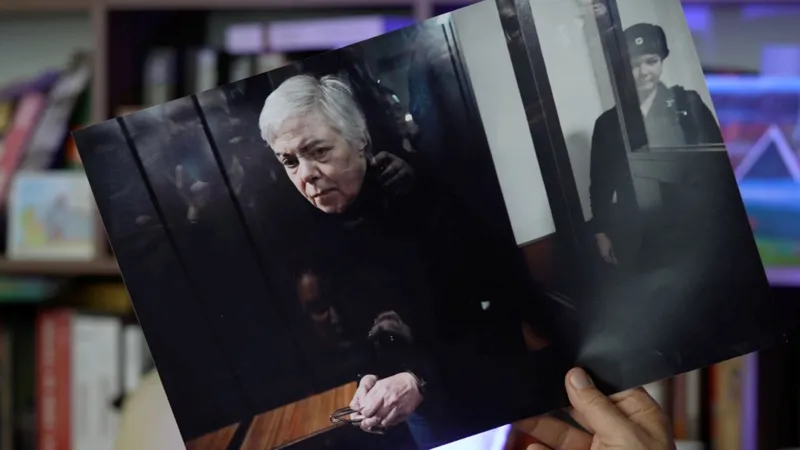
Despite his international reputation, Muratov has frequently attempted to shift attention away from himself and towards Russians imprisoned for opposing the war or challenging the authorities.
He has spoken publicly about journalists, activists, musicians and politicians who have been prosecuted.
One of the most powerful aspects of his argument is that political repression should not be viewed separately from the war itself. In his assessment, the domestic crackdown and the military campaign are connected parts of a political system increasingly intolerant of dissent.
That argument has also appeared in his previous interviews. Muratov has described fear as one of the most important indicators of Russian society, suggesting that people may remain silent not because they necessarily support government policy but because they fear the consequences of speaking openly.
This distinction is important when interpreting public opinion in an authoritarian environment.
Muratov’s position is not simply an indictment of the Kremlin.
He has also been sharply critical of Western governments for their previous economic relationship with Russia.
Before the invasion, European countries relied heavily on Russian oil and gas, while Western businesses maintained substantial commercial relationships with Russian companies.
Muratov argues that this economic engagement weakened the credibility of Western criticism of Vladimir Putin’s domestic policies.
His criticism is consistent with comments he has made in previous interviews, in which he accused European leaders of speaking about human rights while simultaneously maintaining lucrative economic relationships with Moscow.
That history, he suggests, helps explain why the Kremlin has often regarded Western criticism with scepticism.
At the same time, Russia’s invasion has fundamentally altered Europe’s relationship with Moscow. Energy dependence has been reduced, sanctions have expanded and European governments have increased military and political support for Ukraine.
The central question now is what would constitute an acceptable end to the war.
Ukraine continues to demand security guarantees and recognition of its sovereignty, while Russia has sought to preserve territorial gains and secure broader strategic concessions.
For Muratov, however, the language of victory itself risks obscuring the human cost.
Even a negotiated settlement would leave behind destroyed communities, families who have lost relatives and generations of Ukrainians and Russians whose perceptions of one another have been transformed.
The consequences would also extend beyond the battlefield. The war has reshaped European defence policy, disrupted energy markets, affected food and commodity supplies and contributed to a wider geopolitical confrontation involving the United States, Europe, China and other major powers.
Russia’s relationship with the West has deteriorated to its worst level in decades, while Ukraine’s future security has become a central issue for European governments.
The war has also produced a profound information conflict. Russia has maintained a tightly controlled domestic media environment, while Ukraine and its allies have developed their own strategic communications efforts.
Independent journalists therefore face an increasingly difficult task in separating verified information from propaganda and wartime claims.
Muratov’s message is ultimately less about predicting a specific military outcome than about rejecting the idea that enormous destruction can automatically translate into political success.
His assessment is that Russia may be able to destroy parts of Ukraine, but destruction is not the same as conquest. Ukraine’s national identity, political aspirations and determination to survive have endured despite years of war.
That distinction may prove crucial in any eventual negotiations.
A ceasefire could stop the immediate killing, but it would not erase the consequences of the invasion. A peace agreement could establish new borders or security arrangements, but it would not restore the lives lost or the communities destroyed.
For Muratov, those realities make the language of victory inadequate.
His warning also reflects a broader concern about what happens inside Russia after the war. If political repression remains entrenched and independent journalism continues to disappear, ending the fighting may not automatically restore the freedoms that existed before the invasion.

The future of Russia’s political system and media environment could therefore become one of the most important consequences of the conflict.
Muratov remains a powerful symbol of that struggle. His newspaper may no longer operate inside Russia as it once did, but his insistence on independent reporting and accountability continues to attract attention internationally.
His argument is ultimately straightforward: a war that leaves immense suffering behind cannot be judged solely by maps, military positions or political declarations.
Whatever the eventual settlement, Russia and Ukraine will have to live with the consequences for decades. And for Muratov, that alone makes it impossible to describe the conflict as a conventional victory.
The broader lesson is that military power can change territory, but it cannot necessarily produce political legitimacy, erase national identity or reverse the human consequences of war.
Related News:
 Police Assessing Stansted Airport Private Flights Over Epstein Ties
 Inside Kyiv’s resolve as conflict nears five‑year mark
 Muslim Group Wants Mosques to Be Used as Polling Stations Ahead of UK Elections
 Why Aren’t Our Dirtiest Roads Getting Cleaned?
 Murdered Student ‘Algasim’ Was ‘the Most Special Person’, Friends Say
 Manchester Students Mourn Ayatollah Amid Protest
 ‘Seismic Change’: How Nationalist Wins in Celtic Nations Could Reshape the UK
 The “Charles Charm” Offensive: Did the Royals Find Their Mojo in D.C.?
 Farage and Reform UK Reshape British Politics
 Starmer Leadership Under Pressure After Setbacks
 Andrew Accused Over Royal Lodge Cottage Rentals
 Royal Navy Mourns Devastating Helicopter Loss
 MPs Warn UK Asylum System Nears Breaking Point
 Burnham Reaffirms Support for Ukraine During Zelensky Visit
 Hong Kong Activist Allowed to Stay in UK After Threat
 Burnham Considers Inquiry Into Epstein UK Connections
 Cooper Vows Maternity Reform After Birth Care Failures
 UK Charity Watchdog Probes Settlement Donations
 BJP Loses Stronghold After Student Protest Fallout
 Harper Widow Fights Early Release of Killer’s
 Thai School Shooting Leaves Nation Demanding Answers
 Councils to Get Powers to Block New Vape Shops
 UK Must Act with Courage and Clarity on Israel-Palestine Conflict, Says Foreign Affairs Committee Report
 Radioactive Leak at UK’s Nuclear Warhead Base Sparks Outcry Over Safety and Secrecy
 Mutual Inconvenience: Why Alaska Was Chosen for the Trump-Putin Summit on Ukraine
 Is the UK Ready to Put Boots on the Ground in Ukraine? Assessing Military Capacity and Challenges
 Thousands Gather in London to Protest Donald Trump’s Second UK State Visit
 A Third of EU Citizens in UK Report Discrimination by Public Bodies Post-Brexit
 Public Trust in SNP Hits Historic Low Amid NHS Concerns
 Johnson Suggests Mandelson Linked to China Spy Controversy
 Rachel Reeves signals welfare reform ahead of key budget
 Starmer Weighs Fast-Tracking Defence Boost
 Snow and Rain Warnings as Cold Snap Continues in the UK
 Trump and Chagos Deal Rift Over Iran Strikes
 Australian PM Says Former Prince Andrew Has Suffered ‘Extraordinary Fall’ but That Won’t Prompt Republic Referendum
 Farage Chagos Islands Row Sparks Fury
 Calls Grow to Remove Billboard Following Lyra McKee Graffiti
 Nepal Holds First General Election Since Gen Z Protests Toppled Government
 ‘Every Day Feels Like a Month’: Iranians Describe Life Under ‘Constant’ US‑Israeli Strikes
 How Depleted Weapons Stockpiles Could Affect the Iran Conflict
 Minister Meets Crews Who Will ‘Take Out’ Iranian Drones
 UK–US Tensions Ease as Starmer and Trump Hold First Call Since Iran Row
 Yvette Cooper: UK Must Follow Principles, Not US Pressure
 Missing Cuba-Bound Aid Ships Spark Urgent Search
 Mandelson’s Phone Messages Requested in Files Release
 UK Forces Ready to Seize Russian Shadow Fleet Vessels
 US Lawmaker Demands Testimony Over Sarah Ferguson’s ‘Close Epstein Ties’
 The Last of the Lords: Two Hereditary Peers to Retain Ceremonial Roles Amid Historic Ousting
 ‘Eye in the Sky’ Blinded: Photos Reveal Destroyed US Radar Jet at Saudi Base
 ‘Full and Immediate Access’: Netanyahu Reverses Palm Sunday Ban on Latin Patriarch
 ‘The Final Word’: Kathleen Stock’s Polemic Against Assisted Dying Reshapes the UK Debate
 Pope Leo Urges Peace in First Easter Mass Address
 ‘The Soul of Spain’: Politicians Clash Over Renewed Push to Move Picasso’s Guernica
 Moldova River Crisis Exposes War’s Hidden Cost
 The Masked Frontier: Allegations of Greek Police Using Proxies for ‘Seismic’ Border Pushbacks
 MoD Has Lost Track of Veteran Recall List, Says Adviser
 “Jobs Will Go”: Rishi Sunak Warns AI is Already Eroding Entry-Level Opportunities
 “Three-Wheeled Triumph”: Mayor of Erewash Completes 2,000-Mile European Charity Run
 Reality Check on Reform: Minister Says Outright Abolition of Leasehold “Impossible”
 A “Breaking Point” for Britain: Terror Adviser Warns Antisemitism is Now a National Security Emergency
 The “Dry” Life: Teens Trialing Social Media Bans Call Initial Disconnection “Boring” and “Dry”
 Cartel crackdown raises fears of fresh violence
 “Invisible Agony”: 98-Year-Old Woman Left in “Severe Pain” for Days Amidst Care Backlog
 “An Endurance Test for the Mind”: British Couple Sentenced to 10 Years in Tehran
 “The Cost of Conviction”: Palestine Action Activists Found Guilty Over ‘Clinical’ Factory Damage
 “The Local Gavel”: Polls Open Across Hampshire and Isle of Wight in Delayed ‘Milestone’ Vote
 Immigration Judges Fear Pressure in Trump Era
 UK Faces Most Dangerous Era, Military Chief Warns
 Son Urges Iran Prisoner Exchange for Jailed British Pair
 Prince George Set to Begin Studies at Eton This September
 Buckingham Palace Confirms Harry Will Not Stay There
 Trump’s Major Recruitment Drive Targets Border Patrol Growth
 Le Pen’s Popularity Holds Despite Conviction
 Police Rule Out Political Motive in Widdecombe Killing
 Jewish Students Describe Rising Antisemitism on UK Campuses
 Avalanche Claims Nepal’s Greatest Mountain Guides
 Badenoch Defends Tory Candidate Over Antisemitism Case
 Trump Renews Push to End Birthright Citizenship
 Tories Pledge Social Housing Ban for Foreign Nationals