Published: 13 August 2026. The English Chronicle Desk. The English Chronicle Online
Japan has strongly condemned Russian President Vladimir Putin’s visit to one of the disputed Kuril Islands, describing the trip as “absolutely unacceptable” and warning that it could further damage already strained relations between Tokyo and Moscow.
Japanese Prime Minister Sanae Takaichi criticised Putin’s reported visit to Iturup, known in Japan as Etorofu, on Thursday after Russian state media said the Russian president had travelled to the island. Iturup is one of four southern Kuril Islands claimed by both Russia and Japan and administered by Moscow.
Takaichi said Putin’s visit had worsened Japanese public sentiment towards Russia and reiterated Tokyo’s position that the islands constitute Japanese territory “historically and under international law”.
The dispute over the islands has remained one of the most persistent unresolved territorial disagreements in East Asia. It has also prevented Japan and Russia from signing a formal peace treaty to conclude the state of war left over from the Second World War.
The Kuril Islands stretch between Japan’s northern island of Hokkaido and Russia’s Kamchatka Peninsula. The four southernmost islands are claimed by Japan, which refers to them collectively as the Northern Territories. Russia regards them as part of its territory.

The Soviet Union seized the Kuril chain towards the end of the Second World War. Around 17,000 Japanese residents were subsequently deported from the islands, leaving a territorial dispute that has continued for generations.
Putin’s visit therefore carries significance well beyond a presidential tour of a remote Russian region. For Tokyo, the presence of the Russian president on one of the disputed islands represents a direct assertion of Moscow’s sovereignty over territory that Japan continues to claim.
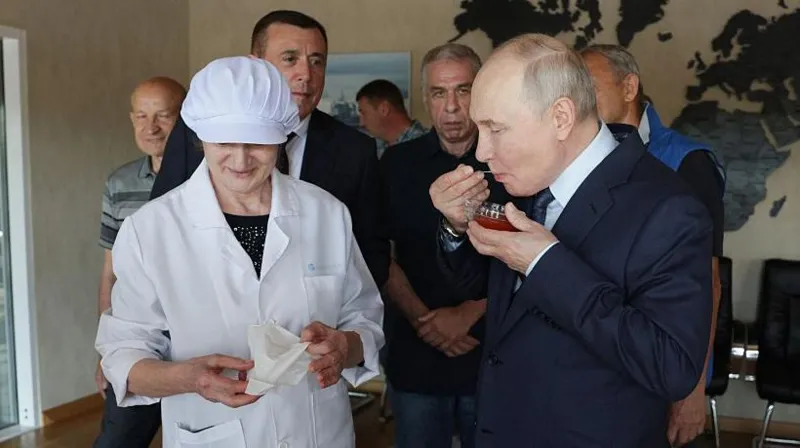
Russian state media reported that Putin met residents during his visit and sampled local fish roe. The visit was presented domestically as part of the Russian government’s engagement with its Far Eastern territories.
Japan’s government responded sharply.
Foreign Minister Toshimitsu Motegi said earlier on Thursday that the islands were “inherently Japanese territory both historically and under international law” and that Tokyo had lodged a strong protest against the Russian president’s visit.
The latest confrontation comes against a broader deterioration in Japanese-Russian relations. Japan joined Western countries in imposing sanctions on Russia after Moscow launched its full-scale invasion of Ukraine in 2022.
Before the war in Ukraine, Tokyo and Moscow had periodically attempted to make progress on the territorial dispute. Negotiations occasionally raised hopes of a breakthrough, particularly over the possibility of resolving the status of the four islands and eventually signing a peace treaty.
Those efforts have largely stalled.
Japan has repeatedly protested visits by senior Russian officials to the disputed territory. Former Russian Prime Minister Mikhail Mishustin visited the islands in the past, while former President and Prime Minister Dmitry Medvedev has also travelled there, prompting strong objections from Tokyo.
Putin’s visit is particularly sensitive because of his position as Russia’s president and the symbolism attached to a presidential appearance on territory claimed by another country.
The Kuril Islands are not only politically important. Their geographical position gives them substantial military and strategic value.
Russia has strengthened its military presence across the island chain over the past decade, deploying weapons systems, improving infrastructure and conducting regular exercises. Iturup is home to a Russian military airfield that provides Moscow with an important strategic position in the north-western Pacific.
The islands also form part of maritime routes linking the Sea of Okhotsk with the Pacific Ocean. Their location makes the surrounding waters important for Russia’s naval strategy and for access between its Far Eastern territories and the wider Pacific.
Japan has consequently watched Russia’s military development in the region with growing concern.
Those concerns have intensified as Russia has strengthened its security cooperation with China. Last month, Chinese and Russian naval vessels sailed through a strait in the Kuril Islands during a joint patrol, an activity that underscored the increasingly coordinated maritime presence of the two countries.
Russia also regularly conducts military drills around the islands. Japanese officials have repeatedly criticised such exercises, arguing that they increase tensions in an area where Tokyo maintains its territorial claims.
The latest dispute therefore comes at a time when Japan is increasingly focused on its security environment across the Indo-Pacific.
Tokyo has been strengthening its defence relationships with the United States and other regional partners, while closely monitoring Chinese military activity around Taiwan and the East China Sea. Russia’s growing cooperation with China has added another strategic complication.
For Moscow, meanwhile, the Kuril Islands are an important component of its Far Eastern defence posture. Russia has consistently rejected Japanese claims to the four southern islands and considers its sovereignty over the territory to have been established as a consequence of the Second World War.
The dispute has deep historical roots, making a rapid diplomatic settlement difficult.
Japan maintains that the four islands were not legitimately incorporated into the Soviet Union after the war and argues that its historical ownership and legal claims remain valid. Russia rejects Tokyo’s interpretation and insists that the post-war territorial settlement established Russian sovereignty.
The disagreement has persisted despite decades of diplomatic negotiations.
The absence of a peace treaty between Japan and Russia is an unusual legacy of the Second World War. Although diplomatic relations were established in 1956, the two countries never reached a final settlement over the islands.
At various points, both sides have explored compromises. However, domestic political pressures, strategic interests and the historical importance of the territory have repeatedly prevented a definitive agreement.
Russia’s invasion of Ukraine has made progress even more difficult.
Japan’s decision to impose sanctions on Moscow has significantly reduced the scope for the kind of political engagement that once surrounded the territorial negotiations. Russia, in turn, has criticised Japan for aligning itself with Western sanctions and has suspended several diplomatic initiatives involving the disputed islands.
Putin’s visit is therefore likely to reinforce the perception in Tokyo that Moscow has little interest in making concessions over the Northern Territories.
For Takaichi’s government, the challenge is to maintain Japan’s long-standing territorial position without allowing the dispute to develop into a broader confrontation with Russia.
Japan has generally relied on diplomatic protests and international messaging when Russian officials visit the islands. But the country’s security establishment is also increasingly concerned about the military dimension of Russia’s presence in the Far East.
The Kuril chain sits close to Japan’s northern approaches, making developments there directly relevant to Japanese defence planning.
The strategic importance of the islands has also grown as Russia deepens military cooperation with China and as the wider Pacific region becomes increasingly contested.
For residents of the islands, however, the dispute has a more immediate character. Communities that live there are governed by Russia and have developed economic and social ties with Russian institutions. Japan’s territorial claim does not alter the practical reality of Russian administration on the ground.
That reality has remained unchanged for decades.
The competing claims also demonstrate how unresolved territorial disputes can continue to influence international relations long after the conflicts that created them have ended. More than 80 years after the end of the Second World War, the Kuril Islands remain a source of diplomatic tension between two major Asian economies.
Putin’s visit has now brought the dispute back into the spotlight.
While neither Tokyo nor Moscow appears close to resolving the territorial disagreement, the Japanese government’s immediate response suggests that the visit will deepen diplomatic tensions rather than create an opportunity for dialogue.

Takaichi’s description of the visit as “absolutely unacceptable” reflects the strength of Japan’s position and the continuing sensitivity surrounding the Northern Territories.
For Russia, the presidential visit reinforces its claim of sovereignty and demonstrates its determination to maintain a strategic presence in the region. For Japan, it is another reminder that its territorial dispute with Moscow remains unresolved.
The immediate consequences are likely to be diplomatic rather than military, but the episode highlights the increasingly complicated security environment surrounding Japan and the wider Indo-Pacific.
As Russia strengthens its military presence in the Kurils and expands cooperation with China, Tokyo is likely to continue monitoring developments closely. The territorial dispute may have originated in the aftermath of the Second World War, but its strategic implications remain firmly rooted in the geopolitics of the present day.
Related News:
 China Detains US Scientist Linked to North Korea Nuclear Research
 US-Iran War Pause Raises Questions Over Weapons Supply
 UK Fighter Jet Purchase Could Breach Nuclear Treaty, Warns CND
 Russia repeatedly targets UK military satellites, warns Space Command chief
 Experts Warn Russia’s Burevestnik Missile Could Destabilise Arms Control
 Britain deploys RAF specialists to assist Belgium with drone threats
 Iran Signals Permanent Break From Global Internet, Activists Warn
 After the Landslide: Can India Reset Ties with BNP Bangladesh?
 China Strikes at Japan’s Core — Will PM Takaichi Back Down?
 Japan Braces as Takaichi Begins New Term with Huge Mandate for Low‑Tax, Ultra‑Conservative Agenda
 South Korea’s Ex-President Faces Death Penalty in Insurrection Trial
 Bill Gates Pulls Out of India’s AI Summit Over Epstein Files Controversy
 Musk Cuts Starlink Access for Russian Forces – Giving Ukraine an Edge at the Front
 Kim Jong Un Reappointed as Ruling Party Chief
 Major 7.1 Earthquake Strikes Off Malaysian Tourist Coast
 Brit Killed in Horror Bus Crash as 18 Others Die and 25 Injured
 Japan to Deploy Missiles on Island Near Taiwan by 2031
 Nine Killed in Karachi Consulate Protest
 Could Kim’s Teen Daughter Become North Korea’s Next Leader?
 Rap Star May Beat Ex‑PM — What This Says About Nepal’s Gen Z
 Why Russia Controls Its People With a Flick of a Switch
 Nepal Holds First General Election Since Gen Z Protests Toppled Government
 Protesters Rally in San Francisco Against OpenAI Deal With Pentagon
 Nepal Election 2026: When Will We Get the Results?
 Baba Vanga’s Chilling World War 3 Prediction and Russia’s New Leader
 Sri Lanka Takes Control of Second Iranian Vessel a Day After US Sub Attack
 Tiny Possum and Glider Thought Extinct for 6,000 Years Found in Remote West Papua
 China Moves to Enshrine ‘Ethnic Unity’ Law
 Gulf Oil Shock Sends Global Economic Ripples
 Nepal Election 2026: Balendra Shah’s Party Nears Historic Supermajority
 China’s Biggest Political Meeting Ends — Key Takeaways
 Point-Blank Gunshot Misses Indian Politician
 Anti-Regime Iranians Turn Anger Toward Trump
 Trump Considers Military Operation to Seize Iran’s Uranium
 Trump Building ‘Massive’ Military Bunker Under White House Ballroom
 Nepal Gen Z Protests Succeed, Bangladesh Struggles
 A Bridge to Peace? Taiwan’s Opposition Leader Lands in China
 The Great Chokehold: Why the Strait of Hormuz is the Epicenter of the 2026 Crisis
 The Academic Chill: Beijing Condemns ‘Hostile’ US Questioning After Researcher’s Death
 Moldova River Crisis Exposes War’s Hidden Cost
 Market Shock: Oil Surges Past $100 as US Initiates Naval Blockade
 The Outback Squeeze: ‘Out of Control’ Diesel Prices Threaten Australia’s Freight Arteries
 The Frozen Frontier: Why Frostbite is the Least of Concerns for Canada’s Arctic Forces
 Canadian astronaut French words ease language row
 Market Deadlock: Oil Prices Surge as US-Iran Peace Talks Unravel in Pakistan
 Southeast Asia Turns to Russia Amid Energy Crisis
 “Grounded”: Beijing Implements Total Ban on Drone Sales Citing Capital Security
 Australia pushes Pacific security pact amid China tension
 “The Floating Fever”: WHO Confirms Second Hantavirus Case as Cruise Outbreak Death Toll Reaches Three
 BJP Sweeps West Bengal in Historic Breakthrough
 “Digital Disinformation”: AI Chatbots Under Fire for Hallucinating Voting Data Ahead of Polls
 “Not a New Pandemic”: UN Health Agency Calms Global Fears Over ‘Nasty’ Hantavirus Cruise Outbreak
 US Awaits Iran Reply on New Ceasefire Proposal
 One Nation Stuns Australia With Historic Farrer Win
 Hormuz Talks Near Critical Stage
 China mine blast death toll rises to 90
 Discontent grows around Putin amid war strain
 Trump-Netanyahu Call Fuels Iran Talk Crisis
 Israeli Strikes Kill 11 in Gaza City
 Everest Climber Recalls Guide’s Six-Day Survival
 Xi Jinping to Make Rare North Korea Visit
 Xi Arrives in North Korea for Rare Summit
 Families Grieve Beyond Air India Crash Victims
 Why Xi’s North Korea Visit Matters Now
 Iran Team Arrives in Mexico Amid US Visa Dispute
 China Missile Test Raises Pacific Security Concerns
 Bangladesh Balances China Ties as India Relations Improve
 Punjab’s Anti-Sacrilege Law Triggers Political Debate
 Venezuela Quake Death Toll Surpasses 4,000
 Indian Police Crack Down on ‘Cockroach’ Protesters as Young Activists Respond With Memes
 India’s Youth Revolt Challenges Modi Government
 Bangladesh President to Step Down After Political Shift
 India’s Gen Z Protest Movement Enters a New Phase
 US and Iran Pause Strikes as Diplomatic Talks Loom
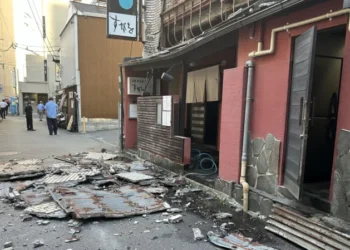 Magnitude 7.1 Earthquake Strikes Japan, Several Injured
 People Trapped in Japan Shopping Centre After Earthquake
 Many Trapped Inside Japanese Shopping Centre After Earthquake
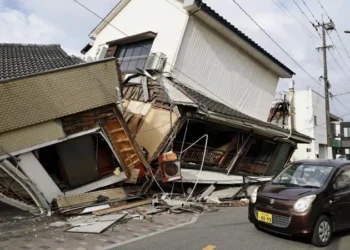 Japan Quake Survivors Recall Terror as Homes Crumble
 Drone Warnings Issued as South Korea Battles Historic Heatwave
 Thai School Shooting Leaves Nation Demanding Answers