Published: 13 August 2026. The English Chronicle Desk. The English Chronicle Online
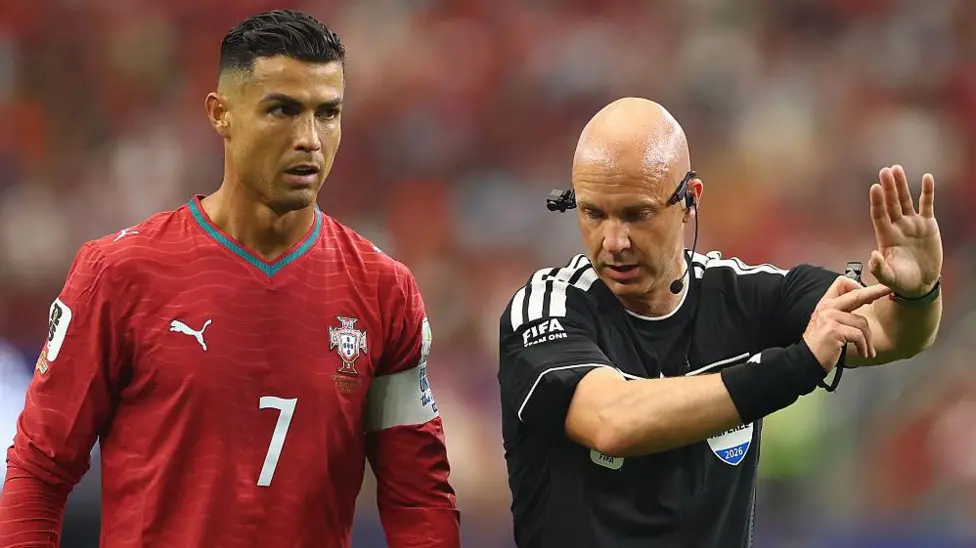
Anthony Taylor has opened up about his decision to retire from refereeing, saying the relentless scrutiny surrounding match officials can create a “culture of fear” and undermine confidence among referees.
The 47-year-old English official ended a 20-year career in the professional game last month, shortly after officiating at the 2026 World Cup. Taylor took charge of three matches at the tournament, including the last-16 meeting between Spain and Portugal in Dallas, before deciding that the time was right to walk away.
His retirement marked the end of one of the most distinguished refereeing careers in English football. Taylor officiated 668 matches in the English professional game, along with major domestic cup finals and 163 international fixtures. Yet his decision to retire was not simply about reaching the end of a long career. He says the physical and mental demands of elite refereeing, the sacrifices made by his family and the constant public examination of officials all played a part.

Taylor has now explained for the first time in detail why he believed it was time to move on.
“Any referee will be lying to you if they said that pressure or that scrutiny did not bother them,” Taylor said, describing the reaction to decisions as a natural human challenge.
He explained that referees regularly have to deal with fear of making mistakes alongside criticism from spectators, managers, players, parents, colleagues and the media. Over time, he said, those pressures can contribute to self-doubt and declining confidence.
“All these things feed into creating self-doubt, lacking confidence, and then things can spiral out of control,” he said.
Taylor stressed that he had developed mechanisms to deal with pressure throughout his career. However, he acknowledged that resilience can be affected when an individual operates under intense scrutiny for many years.
He said energy levels can decline, motivation can be affected and officials can begin to approach matches with an overwhelming fear of making mistakes.
For Taylor, that did not mean he had reached a point where he could no longer cope. Instead, he believed his body and mind had naturally reached the point where a change was appropriate.
His timing was deliberate.
Having completed his World Cup duties, Taylor felt there was no better place to conclude his career. He said he wanted to decide when he finished rather than waiting for circumstances to make the decision for him.
“I wanted to decide when I finished on my own terms,” he said.
The World Cup provided what he regarded as a fitting final chapter to a career that had taken him to some of the biggest matches in international and domestic football.
Taylor admitted there was some sadness attached to leaving. He has spent much of his adult life preparing for matches, travelling, training and working alongside other officials. He has not missed the gruelling pre-season fitness sessions, but he knows that a major part of his identity will disappear now that he is no longer walking onto professional pitches.
Family considerations were also important.
Taylor has previously spoken publicly about the impact that his career had on those closest to him. His family stopped attending some of his matches because of the abuse directed towards him, while members of his family were also targeted by supporters after the 2023 Europa League final in Budapest.
For an elite referee, the consequences of criticism therefore extend beyond the individual making the decision on the pitch.
Taylor said family life had inevitably taken a back seat during his career and that the sacrifices made by relatives and friends were an important consideration when deciding whether to continue.
The wider football environment has also changed dramatically during his career.
Social media has created an almost permanent stream of analysis and criticism. Even though Taylor deliberately stayed away from social media in recent years, he said it was impossible to completely escape the conversation surrounding refereeing.
Football is now covered around the clock, meaning officials can encounter opinions about their performances long after a match has finished.
Taylor described the experience as living in a “goldfish bowl” for much of the football season.
One of his strongest criticisms was reserved for former referees who enter the media and publicly attack current officials.
Taylor said he was disappointed when former match officials contributed to one-sided criticism because he believes their experience should allow them to provide more balanced analysis.
He argued that refereeing decisions often exist in a grey area rather than being simply right or wrong.
According to Taylor, the demand for definitive judgments can ignore the subjective nature of many decisions made during fast-moving matches.
He believes relentless criticism can have damaging consequences.
“If it’s all one-sided criticism, that creates a culture of fear, disrespect, shame,” he said.
That culture, Taylor suggested, can make referees increasingly afraid of making mistakes rather than encouraging them to make confident decisions.
He also indicated that he would be reluctant to pursue a media career based on criticising other officials.
Instead, he wants to use his experience to educate and support referees.
That philosophy will now shape his next career chapter in Turkey.
Taylor has been appointed director of elite refereeing by the Turkish football federation, taking on the role at a particularly difficult moment for the country’s officials.
Turkey has been dealing with a major refereeing betting scandal following a five-year investigation that reportedly found betting accounts linked to 371 of 571 match officials.
Taylor’s task will involve helping rebuild standards and confidence among officials, particularly younger referees who are attempting to progress to the highest level.
He said his focus will be on developing resilience, improving refereeing skills and helping officials cope with demanding matches. He will also work on identifying emerging talent and supporting Turkish referees seeking more prominent international appointments.
The appointment gives Taylor an opportunity to apply the lessons learned during his own career to a new generation of officials.
He also has strong views about another major part of modern refereeing: video assistant refereeing.
VAR has remained one of the most controversial aspects of football, with supporters and managers frequently complaining about lengthy reviews and microscopic examinations of incidents.
Taylor believes VAR has an important role but argues that the technology must be used for the purpose for which it was introduced.
He supports interventions when there is a clear and significant error but believes officials should avoid prolonged examinations of incidents where the evidence is marginal.
“VAR is there to create a sense of justice,” he said, particularly for “the big clear errors”.
He does not believe the system should be used for microscopic checks that can turn straightforward decisions into lengthy debates.
Taylor acknowledged that VAR is sometimes used too frequently and that reviews can take too long. He believes greater public confidence in the system will depend on officials acting when there is clear visual evidence of an error rather than attempting to achieve absolute perfection.
The former referee’s comments come after another high-profile World Cup in which technology, refereeing decisions and the interpretation of the laws remained major talking points.
Taylor himself experienced the physical demands of officiating in Dallas, describing the heat as particularly difficult. Yet despite those challenges, he said he thoroughly enjoyed his second World Cup.
His biggest professional regret remains that he never refereed a Champions League final. Nevertheless, his career included some of the most prestigious appointments available to an official.
His retirement therefore represents a significant loss to English refereeing, but Taylor’s move into referee development means his influence on the game is likely to continue.
Rather than remaining in the spotlight as an official whose decisions are judged by millions, he will now work behind the scenes to help other referees prepare for that same scrutiny.

His message is ultimately about more than criticism. Taylor believes refereeing requires confidence, resilience and an environment in which officials can learn from mistakes without becoming paralysed by fear of making them.
Football will always debate refereeing decisions. That is an unavoidable part of the sport. But Taylor’s experience suggests there is a difference between legitimate analysis and a culture in which officials are treated as targets.
As he begins his new role in Turkish football, the former referee hopes to contribute to a more constructive approach, helping officials improve rather than simply punishing them for every mistake.
After two decades at the centre of football’s most intense moments, Taylor now has the opportunity to influence the game from a different position. His final matches may be behind him, but his experience of pressure, scrutiny, technology and elite performance could make his next chapter just as significant.
Related News:
 Arsenal Trio Named on Player of the Year List
 Three Arsenal Stars Make Award Shortlist
 Scotland Branded “Unprofessional” in World Cup Fallout as England Build Momentum
 Safeguarding Probe Limits West Ham Owner’s Role
 England Cruise Past Costa Rica as World Cup Warm-Up Sharpens Tuchel’s Vision
 Inside the Three Lions: Bellingham Reveals Euro 2024 Flaws
 Declan Rice Facing Burnout as Tuchel Confronts Midfield Crisis
 Morocco Beat Dutch in Wild World Cup Penalty Drama
 Pubs Granted Permission to Stay Open Until 5am for England’s World Cup Clash with Mexico
 England’s 10 Men Hold Firm in World Cup Thriller
 Kylian Mbappé Slams Paraguayan Senator Over Racist Attack
 World Cup Fever Set to Boost UK Economy by £500m
 Argentina End England’s World Cup Dream With Semi-Final Victory
 FA ‘Deeply Concerned’ by FIFA Plan as UEFA Prepares for Crucial Meeting
 Football Nomad Thomas Reflects on 39 Career Moves
 FAI Withdraws Infantino Backing as IFA Backs Uefa
 Central London Gears Up for Lionesses’ Victory Parade as Thousands Prepare to Celebrate Historic Women’s Euros Win
 London Set to Honour Euro 2025 Champions as Lionesses Take Victory Parade Through the Capital
 Premier League Supercomputer Predicts Tough Season for Man Utd Amid Three-Team Title Battle
 FIFA Eyes Biennial Club World Cup from 2029, Plans Possible Expansion
 Grimsby Stun Manchester United in Dramatic Penalty Shootout
 Guardiola Admits City ‘Forgot to Play’ After Shock Defeat to Brighton
 Liverpool Vs outhampton Set for Carabao Cup Clash at Anfield
 Arsenal VS Newcastle Hearts with Dramatic Late Turnaround at St James’ Park
 Everton Held by West Ham as Bowen Cancels Out Keane’s Header in Nuno’s First Game
 Monaco Hold Man City to Dramatic 2-2 Draw as Eric Dier Converts Late Penalty
 Arsenal Edge Past West Ham Amid Injury Concerns
 Questions Remain as Rugby Legend Lewis Moody Faces Motor Neurone Disease Diagnosis
 Son of ex-England footballer dies in tractor crash
 Brentford 3-2 Liverpool: Reds suffer fourth straight PL defeat
 Manchester United triumph as Mbeumo brace seals thrilling win
 Granit Xhaka Rescue Earns Everton Draw at Sunderland
 Bellingham has ‘the edge’ among England No 10s
Man City Masterclass on Guardiola’s Milestone Day Exposes Liverpool Woes
Bellingham has ‘the edge’ among England No 10s
Man City Masterclass on Guardiola’s Milestone Day Exposes Liverpool Woes
 VAR Must Rein Its Neck In to Save Football’s Spirit
 Mary Earps’s Manchester United Return Faces Mixed Reception
 Former Lion Heskey Warns of Shortage of England Strikers
 Stokes urges empathy for England players amid Ashes struggles
 Bumper Ski Season but Avalanches Threaten Scotland’s Snowy Hills
 Japan Triumphs 1-0 Over Australia to Claim Women’s Asian Cup
 English Football’s Managerial Merry-Go-Round Has Become a Circus
 Tottenham Ramp Up Roberto De Zerbi Pursuit with Blockbuster Five-Year Offer
 The Hidden Hurdle: Breaking the Silence on Athletic Incontinence
 “Three-Wheeled Triumph”: Mayor of Erewash Completes 2,000-Mile European Charity Run
 Premier League drama defines crucial weekend
 Foden Commits Future to Man City Until 2030
 Southampton Face Player Legal Action Over Playoff Scandal
 The Battle for Wembley Sparking Unprecedented Legal Warfare
 Tuchel Defends Tough England Squad Decisions
 Farewell to an Icon: Pep Guardiola to Exit Manchester City
 Fans Bring Flags and Fire to World Cup Scenes
 11 EFL Stars Ready to Shine at World Cup
 Fans Invited to Share Scotland World Cup Stories
 Iran Team Arrives in Mexico Amid US Visa Dispute
 “My Drinking Days Are Over” — How to Enjoy an Alcohol-Free World Cup
 Football Regulator Contacts West Ham Over “Serious Allegations” Linked to Sullivan
 Chinese Football Fans Embrace Referee as Unexpected World Cup Figure
 Saka Playing Through Pain As England World Cup Campaign Looms
 Tuchel’s England Mission Goes Beyond Football Success
 Blackpool Cricket Stands Firm Amid County Struggles
 Historic Victory for Canada as They Defeat Nine-Man Qatar
 Heartbreak for Canada as Koné Suffers Horrific Injury
 Paraguay Shock Germany in Historic Penalty Shootout
 Haaland Heroics Send Norway Into Historic Last 16 Knockout
 Police Raise Concerns Over Government’s Late Decision to Extend Pub Opening Hours for England Match
 Trump Helps Clear Balogun for Belgium World Cup Clash
 Norway’s Stunning World Cup Victory Over Brazil
 Trump Helps Clear Balogun for Belgium World Cup Clash
 Belgium Thrashes USA After Red Card Controversy
 Balogun Drama Overshadows USA’s World Cup Exit
 Kane vs Haaland: Which Striker Would You Choose?
 Bryne Backs Haaland Before England World Cup Clash
 Lamine Yamal’s Birthday: Football, Fame, and France
 Argentina Face FIFA Investigation After Players Display Falklands Banner Following World Cup Victory
 Who Am I? Guess World Cup Star No 40 – The Mystery Player Captivating Football Fans
 Sir David Beckham Consoled by Victoria After Heartbreaking World Cup Defeat
 World Cup Rings for Winners as Trump Attendance Confirmed
 Thousands of Tickets Still Available for England v France Clash
 Sixteen Titles in Five Years: How Spain Built an Unrivalled Era of Football Dominance
 Zidane Confirmed as France Head Coach After Long Wait