Published: 13 August 2026. The English Chronicle Desk. The English Chronicle Online
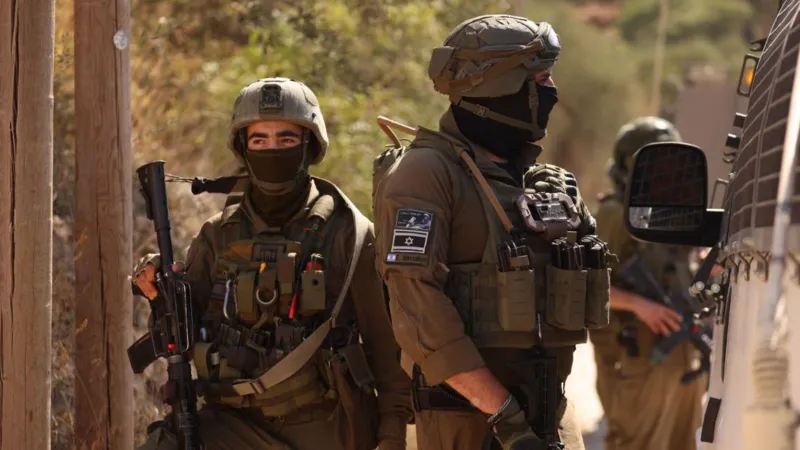
The Israeli military says it will deploy additional troops to a village in the occupied West Bank after failing to remove Israeli settlers who have surrounded the homes of two Palestinian families for several days.
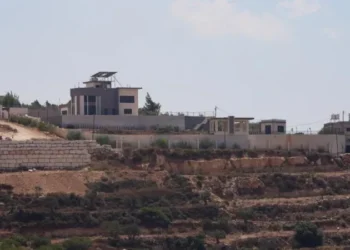
The Abu Ridi and Hassan families, living on the outskirts of Qusra, south of Nablus, say they have been effectively trapped inside their properties since Sunday. Their access to water and electricity has been cut, while dwindling food supplies have added to the pressure on the families.
The situation has become the latest flashpoint in growing concerns over settler violence in the West Bank and the ability, or willingness, of Israeli security forces to prevent Palestinians from being attacked or displaced.
The Israeli military said additional forces would be sent to the area after an operation to remove the settlers failed to end the standoff.
Footage from Qusra showed numerous Israeli security vehicles arriving in the area, including a bulldozer. Later images showed a long line of Israeli security personnel positioned along a road leading towards the Palestinian village.

The area remained under a closed military zone order.
Local media reports also said an Israeli settler outpost near the village had been demolished.
For the families inside the homes, however, the immediate situation remained deeply concerning.
Qusay Abu Ridi, who has been trapped in his home since Sunday, told the BBC that settlers had attacked the property again overnight. He said several settlers remained nearby, apparently hiding from Israeli forces.
The property is owned by Abu Ridi’s brother, a Palestinian-American businessman who had previously contacted the US embassy about the situation.
The US ambassador to Israel, Mike Huckabee, said the embassy had asked Israeli authorities to remove the settlers. He described those responsible as “Israeli terrorists” and condemned what he called an attempt to intimidate and harass the family.
The intervention has added international attention to an incident that began with settlers blocking access to the Palestinian families’ homes.
According to accounts from residents, the settlers blocked the road leading to the gates of the properties and cut electricity and water supplies.
The arrival of Israeli soldiers initially did little to resolve the confrontation. The first soldiers who reached the area were filmed praying alongside settlers, an incident that subsequently prompted the Israeli military to say disciplinary action would be taken.
The situation escalated on Wednesday when Israeli security forces attempted to remove the settlers.
Instead of ending the confrontation, the operation resulted in clashes with a larger group of settlers.
Palestinian security-camera footage shared with the BBC showed Israeli soldiers and border police confronting a crowd of settlers. Security forces were seen using tear gas and stun grenades.
Other footage appeared to show Israeli forces confiscating the canopy under which some settlers had been sheltering while leaving other equipment in the area.
The failure to remove the settlers has intensified questions about the relationship between settler groups and Israeli security forces, particularly in areas where Palestinians say they have experienced repeated attacks and attempts to force them from their land.
It remains unclear precisely what the settlers in Qusra are seeking in the immediate confrontation.
However, residents and Palestinian officials say the incident fits into a wider pattern of pressure on Palestinian communities in the area.
Settler attacks have increasingly included harassment, property damage, arson, intimidation and attempts to occupy Palestinian homes.
The mayor of Qusra, Abdel Azim Wadi, told the BBC that residents had witnessed what he described as a “clear and sustained pattern of targeting” the village.
Last month, a newly completed mosque in the community was set on fire. Hebrew graffiti was reportedly sprayed nearby.
The attack came after violence in the Palestinian village of Tal, where Israeli settlers had also attacked residents.
That confrontation subsequently developed into a wider escalation in which six people were killed, including four Palestinians and two Israeli soldiers. One of the Israeli soldiers had been serving as a security coordinator for a nearby settlement.
The events around Qusra also follow another prolonged confrontation in the nearby village of Jalud.
In July, settlers reportedly surrounded a Palestinian family’s home there for more than two weeks. Following the siege, the owners left the property, which settlers subsequently occupied.
Such incidents have raised fears among Palestinian residents that temporary confrontations can eventually lead to permanent displacement.
The broader pattern has also attracted growing international concern.
United Nations figures cited in the report indicate that 76 Palestinians, including 18 children, have been killed in the West Bank during 2026 by Israeli forces or settlers.
Three Israelis, including one civilian, have also been killed in confrontations involving Palestinians and in an alleged ramming attack in the West Bank.
The displacement figures are similarly significant.
The UN says that since January 2023, 127 Palestinian communities have experienced either full or partial displacement. Of those, 47 communities have been completely displaced, affecting more than 6,390 Palestinians.
During 2026 alone, around 3,800 Palestinians have reportedly been displaced because of settler violence, demolitions and evictions. Nearly half of those displaced were children.
For Palestinian communities already living under severe political and security pressures, the figures represent more than statistics. Displacement can mean losing homes, agricultural land, businesses, community networks and access to essential services.
Qusra’s location makes the situation particularly sensitive. The village is surrounded by Israeli settlements, outposts and Palestinian communities, placing residents in an increasingly contested landscape.
Settlements in the occupied West Bank are regarded as illegal under international law, although Israel disputes aspects of that legal position and maintains that it has historical and legal claims to the territory.
The Israeli government has continued to support settlement expansion, while Palestinian officials and international critics argue that the growth of settlements undermines the possibility of a future Palestinian state.
At a United Nations meeting, Israel’s ambassador to the UN, Danny Danon, rejected the argument that settlements should be regarded as an obstacle to peace.
Danon said Israel would maintain and expand its settlements, arguing that the country has biblical, historical and legal rights to the land.
He told the Security Council that Israel was “not going anywhere”.
Those positions highlight the profound political divide surrounding the West Bank, where questions about land, settlements, security and Palestinian rights remain at the centre of the Israeli-Palestinian conflict.
For the families in Qusra, however, the political debate is being experienced on a much more immediate level.
Their concerns centre on whether they can remain safely inside their homes, regain access to basic necessities and prevent their properties from being taken.
The deployment of additional Israeli troops could bring a temporary end to the confrontation, but it does not resolve the broader concerns surrounding settler violence in the area.
The incident has also raised questions about accountability. Palestinian residents and international observers have repeatedly argued that settlers involved in violence often face insufficient consequences, while Palestinians can face significant restrictions and displacement.
The Israeli military’s decision to discipline soldiers involved in the earlier incident at Qusra indicates that the conduct of security personnel is itself under scrutiny.
But for communities such as Qusra, meaningful security will depend not only on the presence of more troops but also on whether those forces are willing and able to protect residents and prevent further attacks.

The continuing standoff demonstrates how quickly a local confrontation can become part of the much wider crisis engulfing the West Bank.
As additional Israeli forces move into the area, attention will remain focused on the two Palestinian families, the settlers surrounding their homes and the response of Israeli authorities.
The immediate priority for the residents is clear: restoring access to water and electricity, ensuring that food can reach the families and preventing further attacks.
The longer-term challenge is considerably more difficult.
Unless the cycle of settler violence, displacement and competing territorial claims is addressed, incidents such as the one in Qusra are likely to continue placing Palestinian families under extraordinary pressure.
For the Abu Ridi and Hassan families, what began as a blockade outside their homes has become a test of whether they can remain on their land safely. For the wider West Bank, the confrontation is another indication of the increasingly volatile environment surrounding Israeli settlements and Palestinian communities.
Related News:
 Ecuador Deploys 75,000 Forces in Anti-Gang Drive
 Missing Cuba-Bound Aid Ships Spark Urgent Search
 ‘I Will Not Abandon Him’: Pauline Hanson Stands by Ben Roberts-Smith After War Crime Charges
 Trump’s Major Recruitment Drive Targets Border Patrol Growth
 Dreyfus Statue Finally Gets Permanent Paris Home
 Thai School Shooting Leaves Nation Demanding Answers
 Palestinian Families Besieged by Settlers in West Bank
 Channel Crossings Surge: Over 1,000 People Arrive in the UK in Small Boats in a Single Day
 Jailed Georgian Opposition Leaders Warn UK of Iranian Links to Ruling Party
 Kosovo agrees to host Britain’s refused asylum seekers
 UK University Faces Counter-Terror Probe Over China Pressure
 Ukraine-Russia war latest: Putin’s troops exploit bad weather to force Kyiv withdrawal from multiple towns
 New review urges UK to repatriate Shamima Begum, others from Syria
 Indian authorities demolish Kashmir home linked to Red Fort blast
 Greene Pushes Epstein Files Amid Trump Fallout
 Venezuela Threatens Nobel Winner Machado with Fugitive Status
 Trump Envoy to Discuss Ukraine Peace at Kremlin
 Video shows Israeli troops kill Palestinians after surrender
 Emails Show Epstein Funded Mandelson’s Husband After Jail
 Last‑ditch Call to Save Police Front Counters in London
 Nine Arrested in France Over Death of Far‑Right Student
 South Korea’s Ex-President Faces Death Penalty in Insurrection Trial
 How Much Could Andrew’s Arrest Hurt the Royal Family?
 Epstein Eyed Record Label Investment to Access Women, Files Suggest
 New Mexico Reopens Criminal Inquiry into Jeffrey Epstein’s Zorro Ranch
 American Citizen Killed in Cuba Boat Shooting, U.S. Officials Say
 Manchester Students Mourn Ayatollah Amid Protest
 Istanbul Mayor Faces Corruption Trial Amid Political Storm
 Iranian Players Get Australian Visas After Anthem Protest
 Jobless Man on £15k Benefits Accused of Hurling Abuse at Anti-Migrant Demo
 Point-Blank Gunshot Misses Indian Politician
 Teen Admits Filming Westfield Chair Prank
 Belarus Leader Gifts Rifle to Kim Jong Un
 Status Quo Restored: Netanyahu Intervenes After Police Block Latin Patriarch from Holy Sepulchre
 India Begins Mammoth Census for 1.4 Billion People
 Pope Leo Urges Peace in First Easter Mass Address
 ‘Ghost Offences’: Data Reveals No Children Charged with New ‘Adult Crime’ Laws in 11 Years
 ‘The Soul of Spain’: Politicians Clash Over Renewed Push to Move Picasso’s Guernica
 ‘It Was an Accident’: Rohan Dennis Breaks Silence to Attack ‘False Narrative’ Over Wife’s Death
 The Fallen Icon: Ben Roberts-Smith Charged with Five War-Crime Murders
 The $100 Billion Peace: Trump’s ‘Grand Bargain’ Ends Iran Conflict at a Staggering Cost
 Moldova River Crisis Exposes War’s Hidden Cost
 Relief at the Pump: Irish PM Unveils €505m Package to Stem Fuel Crisis
 The Masked Frontier: Allegations of Greek Police Using Proxies for ‘Seismic’ Border Pushbacks
 National Heartbreak: Turkey Mourns Victims of Unprecedented School Shooting Wave
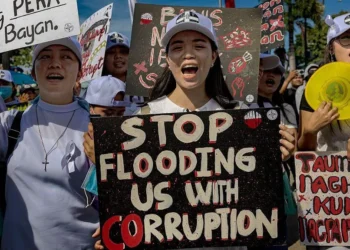 The ‘Big Fish’ Lands: Marcos Confirms Arrest of Key Figure in Flood-Control Scandal
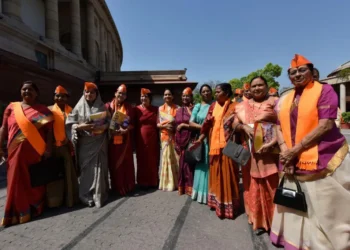 The 850-Seat Solution: India’s Women’s Quota Bill Sparks Parliamentary Expansion Row
 Canadian astronaut French words ease language row
 The ‘Machli’ Manifesto: Why Indian Politicians are Trading Rallies for Fish Markets
 NHS Safety Fears as Nurses Cover Doctor Gaps
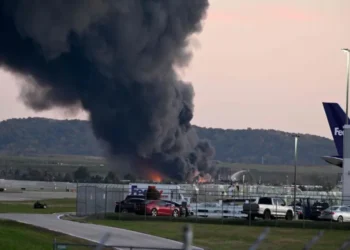 Two Dead in Adelaide Airport Plane Crash Fire
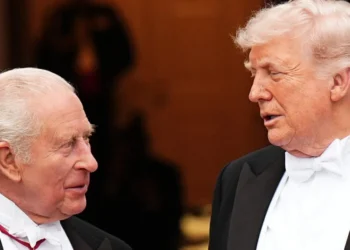 The “Charles Charm” Offensive: Did the Royals Find Their Mojo in D.C.?
 The Cost of Conviction: Singapore High Court Fines Activists for Pro-Palestinian “Watermelon Walk”
 Tragedy in the Red Centre: Outback Search Ends in Discovery of Missing Girl’s Body
 A “Breaking Point” for Britain: Terror Adviser Warns Antisemitism is Now a National Security Emergency
 Cartel crackdown raises fears of fresh violence
 China Fireworks Factory Blast Kills 21 in Hunan
 “Community Shield”: Met Police Deploy Specialist 100-Officer Team to Guard London’s Jewish Postcodes
 France Faces Record Presidential Crowded Race Amid Far-Right Surge
 Gunman Killed After White House Security Shootout
 Farage and Reform UK Reshape British Politics
 Starmer Leadership Under Pressure After Setbacks
 Israel, Lebanon Agree on Fragile Ceasefire Deal
 Zelensky Invites Putin to Direct Peace Talks
 Royal Navy Mourns Devastating Helicopter Loss
 Ex-Wife of Dubai Royal Relative Held in Custody
 Fuel and Supply Crisis Pushes Gaza Toward Collapse
 Russian Artist and Kremlin Critic Shot Dead in Poland
 Le Pen’s Popularity Holds Despite Conviction
 Alleged Head of Fake Government Agency Arrested in Nigeria After Weeks on the Run
 India’s Gen Z Protest Movement Enters a New Phase
 Ecuador Police Battle Gangs in Growing Drugs War
 Hong Kong Activist Allowed to Stay in UK After Threat
 Armed Man Arrested Near Trump Golf Course
 Burnham Considers Inquiry Into Epstein UK Connections
 AOC Reveals Egg-Freezing Decision Amid Political Future
 PC Harper’s Mother Finds Hope After No 10 Call
 Councils to Get Powers to Block New Vape Shops
 Tennessee Town Backs Trump as War Fuels Its Economy
 Brazil Orders Discord to Suspend Livestreams