Published: 3 August 2026. The English Chronicle Desk. The English Chronicle Online
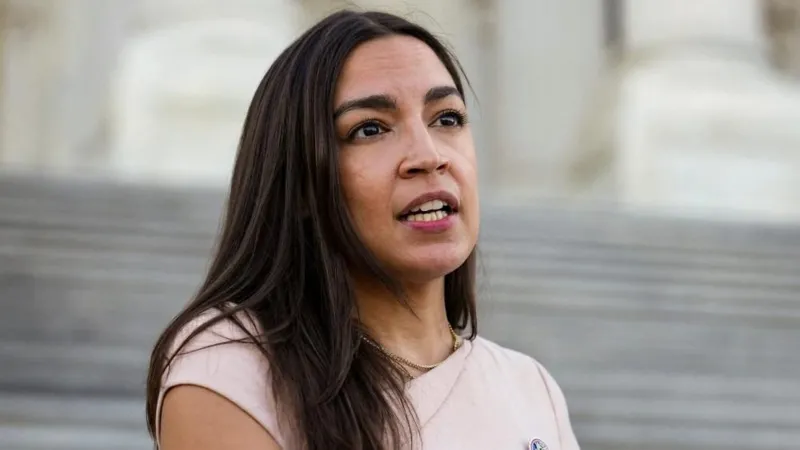
US Congresswoman Alexandria Ocasio-Cortez has revealed that she is freezing her eggs, offering an unusually personal glimpse into a medical process that remains difficult for many Americans to discuss openly.
The 36-year-old New York Democrat shared videos of the early stages of the process on social media, including footage of herself administering an injection and explaining some of what she has learned about fertility preservation. Her decision to speak publicly about the experience appears intended not only to explain the practical realities of egg freezing, but also to encourage wider conversations about reproductive healthcare.
Ocasio-Cortez later discussed the decision during an interview with ABC News’ This Week, where she said she wanted to help normalise conversations surrounding fertility treatment. She acknowledged that discussing such a personal matter could carry political risks, particularly for a public figure operating in an increasingly polarised political environment.
For Ocasio-Cortez, however, the issue is closely connected to the wider debate over reproductive healthcare in the United States. She argued that political leaders should be willing to talk about the realities faced by women seeking reproductive care, rather than treating such issues solely as matters of private life.

The congresswoman has also linked her decision to concerns about access to healthcare under the current political administration. She criticised what she described as a US healthcare system that leaves patients facing significant financial and practical barriers when seeking fertility services.
Her social media posts discussed issues including the cost of egg freezing, clinical procedures and storage, while attempting to explain aspects of the process that can often seem inaccessible or confusing to people considering fertility preservation.
Egg freezing, formally known as oocyte cryopreservation, involves stimulating the ovaries so that multiple eggs can mature. The eggs are then collected through a medical procedure and frozen for potential future use. The process can involve medication, monitoring appointments and significant expense, with costs varying substantially according to location, clinic and individual circumstances.
By sharing her own experience, Ocasio-Cortez has placed an intensely personal medical decision into the middle of a much larger national conversation about reproductive autonomy, healthcare affordability and women’s choices.
Her comments also came at a politically significant moment for the congresswoman.
During the same ABC interview, Ocasio-Cortez indicated that she had not ruled out a future presidential campaign. Asked whether she could eventually seek the White House, she said she remained open to the possibility and expressed gratitude for the level of support she has received.
At the same time, she sought to play down immediate speculation about her political ambitions. With congressional elections approaching in November, she said Democrats needed to concentrate on winning those elections rather than becoming consumed by individual ambitions.
The midterm elections will determine all 435 seats in the US House of Representatives, while roughly one-third of the Senate’s 100 seats will also be contested. The outcome will play a significant role in determining the balance of power in Washington during the remainder of President Donald Trump’s term.
Ocasio-Cortez’s comments therefore carry significance beyond speculation about a possible presidential campaign. They also highlight the continuing struggle within the Democratic Party over its political identity, electoral strategy and relationship with younger voters.
The New York Democrat has long occupied a prominent position on the party’s progressive left. Her political rise began with her surprise victory in a 2018 Democratic primary and she has since become one of the most recognisable progressive voices in Congress.
Her popularity among younger voters has helped make her an influential figure well beyond her New York district. At the same time, her relationship with the Democratic establishment has frequently been complicated.
That tension has become increasingly visible as progressive candidates have gained momentum in Democratic primaries across the country. Ocasio-Cortez’s remarks about a possible future presidential campaign come against this background of growing debate over whether the party should move further to the left or seek to broaden its appeal to centrist and independent voters.
She has also been asked about a possible Senate campaign in New York against Democratic Minority Leader Chuck Schumer. Her response was cautious but did not close the door, saying that “anything is possible”.
Such a contest would have major implications for the Democratic Party because Schumer represents the established leadership structure that progressives have increasingly challenged.
Ocasio-Cortez’s public profile has also placed her at the centre of arguments about how Democrats should communicate with younger Americans. In the ABC interview, she argued that the party has a responsibility to engage with voters through the platforms, language and political discussions that matter to them.
Her comments suggested that the challenge for Democrats is not simply choosing between progressive and moderate policies. Instead, she argued that the party needs to build a coalition broad enough to win elections while remaining responsive to a generation of voters demanding significant political change.
She also appeared to distance herself from some positions associated with the Democratic Socialists of America, including proposals to defund the police and abolish institutions such as the Senate and Department of Defense. The distinction illustrates the careful political position Ocasio-Cortez occupies: she remains closely associated with the progressive movement while also attempting to present herself as part of a broader Democratic electoral coalition.
Her decision to discuss egg freezing adds another dimension to that public identity.
For years, fertility preservation has often been discussed primarily in medical or private settings. Egg freezing has become increasingly visible as women seek to preserve reproductive options while delaying pregnancy for personal, professional, financial or other reasons. Yet the treatment remains expensive and its success is not guaranteed.
Ocasio-Cortez’s decision to document her experience could therefore resonate with women who have considered fertility preservation but have struggled to understand what the process involves.
Her emphasis on cost and access also reflects a broader American healthcare debate. Fertility treatment can involve substantial out-of-pocket expenses, and insurance coverage varies widely. For many patients, the financial burden can become an important factor in deciding whether treatment is possible.
The congresswoman’s decision to speak about the issue also comes amid continued political disputes over reproductive rights in the United States. Abortion access, contraception, pregnancy care and fertility treatment have all become subjects of intense political debate, particularly since the US Supreme Court’s 2022 decision overturning the constitutional right to abortion.
Ocasio-Cortez has consistently positioned herself as a strong supporter of reproductive rights. Her latest comments suggest that she sees personal experiences such as fertility preservation as part of the wider political conversation rather than issues that public figures should necessarily keep private.
At the same time, her willingness to discuss egg freezing illustrates the changing expectations surrounding political figures. Social media has blurred the traditional boundary between politicians’ public and private lives, allowing elected officials to communicate directly with voters about experiences that would once rarely have appeared in political coverage.
For Ocasio-Cortez, the decision to share the process appears deliberate. She has acknowledged the political risks while arguing that greater openness could help women better understand their reproductive choices and the healthcare system surrounding them.

Her comments about a possible presidential campaign are likely to generate further attention, but she has made clear that the immediate political priority is the November midterms.
Whether she eventually seeks the Senate, the presidency or another national role remains uncertain. What is clearer is that Ocasio-Cortez continues to occupy an important place in the Democratic Party’s debate over its future.
Her latest disclosure brings together two issues that are rarely reported in the same political conversation: the intensely personal question of fertility preservation and the much broader question of political ambition.
For now, Ocasio-Cortez says voters and Democrats should focus on the upcoming elections. But by speaking openly about her own reproductive choices while discussing the possibility of a future White House campaign, she has once again demonstrated how personal experience and political identity increasingly intersect in modern American public life.
Related News:
 Inside Kyiv’s resolve as conflict nears five‑year mark
 What to Watch for During Trump’s State of the Union Address
 US Partially Evacuates Beirut Embassy Amid Rising Iran Tensions
 Giuliani hospitalised in critical condition
 US Court Restores Abortion Pill Access Temporarily
 Trump’s Revenge Drive Deepens GOP Divide
 Trump’s Major Recruitment Drive Targets Border Patrol Growth
 Mystery Grows Over Mitch McConnell’s Health
 Russia losses Ukraine war peace talks intensify amid rising deaths
 Trump Escalates Minnesota Immigration Surge Amid Rising Tensions
 Trump Threatens Strong Action If Iran Executes Protesters
 Trump Receives Machado’s Nobel Medal in White House Meeting
 EU Says US Ties Have Suffered ‘Big Blow’ After Greenland Crisis
 Trump Praises ‘Terrific’ Petro After White House Talks
 Fears of New Arms Race as US-Russia Nuclear Weapons Treaty Expires
 US Civil Rights Leader Jesse Jackson Dies Aged 84
 Stephen Colbert Says CBS Spiked Interview With Democrat Over FCC Fears
 American Citizen Killed in Cuba Boat Shooting, U.S. Officials Say
 Hopes and Fears as US Iranians Take to Streets After Toppling of Supreme Leader
 Iran, the US, and a World Cup That Starts in Three Months
 Trump Faces Questions Over Iran Conflict Plan
 US Senate Backs Trump War Powers Amid Iran Missile Barrage
 US Senate Vote Fails to Rein in Trump War Powers on Iran
 UK Prepares Aircraft Carrier for Middle East Crisis
 Pete Hegseth Iran War Remarks Spark Alarm
 Iran War Puts Trump at Political Risk Amid Rising Prices
 Iran Rejects Ceasefire, Warns Trump With Chilling Message
 SNP Health Secretary Criticised Over NHS Failures Locally
 Trump’s Confidence Undimmed — But Every Iran Option Carries Risk
 Missing Cuba-Bound Aid Ships Spark Urgent Search
 ‘My Daughter is Under the Rubble’: The Human Cost of the Tehran Strikes
 India Begins Mammoth Census for 1.4 Billion People
 Pope Leo Urges Peace in First Easter Mass Address
 ‘I Will Not Abandon Him’: Pauline Hanson Stands by Ben Roberts-Smith After War Crime Charges
 ‘The Soul of Spain’: Politicians Clash Over Renewed Push to Move Picasso’s Guernica
 The $100 Billion Peace: Trump’s ‘Grand Bargain’ Ends Iran Conflict at a Staggering Cost
 The Changing Face of Georgia: Trump-Backed Clay Fuller Wins Election
 Moldova River Crisis Exposes War’s Hidden Cost
 Relief at the Pump: Irish PM Unveils €505m Package to Stem Fuel Crisis
 The Masked Frontier: Allegations of Greek Police Using Proxies for ‘Seismic’ Border Pushbacks
 Canadian astronaut French words ease language row
 The ‘Machli’ Manifesto: Why Indian Politicians are Trading Rallies for Fish Markets
 NHS Safety Fears as Nurses Cover Doctor Gaps
 US Court Weighs Fate of TPS for Migrants
 The “Charles Charm” Offensive: Did the Royals Find Their Mojo in D.C.?
 US states redraw maps after voting rights ruling
 “Invisible Agony”: 98-Year-Old Woman Left in “Severe Pain” for Days Amidst Care Backlog
 The “Time Tax” of Memory: Why Dementia Care is the Ultimate Test of UK Resilience
 Trump Threatens UN Budget Cuts as US Pushes ‘Trade Over Aid’ Agenda
 Florida Surgeon ‘Devastated’ Over Fatal Surgery Error
 Tensions Emerge in Netanyahu-Trump Alliance
 France Faces Record Presidential Crowded Race Amid Far-Right Surge
 US Awaits Iran Reply on New Ceasefire Proposal
 Immigration Judges Fear Pressure in Trump Era
 Hormuz Talks Near Critical Stage
 Pope Meets Families in Italy Toxic Waste Zone
 Former ICC prosecutor condemns US sanctions
 Farage and Reform UK Reshape British Politics
 Starmer Leadership Under Pressure After Setbacks
 House Curbs Trump’s War Powers in Rare Rebellion
 Trump-Netanyahu Call Fuels Iran Talk Crisis
 Zelensky Invites Putin to Direct Peace Talks
 Trump Ballroom Project Faces Rising Costs
 Israel Strikes Iran After Missile Attack
 Trump Helps Clear Balogun for Belgium World Cup Clash
 Girl Survives 32 Hours Under Rubble After Venezuela Quake
 Why Some African Nations Are Rejecting Trump Aid
 Trump’s New Vision for 250 Years of US Expansion
 US Investigates ‘Explosive Diarrhoea’ Parasite Outbreak
 Le Pen’s Popularity Holds Despite Conviction
 Trump’s Hormuz U-Turn Raises Doubts Over Iran Strategy
 ICE Arrests Human Rights Lawyer Who Fled Chinese Crackdown
 US Unveils Fresh Tariffs on Global Trading Partners
 Trump Orders Signs Criticising Smithsonian Museum
 India’s Gen Z Protest Movement Enters a New Phase
 Trump Hosts Zelensky and Netanyahu as Ukraine and Iran Conflicts Shape Global Agenda
 Iran Denies Direct US Talks as Oman Continues Diplomatic Mediation
 Russian Missile Strike on Kyiv Kills at Least 14
 Armed Man Arrested Near Trump Golf Course
 Trump Renews Push to End Birthright Citizenship