Published: 13 August 2026 | The English Chronicle Desk | The English Chronicle Online
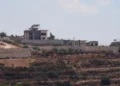
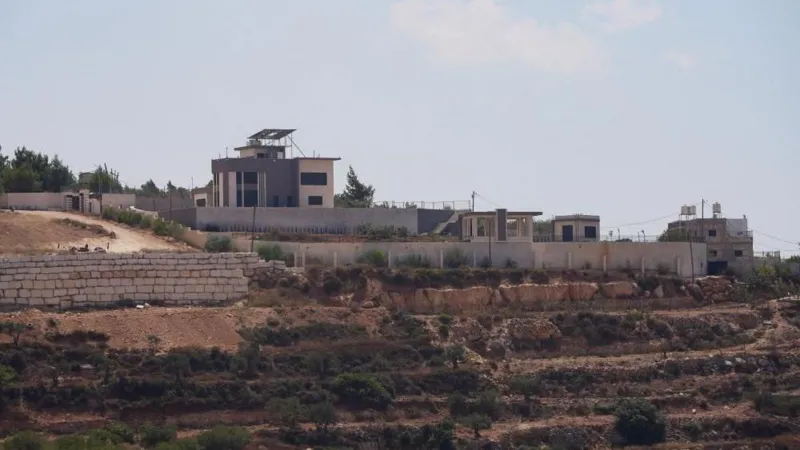
Two Palestinian families in an occupied West Bank village say they have been trapped inside their homes for days after Israeli settlers established an outpost nearby, cutting off access to essential supplies and leaving residents increasingly fearful for their safety.
The Abu Ridi and Hassan families in Qusra, near Nablus, have appealed for help after their water and electricity supplies were cut and food stocks began to run low. Palestinian residents and rights groups say the families have been effectively isolated since Sunday, while international concern over escalating settler violence in the West Bank continues to grow.
The incident has drawn renewed attention to the increasingly tense situation in the occupied territory, where Palestinian communities have reported growing pressure from settlement activity, attacks and attempts to seize land and property.
On Wednesday, Israeli security forces were reported to have withdrawn from the newly established settler outpost following confrontations with a larger group of settlers. Around a dozen settlers were reportedly still present at the site.

The circumstances surrounding the establishment of the outpost remain contested, and it is not immediately clear what the settlers’ precise objectives were. Palestinian residents and rights organisations, however, say the development forms part of a wider pattern in which settlers seek to push Palestinian residents away from their homes and land.
The families’ accounts have intensified concerns about their immediate safety.
Palestinian security camera footage reportedly showed settlers tearing down a wall outside the Abu Ridi family’s home on Sunday evening. Stones from the demolished wall were then used to block the road, according to the footage and Palestinian residents.
The blockade reportedly left seven members of the family, including two young girls, unable to leave their property. Other Palestinians attempting to reach the family were also prevented from accessing the area.
The families live in an area classified as Area B under the Oslo-era administrative arrangements. Palestinian authorities exercise administrative responsibilities there, while Israel retains overriding security control.
Qusay Abu Ridi described the situation as critical in a social media appeal, saying his family was completely isolated.
He said they were living in their own home and on their own land and wanted only the ability to live safely and with dignity.
Aysha Hassan, whose family was also affected, described an atmosphere of fear. She said settlers had attempted to break through the family’s gate before throwing stones and directing insults at those inside.
Her account reflected the anxiety felt by residents who say they have been unable to predict what the settlers might do next.
The families’ isolation has also raised questions about the response of Israeli security forces.
After the Palestinian homeowners first contacted the Israeli army, the initial soldiers who arrived at the scene were reportedly filmed praying alongside settlers. The incident has generated further criticism from rights activists and Palestinian residents, who say security forces should have acted immediately to protect civilians.
The situation also affected journalists attempting to reach the families.
On Monday, Israeli settlers reportedly prevented journalists from the Israeli newspaper Haaretz from reaching the Palestinian properties. The journalists said their vehicle was blocked for approximately two hours and that Israeli soldiers at the scene did not intervene.
The reporters were reportedly told that the area had been designated a closed military zone. The journalists questioned the application of that restriction because, according to their account, the order did not appear to prevent settlers from remaining at the location.
Human rights organisations subsequently called for urgent intervention.
Yesh Din, an Israeli human rights organisation that monitors settler violence and the treatment of Palestinians in the occupied West Bank, appealed to the head of Israel’s Central Command to protect the residents, remove the settlers from the newly established outpost and ensure that those responsible for violence were held accountable.
The first significant relief reportedly came late on Tuesday, when a Palestinian ambulance was allowed to reach the families.
The ambulance delivered food supplies and transported one child away from the area for medical treatment.
The development provided temporary relief but did not resolve the wider security situation surrounding the homes.
Around the same time, the Israel Defense Forces issued a statement condemning the establishment of the new outpost. The IDF said that entering and taking over Palestinian homes was illegal and unacceptable.
The statement represented an important distinction between the actions of the settlers involved and the position officially expressed by the Israeli military.
Senior Israeli military officers subsequently travelled to the area. Maj Gen Avi Bluth, head of the Central Command, and other senior officers reportedly met residents and expressed serious concern about what had occurred.
But tensions remained high.
On Wednesday, Palestinian security camera footage shared with the BBC reportedly showed confrontations involving Israeli soldiers, border police and a larger group of settlers. Security forces were reported to have used tear gas and stun grenades during the confrontation.
The reported withdrawal of Israeli security forces from the outpost came after those clashes.
For Palestinian residents, however, the immediate concern remains whether the settlers will return and whether they will be able to remain safely in their homes.
The incident comes against a backdrop of growing international concern about the future of the West Bank.
A senior United Nations official told the Security Council in New York that the territory was “at breaking point”, reflecting concerns over settlement expansion, violence, displacement and the increasingly fragile security environment.
Israeli settlements in the occupied West Bank are regarded as illegal under international law by the United Nations and most governments. Settlement outposts are distinct because they are established without formal Israeli government authorisation, although some later receive legal recognition under Israeli law.
The issue remains one of the most contentious elements of the Israeli-Palestinian conflict.
Palestinians argue that settlement expansion fragments their communities and reduces the territory available for a future independent state. Israel has disputed aspects of the international legal position and successive Israeli governments have differed over settlement policy.
The events in Qusra nevertheless highlight the immediate human consequences of the dispute.
For families living in isolated rural communities, control over roads, access to water and electricity, and the ability to move freely can determine whether they feel secure in their own homes.
The allegations made by the families also demonstrate why rights organisations have repeatedly called for stronger accountability when violence or intimidation occurs.
The presence of children among those trapped inside the homes has added another layer of concern. Residents say that being unable to leave or receive assistance creates particular risks when medical treatment, food or other necessities are required.
The ambulance that eventually reached the families illustrated the difficulty created by the blockade. Even basic humanitarian access became dependent on security arrangements at the site.
The episode has also raised concerns about the role of journalists in documenting events in sensitive areas of the West Bank. Restrictions on access can make independent verification more difficult, particularly when competing accounts emerge from Palestinian residents, settlers and security forces.
As tensions continue, the families remain at the centre of a wider dispute over land, security and the future of the West Bank.

Their appeal is ultimately straightforward: they want to remain in their homes without intimidation and to have access to essential services.
Whether the authorities can guarantee that security will be a key test in the days ahead.
The Qusra incident is unlikely to be viewed in isolation. It comes amid a broader escalation of settler activity and violence that has increased international pressure on Israel to protect Palestinian civilians and prevent unlawful attempts to seize Palestinian property.
For the two families, however, the wider political debate is secondary to the immediate reality outside their doors.
They are waiting to see whether the settlers leave permanently, whether their supplies and access can be restored, and whether they can once again move around their own community without fear.
In a region where disputes over land have shaped generations of conflict, the events in Qusra offer another stark reminder of how quickly a confrontation over territory can become a matter of basic survival for ordinary families.
Related News:
 Thai School Shooting Leaves Nation Demanding Answers
 Inside Kyiv’s resolve as conflict nears five‑year mark
 Murdered Student ‘Algasim’ Was ‘the Most Special Person’, Friends Say
 Ecuador Deploys 75,000 Forces in Anti-Gang Drive
 Missing Cuba-Bound Aid Ships Spark Urgent Search
 ‘I Will Not Abandon Him’: Pauline Hanson Stands by Ben Roberts-Smith After War Crime Charges
 Cartel crackdown raises fears of fresh violence
 US ‘Narco Boat’ Strikes Draw Global Outcry
 Trump’s Major Recruitment Drive Targets Border Patrol Growth
 Dreyfus Statue Finally Gets Permanent Paris Home
 Ecuador Police Battle Gangs in Growing Drugs War
 Burnham Considers Inquiry Into Epstein UK Connections
 UK Charity Watchdog Probes Settlement Donations
 BJP Loses Stronghold After Student Protest Fallout
 Harper Widow Fights Early Release of Killer’s
 Evidence Links South African Forces to Detective’s Murder
 PC Harper’s Mother Finds Hope After No 10 Call
 Councils to Get Powers to Block New Vape Shops
 Muratov: Putin Can No Longer Claim Victory in Ukraine
 Channel Crossings Surge: Over 1,000 People Arrive in the UK in Small Boats in a Single Day
 Kosovo agrees to host Britain’s refused asylum seekers
 Indian authorities demolish Kashmir home linked to Red Fort blast
 Greene Pushes Epstein Files Amid Trump Fallout
 Venezuela Threatens Nobel Winner Machado with Fugitive Status
 Last‑ditch Call to Save Police Front Counters in London
 Nine Arrested in France Over Death of Far‑Right Student
 South Korea’s Ex-President Faces Death Penalty in Insurrection Trial
 How Much Could Andrew’s Arrest Hurt the Royal Family?
 Epstein Eyed Record Label Investment to Access Women, Files Suggest
 Bill Gates Pulls Out of India’s AI Summit Over Epstein Files Controversy
 American Citizen Killed in Cuba Boat Shooting, U.S. Officials Say
 Calls Grow to Remove Billboard Following Lyra McKee Graffiti
 Nepal Holds First General Election Since Gen Z Protests Toppled Government
 Why Aren’t Our Dirtiest Roads Getting Cleaned?
 Protesters Rally in San Francisco Against OpenAI Deal With Pentagon
 ‘Every Day Feels Like a Month’: Iranians Describe Life Under ‘Constant’ US‑Israeli Strikes
 How Depleted Weapons Stockpiles Could Affect the Iran Conflict
 After Mugabe: Family Feuds and Legal Battles
 Point-Blank Gunshot Misses Indian Politician
 India Begins Mammoth Census for 1.4 Billion People
 Pope Leo Urges Peace in First Easter Mass Address
 ‘Ghost Offences’: Data Reveals No Children Charged with New ‘Adult Crime’ Laws in 11 Years
 ‘The Soul of Spain’: Politicians Clash Over Renewed Push to Move Picasso’s Guernica
 ‘It Was an Accident’: Rohan Dennis Breaks Silence to Attack ‘False Narrative’ Over Wife’s Death
 The Fallen Icon: Ben Roberts-Smith Charged with Five War-Crime Murders
 The $100 Billion Peace: Trump’s ‘Grand Bargain’ Ends Iran Conflict at a Staggering Cost
 Moldova River Crisis Exposes War’s Hidden Cost
 Relief at the Pump: Irish PM Unveils €505m Package to Stem Fuel Crisis
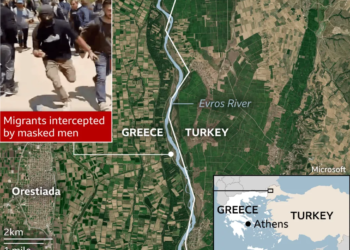 The Masked Frontier: Allegations of Greek Police Using Proxies for ‘Seismic’ Border Pushbacks
 The ‘Big Fish’ Lands: Marcos Confirms Arrest of Key Figure in Flood-Control Scandal
 Canadian astronaut French words ease language row
 The ‘Machli’ Manifesto: Why Indian Politicians are Trading Rallies for Fish Markets
 NHS Safety Fears as Nurses Cover Doctor Gaps
 Two Dead in Adelaide Airport Plane Crash Fire
 The “Charles Charm” Offensive: Did the Royals Find Their Mojo in D.C.?
 Tragedy in the Red Centre: Outback Search Ends in Discovery of Missing Girl’s Body
 A “Breaking Point” for Britain: Terror Adviser Warns Antisemitism is Now a National Security Emergency
 US states redraw maps after voting rights ruling
 China Fireworks Factory Blast Kills 21 in Hunan
 “Community Shield”: Met Police Deploy Specialist 100-Officer Team to Guard London’s Jewish Postcodes
 France Faces Record Presidential Crowded Race Amid Far-Right Surge
 Immigration Judges Fear Pressure in Trump Era
 Farage and Reform UK Reshape British Politics
 Starmer Leadership Under Pressure After Setbacks
 Israel, Lebanon Agree on Fragile Ceasefire Deal
 Zelensky Invites Putin to Direct Peace Talks
 Families Grieve Beyond Air India Crash Victims
 Man Arrested 22 Years After Leeds Teen Murder

 Russian Artist and Kremlin Critic Shot Dead in Poland
 Watchdog Says MI5 Knew Agent’s Violent Misogynistic Views
 Le Pen’s Popularity Holds Despite Conviction
 Police Rule Out Political Motive in Widdecombe Killing
 India’s Gen Z Protest Movement Enters a New Phase
 Burnham Reaffirms Support for Ukraine During Zelensky Visit
 Bali Bans Dutch Expats Over Alleged Running Club Exclusion
 Avalanche Claims Nepal’s Greatest Mountain Guides
 Armed Man Arrested Near Trump Golf Course
 Trump Renews Push to End Birthright Citizenship
 AOC Reveals Egg-Freezing Decision Amid Political Future