Published: 13 August 2026 | The English Chronicle Desk | The English Chronicle Online
A major Ukrainian drone and missile assault on the Russian Black Sea port of Novorossiysk has damaged critical grain-export infrastructure, including major terminals used to move Russian wheat and other agricultural commodities to international markets. The attack has also struck Russia’s main remaining Black Sea naval stronghold, highlighting how military operations are increasingly threatening commercial shipping and food-supply routes.
The overnight assault killed at least three people, including an eight-year-old child, and injured others, according to Russian regional authorities. Ukraine said the operation was deliberately aimed at military infrastructure and the Russian Black Sea Fleet, while subsequent reports indicated that grain terminals were among the facilities damaged.
The consequences extend beyond the immediate military confrontation. Novorossiysk is one of Russia’s most important maritime gateways and handles a substantial proportion of the country’s grain exports. Following the attack, one major grain terminal suspended operations while the damage was assessed, while another terminal was also reported to have halted activity. Reuters reported that the disruption could add further pressure to already vulnerable Black Sea supply chains.
The attack was described by Ukrainian President Volodymyr Zelenskyy as a “unique operation”. Kyiv said it had combined several types of weapons, including long-range systems and unmanned platforms, in an attempt to strike Russian naval assets and supporting infrastructure.

The operation targeted Novorossiysk, a strategically important city on Russia’s Black Sea coast. The port has become particularly important to Russia’s navy since Ukrainian attacks forced much of the Black Sea Fleet away from its traditional base at Sevastopol in occupied Crimea.
Ukraine has increasingly demonstrated the ability to strike targets deep inside Russian territory and across the Black Sea. The Novorossiysk operation therefore represents another stage in a campaign intended not only to damage military assets but also to put pressure on Russia’s maritime logistics.
According to Ukrainian claims, several Russian warships were damaged. Independent reporting also indicated that military infrastructure, port facilities and other strategic assets were affected. Russia has not publicly confirmed all of the Ukrainian claims.
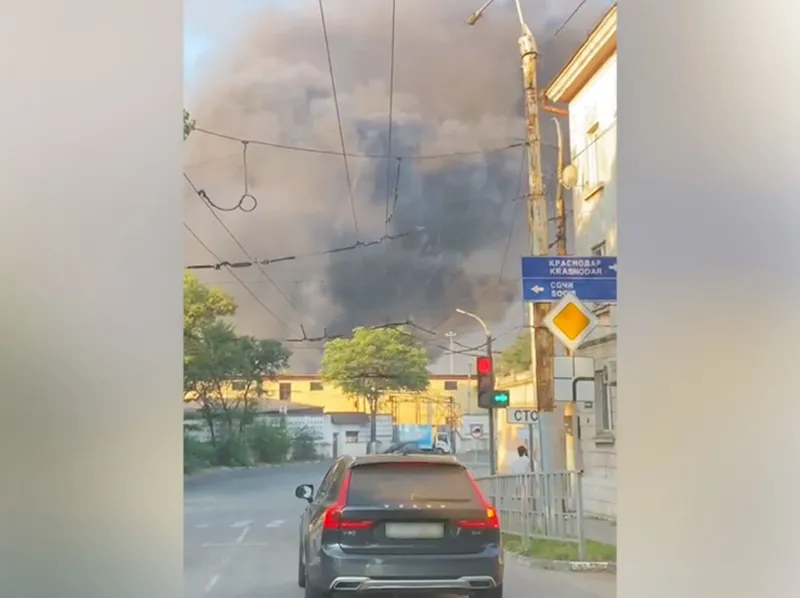
The attack caused disruption throughout the port area. Local officials reported damage to buildings and infrastructure, while emergency measures were introduced in Novorossiysk. The wider Krasnodar region also reported damage following a large-scale overnight barrage.
The most significant economic consequence may come from the damage to grain-export infrastructure.
Novorossiysk is a crucial outlet for Russian agricultural exports. The port handles up to roughly one-third of Russia’s grain exports, according to industry reporting, making it particularly important to the country’s position in global wheat markets.
The attack damaged a terminal operated by Demetra Holding, which subsequently halted operations while the extent of the damage was assessed. Reuters also reported that another major grain terminal had stopped operations following the strike.
The interruption is significant because Russia is the world’s largest wheat exporter. Even a temporary reduction in the ability to load grain ships can create logistical problems for exporters, traders and buyers.
Russia’s agriculture ministry said it was examining ways to redirect cargo through alternative routes, including ports in the Baltic and Caspian seas and land-based transportation networks. Such alternatives, however, cannot necessarily provide the same scale or efficiency as Russia’s major Black Sea export infrastructure.
The disruption comes after earlier restrictions on maritime traffic around Novorossiysk. In July, Russia introduced temporary nighttime restrictions on vessels entering and leaving the port following Ukrainian drone attacks. Industry sources said the port handled approximately one-third of Russia’s grain exports.
The Black Sea is one of the world’s most important agricultural trade corridors.
Russia and Ukraine are both major producers and exporters of wheat, sunflower products, corn and other agricultural commodities. Their importance is particularly pronounced for countries in North Africa, the Middle East and parts of Asia that depend heavily on imports.
The war has repeatedly demonstrated how military activity around ports can affect food prices thousands of kilometres away.
When Russia invaded Ukraine in 2022, the blockade and disruption of Ukrainian ports created major concerns over global food supplies. The subsequent Black Sea Grain Initiative temporarily allowed Ukrainian agricultural exports to continue through maritime corridors, helping reduce pressure on international markets.
That arrangement eventually collapsed after Russia withdrew and maritime attacks intensified.
Since then, both Russia and Ukraine have increasingly targeted infrastructure associated with the other’s maritime economy. Ukrainian attacks have affected Russian shipping and port infrastructure, while Russian strikes have repeatedly damaged Ukrainian agricultural facilities and vessels.
The latest attack therefore adds another layer of instability to an already fragile trading environment.
Russian officials have accused Ukraine of deliberately attacking agricultural infrastructure and warned that the consequences could extend beyond Russia.
Russian Foreign Ministry spokeswoman Maria Zakharova said Ukrainian strikes on Russian grain and agricultural facilities could contribute to higher global food prices and shortages. Moscow has argued that such attacks threaten international food security.
Russia has also maintained that it will continue attacking facilities it says are being used by Ukrainian forces to threaten navigation in the Black Sea and Sea of Azov.
Ukraine, meanwhile, argues that its military campaign is a response to Russia’s continuing invasion and attacks against Ukrainian territory.
The competing claims illustrate the increasingly blurred boundary between military targets and commercial infrastructure in the Black Sea. Ports frequently serve multiple purposes, handling civilian cargo while also supporting military logistics.
Ukraine has become increasingly effective at conducting long-range attacks against Russian targets.
The country has developed and deployed a combination of aerial drones, naval drones and domestically produced missile systems. These weapons have allowed Kyiv to threaten Russian naval assets and infrastructure far beyond the immediate frontline.
The attacks have also forced Russia to adjust the way it operates its Black Sea Fleet.
Novorossiysk became a more important naval location after Ukrainian strikes made Sevastopol increasingly vulnerable. But the concentration of military assets in a major commercial port has also created new risks.
The latest assault demonstrates the difficulty Russia faces in protecting a location that simultaneously functions as a naval base, commercial shipping centre and energy-export hub.
The same geographic concentration that makes Novorossiysk economically valuable also makes it strategically attractive to Ukraine.
The impact on Russian grain exports will depend heavily on how quickly damaged facilities can resume operations.
A short suspension may have limited consequences if exporters can redirect shipments through other terminals. A prolonged disruption, however, could create bottlenecks during a period when global markets are closely watching Black Sea supplies.
Russia’s ability to redirect cargo through other ports will also depend on available storage, railway capacity, shipping schedules and security conditions.
The disruption comes at a time when grain traders are already dealing with heightened uncertainty across the Black Sea. Earlier attacks and restrictions had caused shipping companies and exporters to reassess the risks of operating in the region.
For international buyers, reliability is as important as production. A country may have abundant grain available for export, but if it cannot safely move that grain from inland storage facilities to ships, the supply can still become difficult to access.
The latest developments are particularly significant because Ukraine’s agricultural exports have also suffered from repeated Russian attacks.
Ukrainian ports, including those around Odesa, have been targeted during the war, while cargo vessels and port infrastructure have faced growing security risks.
Industry data has previously indicated substantial reductions in Ukrainian exports following attacks on maritime infrastructure. The country has attempted to maintain trade through alternative Black Sea routes, the Danube and overland transport corridors.
This creates a situation in which both major Black Sea grain exporters are facing increasing risks to their shipping infrastructure.
The result could be greater volatility for international agricultural markets.
The Novorossiysk attack demonstrates that the war is no longer confined to trenches and battlefields.
Ports, grain terminals, energy facilities, ships, railways and supply chains have all become part of the broader strategic contest.
For Ukraine, disrupting Russia’s ability to operate its navy and export commodities can impose economic and military costs while demonstrating that Russian territory and infrastructure remain vulnerable.
For Russia, protecting its export routes has become essential not only for national revenue but also for maintaining its position as a dominant supplier of agricultural commodities.
The military significance of the Novorossiysk strike may therefore be measured alongside its commercial consequences.
The attack has once again raised concerns about the vulnerability of global food markets to the war in Ukraine.
Russia’s importance to global wheat supplies means prolonged disruption at its major export ports could affect international prices, particularly if other agricultural producers cannot immediately compensate for lost shipments.
At the same time, governments and international organisations will be watching whether the disruption remains temporary or develops into a broader crisis affecting shipping capacity.

For countries heavily dependent on imported grain, the uncertainty is particularly significant. Higher freight costs, insurance premiums and wheat prices can quickly increase pressure on food-import bills.
The Black Sea conflict has therefore become a global economic issue as much as a regional military one.
The Novorossiysk attack is another indication that neither side can easily separate military operations from the wider infrastructure supporting trade. As the war continues, the security of the Black Sea’s ports and shipping lanes will remain critical not only to Russia and Ukraine but also to millions of people who depend on the region’s agricultural exports.
The immediate priority for Russia will be restoring damaged facilities and maintaining export flows. For Ukraine, the operation demonstrates its growing ability to strike strategic targets far from the frontline. For global grain markets, however, the incident is a reminder that a single night of fighting can disrupt supply chains that stretch across continents.
Related News:
 Emails Show Epstein Funded Mandelson’s Husband After Jail
 India Sentences Three Men to Death for Attack on Israeli Tourist and Hosts
 US ‘Suitcase Murderer’ Deported From Bali After 11 Years in Jail
 Teen Girl Charged After Alleged Melbourne Hate Crime Spree
 French Police Launch Formal Investigation Into Woman Following Fatal Stabbing of British National
 Northern Ireland Family of Three Shot Dead in Maguiresbridge Home Incident
 Seventeen Dead as Russia Targets Ukrainian Prison in Devastating Airstrike
 Channel Crossings Surge: Over 1,000 People Arrive in the UK in Small Boats in a Single Day
 WW2 Pilot’s Long-Lost Crash Site Unearthed in Essex
 Just Stop Oil Protesters Convicted Amid Climate Defence Row
 Indian authorities demolish Kashmir home linked to Red Fort blast
 Greene Pushes Epstein Files Amid Trump Fallout
 Deadly Russian Strikes Hit Western Ukraine, 20 Killed in Ternopil
 Venezuela Threatens Nobel Winner Machado with Fugitive Status
 Two National Guard Soldiers Critically Injured Near White House
 Southern Lebanon reels as Israeli strikes shatter communities
 American Mother Extradited From UK to U.S. on Murder Charges
 UK Targets in New York Bomb Threat Hoax: Man Jailed
 Gulf states warn Trump Iran strikes risk wider Middle East war
 Machado Trump medal gesture reshapes Venezuela power struggle
 Syria President Declares Victory as Ceasefire Reached with SDF
 Thousands Flee Cambodia Scam Centres Amid Global Pressure
 Fears of New Arms Race as US-Russia Nuclear Weapons Treaty Expires
 SA Police Intensify Search in Gus Lamont Case
 Iran Says ‘Guiding Principles’ Agreed With US at Nuclear Talks
 Nine Arrested in France Over Death of Far‑Right Student
 Indian University Kicked Out of AI Summit for Claiming Chinese Robot Dog as Its Own Invention
 Eight Skiers Found Dead After California Avalanche
 Epstein Eyed Record Label Investment to Access Women, Files Suggest
 How Do You Modernise Mango Farming? India’s Growers Urged to Innovate as Climate Change Hits
 Drugs, Denial, Stigma: Fiji’s HIV Crisis Hits Children
 Louvre Museum Director Resigns Months After High‑Profile Heist
 American Citizen Killed in Cuba Boat Shooting, U.S. Officials Say
 Kidnapping of Foreigners Soars in Africa’s Lawless Sahel Region
 Months of Planning Behind US‑Israeli Mission to Target Iran’s Supreme Leader
 Alleged Bondi gunman seeks order to suppress family’s identity
 Cocoa Farmers Suffer as Chocolate Market Collapses
 Real Estate Brothers Convicted in Sex Trafficking Trial
 Yvette Cooper: UK Must Follow Principles, Not US Pressure
 Missing Cuba-Bound Aid Ships Spark Urgent Search
 Tragedy in Lebanon: Two Indonesian UN Peacekeepers Killed in Border Explosion
 Chain of Fire: US Bunker Busters Strike Major Iranian Ammo Depot in Isfahan
 ‘The Cost of Living’: Asia’s Migrant Workers Debate if Gulf Jobs are Worth the Risk of War
 ‘Blue Helmets’ in the Crossfire: Initial Probe Points to Roadside Bomb in Killing of UN Peacekeepers
 “The Monster of Hull”: Funeral Director Admits to Preventing 30 Burials and Stealing Charity Cash
 The Fallen Icon: Ben Roberts-Smith Charged with Five War-Crime Murders
 California fireworks blast: murder charges filed in case
 US and Iran Pursue Extension of Ceasefire via Pakistan
 Arrest Made: Singer D4vd Held Without Bail in Death of 14-Year-Old Girl
 The ‘Big Fish’ Lands: Marcos Confirms Arrest of Key Figure in Flood-Control Scandal
 Mexico, Spain and Brazil call for Cuba dialogue amid crisis
 Struggling to Survive: Millions of Iranian Jobs Lost to Conflict
 Justice and Deceit: High Court Convicts Woman in Hong Kong Blackmail Plot
 Ukraine Urges UK to Seize Russian Oil Tankers
 US Calls Australia Media Law “Foreign Extortion”
 Tragedy in the Red Centre: Outback Search Ends in Discovery of Missing Girl’s Body
 Cartel crackdown raises fears of fresh violence
 The Silent Scythe: How the Iran War is “Starving” Asian Paddy Fields Before the Harvest
 Ukraine strikes Tuapse as oil disaster worsens
 “Speechless and Determined”: Two Dead, 22 Injured in Leipzig “Vehicular Rampage”
 “The Tightrope Walk”: Lula and Trump Meet at White House to ‘Recalibrate’ Fractured Alliance
 “The Blue Light Intersection”: Seventeen-Year-Old Critically Injured in ‘Nasty’ Police Pursuit Crash
 US and Mexico Face Heatwave as Floods Batter South Africa
 Putin Signals War End as Russian Momentum Stalls
 Philippine Senator Flees After Days Under Senate Siege
 Discontent grows around Putin amid war strain
 Israel, Lebanon Agree on Fragile Ceasefire Deal
 Zelensky Invites Putin to Direct Peace Talks
 Family of British Toddler Voices Frustration as Australian Cold Case Murder Inquiry Opens
 Three-Year-Old Boy Attacked by Crocodile at Zoo as Man Released on Bail
 Trump’s Iran Legacy Hangs on Tehran Deal
 Lebanon Reports 18 Killed in Israeli Strikes as Israel Announces Deaths of Four Soldiers
 Canada Secure Historic Last 16 Spot with Late Goal
 Former Olympian Indicted Over Alleged Vandalism at Washington’s Reflecting Pool
 India Orders Meta to Remove Child Abuse Ads
 Trump’s Major Recruitment Drive Targets Border Patrol Growth
 ‘What Was Their Crime?’: Inside the Iranian School Where Strike Killed 120 Children
 UK’s Largest Muslim Convention Scales Up Security Amid Rising Bigotry
 Berlin Pride Attack Suspect Killed in Police Raid
 UK Government Reviews Why Police Are Handing Criminal Cases to US Military Authorities