Published: 15 July 2026 | The English Chronicle Desk | The English Chronicle Online
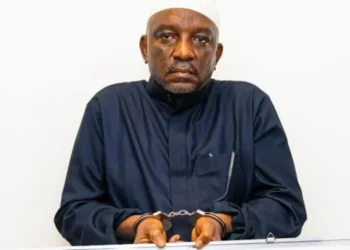
Nigerian authorities have arrested the alleged leader of a fraudulent organisation accused of posing as a government agency, bringing an end to a weeks-long manhunt that attracted nationwide attention and renewed concerns over sophisticated public sector scams.
The suspect, whose identity has not been officially disclosed pending further legal proceedings, was taken into custody following an operation carried out by security agencies after investigators tracked his movements across several locations. Officials said the arrest marked a significant breakthrough in an investigation into a network allegedly responsible for deceiving citizens by claiming to represent a legitimate government institution.
Authorities believe the fake agency operated for an extended period, presenting itself as an official body with the authority to recruit workers, issue permits, process documentation and collect fees from unsuspecting members of the public.
The case has once again highlighted the growing challenge of fraud schemes exploiting public trust in government institutions.
According to investigators, the suspect had been evading arrest for several weeks after authorities launched an investigation into the organisation’s activities.

Law enforcement agencies reportedly received multiple complaints from individuals who claimed they had paid money in exchange for employment opportunities, official certificates or administrative services that never materialised.
As evidence mounted, security agencies initiated a nationwide search for those believed to be behind the operation.
Officials said intelligence gathering, surveillance and cooperation between multiple law enforcement units eventually led investigators to the suspect’s location, where he was arrested without major incident.
Police indicated that additional arrests could follow as the investigation expands.
Preliminary findings suggest the fraudulent organisation carefully imitated the appearance of a genuine government department.
Investigators say the group allegedly used official-looking logos, forged documents, professionally designed websites and social media accounts to convince victims that it was operating under government authority.
Members of the public were reportedly encouraged to submit personal information, application forms and administrative fees for services that did not legally exist.
Some victims allegedly believed they had secured government employment or access to official programmes, only to discover later that the organisation had no legal status whatsoever.
Authorities are now working to determine how many individuals may have been affected.
Investigators have not yet disclosed the total amount of money believed to have been collected through the alleged scheme.
Financial crime specialists are examining bank records, electronic payment systems and digital communications to establish the scale of the operation.
Officials believe the organisation may have targeted victims across multiple Nigerian states, raising the possibility that financial losses could be substantial.
Forensic accountants are also tracing transactions to identify additional suspects and determine whether funds were transferred through domestic or international financial networks.
Government officials say impersonating state institutions damages public confidence in legitimate public services.
Citizens who fall victim to fraudulent organisations often become reluctant to engage with genuine government agencies, creating broader challenges for public administration.
Authorities have therefore emphasised the importance of verifying official information through recognised government websites and authorised offices before making payments or submitting personal information.
Officials also urged members of the public to report suspicious organisations claiming to represent government institutions.
Nigeria has made significant progress in combating financial crime in recent years, but authorities acknowledge that fraud schemes continue evolving alongside advances in digital technology.
Criminal groups increasingly employ professional branding, convincing online platforms and sophisticated communication strategies to make fraudulent operations appear legitimate.
Cybersecurity experts note that scammers often exploit periods of economic uncertainty by offering employment opportunities, business licences, grants or financial assistance under the guise of official government programmes.
The latest case reflects a broader trend in which criminal networks combine traditional fraud with digital tools to reach larger numbers of potential victims.
Law enforcement agencies say the arrest represents only one stage of the broader investigation.
Detectives are continuing to examine documents, electronic devices and financial records recovered during the operation to identify other individuals who may have participated in establishing or managing the fake agency.
Authorities are also investigating whether insiders may have assisted the organisation by providing access to official-looking materials or administrative information.
Officials declined to comment on specific evidence while the inquiry remains active.
The suspect is expected to appear before a Nigerian court after investigators complete preliminary questioning.
Prosecutors will determine what criminal charges should be filed based on evidence collected during the investigation.
Potential offences could include fraud, impersonation of public officials, forgery, obtaining money by false pretences and conspiracy, depending on the findings of investigators.
Under Nigeria’s legal system, the suspect remains presumed innocent unless proven guilty in court.
Government agencies have used the case to remind citizens to exercise caution when dealing with organisations claiming official authority.
Experts recommend confirming the legal status of agencies through recognised government channels before responding to recruitment advertisements, paying processing fees or submitting personal documents.
Applicants are also encouraged to be wary of requests for advance payments in exchange for guaranteed government jobs or expedited administrative services.
Consumer protection groups say increased public awareness remains one of the most effective ways of preventing fraud.
The arrest forms part of wider efforts by Nigerian authorities to combat financial crime, corruption and organised fraud.
Security agencies have intensified operations targeting cybercriminals, identity theft networks and fraudulent investment schemes as digital technologies become increasingly central to everyday transactions.
Officials say protecting citizens from financial exploitation remains a national priority, particularly as more public services move online.

The successful arrest of the alleged leader of the fake government agency demonstrates the growing cooperation between law enforcement bodies in responding to complex fraud investigations.
As investigators continue gathering evidence, authorities hope the case will serve both as a warning to organised criminal groups and as a reminder to citizens of the importance of verifying official information before engaging with organisations claiming government authority.
The investigation remains ongoing, and officials have indicated that further arrests and additional charges may follow as the full extent of the alleged operation becomes clearer.
Related News:
 Nearly 50 Die of Thirst in Sahara Desert
 UK Home Office to Launch French Beach Signage to Warn Asylum Seekers of Risks
 Father’s Tip Leads to Arrest in Charlie Kirk Murder Case
 Charlie Kirk Killing Used to Mobilise UK’s Largest Far-Right Rally in Decades
 UK and Ireland Set to Unveil New Proposals to Address Northern Ireland’s Troubles Legacy
Channel Crossings Surge: Over 1,000 People Arrive in the UK in Small Boats in a Single Day
UK and Ireland Set to Unveil New Proposals to Address Northern Ireland’s Troubles Legacy
Channel Crossings Surge: Over 1,000 People Arrive in the UK in Small Boats in a Single Day
 UK Recognises State of Palestine in Push to Preserve Hope for Peace
 Jailed Georgian Opposition Leaders Warn UK of Iranian Links to Ruling Party
 China’s Mega Embassy in London Faces Further Delay
 Prince Andrew met alleged Chinese spies during Pitch@Palace China trips
 Kosovo agrees to host Britain’s refused asylum seekers
 UK University Faces Counter-Terror Probe Over China Pressure
 Second world war veterans honoured as King leads Remembrance Sunday
 Ukraine-Russia war latest: Putin’s troops exploit bad weather to force Kyiv withdrawal from multiple towns
 New Epstein Files Spark Political Clash in Washington
 Ukraine Energy Corruption Scandal Hits Zelensky’s Inner Circle
 New review urges UK to repatriate Shamima Begum, others from Syria
 Hasina Rejects Allegations Ahead of Bangladesh Tribunal Verdict
 Indian authorities demolish Kashmir home linked to Red Fort blast
 Greene Pushes Epstein Files Amid Trump Fallout
 UN Security Council Approves Trump’s Gaza Peace Plan
 WhatsApp Messages Expose Nathan Gill’s Bribery
 Venezuela Threatens Nobel Winner Machado with Fugitive Status
 Trump Envoy to Discuss Ukraine Peace at Kremlin
 Video shows Israeli troops kill Palestinians after surrender
 Guinea-Bissau President Flees After Military Coup
 Emails Show Epstein Funded Mandelson’s Husband After Jail
 Saif al-Islam Gaddafi Reportedly Killed in Libya Shooting
 UK Wants Action on Russia After Navalny Frog Poisoning, Cooper Says
 Nine Arrested in France Over Death of Far‑Right Student
 South Korea’s Ex-President Faces Death Penalty in Insurrection Trial
 How Much Could Andrew’s Arrest Hurt the Royal Family?
 New Mexico Reopens Criminal Inquiry into Jeffrey Epstein’s Zorro Ranch
 Chad Shuts Border With Sudan in Bid to Stop Conflict Spreading
 Mandelson Arrested Amid Political Turmoil as Ukraine Marks Four Years of Conflict
 American Citizen Killed in Cuba Boat Shooting, U.S. Officials Say
 Hillary Clinton Tells House Panel She ‘Had No Idea’ of Epstein’s Crimes
 Kidnapping of Foreigners Soars in Africa’s Lawless Sahel Region
 Belgium Narco-State Warning Raises Alarm Over Crime Surge
 Istanbul Mayor Faces Corruption Trial Amid Political Storm
 After Mugabe: Family Feuds and Legal Battles
 Point-Blank Gunshot Misses Indian Politician
 Ecuador Deploys 75,000 Forces in Anti-Gang Drive
 “Fire Came From the Sky” — Life on the Brink of Civil War in South Sudan
 Missing Cuba-Bound Aid Ships Spark Urgent Search
 Belarus Leader Gifts Rifle to Kim Jong Un
 Zelensky Visits Saudi Arabia After Offering Drone Expertise
 ‘I Will Not Abandon Him’: Pauline Hanson Stands by Ben Roberts-Smith After War Crime Charges
 Justice in Limbo: Top Australian Soldier to Remain on Remand for War Crimes
 The ‘Big Fish’ Lands: Marcos Confirms Arrest of Key Figure in Flood-Control Scandal
 Political Shockwaves: Julius Malema Sentenced to Five Years Over 2018 Rifle Incident
 The “Friendly Federal Assassin”: 31-Year-Old Californian Identified in Press Dinner Attack
 Cartel crackdown raises fears of fresh violence
 “A Town on the Edge”: Violence Erupts in Alice Springs Following Arrest in Murder Case
 US ‘Narco Boat’ Strikes Draw Global Outcry
 “Consolidation in Crisis”: Gen Assimi Goïta Assumes Defence Ministry After Coordinated Attacks Kill Predecessor
 “Shadows of the State”: Counter-Terrorism Probe Launched into Tower Hamlets Synagogue Arson
 “Community Shield”: Met Police Deploy Specialist 100-Officer Team to Guard London’s Jewish Postcodes
 “The Eagle’s Catch”: Fugitive Former Power Minister Saleh Mamman Apprehended in Pre-Dawn Raid
 Ebola outbreak in DRC overwhelms health system as cases surge
 Gunman Killed After White House Security Shootout
 Irish Gangland Figure Fails in Dublin Election Bid
 Israel, Lebanon Agree on Fragile Ceasefire Deal
 Israeli Strikes Kill 11 in Gaza City
 Zelensky Invites Putin to Direct Peace Talks
 Ex-Wife of Dubai Royal Relative Held in Custody
 Fuel and Supply Crisis Pushes Gaza Toward Collapse
 South Africa Launches Illegal Migration Crackdown
 South Africa Tightens Borders in New Migration Crackdown
 Hundreds Freed in Major Operation Against Boko Haram Stronghold
 “Extreme Fear” Spreads Among Immigrants Amid South Africa Backlash
 Twelve Killed in Mass Shooting in Johannesburg, Police Confirm
 Russian Artist and Kremlin Critic Shot Dead in Poland
 Why Some African Nations Are Rejecting Trump Aid
 Trump’s Major Recruitment Drive Targets Border Patrol Growth
 Ukraine Creates Long-Range Strike Command
 Dreyfus Statue Finally Gets Permanent Paris Home
 From the Streets to the Frontline: Former Street Child Emerges as Key Figure in South Africa’s Police Corruption Probe
 Iran’s Regime Still Intact — Coming Days Will Test Its Survival