Published: 15 July 2026 | The English Chronicle Desk | The English Chronicle Online
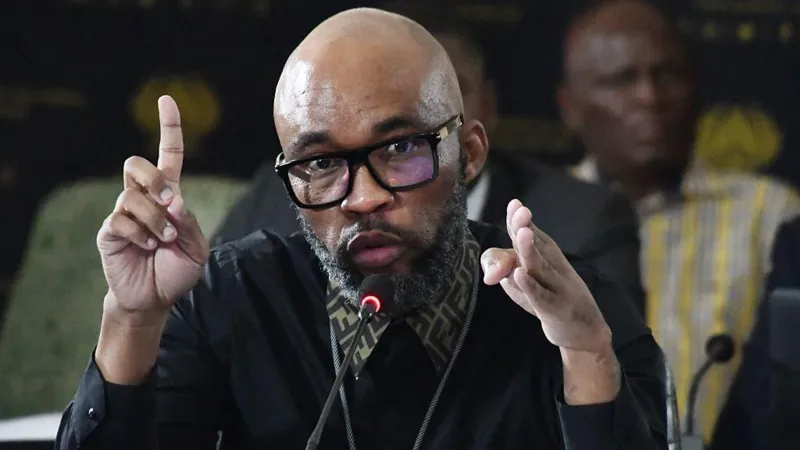
A man whose early years were spent surviving on the streets has become one of the most significant figures in South Africa’s expanding police corruption investigation, with his testimony and insider knowledge helping authorities unravel allegations of misconduct within the country’s law enforcement agencies.
His remarkable journey—from homelessness and poverty to becoming a trusted investigator in one of South Africa’s most sensitive anti-corruption inquiries—has drawn national attention and highlighted the growing determination of authorities to confront corruption at the highest levels of policing.
The investigation, which has dominated public debate in recent weeks, centres on allegations involving senior police officials accused of abusing their positions, obstructing justice and maintaining improper relationships with criminal networks. While investigators continue gathering evidence, officials stress that the inquiry remains ongoing and that all individuals under investigation are entitled to due process.
Against that backdrop, the former street child’s role has emerged as one of the most compelling aspects of the investigation.
Before becoming involved in law enforcement, the investigator endured an upbringing defined by poverty and instability.
Growing up without a stable home, he spent much of his childhood living on city streets, relying on temporary shelters, charitable organisations and the generosity of strangers to survive.
Like many children facing similar circumstances, access to education, healthcare and consistent family support was limited.
Those difficult experiences, however, also exposed him to the realities of crime, addiction and violence that affect vulnerable communities across South Africa.
Rather than becoming trapped in that environment, he gradually rebuilt his life through education, employment opportunities and support from community organisations.
His determination eventually led him into public service, where colleagues say his resilience and understanding of life on society’s margins became valuable professional strengths.
Investigators familiar with the inquiry believe his background has provided insights unavailable to many traditional law enforcement officers.
Years spent navigating dangerous environments gave him a practical understanding of how organised criminal groups operate, how vulnerable individuals are recruited and how corruption can flourish when public institutions lose credibility.
That perspective reportedly helped investigators establish relationships with witnesses who might otherwise have been reluctant to cooperate with authorities.
Community members often view individuals with similar life experiences as more approachable and trustworthy than officials perceived as disconnected from local realities.
Analysts say this ability to build confidence has become increasingly important in complex corruption investigations where witness testimony often plays a critical role.
The broader inquiry has focused on allegations that elements within South Africa’s police service may have abused official authority for personal gain.
Investigators are examining claims involving procurement irregularities, interference in criminal investigations, financial misconduct and suspected links between certain officials and organised crime groups.
Authorities have not publicly disclosed the full scope of the evidence gathered so far, citing the need to protect the integrity of ongoing investigations.
Officials continue emphasising that the inquiry is intended to establish facts through legally obtained evidence rather than speculation or political pressure.
The former street child’s contribution is understood to involve assisting investigators in piecing together complex networks of relationships, financial transactions and operational decisions.
His experience reportedly proved particularly valuable when examining activities extending beyond conventional policing into communities where criminal organisations maintain significant influence.
The investigation arrives at a time when public confidence in South Africa’s criminal justice institutions remains under intense scrutiny.
Over the past decade, several high-profile corruption cases involving public officials have fuelled calls for stronger accountability, greater transparency and more effective oversight of state institutions.
Police corruption allegations have been especially damaging because law enforcement agencies play a central role in maintaining public confidence in the rule of law.
Experts argue that successful investigations, regardless of whom they involve, are essential for rebuilding institutional credibility.
Transparency advocates say holding officials accountable strengthens democracy by demonstrating that no individual is above the law.
South Africa has made combating corruption a central policy objective in recent years.
Independent investigative bodies, specialised prosecutors and anti-corruption units have expanded efforts to pursue cases involving public officials, state-owned enterprises and organised criminal networks.
While progress has sometimes been slow, authorities argue that increasingly sophisticated investigative techniques are improving the country’s ability to uncover complex financial and institutional misconduct.
Experts caution, however, that corruption investigations involving senior officials often require extensive forensic analysis, financial auditing and witness protection, making them lengthy and legally challenging.
Beyond the legal proceedings, many South Africans view the investigator’s personal journey as a powerful example of resilience and social mobility.
His story illustrates how individuals from disadvantaged backgrounds can contribute meaningfully to public service when provided with opportunities to rebuild their lives.
Community leaders say his experience challenges stereotypes often associated with homeless children and demonstrates the long-term value of investing in education, rehabilitation and youth support programmes.
Former child welfare advocates have also pointed to the case as evidence that vulnerable young people should not be defined solely by the circumstances into which they are born.
Despite growing public interest, investigators acknowledge that substantial work remains before the inquiry reaches its conclusion.
Evidence must continue to be examined carefully, witness statements verified and legal procedures followed to ensure any eventual prosecutions are supported by credible and admissible evidence.
Authorities have reiterated that everyone mentioned in the investigation remains entitled to the presumption of innocence unless proven guilty in court.
Legal experts expect the inquiry to continue attracting significant public attention as additional findings emerge in the coming months.
While the investigation ultimately focuses on allegations of police corruption, the rise of a former street child to a position of national importance has added an unexpected human dimension to the case.
His journey reflects not only personal determination but also the broader challenges and possibilities facing South African society.
For many observers, the story serves as a reminder that effective public institutions depend on individuals willing to confront wrongdoing regardless of their background.
Whether the inquiry ultimately leads to criminal charges, institutional reforms or broader changes within South Africa’s policing system, the contribution of someone who once struggled simply to survive has already become one of its most compelling chapters.
As investigators continue their work, both the legal outcome and the symbolic significance of his remarkable journey are likely to remain central to the national conversation about accountability, justice and the fight against corruption.
Related News:
 Chad Shuts Border With Sudan in Bid to Stop Conflict Spreading
 “Fire Came From the Sky” — Life on the Brink of Civil War in South Sudan
 “Consolidation in Crisis”: Gen Assimi Goïta Assumes Defence Ministry After Coordinated Attacks Kill Predecessor
 “The Eagle’s Catch”: Fugitive Former Power Minister Saleh Mamman Apprehended in Pre-Dawn Raid
 Nearly 50 Die of Thirst in Sahara Desert
 Why Some African Nations Are Rejecting Trump Aid
 UK Must Act with Courage and Clarity on Israel-Palestine Conflict, Says Foreign Affairs Committee Report
 Radioactive Leak at UK’s Nuclear Warhead Base Sparks Outcry Over Safety and Secrecy
 Hong Kong Summons UK and Australian Envoys Following Asylum Grants to Democracy Activists
 Is the UK Ready to Put Boots on the Ground in Ukraine? Assessing Military Capacity and Challenges
 Channel Crossings Surge: Over 1,000 People Arrive in the UK in Small Boats in a Single Day
 Yvette Cooper Signals Global Momentum Towards Gaza Peace Deal Amid Humanitarian Crisis
 Russia’s Latest Push to Win US Favors Shows Deep Desperation
 BBC to Apologise Over Edited Trump Speech Amid Backlash
 Britain deploys RAF specialists to assist Belgium with drone threats
 Trump Urges Herzog to Grant Netanyahu Full Pardon
 Indian authorities demolish Kashmir home linked to Red Fort blast
 Greene Pushes Epstein Files Amid Trump Fallout
 December Run-Off in Chile as Election Produces No Winner
 Canada Passes Carney’s First Budget in Tight Parliamentary Vote
 Shadow Fleet at Sea: Europe’s Battle Against Illicit Oil Shipping
 India’s COP30 Delay Raises Global Climate Concerns
 Georgians Defy Government Crackdown After Year of Protests
 Albanese Opens Door to Bondi Royal Commission Amid Rising Pressure
 EU Says US Ties Have Suffered ‘Big Blow’ After Greenland Crisis
 Australian Families Leave Syrian Camp for Home
 Starmer Weighs Fast-Tracking Defence Boost
 Nine Arrested in France Over Death of Far‑Right Student
 Australian PM Says Former Prince Andrew Has Suffered ‘Extraordinary Fall’ but That Won’t Prompt Republic Referendum
 Farage Chagos Islands Row Sparks Fury
 Ukraine Negotiator Reveals What It Feels Like Facing Russia
 Has Europe truly learned from the failures of 2022?
 American Citizen Killed in Cuba Boat Shooting, U.S. Officials Say
 Iran’s Regime Still Intact — Coming Days Will Test Its Survival
 Kidnapping of Foreigners Soars in Africa’s Lawless Sahel Region
 Trump Faces Questions Over Iran Conflict Plan
 Herzog Asio meeting sparks security storm
 Finland Plans to Lift Decades‑Old Ban on Hosting Nuclear Weapons
 Minister Meets Crews Who Will ‘Take Out’ Iranian Drones
 Nine Days of Strikes Reshape the Middle East
 Cocoa Farmers Suffer as Chocolate Market Collapses
 Trump Pressures Congress Over Save America Act
 Iran War Puts Trump at Political Risk Amid Rising Prices
 Iranian Football Squad Asylum Drama Shocks Australia
 After Mugabe: Family Feuds and Legal Battles
 Ukraine War Becomes Flashpoint in Hungarian Election
 Queensland Protest Laws Spark Free Speech Backlash
 Yvette Cooper: UK Must Follow Principles, Not US Pressure
 Trump Nato threats expose Iran strategy vacuum
 Trump’s Confidence Undimmed — But Every Iran Option Carries Risk
 Israel Says Iran Security Chief Larijani ‘Killed’
 Philippines energy emergency sparks coal power surge
 Trump Facing Backlash from Epstein Survivors Over Files
 UK Forces Ready to Seize Russian Shadow Fleet Vessels
 Trump Considers Military Operation to Seize Iran’s Uranium
 Report Says Pezzullo Acted ‘Recklessly’ in Dealings
 Hungary Claims Plot to Target Gas Pipeline Pre-Vote
 Oil and Diplomacy: Russian Refineries Burn as Zelenskyy Secures Middle East Shield
 The Great Chokehold: Why the Strait of Hormuz is the Epicenter of the 2026 Crisis
 Moldova River Crisis Exposes War’s Hidden Cost
 The Frozen Frontier: Why Frostbite is the Least of Concerns for Canada’s Arctic Forces
 Diplomatic Deadlock: Lebanon Enters High-Stakes Border Talks with ‘No Cards to Play’
 The Fog of War and the Ticker Tape: Suspicious Trades Rile Washington
 Judicial Whiplash: Virginia Court Pauses Redistricting 24 Hours After Public Vote
 “Industrial-Scale Extraction”: White House Memo Accuses China of Mass AI Theft
 Capitalism ‘Suicidal’, Warns Petro at Climate Summit
 “An Endurance Test for the Mind”: British Couple Sentenced to 10 Years in Tehran
 “The Pivot to Pakistan”: Trump Pauses ‘Project Freedom’ in Hormuz Amid Iran Deal Hopes
 “The New Silk Road”: India and Vietnam Forge Strategic Maritime Alliance to Counter Regional Volatility
 “The Local Gavel”: Polls Open Across Hampshire and Isle of Wight in Delayed ‘Milestone’ Vote
 US Awaits Iran Reply on New Ceasefire Proposal
 Discontent grows around Putin amid war strain
 Israel, Lebanon Agree on Fragile Ceasefire Deal
 UK Faces Most Dangerous Era, Military Chief Warns
 Israel Strikes Iran After Missile Attack
 Iran Team Arrives in Mexico Amid US Visa Dispute
 Son Urges Iran Prisoner Exchange for Jailed British Pair
 Trump’s Iran Legacy Hangs on Tehran Deal
 Trump Helps Clear Balogun for Belgium World Cup Clash
 Trump’s Major Recruitment Drive Targets Border Patrol Growth