Published: 17 August 2026. The English Chronicle Desk. The English Chronicle Online
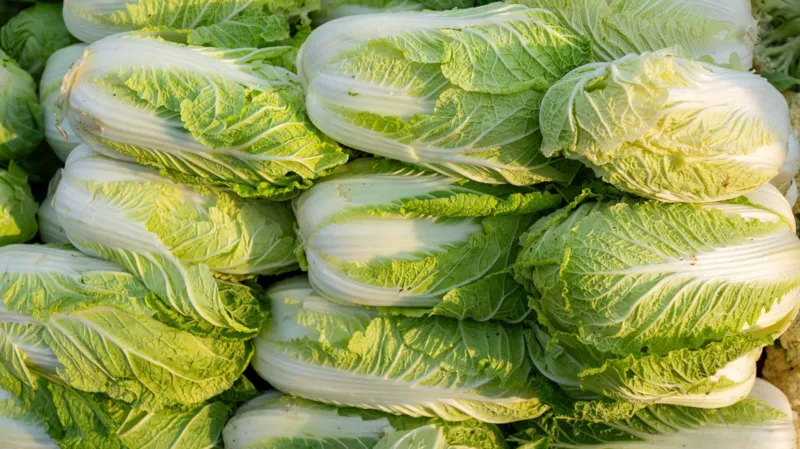
China has launched an investigation after footage emerged appearing to show cabbages being treated with a formaldehyde solution before being transported for sale, raising fresh concerns about food safety and prompting authorities to carry out checks across markets.
Officials in the north-eastern province of Hebei said they had verified video footage showing individuals dipping cabbages into a liquid before loading the vegetables onto trucks. Authorities have since taken legal action against those allegedly involved and are investigating how widespread the practice may have been.
The use of formaldehyde to preserve food is prohibited in China. The chemical is commonly associated with industrial applications and the preservation of biological specimens, but it is also recognised as a hazardous substance with potential health risks.

The investigation began after an environmental blogger published footage online last week. The images quickly attracted widespread attention, with concern growing among consumers about whether vegetables treated with the chemical could have entered markets or reached households.
Authorities in Kangbao county, where the reported activity took place, have pledged to deal strictly with any illegal or non-compliant practices uncovered during the investigation.
The case has also prompted officials to examine supply chains and trace potentially affected vegetables. Spot checks are being conducted at markets in an effort to determine whether any contaminated or improperly treated produce has entered the wider food distribution system.
Investigation follows viral footage
The footage at the centre of the investigation reportedly shows cabbages being dipped into a liquid before they are placed onto trucks for transportation.
The video was initially circulated by an environmental blogger, whose investigation brought the alleged practice to public attention. Officials subsequently confirmed that they had verified the footage, giving the allegations greater weight and prompting a formal response.
Authorities have not indicated that all cabbages from the area are affected, and the investigation is intended in part to establish the precise scale of the problem.
The discovery has nevertheless created considerable concern because cabbage is a major agricultural product in China and is consumed widely both domestically and internationally.
Police have reportedly taken legal action against individuals connected with the activity. Investigators are also examining the source of the formaldehyde solution, the reasons it was allegedly used and the distribution networks through which the vegetables were transported.
The case highlights the difficulties authorities face in monitoring complex agricultural supply chains, particularly when produce passes through multiple wholesalers, transporters and markets before reaching consumers.
Why formaldehyde has raised concern
Formaldehyde is a colourless chemical widely used in manufacturing and other industrial applications. It is also used in laboratories to preserve biological specimens.
Its presence in food is a serious concern because it is not authorised as a method of preserving fresh vegetables. Deliberately treating food with the substance can therefore create both legal and public-health issues.
Health authorities have long examined the relationship between formaldehyde exposure and cancer. The American Cancer Society says exposure to relatively high concentrations in certain workplaces has been associated with some types of cancer in humans, although the risks associated with much smaller exposures are less clearly established.
The circumstances of the cabbage case, including how much formaldehyde may have been present on the vegetables and whether consumers were exposed to harmful levels, remain subjects for investigation.
Authorities have therefore avoided suggesting that every cabbage produced in the region represents a health risk.
Instead, officials are focusing on identifying the specific vegetables involved and preventing potentially affected products from entering the food chain.
Officials move to reassure consumers
The Chinese authorities have moved quickly to contain the controversy and reassure the public.
Local officials have announced inspections and spot checks at markets, while investigators are working to establish whether the practice occurred elsewhere.
Kangbao county authorities said that any illegal or non-compliant activity discovered during the investigation would be dealt with according to the law, with the stated aim of protecting the safety of the vegetable supply.
The response reflects the sensitivity surrounding food safety in China, where previous contamination scandals have sometimes resulted in widespread public concern and calls for tougher enforcement.
Beijing’s Xinfadi market, one of the capital’s major wholesale centres for fresh produce, said it had investigated the source of its cabbages and found that none of the vegetables linked to the incident had entered the market.
Such statements are intended to reassure consumers that the investigation is targeted rather than evidence of a nationwide contamination problem.
Economic pressure behind food preservation
Investigators will also need to determine why formaldehyde was allegedly used.
Cabbages are perishable agricultural products and can deteriorate during transportation, particularly when moved over long distances. Maintaining freshness can therefore be commercially important for farmers, wholesalers and distributors.
However, using an unauthorised chemical to extend the shelf life of food can create significant risks for consumers and undermine confidence in the entire supply chain.
Chinese state media has strongly criticised those accused of the practice.
An editorial in the People’s Daily described the alleged behaviour as placing immediate financial interests above consumer health and accused wholesalers of crossing both legal and ethical boundaries.
The criticism reflects the seriousness with which authorities are treating the allegations.
China is a global cabbage producer
The incident has significance beyond the local market because China is the world’s largest producer of cabbages.
The country produces well over 30 million tonnes of cabbage each year, accounting for close to half of global production. Large quantities are consumed domestically, while substantial volumes are also exported to other countries in Asia and beyond.
Vietnam, South Korea and Russia are among the important destinations for Chinese vegetables.
That means any evidence of unsafe treatment could have implications for international food supply chains if affected produce were found to have been exported.
So far, however, there has been no indication from the information provided that contaminated cabbages have entered overseas markets.
The investigation will therefore be closely watched by importers and food-safety authorities in countries that purchase Chinese agricultural products.
Public concern spreads online
Social media has played a central role in bringing the allegations to public attention.
The environmental blogger’s footage quickly generated discussion and concern among Chinese internet users, with many questioning how such a practice could take place and whether existing inspection systems were sufficient to detect it.
Online attention can put significant pressure on authorities to respond rapidly to food-safety allegations.
At the same time, officials face the challenge of preventing legitimate concern from developing into unnecessary panic. Authorities must establish which claims are supported by evidence while identifying potentially affected products as quickly as possible.
The investigation is therefore likely to focus not only on those shown in the footage but also on wholesalers, transporters and other businesses that may have been involved in the distribution chain.
A wider food-safety challenge
The cabbage investigation is another reminder of the difficulties involved in ensuring food safety across large agricultural markets.
Modern food distribution often involves several stages between farms and consumers. A problem introduced at one point in the chain can therefore become difficult to trace unless inspection and record-keeping systems are effective.
For China, maintaining consumer confidence is particularly important given the enormous size of its food industry and the country’s role as a major agricultural exporter.

The authorities’ response will ultimately be judged by whether investigators can determine the scale of the alleged practice, identify those responsible and ensure that affected products are removed from circulation.
For consumers, the immediate question is whether any vegetables treated with formaldehyde reached the food chain and, if so, where they were distributed.
Until those questions are answered, officials are likely to continue inspections and tracing efforts.
The case has already demonstrated how quickly concerns over food safety can spread when images emerge online. It also underlines the importance of strict controls at every stage of food production and distribution.
As the investigation continues, authorities will be under pressure to provide clear evidence about what happened, reassure consumers without minimising legitimate concerns and ensure that any individuals or businesses found to have deliberately violated food-safety rules are held accountable.
For a country responsible for such a large share of the world’s cabbage production, the outcome will matter not only to Chinese consumers but also to the wider international food trade.
Related News:
 Southeast Asia Turns to Russia Amid Energy Crisis
 US Awaits Iran Reply on New Ceasefire Proposal
 Hormuz Talks Near Critical Stage
 China mine blast death toll rises to 90
 Maldives Cave Diving Tragedy Raises Safety Alarm
 Modi’s London Visit Seals Historic UK-India Trade Pact Amid Global Tensions
 China’s crackdown on civil servant perks sparks economic concerns
 Costa Blanca Holiday Horror as Food Poisoning Outbreak Hits Four-Star Hotel
 CDC Plunged Into Turmoil as Ousted Chief Susan Monarez Refuses to Step Down
 Shein UK Faces Allegations of Shifting Majority of Profits to Singapore to Reduce UK Tax
 Labour Urged to Launch National Occupational Health Service to Tackle Worklessness
 British AI Startup Outshines Human Forecasters in Global Prediction Contest
 China warns UK over delayed London mega embassy decision
 Rachel Reeves to lead UK trade push in Saudi Arabia amid rights debate
 UPS Cargo Plane Crash in Kentucky Kills Seven
 North Sea oil workers must lose weight or face job loss
 Canada Passes Carney’s First Budget in Tight Parliamentary Vote
 India’s Labour Law Overhaul Sparks Fierce Debate
 Mark Carney Walks Diplomatic Tightrope on China Visit
 Wall Street shaken by Trump tariff shock as markets tumble
 ‘Black Tax’: Burden, Pride and Survival for African Workers
 ‘Repatriate the Gold’: Germany Debates Bringing Reserves Home
 UK New Car Discounts Near £6,000 as Prices Are Slashed
 Trump Tower Gold Coast to Redefine Skyline
 Rory Amon Trial: Alleged Victim Speaks in Court
 Hospital Fungal Outbreak Sparks Major Cover-Up Claims
 Oil Prices Surge as Iran War Jolts Markets
 Gulf shipping crisis as war risk cover pulled
 Global markets face turmoil as Hormuz crisis deepens
 Oil Prices Surge Above $100 Amid Iran War
 Canada Plasma Deaths Raise Safety Concerns After Two Donors Die
 The Truth Behind Rising Energy Costs and Fossil Fuel Myths
 North Korea Fires Missiles Amid US-South Korea Drills
 UniCredit’s Bold Move to Reshape European Banking
 RBA rate hike sparks fears amid global crisis
 Oil Slides, Stocks Jump on Trump Peace Signals
 ABC Staff Strike Over Pay and AI Concerns
 Middle East Conflict to Hit UK Economy Hardest
 Australian Growth Slows as Global Inflation Spike Looms
 Trump to Deploy “God Squad” Over Gulf Wildlife Protections
 Trump Threatens Iran With Total Infrastructure Destruction
 Iran Drone Strike Hits Kuwaiti Oil Tanker in Dubai Port
 Russia: The Unforeseen Winner of the Iran Conflict
 US Senators Slam Ticketmaster Over Sneaky New Fee Hikes
 Apple at 50: Three Products That Changed How We Live
 IMF Warns Iran War Could Spark Deep Global Recession
 Trump Slams UK Ties and Threatens To Rewrite Trade Deal
 Ukraine Urges UK to Seize Russian Oil Tankers
 US Calls Australia Media Law “Foreign Extortion”
 Escobar’s Hippos May Be Moved to India Zoo
 Capitalism ‘Suicidal’, Warns Petro at Climate Summit
 Oil Prices Surge Above $120 Amid Iran Blockade Fears
 $13bn World Cup Set to Break All Revenue Records
 US to Escort Trapped Ships Through the Strait of Hormuz
 Trump approval plunges amid Iran war fears
 Trump Threatens UN Budget Cuts as US Pushes ‘Trade Over Aid’ Agenda
 China Fireworks Factory Blast Kills 21 in Hunan
 Australia pushes Pacific security pact amid China tension
 Global Conflict Hits Home As Bullock Warns Of Economic Pain
 Hantavirus Cruise: Britons Face 45-Day Isolation Order
 Norway Doubles Down on Oil and Gas for Europe Energy Security
 Crisis in the Canary Islands as Cruise Ship Evacuated
 Cruisers Face Perth Quarantine After Hantavirus Outbreak
 High Street Crisis: Fears Grow Over Post Office Closures
 Oil Markets Face ‘Red Zone’ Threat Amid Iran Crisis
 UK Pushes for New EU Goods Trade Deal
 Pope Meets Families in Italy Toxic Waste Zone
 Discontent grows around Putin amid war strain
 UK Economy Suffers a Sharp Downturn as Iran Conflict Bites
 Millions Gather for Khamenei’s Six-Day State Funeral
 BMA Faces Unprecedented Staff Cuts Amidst Severe Financial Turmoil
 Ukraine Creates Long-Range Strike Command
 Venezuela Quake Death Toll Surpasses 4,000
 Houthis Strike Saudi Arabia as Middle East Tensions Rise
 Powerful 7.7-Magnitude Earthquake Hits Eastern Indonesia
 Weight-Loss Drugs Offer Food Savings Mainly to High Earners
 Israeli Strike in Southern Lebanon Kills Seven
 Canada to Match Trump’s 50% Tariffs Dollar for Dollar
 Vietnam Youth Rally Behind Hanoi ‘Justice Tree’
 New Tata Chairman Faces Tough Road Ahead