Published: 24 August 2026 | The English Chronicle Desk | The English Chronicle Online
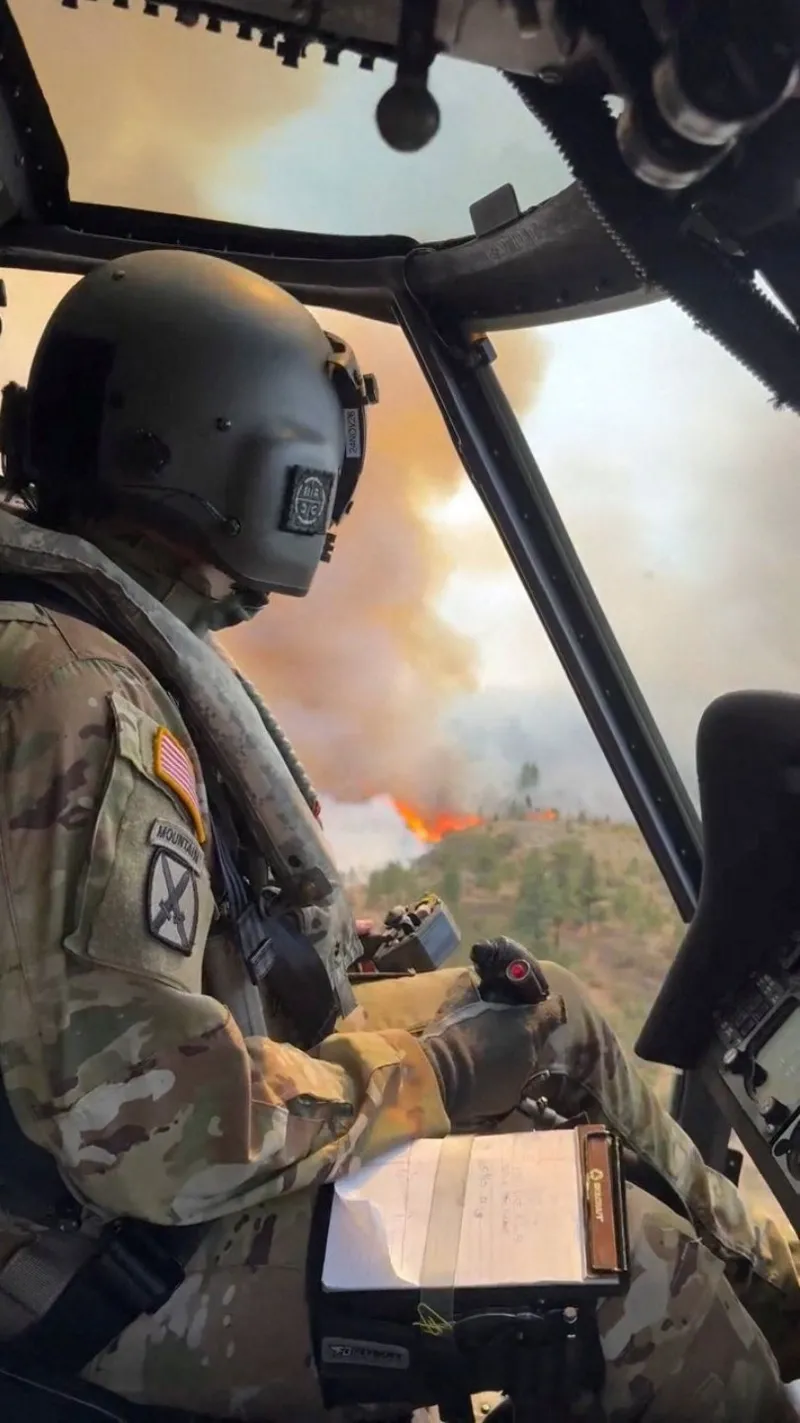
Tens of thousands of people have been ordered to evacuate as a fast-moving wildfire approached the outskirts of Reno, Nevada, prompting a state of emergency and the deployment of the National Guard.
About 42,000 people have been told to leave their homes immediately, while another 45,000 have been warned to prepare for possible evacuation as firefighters battle a blaze that has spread rapidly through Washoe County.
Officials said the wildfire had burned approximately 10,500 acres by Sunday evening and remained completely uncontained. Six people had been injured, including three emergency responders involved in firefighting operations.
The fire, which was reported on Saturday morning, has been driven by strong and unpredictable winds, making conditions difficult for firefighters and emergency crews working to protect communities around Reno.
Nevada Governor Joe Lombardo declared a state of emergency in Washoe County and ordered the Nevada National Guard to assist with firefighting and law enforcement operations as the situation continued to deteriorate.

“This is an active and rapidly evolving situation and I urge everyone in the affected areas to remain vigilant and follow the direction of local officials,” Lombardo said.
Authorities have urged residents within evacuation zones to leave immediately rather than waiting for conditions to worsen. Those outside the immediate evacuation area have been encouraged to remain prepared in case the fire changes direction or additional evacuation orders are issued.
The scale of the evacuation has created a major emergency for the Reno area, with around 13,700 homes located inside the evacuation zone.
Two emergency shelters have been established to accommodate people forced to leave their homes.
Fire spreads rapidly towards Reno
The wildfire was first reported at about 11:15 local time on Saturday, according to local officials. Authorities said the fire was caused by human activity, although further details about how it started have not been released.
Within a short period, the blaze expanded across thousands of acres, threatening populated areas around Reno.
The combination of dry conditions, strong winds and rapidly changing weather has complicated efforts to establish containment lines. Firefighters have been forced to respond to changing fire behaviour while simultaneously protecting homes, roads and critical infrastructure.
A fire that remains at 0% containment presents a particularly serious challenge because crews have not yet been able to establish a secure perimeter capable of stopping its expansion.
Emergency officials have therefore prioritised evacuations and the protection of communities as firefighting operations continue.
Reno is one of Nevada’s largest cities, with a population of roughly 280,000. The city lies in western Nevada, close to the California state line, and its surrounding communities include extensive residential areas bordering open and dry land.
The proximity of the wildfire to populated areas has heightened concerns over the potential for further evacuations.
Thousands of homes inside evacuation zone
Local emergency services said approximately 13,700 homes were located within the evacuation area.
The large number of properties affected demonstrates the scale of the emergency facing Washoe County. Families have been forced to leave with limited notice, while emergency services have had to coordinate evacuation routes, shelters, traffic restrictions and firefighting operations simultaneously.
Residents who have been ordered to evacuate have been advised to follow official instructions and avoid returning until authorities declare areas safe.
Road closures have also been introduced in affected areas, creating additional disruption for residents and emergency crews.
The closures are intended to keep evacuation routes clear and allow firefighters, police officers and other emergency personnel to move through threatened areas more efficiently.
Officials have also warned people against approaching the wildfire to watch or photograph it, as rapidly changing wind conditions can make fire behaviour difficult to predict.
Schools closed as emergency response expands
The wildfire has also disrupted education across Washoe County.
All county schools are scheduled to close on Monday except one, reflecting the seriousness of the emergency and concerns over the safety of students, teachers and other staff.
School closures also affect families who may already be dealing with evacuation orders, road closures and temporary accommodation.
The decision allows authorities to reduce traffic in affected areas and ensures emergency resources are not complicated by normal school transportation and activity.
Further closures could be considered if evacuation zones expand or air quality deteriorates.
Wildfires can produce significant amounts of smoke, creating additional health concerns even in areas that are not directly threatened by flames.
Six people injured
Officials said six people had been injured in the wildfire so far.
Three of those injured were emergency responders working to contain the blaze.
The involvement of firefighters among those injured underlines the risks faced by crews operating in extreme conditions.
Wildland firefighters often work close to rapidly advancing flames while dealing with intense heat, smoke, difficult terrain and unpredictable wind shifts.
As the fire continues to spread, emergency officials are likely to maintain a strong focus on the safety of crews as well as residents.
The number and severity of injuries could change as authorities continue assessing the situation.
National Guard joins response
Governor Lombardo’s decision to activate the National Guard represents a significant expansion of the state’s emergency response.
National Guard personnel can assist with a range of operations, including security, traffic control, logistical support and other duties that allow specialist firefighting teams to concentrate on the blaze.
Their deployment comes as local authorities manage an unusually large evacuation involving tens of thousands of people.
The state emergency declaration also gives authorities additional resources and coordination mechanisms as they respond to the rapidly developing situation.
Officials have stressed that the situation remains active and could change quickly.
Residents have consequently been urged to monitor official announcements rather than relying solely on information circulating on social media.
Wind makes firefighting more difficult
Weather conditions have been a major factor in the wildfire’s rapid development.
Strong winds can carry embers ahead of the main fire front, allowing flames to jump roads and other potential barriers and creating new areas of fire.
Wind direction can also change quickly, making it difficult for authorities to predict precisely which communities could become threatened.
This unpredictability is one reason officials have expanded evacuation warnings beyond areas immediately affected by flames.
Dry vegetation can further accelerate the spread of a wildfire, particularly when combined with hot weather and strong winds.
For residents in threatened communities, this means conditions can deteriorate considerably faster than expected.
Human-caused fire under investigation
Local officials have said the wildfire was caused by human activity.
Authorities have not provided detailed information about the circumstances surrounding its ignition, and an investigation is expected to establish exactly how the blaze began.
Human-caused wildfires can result from a wide range of activities, whether accidental or deliberate, and investigators typically examine the location where a fire started and the circumstances surrounding its ignition.
The finding is likely to attract additional attention because the fire has affected such a large area and forced an extensive evacuation.
A major test for emergency services
The wildfire represents a major test for emergency services in and around Reno.
The combination of a rapidly expanding fire, thousands of threatened properties, widespread road closures and a large-scale evacuation requires coordination between local authorities, firefighters, police, state agencies and the National Guard.
Shelters have already been opened for displaced residents, while crews continue working to slow the fire’s advance.
Authorities will also have to assess infrastructure, power supplies and roads as the emergency develops.
For residents who have been evacuated, the immediate priority is staying safe and waiting for official instructions about when, or whether, they can return.

The situation also serves as a reminder of the growing challenges faced by communities located close to wildfire-prone landscapes in the western United States.
For now, the Reno-area wildfire remains uncontrolled, with thousands of acres already burned and tens of thousands of people affected.
Officials are urging residents to treat evacuation orders seriously and remain prepared for further changes.
As firefighters work to establish containment, the direction and intensity of the blaze will depend heavily on weather conditions in the coming hours.
With the fire already reaching the outskirts of Reno, emergency officials are continuing to focus on protecting lives and preventing the flames from spreading further into populated areas.
Related News:
 Evacuations Ordered as California Wildfires Spread Fast
 Queensland Braces for Potential Second Severe Cyclone Hit
 Cyclone Vaianu Forces Mass Evacuations in New Zealand
 Sydney Records Hottest June Since 1859 as Expert Warns New High a ‘Signature’ of Global Warming
 Wildfires rage across Europe as hundreds arrested in France
 Two National Guard Soldiers Critically Injured Near White House
 US National Guard Member Killed in DC Shooting
 American Mother Extradited From UK to U.S. on Murder Charges
 Federal Immigration Shift: Officers Leave Louisiana for Minneapolis
 Trump Says US Must ‘Own’ Greenland to Block Russia, China
 Government Unveils Northern Powerhouse Rail Plans
 Trump press secretary attacks reporter over ICE question
 Kyrsten Sinema Faces High-Profile Lawsuit Over Marriage Interference
 Greenland Crisis Forces Europe to Draw a Line With Trump
 China Halts Nvidia H200 Chips Despite US Export Approval
 Trump Fed bid heads to Supreme Court
 Historic Abu Dhabi Talks Bring US, Ukraine and Russia Together
 Partial US Government Shutdown Hits Homeland Security Funding
 Thousands Protest ICE Operations in Nationwide US Day of Action
 Epstein Files Reveal Trump Officials’ Emails with Financier
 Sinema payment row deepens after $9,000 transfer claim
 US-Cuba Negotiations Shift as Oil Blockade Looms
 Nurses’ families fear breakup under UK immigration crackdown
 California Democrats Vow Trump Reckoning
 Trump’s Surgeon General Pick Evades Vaccine Questions
 Buffalo Refugee Tragedy: Border Patrol Neglect Leads to Death
 Ocean Warming Drives Massive Marine Life Loss, Study Warns
 New Poll Reveals Reform UK Stance on British Citizenship
 Adelaide University Faces Backlash Over Event Cancellation
 Ukraine war briefing: Zelenskyy offers help to Saudi Crown prince on combatting Iranian drones
 Utah Woman Found Guilty of Poisoning Husband for Inheritance
 UK Energy Reform Could Cut Bills by £200
 US Airman Rescued in Daring Mission After F-15 Shot Down in Iran
 Trump Signals Hope for New Iran Talks as Ceasefire Fades
 Trump’s Presidency: A House of Cards Collapsing?
 Louisiana Tragedy: Eight Children Die in Mass Shooting
 Trump Starts $166bn Tariff Refund Process
 UK Stands Firm on Falklands Amid US Rift
 Crackdown Backfires on UK Climate Protesters
 Investigation Into Anti-Trump Motives After Gala Shooting
 Trump Defiant After Washington Hotel Shooting
 Identity Revealed: Suspected Washington Gunman Named
 Coalition pushes fossil fuel phaseout plan
 Trump orders US troop pullout from Germany
 White House Security Case Sparks Political Firestorm
 Trump approval plunges amid Iran war fears
 Ohio’s Battle for Trust: Democrats Vying to Flip the Buckeye State
 US ‘Narco Boat’ Strikes Draw Global Outcry
 Afghan Families Left in Limbo Face Risk of Deportation
 Florida Surgeon ‘Devastated’ Over Fatal Surgery Error
 US Awaits Iran Reply on New Ceasefire Proposal
 Fear and Betrayal: The Chilling Case of Kouri Richins
 UK Faces Mass Water Shortages by 2055, Lords Warn
 Trump Sends 5,000 More US Troops to Poland
 Kevin Warsh sworn in as Fed chair amid economic backlash
 US green card applicants must apply from abroad, DHS says
 Pope Meets Families in Italy Toxic Waste Zone
 DeSantis’s ‘Alligator Alcatraz’ Faces Final Shutdown
 Trump’s Grip on the GOP Tested in Texas Senate Battle
 House Curbs Trump’s War Powers in Rare Rebellion
 Trump Urged to Condemn UFC Fighter Over Obama Slurs
 US Military Pacific Boat Strike Kills Three People
 Is JD Vance the Ultimate Fall Guy for Trump’s Shaky Iran Deal?
 AOC Backs El-Sayed in Tight Michigan Senate Primary
 US Courts Back Trump on Park Signage Removals
 Trump’s Mount Rushmore Speech: A Divisive Anniversary
 Trump Intervenes in Fifa World Cup Balogun Ban
 NCAA Rules Unchanged After Supreme Court Transgender Ruling
 US Airman Avoids British Court in Indecent Exposure Case
 UK Heatwaves Ignite Crisis of Sleep and Public Safety
 UK Schools Struggle as Classrooms Top 40C
 London Tube Heat Reaches Dangerous Levels
 Florida Executes One of Its Oldest Death Row Prisoners
 Olympus Awaits Unesco Heritage Recognition
 Houthis Strike Saudi Arabia as Middle East Tensions Rise
 Wildfires Force Mass Evacuations in France And Spain
 Powerful 7.7-Magnitude Earthquake Hits Eastern Indonesia
 Burnham unveils £65m drought aid for farmers
 Gen Z turns to BirdTok for a gentler digital escape
 Rain to return with thunderstorms and flood risk