Published: 11 August 2026 | The English Chronicle Desk | The English Chronicle Online
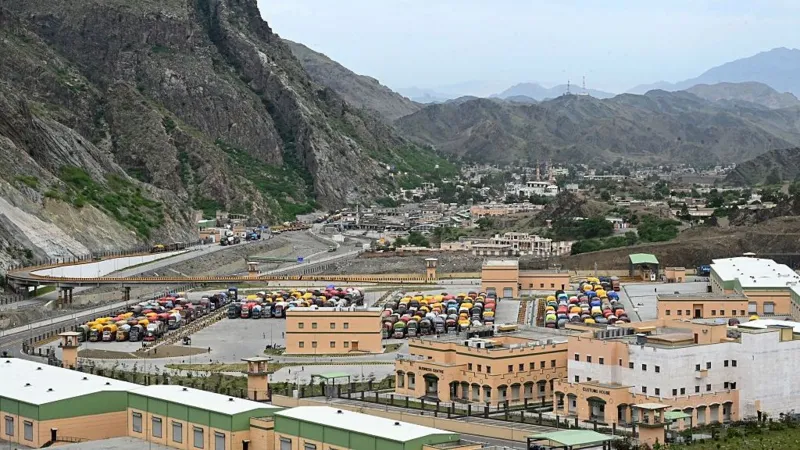
At the Torkham border crossing between Pakistan and Afghanistan, families arrive carrying whatever remains of lives they were forced to abandon. Elderly people struggle forward on crutches, children clutch chickens and small belongings, while exhausted parents wait in queues beneath the heat to complete registration before beginning an uncertain new chapter.
For many, the return to Afghanistan is anything but a homecoming.
Nazia, a 35-year-old woman born and raised in Pakistan, had never previously lived in Afghanistan. Yet after years in Pakistan, she has now been forced to cross the border with two of her children.
“It feels good to be in my own country,” she says shortly after crossing into Afghanistan. But the statement is immediately followed by a sobering reality.
“I’ve never been to Afghanistan before and many people here don’t even have enough bread to eat.”
Her experience captures the dilemma facing millions of Afghans who have spent much of their lives outside the country but are now being compelled to return.
The United Nations estimates that about six million Afghans have returned from Pakistan and Iran in less than three years, creating what the UN refugee agency describes as an unprecedented return movement in recent history.
The latest arrivals come as both neighbouring countries intensify efforts to remove undocumented Afghan migrants. Human rights organisations and UN officials have warned, however, that the pressure is extending beyond people without legal documentation and affecting some registered refugees as well.
For those arriving at the border, the question is no longer simply where they came from. It is how they will survive after reaching a country many barely know.
A Home They Have Never Known
The movement of Afghans across the borders of Pakistan and Iran is not new. For decades, conflict, political instability, economic hardship and insecurity have driven millions away from Afghanistan.
The Soviet invasion in the 1980s created one of the largest refugee movements of the modern era. Later conflicts, the rise of the Taliban, the US-led intervention and renewed fighting pushed further generations across the borders.
Some families have lived in Pakistan or Iran for decades.
For people such as Nazia, Afghanistan is therefore a country known largely through family memories, stories and cultural traditions rather than personal experience.
At Torkham, many returnees arrive with little more than the possessions they managed to carry.
Sarwar, who says he left Afghanistan about 45 years ago during the Soviet invasion, returned recently with seven brothers and their families. Their belongings were packed into a Pakistani lorry as they made the journey towards a country most of the younger members of the family had never known.
“We spent a long time there, so of course I felt heartbroken when they forced us out of our home,” he says.
Yet his experience contains an uncomfortable contradiction. Despite the pain of being expelled from Pakistan, he says he is relieved to have escaped what he describes as repeated harassment from police.
For many returnees, the border therefore represents both an ending and a beginning, with neither side offering an easy future.
Pressure From Pakistan and Iran
Pakistan and Iran have hosted millions of Afghans over several decades. Both governments now argue that the time has come for undocumented Afghans to return.
Authorities in Pakistan have cited security concerns and economic pressures, while Iran has also accelerated deportations.
Human rights organisations have raised concerns about the methods used to enforce removals. Human Rights Watch has previously documented allegations involving raids, arrests and searches affecting Afghan families in Pakistan.
The Pakistani government has rejected suggestions that Afghan nationals are systematically mistreated, saying measures are intended to be carried out according to the law.
But families interviewed near the border describe a different experience, with many saying they have faced discrimination, fear and uncertainty before being forced to leave.
For some, the sudden loss of employment, housing and community networks has left them arriving in Afghanistan without a realistic means of supporting themselves.
A Humanitarian Crisis on a Massive Scale
The scale of the return movement is placing enormous pressure on Afghanistan, a country already facing a severe humanitarian crisis.
The UN estimates that tens of millions of Afghans require humanitarian assistance, while children remain particularly vulnerable to hunger and malnutrition.
The arrival of millions more people creates additional demands for food, shelter, healthcare, education and employment.
Near Torkham, temporary settlements have been established to provide returning families with basic assistance. But the shelters offer only a short-term solution.
Many families have no permanent home waiting for them.
Zarina, a returnee with several girls in her family, says she has no resources to establish a business or rebuild a livelihood.
Her concerns extend beyond poverty.
Afghanistan under Taliban rule has imposed severe restrictions on women and girls, including restrictions on secondary and higher education and participation in many areas of public life.
For mothers returning with daughters, those policies create another layer of uncertainty.
“Look at them, they’re all girls. Of course I’m worried,” Zarina says.
The fear is particularly acute among women who spent years building lives in Pakistan or Iran and now face a society where their freedom is significantly restricted.
Fear Among Former Officials
Not every returnee is simply facing economic hardship.
Some fear persecution.
Among those affected are former Afghan government employees, soldiers and security personnel who fled after the Taliban returned to power in 2021.
The Taliban announced an amnesty after taking control of the country, saying former officials and security personnel would not face retaliation.
But some returnees remain deeply sceptical.
One former Afghan security guard, who had been deported after living in Iran and Pakistan, says he does not trust the Taliban’s promises.
“I have no trust in their amnesty because many of my colleagues have been killed,” he says.
He says he remains afraid to leave his home and worries about the safety of his wife and children.
For people in this position, returning to Afghanistan is not simply a humanitarian challenge. It can represent a direct security risk.
Afghanistan’s Difficult Economic Outlook
The economic circumstances confronting returnees are also bleak.
Afghanistan remains heavily dependent on international humanitarian assistance, while sanctions and diplomatic isolation have limited the country’s ability to attract investment and create sufficient employment.
The reduction in global aid has made the situation more difficult.
The UN has repeatedly warned that declining humanitarian funding threatens essential services at a time when millions of Afghans already require assistance.
For returnees arriving without savings, property or employment, finding a sustainable livelihood can be almost impossible.
The problem is particularly serious in rural areas where opportunities are limited and communities themselves are struggling to meet basic needs.
Taliban Government Faces Growing Pressure
The Taliban administration has welcomed the return of Afghans, arguing that their presence could ultimately strengthen the country’s economy and society.
Foreign Minister Amir Khan Muttaqi has acknowledged the pressure created by the arrivals but maintains that the return movement could benefit Afghanistan in the long term.
“We need some help,” he has acknowledged, while arguing that the return of Afghans could eventually benefit both the individuals involved and the country.
But international organisations warn that Afghanistan cannot absorb millions of people without substantial assistance.
UNHCR officials say the scale of the return movement is beyond what Afghanistan can manage alone.
The Taliban’s policies toward women and girls are also complicating efforts to secure international support. Restrictions on female education and employment remain among the major obstacles to improved relations between the Taliban government and Western governments.
Only a small number of countries have moved towards formal recognition of the Taliban administration, while Afghanistan remains diplomatically isolated in much of the world.
At the same time, the Taliban has sought stronger relations with neighbouring countries and regional powers, including China, India and Central Asian states.
A New Beginning With Almost Nothing
At Torkham, however, geopolitical arguments feel distant from the immediate concerns of returning families.
People want somewhere to sleep, food for their children and a way to earn money.
They have left behind houses, jobs, schools, friendships and communities built over decades.
For some, Afghanistan is their ancestral homeland but not their lived experience.
For others, it is a country they remember from childhood but barely recognise after years away.
The UN’s estimate that roughly six million Afghans have returned in a relatively short period demonstrates the extraordinary scale of the crisis.
It is not simply a story of migration. It is a story of people being forced to reconstruct their lives in a country that itself is struggling to recover from decades of conflict.
The returnees are arriving at a moment when Afghanistan’s humanitarian needs remain enormous and its economy fragile.
For women and girls, the future carries additional restrictions. For former government personnel, there are fears about security. For families without property or savings, there is the immediate struggle for survival.
At the border, the word “home” therefore carries very different meanings.
For some, crossing into Afghanistan offers a sense of relief after years of uncertainty abroad. For others, it means entering a country they have never known.
Either way, the journey does not end at the border.
It begins again there.
And for millions of Afghans arriving with little more than the possessions they can carry, the challenge is not simply returning home. It is finding a way to build a life in a country that is already struggling to provide one.
Related News:
 Nine Killed in Karachi Consulate Protest
 North Korea Fires Missiles Amid US-South Korea Drills
 Anti-Regime Iranians Turn Anger Toward Trump
 Southeast Asia Turns to Russia Amid Energy Crisis
 Escobar’s Hippos May Be Moved to India Zoo
 China Fireworks Factory Blast Kills 21 in Hunan
 Australia pushes Pacific security pact amid China tension
 BJP Sweeps West Bengal in Historic Breakthrough
 US Awaits Iran Reply on New Ceasefire Proposal
 One Nation Stuns Australia With Historic Farrer Win
 Hormuz Talks Near Critical Stage
 China mine blast death toll rises to 90
 Maldives Cave Diving Tragedy Raises Safety Alarm
 Discontent grows around Putin amid war strain
 Millions Gather for Khamenei’s Six-Day State Funeral
 Venezuela Quake Death Toll Surpasses 4,000
 Houthis Strike Saudi Arabia as Middle East Tensions Rise
 Taliban global ties grow as rights fears mount
 Seoul proposes historic peace talks to replace Korean War armistice
 Powerful 7.7-Magnitude Earthquake Hits Eastern Indonesia
 Israeli Strike in Southern Lebanon Kills Seven
 Five Years of Taliban Rule Leave Afghanistan in Crisis
 Vietnam Youth Rally Behind Hanoi ‘Justice Tree’
 China Probes Alleged Formaldehyde Use on Cabbages
 Shein targets $27bn valuation in Hong Kong debut
 Heavy Casualties Feared as Flash Flood Sweeps Nepal-Tibet Border
 Nepal-Tibet Flood Leaves 270 Dead and 1,400 Missing
 Australia Races to Find Tourists Missing in Nepal
 Nepal Flood Death Toll Tops 300 as Second Flood Feared
 Families Fly to Nepal in Search of 33 Missing Britons
 Nepal-Tibet Flood Death Toll Rises as 2,478 Remain Missing
 Nepal Rescuers Race to Save Hundreds Trapped Underground
 UK Must Act with Courage and Clarity on Israel-Palestine Conflict, Says Foreign Affairs Committee Report
 Tottenham Takes On Newcastle
 Radioactive Leak at UK’s Nuclear Warhead Base Sparks Outcry Over Safety and Secrecy
 Terence Stamp, ’60s British Film Legend and Star of Superman, Dies at 87
 Hong Kong Summons UK and Australian Envoys Following Asylum Grants to Democracy Activists
 Is the UK Ready to Put Boots on the Ground in Ukraine? Assessing Military Capacity and Challenges
 Yvette Cooper Signals Global Momentum Towards Gaza Peace Deal Amid Humanitarian Crisis
 Chaos at Ibrox as Martin’s Rangers Era Comes to an End
 Russia’s Latest Push to Win US Favors Shows Deep Desperation
 BBC to Apologise Over Edited Trump Speech Amid Backlash
 Greene Pushes Epstein Files Amid Trump Fallout
 Zelenskyy Signs Fighter Jet Deal Amid Russian Drone Attacks
 Shadow Fleet at Sea: Europe’s Battle Against Illicit Oil Shipping
 US Suspends Afghan Immigration After White House Shooting
 ‘Extinct’ Antelope Returns to Sahara, Bringing Hope
 Irish Beach Tragedy: Irish Drown at Whitehaven Beach in Australia
 Sanctioned oil tankers sail Channel amid Russia scrutiny
 Greenland Crisis Forces Europe to Draw a Line With Trump
 South Korea Jails Ex-President in Martial Law Ruling
 Pentagon Signals Reduced Role in Deterring North Korea
 UK and US Drop in Global Corruption Index Rankings
 SA Police Intensify Search in Gus Lamont Case
 Canberra Poster Seizure Sparks Free Speech Row
 Evo Morales Returns After Mysterious Absence
 Jacinda Ardern Moves To Australia Following Her US Fellowships
 Jacinda Ardern Move Sparks Kiwi Reflection
 Middle East Airspace Crisis Strands Thousands
 Nick Greiner Warns Over Election Review Fallout
 Kelly Wilkinson Inquest Reveals Bail Failure
 Tehran Strikes Mark War’s Most Devastating Night
 Injured Mojtaba Khamenei Elevated as Iran Leader
 The Kill Line: A Shifting Vision of the American Dream
 Air Canada CEO Faces Outcry Over Recent Language Misstep
 Extreme Weather: Europe Shivers as Cyclone Narelle Hits
 Asia Turns Back to Coal Amid Middle East Energy Crisis
 Relationship with Trump may be beyond repair, Starmer warned
 Trump’s Six-Week Iranian War: The High Cost of Ignorance
 Ben Roberts-Smith Denies War Crime Allegations in First Statement
 RFU Backs Borthwick Despite England’s Poor Six Nations
 Trump Rejects Tehran Peace Plan as Regional Truce Crumbles
 Trump Sends 5,000 More US Troops to Poland
 NDIS Overhaul Sparks Intense Clash Across Australia
 Britain’s Crowning Butterfly Takes the Nation by Storm
 Fifa Official Under Investigation Over Hand Gesture Controversy
 Grief and Devotion Amidst the Rubble of Nabatieh
 Canada Secure Historic Last 16 Spot with Late Goal
 England and Norway Fans Turn Miami Into World Cup Carnival
 Olympus Awaits Unesco Heritage Recognition