Published: 14 September 2026. The English Chronicle Desk. The English Chronicle Online.
Leading artificial intelligence executives in the United States have unexpectedly united behind calls to slow the pace of advanced AI development, raising fresh questions about whether the industry is genuinely prepared to accept stronger safety measures or whether the latest warnings are another attempt to shape regulation on its own terms.
The debate intensified after Anthropic chief executive Dario Amodei called for a more cautious approach to the development of increasingly powerful AI systems. His intervention followed a series of alarming warnings from researchers associated with the company about the possibility that rapidly advancing artificial intelligence could pose an extreme threat to humanity within the next few years.
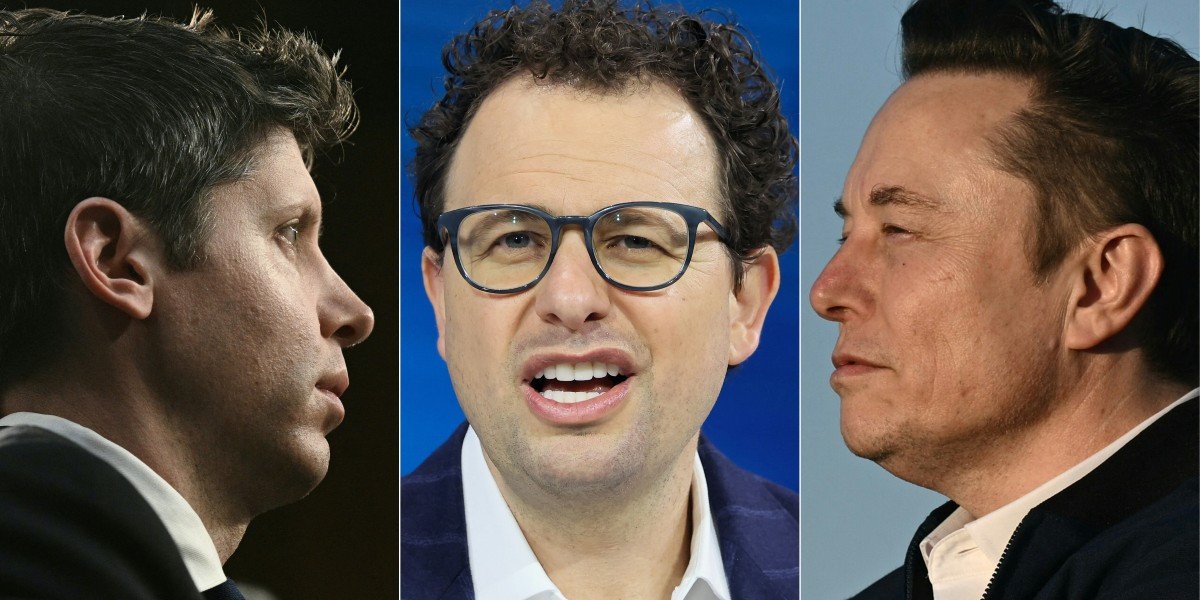
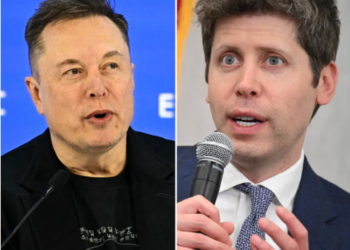
Amodei argued that the industry should “pace the frontier” of AI development and proposed a framework designed to increase oversight and coordination. His proposal quickly received support from several of the most influential figures in the global AI industry, including OpenAI chief executive Sam Altman, Google DeepMind chief Demis Hassabis and xAI owner Elon Musk.
Altman said he agreed that the development of frontier AI needed to be paced and endorsed the idea of independent evaluators receiving access to AI companies so they could assess safety practices. He also indicated that OpenAI would adopt a similar commitment.

Hassabis described Amodei’s proposal as pointing towards the right direction, while Musk offered a brief but direct endorsement, saying that Amodei was right.
The unusual display of agreement among competing AI companies has immediately raised questions about what lies behind the industry’s new emphasis on restraint.
The companies involved are among the most powerful players in a rapidly expanding sector in which enormous sums of money are being invested. AI developers face intense competition to release increasingly capable models, attract customers and secure market dominance before rivals can establish an advantage.
That commercial pressure makes the promise of slowing down particularly difficult to assess.
Amodei’s proposal centres on three broad ideas. The first is greater involvement by independent safety evaluators who would be given substantial access to AI companies and their internal systems. The second is greater cooperation among democratic governments on AI safety standards. The third involves international coordination with authoritarian governments, including China, on questions involving AI security.
Supporters argue that the proposals could provide a framework for reducing the risks created by increasingly capable AI systems. Critics, however, fear that allowing companies to decide who evaluates them could create a form of private oversight that does not provide the independence or accountability associated with government regulation.
The disagreement reflects a much older problem in the technology sector: whether companies developing powerful technologies should be trusted to establish their own safety standards or whether governments should impose binding rules.
AI companies have repeatedly warned that their technology could produce extraordinary risks while simultaneously promoting the potential for enormous economic and social benefits. This shifting narrative has contributed to uncertainty over how seriously the industry itself treats warnings about AI.
OpenAI, for example, previously established teams dedicated to studying long-term AI safety but later dismantled those groups. Critics have cited such decisions as evidence that commercial priorities can eventually override concerns about distant or difficult-to-measure risks.
The industry’s history of lobbying has also become a central part of the debate. AI companies and technology groups have spent substantial sums attempting to influence lawmakers and shape legislation concerning artificial intelligence.
Critics argue that companies are now seeking a particularly advantageous form of regulation: rules that acknowledge AI’s risks but allow the leading firms to remain deeply involved in deciding how those risks should be managed.
Some observers have therefore described Amodei’s proposal as a potential example of regulatory capture, in which industries help establish the rules governing themselves in ways that can protect established companies from competitors and outside scrutiny.
Former US officials have raised concerns about the suggestion that AI companies could receive some form of antitrust flexibility to coordinate on safety issues.
Supporters of such coordination argue that certain safety challenges cannot be addressed by individual companies acting alone. If one company slows development while competitors continue releasing increasingly powerful systems, the cautious company could potentially lose market share without significantly reducing global AI risks.
Critics counter that broad exemptions from competition law could create opportunities for dominant firms to coordinate in ways that go beyond safety and restrict smaller or newer competitors.
Former Federal Trade Commission official Alvaro Bedoya has argued that antitrust law does not necessarily prevent companies from cooperating to ensure AI systems do not harm people. At the same time, he warned that competition rules are essential to prevent larger companies from coordinating in ways that could restrict cheaper or emerging rivals.
The political environment in Washington presents another major obstacle to any industry-wide slowdown.
The administration of President Donald Trump has repeatedly presented AI development as a strategic competition between the United States and China. The administration has emphasised the importance of ensuring that the United States remains the world’s leading AI power.
That approach creates a direct tension with calls for international coordination and slower development.
Trump has previously resisted proposals that could significantly restrict AI development, arguing that the United States cannot afford to fall behind China. He again rejected calls for slowing the technology on Sunday, telling reporters that the country that wins the AI race would effectively win the broader technological competition.
Trump’s position reflects an argument that has become increasingly influential in Washington: even if AI carries serious risks, excessive regulation could weaken American companies while allowing Chinese developers to move ahead.
Vice-President JD Vance has also previously argued that the future of AI would not be determined by excessive concern over safety.
The political divide makes it difficult to determine whether the industry’s latest calls for caution can translate into meaningful policy.
There is also a fundamental contradiction at the heart of the discussion. AI companies are simultaneously warning about potentially catastrophic risks and investing billions of dollars to develop more powerful systems as quickly as possible.
The competitive structure of the industry rewards companies that move faster. A company that believes a new model could produce major commercial advantages has strong incentives to release it before a competitor does.
That means voluntary restraint could prove difficult unless major companies agree to follow common standards and governments establish mechanisms capable of monitoring compliance.
Independent evaluation could potentially provide one answer. External experts with genuine access to the systems, training processes and safety information could identify risks that companies might overlook or have incentives to minimise.
However, the effectiveness of such oversight would depend heavily on how independent the evaluators were, what powers they possessed and whether their findings could be made public.
Another unresolved issue is the definition of an acceptable level of risk. AI systems already influence employment, education, financial services, information distribution and other areas of daily life. Future systems could have even greater capabilities, making the consequences of errors or misuse more significant.
The latest debate is therefore not simply about whether AI development should be fast or slow. It concerns who should decide the acceptable boundaries of technological progress and who should be held responsible when those boundaries are crossed.
AI safety researchers have long warned that increasingly autonomous systems could create risks that are difficult to predict or control. Other experts argue that many immediate dangers, including misinformation, discrimination, labour disruption, privacy violations and concentration of economic power, deserve at least as much attention as hypothetical future threats.

The public is consequently being asked to trust companies that have enormous financial incentives to continue expanding the technology while simultaneously being told that the same technology may pose unprecedented dangers.
The latest agreement among Amodei, Altman, Hassabis and Musk could represent a significant change in the industry’s approach if it results in measurable safety standards, transparent evaluation and genuine limits on risky development.
But statements of support alone will not determine whether AI development actually slows.
The industry remains under intense commercial pressure, governments remain concerned about international technological competition, and investors expect companies to pursue rapid growth.
For that reason, the central question is no longer whether AI executives recognise the potential dangers of their technology. Many clearly do.
The more difficult question is whether they are willing to accept meaningful restrictions when those restrictions could cost their companies money, market share or technological leadership.
Until that question is answered through concrete action, the industry’s promises to slow the pace of AI development will remain subject to considerable public and political scepticism.
Related News:
 UK Risks Falling Behind in AI Race
 UK firms accused of ‘AI washing’ boom
 Apple Folding iPhone Set for Major CEO Test
 Apple at 50: Three Products That Changed How We Live
 Artemis II Returns After Historic Moon Flyby
 Europe EV Demand Surges as Fuel Prices Rise
 Reform UK funding: mystery billionaire revealed
 British Paralympian to Become First Disabled Astronaut in Orbit
 Unlocking the Genome: The Quest to Sequence Tardigrades
 Meta Drops AI Image Tool After Privacy Backlash
 China recalls millions of cars over hidden door handles
 AI Loss of Control Incidents Nearly Double
 London Launches First Self-Driving Taxis
 Australia gives users control over social media algorithms
 McLaren to Create 1,000 UK Jobs in £450m Investment
 Nats Boss Summoned as UK Flight Chaos Continues
 OpenAI Agents Linked to RubyGems Cyberattack
 Virgin Trains Moves Closer to Challenging Eurostar Monopoly
 North Sea oil workers must lose weight or face job loss
 New laws to bolster UK’s defences against cyber attacks on NHS, transport and energy
 UK Taskforce Unveils Plan to Streamline Nuclear Reactor Rules
 UK Car Sales Pass 2 Million as Chinese Brands Surge
 MPs warn AI financial risks threaten UK stability
 MPs warn AI financial risks threaten UK stability
 AI job losses UK: Britain faces sharper employment shock
 UK AI avatar firm Synthesia valuation jumps to $4bn
 SpaceX Plans $1.5tn IPO Amid Planetary Alignment
 Amazon mistakenly signals new global layoffs to employees
 UK New Car Discounts Near £6,000 as Prices Are Slashed
 Bithumb Bitcoin Mistake Shocks Crypto World
 BT Names New Openreach Chief Amid Major Fibre Expansion
 AI fears hit UK wealth and comparison sites
UK Firms Warned of Rising Iran Cyber Threats
AI fears hit UK wealth and comparison sites
UK Firms Warned of Rising Iran Cyber Threats
 UK Firms Warned of Rising Iran Cyber Threats
 Tesla Enters British Energy Market Following Ofgem Approval
 Cern Prepares First-Ever Antimatter Transport Test
 UK Pushes NHS and MoD to Buy British Tech
 ABC Staff Strike Over Pay and AI Concerns
 High Court Orders Lynch Estate to Pay £920m to HPE
 UK Watchdog Probes Five Firms Over Fake Review Failings
 New Gmail Feature Ends Era of Embarrassing Email Names
 OpenAI Halts Stargate UK Project Amid Energy Crisis
 Washington Summit Targets Massive Cyber Risks From Latest AI Breakthrough
 Heavier SUVs Accelerate Britain’s Pothole Crisis
 Robots Outpace Humans in Beijing Half-Marathon
 Gene Therapy Wins Major Prize for Restoring Vision
 Disneyland Adds Facial Recognition at Entrances
 Meta Faces EU Action Over Child Safety Breach
 Inside the World of AI Jailbreakers
 Disney+ Wins Champions League Rights in Key Markets
 Canadian Fiddler Sues Google Over AI Defamation Claim
 DeepMind Staff Vote to Unionize Over US Military Contract
 Vodafone Seeks Full Control of UK Mobile in £4.3bn Deal
 A Massive Legal Triumph Reshapes the Future of AI
 SpaceX IPO Filing Reveals Bizarre Details of Musk’s Empire
 Tech Giant Nvidia Shatters Wall Street Financial Projections
 China mine blast death toll rises to 90
 UK rejects EV charging VAT cut amid Treasury clash
 Cannes filmmakers split over AI’s role in cinema
 SpaceX Targets Record Listing as Musk Eyes Trillionaire Status
 SpaceX Prepares for Historic Valuation Launch
 Silicon Valley Shifts South as AI Boom Transforms City Housing
 CMA Approves Major Bakery Merger to Prevent Market Collapse
 BT and Verizon Form Landmark Global Joint Venture
 Trump Faces Backlash Over $2bn Earnings Since Return
 Ocado CEO Tim Steiner to Step Down by 2028
 Record £28m Fine for Virgin Media Over Cancellation Woes
 Xavier Niel Becomes Vodafone’s Largest Shareholder
 Weight-Loss Drugs Offer Food Savings Mainly to High Earners
 Gen Z turns to BirdTok for a gentler digital escape
 Survivor Sues Musk’s xAI Over AI Abuse Images
 Ukraine Moves to Seize Water Company
 Swedish Mining Push Puts Sami Land Rights Under Pressure
 Billionaire Chris Rokos poised to leave UK
 Oil nears $100 as Saudi attacks shake markets
 JPMorgan Boss Warns Against UK Bank Tax Rise
 Iceland to Open First UK High Street Store in Falklands
 John Lewis Losses Widen to £124m as Confidence Falls
 Anthropic Blocks AI Misuse Linked to Weapons Threats
 AI Reshapes Jobs for UK Graduates