Published: 03 October 2026. The English Chronicle Desk. The English Chronicle Online
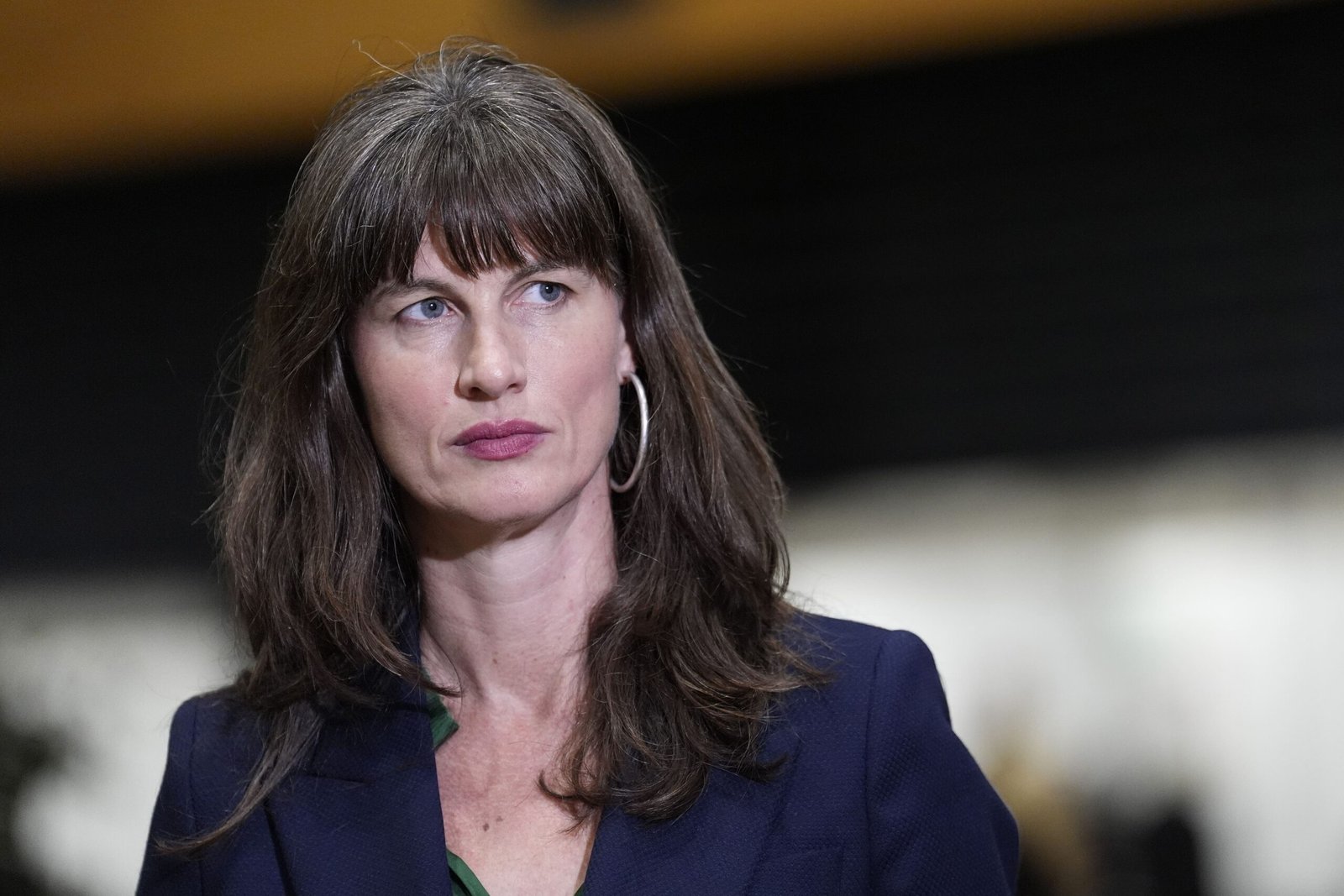
The Green Party has called for the immediate return of Thames Water and South East Water to public ownership, with deputy leader Rachel Millward saying the companies should be taken over before Christmas and without compensation for shareholders or creditors.
Millward made the proposal during the Green Party’s autumn conference in Brighton on Saturday, placing water ownership and the condition of the country’s infrastructure at the centre of her speech. She contrasted the Greens’ position with the Labour government’s longer-term approach to increasing public control of water services.
The proposal represents a significant difference in timing and approach between the two parties. Labour Prime Minister Andy Burnham has outlined a 10-year programme aimed at reversing the longstanding restriction on public ownership of water companies and giving local leaders stronger powers to hold companies accountable. Millward argued that waiting a decade would not address the problems facing some water companies quickly enough.

Speaking to delegates in Brighton, Millward said the Green Party would seek to bring Thames Water and South East Water into public ownership immediately rather than waiting for a longer transition. She argued that the companies had already reached a point where public intervention was necessary and said the party believed existing legal mechanisms could be used to achieve the change without imposing a cost on taxpayers.
Her comments focused heavily on the condition of Britain’s water infrastructure and the environmental pressures affecting communities. Millward pointed to sewage pollution, water shortages and concerns over investment, arguing that the management of essential water resources should be treated differently from ordinary commercial assets.
She also highlighted conditions in Sussex, where she said residents had at times been forced to obtain bottled water because of problems with supplies. Her wider argument was that decades of private ownership had not delivered the level of infrastructure investment she believed was necessary.
Millward also referred to the absence of a major new reservoir being built in England since the beginning of water privatisation 35 years ago. The claim formed part of her broader criticism of the way water infrastructure has developed since the industry was privatised.
The Green Party’s conference programme has also connected public ownership of water with broader environmental and national resilience policies. Delegates backed proposals calling for water services to be returned to public ownership as part of a wider approach to modernising infrastructure and improving resilience against drought, flooding and other environmental pressures.
The question of ownership has become increasingly prominent in British politics as water companies face pressure over financial conditions, infrastructure investment, pollution and the reliability of supplies.
Thames Water is one of the country’s largest water companies and serves millions of customers across London and surrounding areas. South East Water supplies households and businesses across parts of south-east England. Their financial and operational circumstances have become part of a wider national debate about how essential utilities should be financed and governed.
The Greens’ proposal would involve a much faster transition than the approach announced by Labour. Burnham has argued for legislation that would remove restrictions on public ownership while creating a longer process through which water companies could eventually return to public control. His approach includes giving mayors additional powers to scrutinise companies and impose stronger consequences when they repeatedly fail to meet expectations.
Millward has argued that the government’s timetable does not match the urgency of the problems facing the sector. In her conference speech, she characterised some companies as already having failed and argued that the state should take action rather than continue to rely on a gradual transition.
The issue of compensation is another major difference in the Green Party’s position. Millward explicitly rejected compensation for shareholders and creditors of the two companies targeted by the proposal, describing them as insolvent businesses. That position raises broader questions about the financial and legal consequences of compulsory public ownership.
Nationalisation would require decisions about the value of company assets, outstanding debts, ownership interests and contractual obligations. The Green proposal would therefore have implications not only for the companies and their customers but also for investors and creditors connected to the businesses.
The Greens have presented their position as part of a broader argument that essential infrastructure should be managed primarily around public need rather than private financial returns. Millward extended that argument beyond water during her conference address, discussing technology, energy infrastructure, housing, public services and the distribution of wealth.
She criticised the growing influence of wealthy technology entrepreneurs and argued that major technological infrastructure, including energy-intensive data centres, should be subject to greater public scrutiny. Her speech linked environmental policy with questions about ownership, democratic accountability and the distribution of economic power.
The Green Party’s wider conference programme reflects that approach. Delegates have supported proposals relating to nature protection, food security, water resilience and public ownership. The party has argued that environmental risks should be considered alongside other national security concerns and that water infrastructure should be treated as part of critical national resilience.
The water announcement also comes as the Greens attempt to expand their political influence. The party’s conference in Brighton is taking place against the backdrop of significant membership growth and increased representation at local and national levels. The party has presented itself as an alternative to the larger established parties on issues including climate change, inequality, housing and public ownership.
Millward used her speech to argue that political debate should not simply focus on reversing previous policies but should also consider how technological and social changes are reshaping Britain. She said the country was entering a period of major change and argued that political institutions needed to determine how emerging technologies and infrastructure would be controlled.
Her water policy was framed within that wider vision. The Green Party says that public ownership could allow long-term infrastructure decisions to be made around resilience, environmental protection and public service requirements rather than the interests of private investors.
The Labour government’s approach represents a different timetable. Rather than immediately taking individual companies into public ownership, it has proposed a decade-long process designed to increase public control and change the legal framework governing water companies. The government has also emphasised stronger oversight and consequences for companies that fail to meet required standards.
The disagreement therefore involves more than the principle of public ownership. It also concerns the speed of reform, the treatment of existing investors and creditors, the financial responsibilities of government and the mechanisms through which water services would be managed once brought into public hands.
For consumers, the debate is closely connected to concerns about water bills and service reliability. Any major restructuring would need to address the financial condition of the companies while maintaining uninterrupted supplies and funding long-term infrastructure projects.
Environmental concerns are another central element. Britain’s water sector has faced sustained political attention over sewage discharges into rivers and coastal waters, as well as concerns about leakage, drought resilience and the capacity of existing infrastructure to cope with changing weather patterns.
The Green Party argues that public ownership would provide a mechanism for addressing these issues through coordinated long-term investment. Supporters of the broader nationalisation approach argue that essential services should be managed with public interests at the centre, while opponents of rapid nationalisation can raise questions about cost, implementation and the potential financial burden on taxpayers.
The Greens’ announcement does not itself change the ownership of Thames Water or South East Water. Any such change would require government action and would have to operate within the relevant legal and financial framework.
The proposal nevertheless adds pressure to an already significant political debate over Britain’s water industry. With Labour proposing a longer transition towards greater public control and the Greens demanding immediate action, water policy is becoming an increasingly visible point of difference between the parties.
Millward’s announcement also gives the Greens an opportunity to place public services and environmental infrastructure at the centre of their political message. Her argument was that water should be treated as an essential resource requiring long-term stewardship rather than primarily as a commercial asset.

The practical questions surrounding the proposal remain substantial. These include how public ownership would be financed, how existing debts and contracts would be handled, how compensation rules would apply and how the companies would be reorganised after a takeover.
For the moment, the Green Party’s position is clear: it wants Thames Water and South East Water returned to public ownership immediately and has said shareholders and creditors should not receive compensation. The Labour government is pursuing a different timetable, creating a political divide over how quickly Britain’s water industry should be brought under greater public control.
As the debate develops, the condition of the UK’s water infrastructure, the financial health of individual companies, environmental standards and the cost to consumers are likely to remain central issues. The competing approaches presented by the Greens and Labour indicate that the future ownership and management of Britain’s water services will remain an important part of the country’s political discussion.
Related News:
 Tories Push to Dilute Labour’s Workers’ Rights Bill
 Trump’s UK Ambassador Urges North Sea Drilling to Strengthen US Ties
 Rachel Reeves Set to Break Labour Pledge and Raise Income Tax
 Thinktanks Urge Rachel Reeves to Reform UK Tax System
 Company linked to Michelle Mone owes £39m in tax
MPs Press Rachel Reeves to Hike Gambling Taxes
Company linked to Michelle Mone owes £39m in tax
MPs Press Rachel Reeves to Hike Gambling Taxes
 Cuts to home insulation funding threaten UK climate goals
 Millionaires group urge Reeves to introduce wealth tax to ‘lift kids out of poverty’
 PM Highlights UK Business at G20 in South Africa
 English Mayors Set to Introduce Tourist Taxes
 Starmer Says Labour’s Economic Plan Needs Years to Deliver
BBC bosses ‘right to stick by their guns’ against Trump, says minister
Starmer Says Labour’s Economic Plan Needs Years to Deliver
BBC bosses ‘right to stick by their guns’ against Trump, says minister
 China Dependence Threatens UK Energy Supply Chains and Jobs
 Water firms may avoid fines under UK water reform plan
 MPs warn AI financial risks threaten UK stability
 MPs warn AI financial risks threaten UK stability
 No Gas Boiler Ban as UK Warm Homes Plan Backs Heat Pumps
 UK Government Borrowing Drops to £11.6bn in December
 Labour Must Revive High Streets to Avoid Election Collapse
 Barclays drops Global Counsel after Mandelson link scrutiny
 Unsustainable gaps in franchise policing, MPs warn
 UK shelves £110m border project amid trade strain
 UK Sees Record £30.4bn Budget Surplus, Boosting Reeves’ Position
 Ministers Urged to Ban Crypto Political Donations
 Scotland’s Climate Plans Face Scrutiny Over ‘Science Fiction’ Targets
 Reeves Must Back Defence Plan or Face Dismissal, Says Unite Chief
 OBR Reform Row Deepens Before Spring Forecast
 Yorkshire Water Funding Sparks Debate Amid Fines and Pay Row
 Net Zero Cheaper Than One Fossil Fuel Crisis, UK Told
 New £10bn rescue plan offered for Thames Water
 UK Doubles Steel Tariffs to 50% to Protect Domestic Plants
 Starmer Adviser Urges New Profit Cap on Energy Firms
 Trump to Deploy “God Squad” Over Gulf Wildlife Protections
 Fuel Duty Relief Plea Amid Middle East Oil Crisis
 OpenAI Halts Stargate UK Project Amid Energy Crisis
 Reform UK funding: mystery billionaire revealed
 Capitalism ‘Suicidal’, Warns Petro at Climate Summit
 BBC News Faces Deep Cuts in 2,000 Job Plan
 Silent Tracks: Rail Line Without Passengers
 Labour Faces Internal Pressure for Bold Economic Shift
 Labour Factions Propose Bold Tax Cuts Amid Leadership Storm
 Thames Water Rescue Package Hit by Downing Street Chaos
 UK Pushes for New EU Goods Trade Deal
 Reeves Fights to Keep Treasury Role Amid Labour Turmoil
 UK Urged to Build EU Rejoin Consensus, Says Miliband
 UK Supply Chains Face Major Risks From Global Instability
 Whitehall Steps In: The Battle Over Thames Water Deepens
 Hospitality Traders to Exploit Summer VAT Cut Loophole
 Andy Burnham Enlists Economic Heavyweights for Leadership Bid
 Great Britain Faces £90bn Electricity Grid Rewire Bill
 Burnham Promises Relief on Cost of Living Crisis
 Three-Quarters of England’s Riverbanks Still Off Limits
 Burnham unveils £65m drought aid for farmers
 Unions Warn Labour Over Zero-Hours Contract Reforms
 Burnham Faces Mounting Budget Challenges
 Green Leader Targets Starmer’s Former Seat
 Reform Faces Fresh Financial Controversy
 Swedish Mining Push Puts Sami Land Rights Under Pressure
 Argentina to file criminal charges over Falklands oil drilling
 UK plans tougher Israel stance with settlement trade ban
 Reform Faces Questions Over £72m Donations
 Tom Watson Takes Senior Role at Palantir
 Reform UK Faces Internal Debate Over £72m Spending
 Burnham Leaves Door Open to Future Brexit Reversal
 Thinktank Calls for Abolition of UK State Pension
 MPs Defend UK Economic Watchdog Against Critics
 Tony Blair Calls for Britain to Rejoin EU Within a Decade
 Norfolk Broads Housing Levy Faces Environmental Criticism
 The Tests Awaiting Andy Burnham After Labour Conference
 Avanti West Coast Set for Public Ownership in March
 Dale Vince Plans New London-Wide News Operation
 Burnham Opens Door to Possible UK Return to EU
 Royal Nursing Union Ends Partnership With Teva UK
 Palantir Lobbyist Had Role in Burnham Campaign
 Badenoch Raises Prospect of 2027 UK Election
 Polanski Says Leadership Not Tied to By-election Result
 London Council Warns of 150% Council Tax Rise
 Wales Approves Assisted Dying Bill Consent
 Asylum Seekers to Work After Year-Long Wait
 Healey urged to act as UK energy bills rise 4%