
Published: 05 October 2026. The English Chronicle Desk. The English Chronicle Online.
The UK Conservative party is preparing to announce a sweeping programme of deregulation that would include abolishing the Environment Agency and Natural England, replacing existing affordable housing requirements and changing rules that govern the environmental impact of major developments.
The proposals are being presented as part of a broader Conservative strategy to make economic growth, housebuilding and infrastructure development central to the party’s political message. Shadow chancellor Andrew Griffith is expected to argue that Britain has accumulated a complex network of regulations that increases the cost of construction and slows down projects that the country needs.
The announcements are due to form part of the Conservative party conference programme in Birmingham, where the leadership is seeking to demonstrate a clearer economic identity and regain political ground against both Labour and Reform UK.

The Conservatives have argued that the existing regulatory system places excessive burdens on developers and businesses. Under the proposals, rules designed to protect nature, require affordable homes in new developments and provide funding for local infrastructure would be significantly changed.
Griffith is expected to describe the programme as an ambitious deregulation effort intended to reduce costs, accelerate development and make Britain more competitive. Conservative plans would also seek to simplify the tax system, with shadow Treasury ministers being asked to identify ways of reducing complexity for individuals and companies.
One of the most controversial elements of the programme would be the abolition of Natural England and the Environment Agency. The Conservatives say the functions currently carried out by the two organisations could instead be transferred directly into the Department for Environment, Food and Rural Affairs.
The party argues that removing the separate agencies would create a more streamlined regulatory structure while retaining the necessary environmental protections. Critics are likely to question whether transferring responsibilities into a government department would provide the same level of independent oversight.
The Environment Agency currently plays a major role in areas including flood protection, pollution control, environmental regulation and water management in England. Natural England is responsible for protecting and improving the natural environment, including landscapes, habitats and biodiversity.
The Conservative proposal would therefore represent a significant change in how environmental regulation is organised if implemented.
Housing is another major focus of the plans. The party claims that removing certain requirements could reduce the cost of building a new home by as much as £50,000. Among the regulations targeted would be net-zero requirements for new housing, including the Future Homes Standard, which is designed to ensure that newly constructed homes in England are prepared to meet low-carbon standards.
The Conservatives also want to replace Section 106 agreements and the community infrastructure levy. These mechanisms currently require developers to contribute towards affordable housing and local infrastructure associated with new developments, including facilities and services such as schools and healthcare.
Under the proposed system, the party would introduce what it describes as a single, simplified levy on developers. Conservative politicians argue that a more predictable system would reduce delays and give builders greater certainty when planning projects.
Supporters of the approach are expected to argue that faster construction would help address Britain’s housing shortage and stimulate economic activity. The party’s new shadow housing secretary, Katie Lam, is expected to claim that regulatory reform would prevent what Conservatives describe as anti-growth policies from blocking development.
However, the proposals are likely to generate a significant political debate over the balance between economic growth and environmental protection.
Environmental regulation can impose costs on developers, but it also exists to protect communities from pollution, flooding, ecological damage and poorly planned construction. Changes to those rules could therefore affect not only businesses but also residents living near new developments and infrastructure projects.
The Conservative leadership is nevertheless betting that economic concerns provide an opportunity to differentiate the party from its political rivals. Conservative strategists believe voters may respond to a message centred on lower taxes, cheaper housing, reduced regulation and faster infrastructure construction.
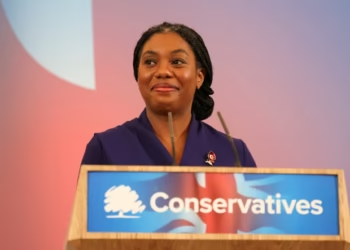
The proposals are also part of Conservative leader Kemi Badenoch’s attempt to establish a clearer ideological and policy framework for the party. Badenoch has published a new political document, The Right Way, which she has presented as the foundation for future Conservative policy development.
The document takes inspiration from Margaret Thatcher’s 1970s political writing and reflects Badenoch’s intention to position the Conservatives as a party prepared to act quickly if returned to government.
Badenoch has argued that the Conservatives must be ready to govern from the first day after the next general election. She has also sought to distinguish her party both from Labour and from the Conservative approach of recent years.
The party currently faces a difficult political landscape, with polling placing it behind Labour and Reform UK. The leadership therefore hopes that a stronger focus on the economy and deregulation can help the Conservatives appeal to voters concerned about living costs, taxation, housing availability and Britain’s long-term growth prospects.
Heathrow expansion is another central component of the economic strategy. Griffith is expected to reaffirm Conservative support for the construction of a third runway at Heathrow and argue that Britain should move more rapidly to expand airport capacity.
The Conservatives say major infrastructure projects should not take decades to complete. Griffith is expected to argue that the country needs faster decision-making and fewer regulatory obstacles if it is to compete internationally.
The issue could create another contrast with Labour figures. Andy Burnham, the prime minister, has recently expressed personal scepticism about delays surrounding the Heathrow project, while also indicating that differing views on the airport expansion should be taken seriously.
The Conservative proposal to leave the Aarhus Convention would also mark a significant change. The convention provides members of the public and community organisations with rights relating to environmental information, public participation and access to justice in environmental matters.
Conservatives supporting withdrawal argue that the system can be used to delay development projects. Opponents could argue that reducing those rights would make it harder for communities to challenge projects that they believe could damage their environment.
The party’s proposed changes therefore extend well beyond simply removing individual regulations. They amount to a broader attempt to change the relationship between government, developers, environmental regulators and local communities.
Griffith is expected to present the programme as a response to what Conservatives describe as Britain’s excessive regulatory burden. He will argue that the country cannot afford to allow complex rules and lengthy approval processes to hold back economic activity.
The Conservatives also intend to review the tax system. Griffith is expected to describe the existing tax code as excessively complicated and promise that shadow Treasury ministers will work on ways to simplify taxation for both businesses and individuals.
The proposals are designed to create a coherent political message: lower costs, faster construction, fewer regulatory barriers and greater emphasis on private-sector investment.
Yet the success of that message will depend partly on whether voters believe deregulation can deliver tangible improvements in their daily lives. Cheaper housing, faster infrastructure projects and stronger economic growth are attractive promises, but removing environmental safeguards can also generate concerns over long-term costs and public protection.
The Conservative leadership will therefore face the challenge of convincing voters that its proposed reforms can accelerate growth without weakening environmental standards or undermining confidence in public regulation.

For communities near proposed developments, the question will be whether a simpler system produces genuinely faster construction or merely reduces opportunities for scrutiny. For developers, the appeal will be greater certainty and potentially lower costs. For environmental campaigners, the proposals are likely to raise concerns about whether protections for nature and local communities could be weakened.
The Conservative conference is consequently expected to become an important test of Badenoch’s strategy for rebuilding the party. By placing deregulation, housing and infrastructure at the centre of its economic offer, the Conservatives are attempting to move the political debate towards growth and away from issues where Reform UK has gained considerable attention.
Whether the strategy can close the polling gap remains uncertain. But the proposed abolition of two major environmental agencies and the planned overhaul of housing and development regulations demonstrate the scale of change the Conservatives are prepared to consider as they seek to redefine their economic programme ahead of the next election.
Related News:
 Water firms may avoid fines under UK water reform plan
 No Gas Boiler Ban as UK Warm Homes Plan Backs Heat Pumps
 Scotland’s Climate Plans Face Scrutiny Over ‘Science Fiction’ Targets
 Net Zero Cheaper Than One Fossil Fuel Crisis, UK Told
 Three-Quarters of England’s Riverbanks Still Off Limits
 Polanski Says Leadership Not Tied to By-election Result
 Greens Call for Immediate Water Nationalisation
 Green Party Surges Past Labour in Latest UK Poll
 Trump’s UK Ambassador Urges North Sea Drilling to Strengthen US Ties
 French Taxi Driver Cleared in David Lammy Theft Case After Fare Dispute
 Millionaires group urge Reeves to introduce wealth tax to ‘lift kids out of poverty’
 Starmer Faces Growing Dissent as Labour MPs Weigh Leadership Challenge
 Reeves rejects £1bn plea for NHS redundancy payouts
 PM Condemns Leaks, Vows Loyalty to Ministers and Stability
 Major Rent Reform Ends No-Fault Evictions in England
 Most Tories Expect to Support a Farage-Led Government
 Starmer Says Labour’s Economic Plan Needs Years to Deliver
 Judi Dench Champions Fight to Save London’s Green Spaces
 Labour Blocks Burnham as Party Rift Deepens Ahead of Polls
 Huge mistake: Labour blocks Burnham from byelection bid
 Artificial intelligence will cost jobs, admits Liz Kendall
 Labour targets Greens on drugs in Gorton Denton byelection
 Greens nominate Hannah Spencer for Gorton and Denton byelection
 Mandelson Faces Police Inquiry Over Epstein Leak
 Labour Thinktank Row Deepens Over Journalist Probe Claims
 Morgan McSweeney downfall shocks Labour leadership
 Cabinet Secretary Shake-Up Triggers Due Diligence Warning
 Starmer Faces Inquiry Calls Over Thinktank Probe
 Royal Mail Delivery Crisis Deepens Amid Weather Chaos
 UK shelves £110m border project amid trade strain
 Farage Unveils Reform UK Frontbench Team
 California Democrats Vow Trump Reckoning
 Trump Tariffs Threat Spark UK and EU Alarm
 Wales Approves Assisted Dying Bill Consent
 UK EU Trade Reset Gains Public Backing
 Green Party Stuns Labour in Gorton and Denton Byelection
 Corbyn Leads Your Party in Coordinated Left-Flank Strategy
 Labour Together scandal sparks clean break vow
 Asylum Seekers to Work After Year-Long Wait
 Starmer Row as Greens Demand Apology
 Proposed Law Leaves Gap for Children of Convicted Paedophiles
 Gordon Brown urges court for crimes against children
 Inquiry into HMRC child benefit errors launched by NAO
 NHS Plans to Cut Overseas Workers Labeled Overambitious
 Farage Faces Backlash Over Crypto Cameo Endorsements
 Relationship with Trump may be beyond repair, Starmer warned
 Unions Raise Concerns Over Doctors’ Pay Dispute
 UK Government Poised to Revive Stalled Hillsborough Law
 UK Stands Firm on Falklands Amid US Rift
 Welsh Labour Faces Potential Historic Election Defeat
 Silent Tracks: Rail Line Without Passengers
 Major test for Labour as polls open in Great Britain
 Reform UK Faces Crisis as Newly Elected Councillors Resign
 Keir Starmer Struggles to Secure His Grip on Downing Street
 Farage Faces Standards Probe Over Cash Property Purchase
 UK Faces Mass Water Shortages by 2055, Lords Warn
 Secret Role of UK Security Services in Troubles Amnesty Law
 Farage and Reform UK Reshape British Politics
 Minister Criticises Police Guidance Amid Southampton Protests
 Makerfield Voters Demand Real Change as Election Looms
 The Hidden Crisis Eroding Trust in British Communities
 Labour MP Revives Blocked Assisted Dying Bill in Commons
 Starmer Set to Announce Exit Plan as Burnham Eyes No 10
 Burnham Pledges New Era of Open Debate for Labour MPs
 Ann Widdecombe, Formidable Political Figure, Dies at 78
 Security Row Erupts Following Tragic Death
 Burnham unveils £65m drought aid for farmers
 Unions Warn Labour Over Zero-Hours Contract Reforms
 Former Diplomats Urge UK and France to Act on Palestine
 Bayeux Tapestry Revives Franco-British Ties
 Swedish Mining Push Puts Sami Land Rights Under Pressure
 Tom Watson Takes Senior Role at Palantir
 Mahmood Warns Far Right Over Asylum Protests
 MPs Defend UK Economic Watchdog Against Critics
 The Tests Awaiting Andy Burnham After Labour Conference
 Free Speech Emerges as Key UK Election Issue
 Burnham Opens Door to Possible UK Return to EU
 Badenoch Raises Prospect of 2027 UK Election
 Half of UK Voters Back Possible EU Return
 US bombers leave RAF Fairford after terror threat