Published: 10 September 2025 | The English Chronicle Desk
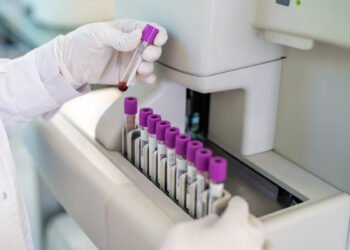
Doctors across the UK have launched a groundbreaking clinical trial for a £100 blood test designed to detect Alzheimer’s disease, aiming to transform how the NHS diagnoses and manages the condition. The trial seeks to recruit over 1,000 patients with suspected dementia from memory clinics nationwide to evaluate whether the test leads to faster, more reliable diagnoses and improved care for those affected.
Alzheimer’s disease, the most common form of dementia, affects more than half a million people in the UK, yet diagnosis remains a lengthy and complex process. Currently, only around 2% of patients undergo gold-standard tests such as PET scans or lumbar punctures that identify hallmark signs of the disease. Early and accurate detection is crucial, particularly as new drugs like lecanemab and donanemab, while only modestly effective, show greater promise when administered in the earliest stages of the condition.

The blood test being trialled measures a protein known as p-tau217, which reflects the presence of amyloid and tau—two proteins closely linked to Alzheimer’s. Early evidence indicates the test could match the accuracy of PET scans and lumbar punctures while being far less invasive and significantly more cost-effective.
Prof Jonathan Schott, neurologist at University College London and co-lead of the Adapt trial, said: “We’re expecting numerous further treatments to come on stream within the next 10 years, so we need to prepare the NHS now, to be able to deliver these treatments, as well as the benefits an accurate diagnosis already gives.”
Participants in the trial will come from diverse geographic, ethnic, and socioeconomic backgrounds, including those with other medical conditions, ensuring the findings are widely applicable. Half of the participants will receive their blood test results within three months, while the remainder will receive results after 12 months. Doctors will then assess whether access to these results improves diagnosis speed and guides treatment decisions.
Dr Ashvini Keshavan, senior clinical research fellow at UCL’s Dementia Research Centre and co-lead on the trial, explained: “This is not about confirming accuracy, which we have already done. This is about showing that it actually makes a difference to patients’ onward management.”
In laboratories already using the test, results can be processed within two weeks, highlighting the potential for rapid, large-scale implementation if the trial proves successful. Researchers expect to complete recruitment within two years, after which the results will be submitted to the National Institute for Health and Care Excellence (NICE) to determine whether the test should be rolled out across the NHS.

The trial is part of the multimillion-pound Blood Biomarker Challenge, funded by Alzheimer’s Society, Alzheimer’s Research UK, and the People’s Postcode Lottery. Dr Sheona Scales, director of research at Alzheimer’s Research UK, noted: “The earlier we can intervene with these experimental or new potential treatments, the greater their chances of success. The pace of change in Alzheimer’s research is accelerating, and accurate, early diagnosis is key to unlocking these advancements.”
If successful, the £100 blood test could not only speed up diagnosis but also guide treatment decisions more effectively, potentially transforming care for thousands of people living with Alzheimer’s in the UK.
Related News:
 The diet that can significantly ease symptoms of IBS
 No link found between paracetamol in pregnancy and autism
 Shouting Works Best to Deter Gulls, UK Study Finds
 Concerns Mount Over Accuracy of At-Home Health Tests as Study Calls for Stricter Regulation
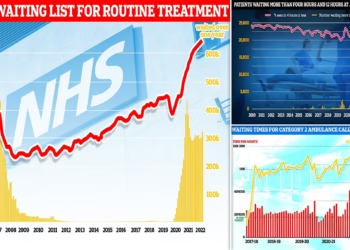 NHS Under Pressure: Waiting Times Soar as Staffing Crisis Deepens
 The Ketamine Crisis in the UK is a Silent Epidemic Leaving Users with Lifelong Pain
 UK Launches World-First Gonorrhoea Vaccine Amid Record Infection Surge
 Woman Warned She Might Need Leg Amputation to Survive After Liquid Brazilian Butt Lift
 AI Tools Used by English Councils Found to Downplay Women’s Health Issues, Raising Concerns Over Gender Bias in Care
 None of Us Feel Safe’: Violence Against A&E Nurses Nearly Doubles as Waiting Times Soar
 Cats Develop Dementia Similarly to Humans, Study Finds
 Appalling Rise in Pharmacy Crimes: Staff Face Increasing Theft and Aggression
 Alarming rise in abusive teen relationships in the UK sparks urgent warnings
 Learner Drivers to Face CPR and Defibrillator Questions in New Theory Tests
 Inquest Finds Agency Worker Failings Led to Unlawful Death of Vulnerable 14-Year-Old
 UK Patients Face Steep Price Rise for Weight-Loss Drug Mounjaro
 Shocking Rise in Children’s Exposure to Violent Online Pornography Raises Alarm
 Baby Food Manufacturers Given 18 Months to Improve Nutrition and Labelling
 New Dinosaur Species Honours Record-Breaking Yachtswoman Dame Ellen MacArthur
 Martha’s Rule Now Fully Implemented Across All Acute Hospitals in England
 Why E-Bikes and E-Scooters Are Making Streets a ‘Nightmare’ for Blind People
 Council Proposes Limits on Ice Cream Van Music and Parking in South Cambridgeshire
 Millions in the UK at Higher Risk of Heart Failure and Stroke Due to Air Pollution, Study Warns
 Norfolk Hospital Ranked Worst in England as NHS League Tables Return
 More Than Half of UK Births Now Involve Medical Intervention
 UK Graduates in Healthcare Report Highest Satisfaction with Degree Choices
 NHS ‘Toxic Culture’ Risks Harm to Mothers and Babies, Health Leader Warns
 First Group of Children from Gaza Arrive in UK for Life-Saving NHS Treatment
 UK Doctors Guilty of Sexual Misconduct Continue Practising Amid Weak Sanctions, Research Finds
 Private Psychology Costs Surge in UK as Practitioners Turn Away Clients Amid Record Demand
 Heavy Drinkers Lead Growth in Non-Alcoholic and Low-Alcohol Market
 Omeprazole Alert: NHS Issues Guidance on Safe Use for Heartburn and Indigestion
 Labour Announces Pay Boost and New Negotiating Body to Address England’s Care Sector Crisis
 Starmer Unveils Plan for NHS “Online Hospital” to Tackle Waiting Lists
 Tragic Death Strikes Half-Marathon in Stoke-on-Trent: Runner Dies Shortly After Crossing Finish Line
 Call to Allow ‘Safe and Effective’ At-Home Abortions Up to 12 Weeks in the UK
 Medical Cannabis Offers New Hope for British Women Struggling with Chronic Pain
 One in four UK residents fear a loved one drinks excessively as addiction concerns rise
 Eligibility Confusion Over COVID Vaccination Leaves Pharmacies Struggling Across the UK
 Majority of UK Men Would Opt for Prostate Cancer Screening, Survey Finds
 Scientists Announce First Potentially Accurate Blood Test for Chronic Fatigue Syndrome
One in Three UK Workers Call in Sick After Work Drinks as Cultural Pressures Persist, Survey Finds
Scientists Announce First Potentially Accurate Blood Test for Chronic Fatigue Syndrome
One in Three UK Workers Call in Sick After Work Drinks as Cultural Pressures Persist, Survey Finds
 NHS Facilities Staff Vote to Strike Over Pay Discrimination
 NHS May Pay 25% More for Medicines Amid US Drug Talks
 Survey Shows Most GPs Rushing Appointments
 NHS Staff Strike Over £30m Pay Discrimination Claim
 Ambulance Worker Fired After Flinging Amputee from Wheelchair and Offering Bribe
 Women Challenge Meta Over Targeted Ads After Miscarriage
 Mum’s Final Wish: Donating Her Body to Science
 Genetic Tests May Predict Return of Blood Cancer
 UK Woman Becomes Longest Survivor of Heart-Lung Transplant
£18 Prostate Cancer Test Could Save Thousands of Lives
UK Woman Becomes Longest Survivor of Heart-Lung Transplant
£18 Prostate Cancer Test Could Save Thousands of Lives
 UK Vets May Be Forced to Publish Prices After CMA Probe
 Thousands in the UK sue Johnson & Johnson over alleged talcum powder, linked to cancer
Pregnant Women in England Face Rising Risk of Severe Birth Injury
Thousands in the UK sue Johnson & Johnson over alleged talcum powder, linked to cancer
Pregnant Women in England Face Rising Risk of Severe Birth Injury
 ‘Game-Changing’ HIV Prevention Jab Set for NHS Approval
 Ranking Antidepressants by Physical Side Effects Revealed
 One in 12 Secondary Pupils Sent to Isolation Weekly
 UK Health Leaders Push for Urgent Tobacco & Vape Bill
 Man Trapped in Quicksand Rescued in Dramatic Coastal Rescue
 Hospice Cuts Raise Alarm Across England Amid Funding Crisis
Morning-After Pill Now Free Across England’s Pharmacies
Hospice Cuts Raise Alarm Across England Amid Funding Crisis
Morning-After Pill Now Free Across England’s Pharmacies
 How Bringing Forests Into Preschools Boosts Children’s Health
 Celebrities and Charities Demand UK Government Act on Child Poverty
 Experts Warn on Home Birth Risks, Call for Skilled Midwives
 Experts Urge Legal Right to Timely Cancer Care
 London’s Childlessness Crisis: Schools Closing as Families Shrink
 North Sea oil workers must lose weight or face job loss
 Crisis charity to become landlord amid UK housing emergency
 Leading doctors issue warning amid ‘bad’ flu season
 Valve Opens the Door for Android Games on Steam
 From Baby Teeth to Bioengineering: The Future of Self-Healing Teeth
 UK launches major AI drive to fight deadly superbugs
 ‘Traumatic Wait’: Northern Ireland Women Face Breast Cancer Delays
 Welsh Government Christmas 2020 Lockdown Criticised
 Coffins Now Too Large to Cremate Amid Rising Obesity Crisis
 NHS paediatric leave parents waiting months for answers
 Catherine urges end to stigma around addiction
 Fibromyalgia Patients Struggle as NHS Fails to Provide Care
 “Enough is Enough”: Local MP Vows to Fight Rainham Quarry Plans