Published: 03 June 2026. The English Chronicle Desk. The English Chronicle Online.
The fragile diplomatic landscape of the Middle East faces an immediate and severe test today. Israeli warplanes launched dozens of heavy airstrikes across the southern regions of Lebanon this morning. These military actions occurred despite intense efforts by the United States administration to shore up peace. President Donald Trump has been actively trying to salvage a tattered ceasefire agreement this week. The latest surge in violence highlights the deep volatility gripping this highly sensitive border zone. Analysts suggest the conflict threatens to unravel broader diplomatic initiatives currently underway in Washington.
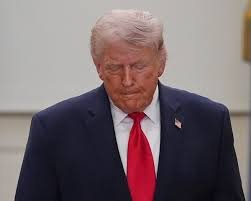
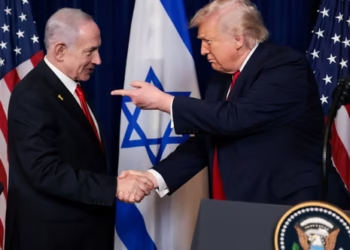
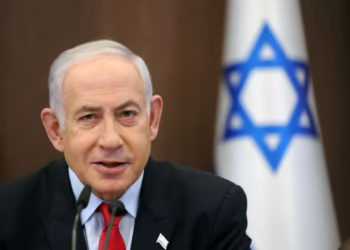
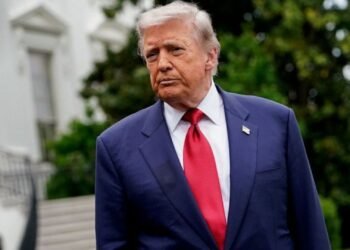
The political drama intensified dramatically following a series of high-level statements from Washington on Monday. President Trump announced he had successfully intervened to stop an imminent attack on Beirut. The American leader stated he spoke directly with the Israeli Prime Minister, Benjamin Netanyahu. He also claimed communications were established with high-ranking representatives from the Hezbollah militant organisation. According to the White House, all sides initially agreed to halt their active shooting immediately. This diplomatic breakthrough was intended to provide a vital breathing space for ongoing regional negotiations.
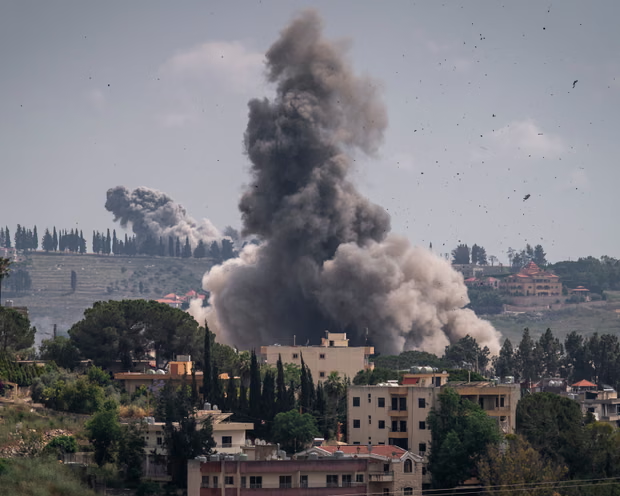
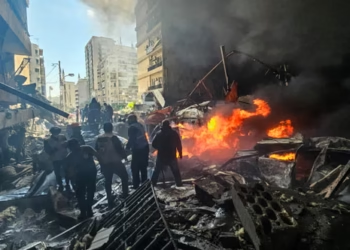
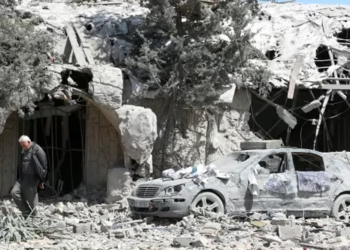
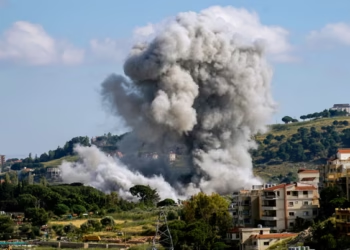
However, the reality on the ground in Lebanon quickly contradicted these optimistic political statements. Lebanon’s state-run National News Agency reported at least thirty distinct Israeli strikes on Tuesday. These air operations targeted numerous positions scattered across the rural south of the country. Near the historic coastal city of Sidon, emergency workers faced absolute devastation and heartbreak. Rescuers successfully recovered the bodies of six family members from beneath a collapsed building. The victims tragically included a local woman and two young children killed during the raid.
The Israeli military defended its renewed bombardment by citing urgent and immediate security concerns. Army officials issued strict evacuation orders for residents living in the southern city of Nabatiyeh. These warnings were broadcast just moments before another wave of intense airstrikes commenced yesterday. The Israel Defence Forces explicitly accused Hezbollah of committing multiple violations of the active ceasefire. They maintained that their defensive operations were necessary to protect civilians living in northern Israel. This cycle of accusation and counter-accusation continues to define the tragic conflict daily.
Achieving a durable peace agreement in Lebanon remains a critical priority for the United States. A stable ceasefire would significantly bolster Washington’s wider efforts to secure a truce with Iran. Hezbollah maintains deep ideological, financial, and military connections to the political leadership in Tehran. Therefore, any escalation in Lebanon directly impacts the delicate diplomatic channels across the region. President Trump is highly motivated to untangle this complex web of regional hostilities this month.
The American President has pushed back against suggestions that his wider strategy is failing. On Tuesday, Trump strongly denied reports regarding a complete breakdown in talks with Tehran. Semi-official news agencies in Iran suggested negotiators had paused talks due to the strikes. The President used social media to clarify that continuous conversations have been occurring daily. He stressed that discussions took place yesterday, two days ago, and four days ago. The White House insists that the diplomatic channel with Iran remains fully functional now.
Meanwhile, Hezbollah has adjusted its public messaging regarding its recent military operations along the border. The group has notably stopped claiming direct responsibility for rocket strikes inside Israeli territory. Instead, statements focus on their defensive engagements against Israeli ground troops operating inside Lebanon. Israeli soldiers have pushed across the frontier to establish a wide security buffer zone. This contested area currently extends between five and ten kilometres deep into Lebanese territory.
Despite the shift in rhetoric, cross-border projectiles continue to threaten communities in northern Israel. The Israeli military confirmed it intercepted two rockets fired from Lebanon overnight towards Safed. Additionally, an explosive drone successfully struck an Israeli military position located in western Galilee. The Times of Israel newspaper reported that this specific base sits close to the border. Fortunately, emergency services confirmed that no injuries were recorded from either of these incidents.
The current phase of this destructive war trace its origins back to early spring. Hezbollah launched a massive rocket barrage against Israel on the second day of March. That assault was a direct retaliation for the killing of Ayatollah Ali Khamenei. The Iranian supreme leader died during a major US-Israeli offensive targeting targets inside Iran. Since that pivotal event, the entire region has been locked in a bloody cycle. The last few days have witnessed a dramatic and highly dangerous escalation in fighting.
Over the recent weekend, Israeli ground forces achieved a symbolic victory in the south. Troops successfully raised the national flag over the historic ruins of Beaufort Castle. This move marked their deepest ground incursion into Lebanon for more than two decades. Hezbollah responded almost immediately by launching deeper rocket attacks targeting major cities in northern Israel. The psychological impact of these deep strikes has severely rattled populations on both sides.
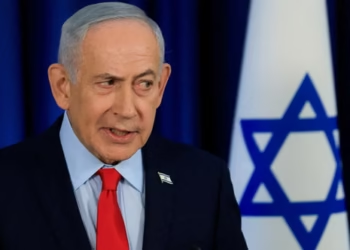
Prime Minister Netanyahu justified his latest orders by pointing to these repeated ceasefire violations. An official truce has technically been in place since the seventeenth day of April. However, observers note that the agreement was never truly respected by either combatant party. Netanyahu specifically ordered fresh airstrikes on the densely populated southern suburbs of the Lebanese capital. This urban area is widely recognised as a major political and military stronghold for Hezbollah.
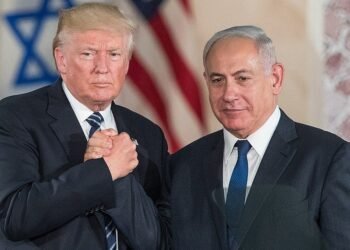
This decision reportedly sparked a furious reaction from the American President behind closed doors. Reports from the US news outlet Axios claim Trump used exceptionally strong language. He allegedly called the Israeli Prime Minister crazy during an intense and private phone conversation. Trump reportedly accused Netanyahu of actively jeopardising the broader peace negotiations with the Iranian state. The leak reveals the immense pressure building within the traditional alliance between Washington and Jerusalem.
However, independent Israeli media networks have offered a different interpretation of this crucial call. Channel 12 political analysts heavily contested the specific details leaked to the American press. Chief political analyst Amit Segal suggested the conversation was actually much more constructive in nature. Segal stated that Trump did not launch a personal attack against the Prime Minister. Instead, the two leaders allegedly agreed on a strict conditional framework for future operations. Under this agreement, Israel would avoid Beirut if Hezbollah stopped attacking Israeli towns.
Despite these conflicting reports, Israel’s defence leadership maintains a firm and uncompromising public stance. Defence Minister Israel Katz confirmed that instructions to strike terrorist targets remain fully active. Katz stated that Washington fundamentally endorses Israel’s right to respond to ongoing hostile actions. He warned that if northern Israeli towns face attacks, Beirut will be targeted again. The specific target remains the Shia Dahiyeh quarter, which houses key militant infrastructure.
The threat of renewed bombing has caused immense panic among ordinary citizens in Beirut. Many residents chose to flee the capital city ahead of the expected military escalation. On Tuesday, numerous shops remained firmly closed across the usually bustling southern urban districts. A journalist from Agence France-Presse reported seeing military drones patrolling the skies at low altitude. The constant buzzing sound provides a chilling reminder of the ever-present danger of air attack.
Some displaced locals are attempting to return home during brief lulls in the violence. Layla Shehab, a thirty-five-year-old mother, decided to bring her family back to the suburbs yesterday. She explained that the local situation appeared to have calmed down slightly after the morning. However, such returns remain incredibly risky given the unpredictable nature of modern aerial warfare. Millions of civilians find themselves caught helplessly between military objectives and diplomatic failures today.
Diplomats are working around the clock in the United States to find a solution. Official Lebanese and Israeli delegations have quietly begun a fourth round of talks in Washington. The two nations have no formal diplomatic relations, making these direct talks highly unusual. However, the political wing of Hezbollah remains deeply skeptical of these American-led diplomatic efforts. Senior official Mahmoud Qmati stated that the group will never accept a partial ceasefire agreement. Qmati warned that any aggression against Beirut would trigger a much stronger military response.
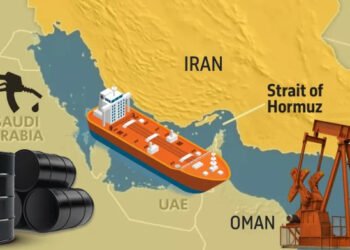
The stakes could not be higher for President Trump as the summer months approach. Since mid-March, he has repeatedly assured the public that a grand deal is close. This proposed agreement would temporarily postpone highly sensitive issues like Iran’s secret nuclear programme. The immediate economic priority for the White House is reopening the critical Strait of Hormuz. The prolonged closure of this waterway caused global oil prices to spike dangerously this year. Resolving the conflict in Lebanon is seen as the vital first step toward economic stability.
Related News:
 Middle East Flights Halted After Iran Strikes
 US Iran Operation: Sixth Service Member Killed
 Hezbollah Anger Erupts as War Returns to Beirut
 Gaza Siege Deepens as Iran War Escalates
 Riyadh Drone Attack Escalates Regional War
 Middle East attacks intensify as Trump rejects Iran talks
 Iran-Iraq border airstrikes spark new tensions
 Thousands Protest Iran Strikes Outside US Embassy London
 US Bombers Arrive at RAF Base Amid Rising Iran Tensions
 UK Prepares Aircraft Carrier for Middle East Crisis
 Seventh US Service Member Killed in Iran Conflict Identified
 Mojtaba Khamenei Supporters Rally as Iranians Fear Repression
 Ukraine Sends Drone Experts to Defend US Bases in Jordan
 Tehran Strikes Mark War’s Most Devastating Night
 Iran Defiance Grows Amid US-Israel War Pressure
 Iranian Exile Factions Seek US Backing for Iran’s Future
 US-Israeli Strategy Shifts to Plan B in Iran War
 Injured Mojtaba Khamenei Elevated as Iran Leader
 US Missile Strike on Iran School Sparks Global Shock
 Iran Gulf attacks escalate as ships and airports targeted
 Iran Conflict: Trump’s Uncertain Path and Diplomatic Off-Ramp
 Ancient Heritage Sites Damaged in Recent Airstrikes
 Tehran Diary: Dark Days Under Relentless Bombardment
 British Tourist Charged Over Dubai Missile Strike Video
 Gaza Detainee Abuse: Israel Drops Charges Against Soldiers
 The Escalation Trap: Iran War Risks Becoming Costly
 Trump Iran War Stance Hardens as Conflict Widens
 Lebanon Ground Campaign Raises Occupation Fears
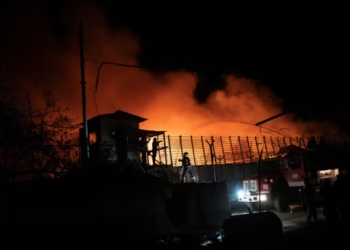 Kabul hospital strike sparks deadly blame row
 Ghalibaf Iran: Survivor Emerges in Shifting Power Game
 Gulf Distrust Grows Over Rumoured US-Iran Peace Talks
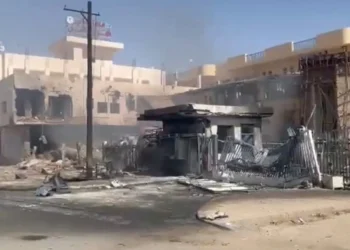 WHO Warns of Health Crisis Unfolding in Middle East
 Saudi Arabia Urging US to Keep Up Iran Attacks
 Iranian President’s Son Shares Wartime Hopes and Fears
 Iran Warns of US Ground Assault Amid Rising War Tension
 Diplomacy on the Brink: Pakistan’s Risky Peace Mission
 Trump Threatens Iran With Total Infrastructure Destruction
 Trump Slams Europe as Transatlantic Tensions Boil Over
 High-Value Target: Iranian Strike Destroys US Radar Plane
 UN Warns Israeli Death Penalty Bill Could Be a War Crime
 UK Activist Leaders Convicted Over Protest Violations
 Albanese to Address Nation as War Sparks Economic Crisis
 Pakistan and China Propose Five-Part Peace Plan
 Trump Issues Stark Warning After Strike On Iran’s Largest Bridge
 Hope and Fear as Iranians Flee Across the Turkish Border
 Death, displacement and military duties: children plunged into crisis
 Trump’s Six-Week Iranian War: The High Cost of Ignorance
 The Price of Hubris: Trump, Netanyahu, and the ‘Easy’ War
 IEA Warns Oil Crisis Surpasses 1970s as Trump Deadline Looms
 Israel Defies Ceasefire as Lebanon Operations Persist
 Middle East Peace Crisis: Ceasefire Strained by New Violence
 Pakistan Brokers Historic Peace Deal Amid Rising Tensions
 Middle East Analysis: The Cost of a Fragile Peace
 Israel Launches Massive Airstrikes Across Lebanon
 Netanyahu Vows Continued Lebanon Strikes Amid Peace Talks
 Islamabad Hosts Historic Peace Talks Between Iran and USA
 US and Iran Pursue Extension of Ceasefire via Pakistan
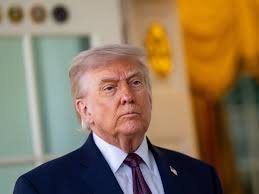 Trump’s Islamabad Gamble: The High Stakes of a New Iran Deal
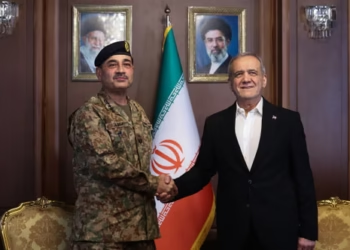 The General’s Gambit: Pakistan’s New Role in Global Peace
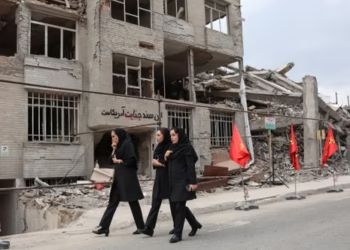 Uncertain Peace: Tehran Residents Face a Ruined Capital
 Aid Crisis Grows as Hormuz War Disrupts Supply
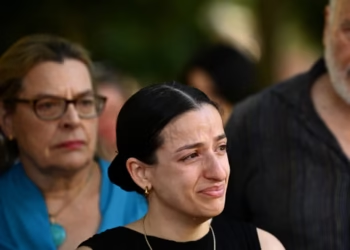 Australian Activists Detained as Gaza Aid Flotilla Intercepted
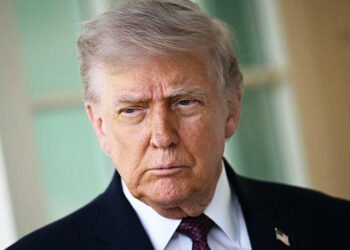 Trump likens US Navy actions to ‘pirates’
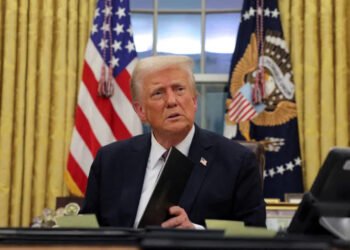 Global order shifts amid Trump-era turmoil
 Middle East Crisis Escalates as Oil Routes Shake Markets
 Tensions Emerge in Netanyahu-Trump Alliance
 UAE’s Secret Strike on Iran Risks Wider Gulf Conflict
 Netanyahu Claims Secret UAE Visit Amid Regional Conflict
 Plea for Mercy: The Battle to Bring Ahmed al-Doush Home
 Gulf Crisis Deepens After Drone Attack Near Nuclear Facility
 Global Flotilla Intercepted in International Waters
 Global Outrage After Israeli Minister Mocks Bound Activists
 Israeli Strikes in Lebanon Kill 10 Amid Ceasefire Strain
 Hunger increasingly weaponised in global conflicts
 Former ICC prosecutor condemns US sanctions
 Trump Claims Iran Peace Deal Near Completion
 US Strikes Iranian Sites Amid Shaky Ceasefire Talks
 Israel Intensifies Lebanon Strikes to Crush Hezbollah
 Trump’s Iran Deal Plan Sparks Intense Alarm Across Israel
 US and Iran Trade Fresh Strikes, Threatening Ceasefire