Published: 14 July 2026. The English Chronicle Desk. The English Chronicle Online.
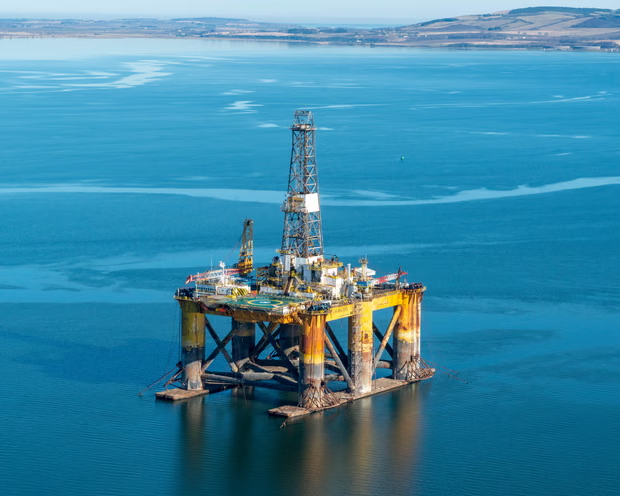
The British oil and gas sector has launched a final strategic push to influence the incoming Labour government. Industry leaders are now appealing directly to Andy Burnham as he prepares to assume the role of prime minister. The sector is positioning itself as a vital component of his broader national reindustrialisation agenda. This move comes at a critical time for the UK as the nation balances energy security needs. Offshore Energies UK has distributed a significant letter to over four hundred members of the parliamentary Labour party. They are urging the new administration to approve further oil and gas drilling projects within domestic waters. The coalition behind this request includes ten major business groups and the prominent GMB trade union representatives. These organizations argue that a thriving energy sector is essential for maintaining skilled manufacturing jobs across Britain. They suggest that their existing industrial base should be utilized to power the nation for many decades.
The industry acknowledges the government’s stated ambition to create a secure and lower carbon energy system. However, they insist that this transition must be managed through an all-energy approach that values domestic strengths. Their correspondence highlights the importance of not overlooking the country’s significant industrial capabilities during the shift away from fossil fuels. Andy Burnham has previously committed to reversing the patterns of deindustrialisation that have affected many British regions. His political vision focuses on creating strong economic growth in every single postcode through increased regional devolution powers. He has specifically promised to protect sovereign production in sectors like steel, defence, food, and energy. Whether these pledges will translate into new North Sea drilling approvals remains a subject of intense national debate. The fate of major projects like Rosebank and Jackdaw has been uncertain since Labour entered government.
The party platform included a promise to halt new exploration licences, causing friction within the energy sector itself. Energy Secretary Ed Miliband has faced mounting pressure to clarify his stance on these two long-standing fossil fuel projects. Both developments were originally licensed under the previous Conservative government, which complicates the decision for the new Labour cabinet. Because these licences were already granted, approving them would not technically violate the specific manifesto pledge made by Labour. Ed Miliband has historically been a vocal critic of such projects, once describing them as forms of climate vandalism. Recent reports suggest, however, that he may be shifting his position to demonstrate fiscal credibility under the new leader. There is speculation that he might approve the Jackdaw gas project to align with broader economic stability goals.
The Jackdaw development could potentially deliver gas to British homes as early as this coming winter season. The Rosebank project, by contrast, would require a longer timeframe to reach its full operational and production capacity. Furthermore, most of the oil extracted from Rosebank would be exported to international refineries rather than remaining within the UK. The industry lobbyists argue that Britain will inevitably require oil and gas resources for many years into the future. They claim the primary policy question is whether the UK produces these resources itself or relies on imports. Increasing reliance on international markets could leave the British economy vulnerable to price shocks and geopolitical instability elsewhere. Leaders from the chemical industry argue that supporting North Sea activities is not a contradiction to pursuing renewable goals.
They maintain that domestic production strengthens industrial competitiveness while protecting thousands of high-quality jobs across the United Kingdom. Protecting the workforce is viewed as a pillar of maintaining national economic health in an increasingly volatile global landscape. Conversely, environmental campaign groups are intensifying their opposition to any expansion of fossil fuel extraction in the North Sea. They argue that new drilling will provide negligible benefits for the long-term energy security of the British public. These campaigners suggest that the focus must be on transitioning to abundant renewable energy sources like wind power instead. They contend that helping households move away from fossil fuel dependency is the most effective path toward stable prices. Critics of the industry have urged the government to ignore the special pleading of companies that made huge profits.
They believe that the state should prioritize investments in future-facing industries that provide sustainable employment for the younger generation of workers. Beyond the drilling debate, Andy Burnham faces the immediate challenge of reducing electricity costs for struggling British industrial businesses. Current data indicates that British electricity prices remain significantly higher than the average costs observed across the G7 nations. A joint report from the CBI and Energy UK warns that these high costs act as a heavy anchor. This burden currently restricts productivity and reduces the overall competitiveness of the UK economy on the global stage. Business economists argue that lowering energy costs must be a day-one priority for the incoming prime minister and cabinet. Years of adding policy surcharges onto electricity bills have severely damaged the competitive standing of many local manufacturing firms.
If British businesses are to invest and grow, they require an energy landscape that allows them to compete effectively. High electricity costs create a difficult environment for firms trying to electrify their operations and remain viable in international markets. This situation represents a substantial drag on the country’s potential for robust and sustainable economic growth in the coming years. As the transition date approaches, the government must weigh these competing industrial, environmental, and economic pressures with extreme care. The path taken by the new administration will likely define the energy landscape for the entire next generation of citizens. Decisions made in these early weeks will signal the government’s approach to the complex balance of growth and sustainability. Stakeholders across the political spectrum are waiting to see how these conflicting interests will eventually be reconciled under new leadership. Balancing the needs of traditional energy workers with the urgency of climate action remains the most significant hurdle ahead. The coming days will be pivotal in determining how the new government addresses these urgent and interconnected national challenges.
Related News:
 Green Party Surges Past Labour in Latest UK Poll
 Trump’s UK Ambassador Urges North Sea Drilling to Strengthen US Ties
 French Taxi Driver Cleared in David Lammy Theft Case After Fare Dispute
 Millionaires group urge Reeves to introduce wealth tax to ‘lift kids out of poverty’
 Starmer Faces Growing Dissent as Labour MPs Weigh Leadership Challenge
 Reeves rejects £1bn plea for NHS redundancy payouts
 PM Condemns Leaks, Vows Loyalty to Ministers and Stability
 Major Rent Reform Ends No-Fault Evictions in England
 Peers Flood Assisted Dying Bill with 942 Amendments
 Most Tories Expect to Support a Farage-Led Government
 Labour MP claims devolution bill is ‘blatant discrimination’ against Cornwall
 Millions Face Higher Taxes Under Reeves New Budget
 Starmer Says Labour’s Economic Plan Needs Years to Deliver
 Culture secretary to review Telegraph takeover by Daily Mail owner
 UK Government Borrowing Drops to £11.6bn in December
 Labour Blocks Burnham as Party Rift Deepens Ahead of Polls
 Andy Burnham and the Labour Rift Over Power and Leadership
 Huge mistake: Labour blocks Burnham from byelection bid
 Artificial intelligence will cost jobs, admits Liz Kendall
 Labour targets Greens on drugs in Gorton Denton byelection
 Greens nominate Hannah Spencer for Gorton and Denton byelection
 Mandelson Faces Police Inquiry Over Epstein Leak
 Starmer Condemns ‘Depraved’ Russian Strikes on Ukraine
 Labour Thinktank Row Deepens Over Journalist Probe Claims
 Morgan McSweeney downfall shocks Labour leadership
 Cabinet Secretary Shake-Up Triggers Due Diligence Warning
 Starmer Faces Inquiry Calls Over Thinktank Probe
 Royal Mail Delivery Crisis Deepens Amid Weather Chaos
 UK shelves £110m border project amid trade strain
 Farage Unveils Reform UK Frontbench Team
 California Democrats Vow Trump Reckoning
 Trump Tariffs Threat Spark UK and EU Alarm
 Wales Approves Assisted Dying Bill Consent
 UK EU Trade Reset Gains Public Backing
 Green Party Stuns Labour in Gorton and Denton Byelection
 Corbyn Leads Your Party in Coordinated Left-Flank Strategy
 Labour Together scandal sparks clean break vow
 Asylum Seekers to Work After Year-Long Wait
 Starmer Row as Greens Demand Apology
 Proposed Law Leaves Gap for Children of Convicted Paedophiles
 Gordon Brown urges court for crimes against children
 Starmer Praised for Stance on Trump and Iran Conflict
 Inquiry into HMRC child benefit errors launched by NAO
 NHS Plans to Cut Overseas Workers Labeled Overambitious
 Farage Faces Backlash Over Crypto Cameo Endorsements
 Army Probes Apache Flyover at Kid Rock’s Nashville Estate
 Relationship with Trump may be beyond repair, Starmer warned
 Unions Raise Concerns Over Doctors’ Pay Dispute
 UK Government Poised to Revive Stalled Hillsborough Law
 Starmer Faces Commons Test Over Mandelson Scandal
 UK Stands Firm on Falklands Amid US Rift
 Crackdown Backfires on UK Climate Protesters
 Welsh Labour Faces Potential Historic Election Defeat
 Starmer Survives Mandelson Rebellion
 Silent Tracks: Rail Line Without Passengers
 Major test for Labour as polls open in Great Britain
 Labour Members Doubt Starmer Future as Burnham Leads Poll
 Reform UK Faces Crisis as Newly Elected Councillors Resign
 Farage Faces New Questions Over Private Helicopter Use
 Keir Starmer Struggles to Secure His Grip on Downing Street
 Farage Faces Standards Probe Over Cash Property Purchase
 Green Party Makerfield Candidate Resigns Over Posts
 Secret Role of UK Security Services in Troubles Amnesty Law
 Farage and Reform UK Reshape British Politics
 Starmer Leadership Under Pressure After Setbacks
 Minister Criticises Police Guidance Amid Southampton Protests
 Makerfield Voters Demand Real Change as Election Looms
 The Hidden Crisis Eroding Trust in British Communities
 Deepfake Abuse on X Sparks Safety Concerns for Dissidents
 UK Ministers Lobby Trump Over Under-16s Social Media Ban
 Labour MP Revives Blocked Assisted Dying Bill in Commons
 Starmer Resolves to Fight Burnham in Leadership Battle
 Starmer Set to Announce Exit Plan as Burnham Eyes No 10
 Hollie Ridley to Step Down as Labour General Secretary
 Jarvis Urges Burnham to Secure 3.5% Defence Spending
 Farage Warns Sky News Following Financial Inquiry
 Reform UK Finances Face Deep NCA Probe
 Burnham Pledges New Era of Open Debate for Labour MPs
 Ann Widdecombe, Formidable Political Figure, Dies at 78
 Sadiq Khan Backs Call for Maximum UK Work Heat Limit