
Published: 13 July 2026 | The English Chronicle Desk | The English Chronicle Online
As Andy Burnham prepares to enter 10 Downing Street following Labour’s election victory, governments around the world are closely evaluating what his leadership could mean for Britain’s foreign policy, trade relationships and security commitments.
From Washington and Brussels to Moscow and Beijing, diplomats and political observers are assessing how the incoming prime minister may reshape the United Kingdom’s position on some of the world’s most pressing issues. Although Burnham built much of his political reputation on domestic priorities such as public services, devolution and economic renewal, his arrival in Downing Street is expected to have significant implications far beyond Britain’s borders.
International leaders are now seeking early indications of how Burnham intends to balance continuity with change as he assumes responsibility for one of Europe’s most influential governments.

In the United States, President Donald Trump is expected to approach Burnham’s premiership with cautious pragmatism.
The so-called “special relationship” between London and Washington has traditionally endured changes in leadership on both sides of the Atlantic, driven by longstanding cooperation on defence, intelligence, trade and diplomacy.
However, Trump and Burnham represent markedly different political traditions.
Trump has consistently championed his “America First” agenda, favouring bilateral negotiations and policies designed to prioritise US economic and strategic interests. Burnham, by contrast, is widely expected to emphasise closer cooperation with European allies while maintaining Britain’s close security partnership with the United States.
Despite ideological differences, analysts believe both governments have strong incentives to preserve cooperation through NATO, intelligence sharing under the Five Eyes alliance and continued collaboration on counterterrorism and cybersecurity.
Trade discussions may prove more complex.
The United Kingdom continues to seek stronger commercial ties with major global economies, including the United States. Burnham’s administration is expected to support open trade while placing greater emphasis on labour protections, environmental standards and industrial policy than previous Conservative governments.
Whether those priorities align with Washington’s negotiating position remains to be seen.
In Moscow, Russian officials are likely to view Burnham as representing continuity rather than dramatic change in Britain’s approach to European security.
Successive UK governments have supported sanctions against Russia following the invasion of Ukraine and have backed military and humanitarian assistance for Kyiv.
Political observers believe Burnham is unlikely to depart significantly from that position.
His expected commitment to NATO and European security cooperation suggests Britain will remain among Ukraine’s strongest international supporters.
For President Vladimir Putin, this would indicate little immediate prospect of improved relations with London.
Instead, analysts anticipate continued diplomatic tensions while maintaining channels of communication on issues including nuclear security, regional stability and conflict prevention.
Across Europe, Burnham’s arrival has generated optimism among many governments hoping for closer UK-EU cooperation after years of strained post-Brexit relations.
While there is little expectation that Britain will seek to rejoin the European Union, many European leaders hope the new government will pursue more constructive engagement on trade, defence, scientific research and climate policy.
Brussels officials are expected to prioritise rebuilding trust through practical agreements rather than reopening broader constitutional debates surrounding Brexit.
Burnham has previously spoken about the importance of maintaining strong partnerships with European neighbours while respecting Britain’s decision to leave the EU.
That approach may create opportunities for closer collaboration without fundamentally altering the UK’s constitutional relationship with the bloc.
China is also expected to monitor the transition carefully.
Relations between London and Beijing have become increasingly complicated in recent years due to disagreements over national security, human rights, technology and foreign investment.
Burnham is expected to continue protecting Britain’s strategic interests while seeking stable economic engagement where possible.
This balancing act reflects the broader challenge facing many Western governments as they attempt to maintain commercial relationships with China while addressing security concerns.
In the Indo-Pacific region, allies including Japan, Australia and South Korea are likely to welcome continuity in Britain’s defence commitments.
The United Kingdom has strengthened its presence in the region through defence partnerships, naval deployments and participation in international security initiatives.
Diplomatic experts expect Burnham to continue supporting those relationships while also placing renewed emphasis on diplomacy and multilateral cooperation.
Within NATO, Burnham is expected to reaffirm Britain’s commitment to collective defence.
The alliance remains central to UK security policy, particularly as the war in Ukraine continues to influence Europe’s strategic environment.
British defence spending, military modernisation and intelligence cooperation are therefore likely to remain priorities under the new administration.
Middle Eastern governments are also closely observing the political transition.
Britain maintains significant diplomatic, commercial and security relationships throughout the region.
Issues including the Israel-Gaza conflict, Gulf security, Iran’s regional activities and energy cooperation will require careful management by the incoming government.
Burnham’s administration is expected to continue advocating diplomatic solutions while maintaining Britain’s longstanding security partnerships.
Climate change is another area where international observers anticipate a shift in emphasis.
The incoming Labour government is widely expected to pursue more ambitious environmental policies and strengthen Britain’s participation in international climate initiatives.
This may improve cooperation with European partners while creating new opportunities in renewable energy and green investment.
Business leaders around the world are also assessing the economic direction of the new government.
Markets generally favour political stability, and investors will be looking for early indications regarding taxation, regulation, infrastructure investment and industrial strategy.
Burnham has consistently argued that long-term economic growth depends on investment in public services, transport, education and regional development.
Whether these priorities translate into increased international investment remains an important question for financial markets.
Domestically, Burnham faces immediate challenges including economic growth, healthcare pressures, housing shortages and public finances.
Foreign policy, while critically important, will compete with substantial domestic responsibilities during his first months in office.
Nevertheless, international partners understand that Britain’s global influence depends partly on its domestic stability and economic performance.
Political analysts note that changes in leadership rarely produce immediate transformations in foreign policy.
Instead, governments often preserve core national interests while adjusting diplomatic style, priorities and methods of engagement.

Burnham’s premiership is therefore expected to combine continuity in areas such as defence and security with potential changes in economic diplomacy, climate policy and relations with European partners.
For world leaders, the arrival of a new British prime minister represents both uncertainty and opportunity.
Allies will seek reassurance about existing commitments, while competitors will assess whether policy changes create new diplomatic openings.
As Burnham prepares to take office, capitals across the world are carefully watching his first appointments, policy announcements and international engagements.
Those early decisions will help shape international perceptions of Britain’s direction under new leadership.
While each government will interpret Burnham’s arrival through its own national interests, one conclusion appears widely shared: the United Kingdom remains an important global actor, and its next prime minister will inherit a complex international landscape requiring careful diplomacy, strategic judgment and strong alliances.
Related News:
 Trump Pulls Canada from His Controversial ‘Board of Peace’ Plan
 Britain’s Position and Trump Vows to Press On in Iran Conflict
 UK Prepares Aircraft Carrier for Middle East Crisis
 Fox News Cut In Over Trump King Charles Claim
 Charles Faces Trump Test in High-Stakes US Visit
 UK Stands Firm on Falklands Amid US Rift
 UK Must Act with Courage and Clarity on Israel-Palestine Conflict, Says Foreign Affairs Committee Report
 Radioactive Leak at UK’s Nuclear Warhead Base Sparks Outcry Over Safety and Secrecy
 Mutual Inconvenience: Why Alaska Was Chosen for the Trump-Putin Summit on Ukraine
 Is the UK Ready to Put Boots on the Ground in Ukraine? Assessing Military Capacity and Challenges
 Protests Expected as Israeli Arms Firms Join Global Defence Trade Fair in London
 Thousands Gather in London to Protest Donald Trump’s Second UK State Visit
 Trump Urges UK to “Call Out the Military” to Secure Borders Amid State Visit
 UK Fighter Jet Purchase Could Breach Nuclear Treaty, Warns CND
 A Third of EU Citizens in UK Report Discrimination by Public Bodies Post-Brexit
 Public Trust in SNP Hits Historic Low Amid NHS Concerns
 Johnson Suggests Mandelson Linked to China Spy Controversy
 Witness statements reveal the CPS China spy row collapse in the UK
 Rachel Reeves signals welfare reform ahead of key budget
 Kosovo agrees to host Britain’s refused asylum seekers
 British Woman in Iran ‘Losing Hope’ Amid Ongoing Detention
 Johnson Approved China’s London ‘Super-Embassy’ in 2018
 BBC Journalist Held and Interrogated in Vietnam
 Russia losses Ukraine war peace talks intensify amid rising deaths
 Trump Escalates Minnesota Immigration Surge Amid Rising Tensions
 Trump Threatens Strong Action If Iran Executes Protesters
 Trump Receives Machado’s Nobel Medal in White House Meeting
 EU Says US Ties Have Suffered ‘Big Blow’ After Greenland Crisis
 Starmer China visit raises human rights pressure on Beijing
 Trump Praises ‘Terrific’ Petro After White House Talks
 Fears of New Arms Race as US-Russia Nuclear Weapons Treaty Expires
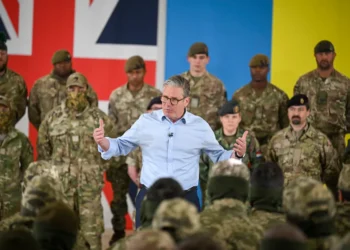 Starmer Weighs Fast-Tracking Defence Boost
 Stephen Colbert Says CBS Spiked Interview With Democrat Over FCC Fears
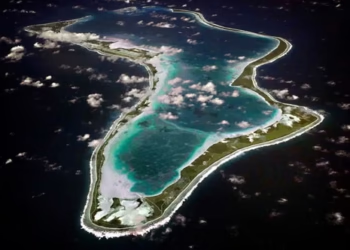 Trump and Chagos Deal Rift Over Iran Strikes
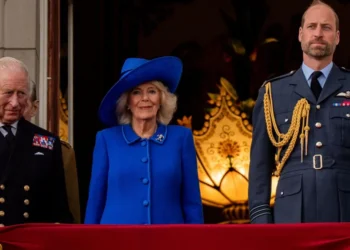 How Much Could Andrew’s Arrest Hurt the Royal Family?
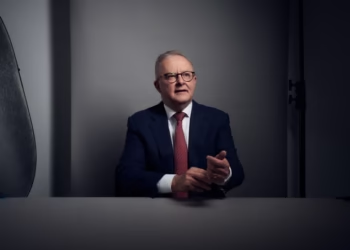 Australian PM Says Former Prince Andrew Has Suffered ‘Extraordinary Fall’ but That Won’t Prompt Republic Referendum
 Farage Chagos Islands Row Sparks Fury
 US Will Not Back Out of Tariff Deals with UK and Others, Says Trump Trade Representative
 Trump Tariffs Threat Spark UK and EU Alarm
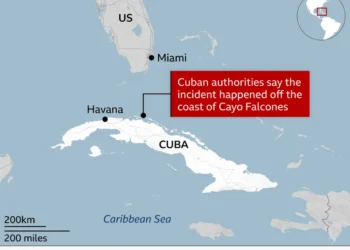 American Citizen Killed in Cuba Boat Shooting, U.S. Officials Say
 Hopes and Fears as US Iranians Take to Streets After Toppling of Supreme Leader
 Iran, the US, and a World Cup That Starts in Three Months
 Trump Faces Questions Over Iran Conflict Plan
 UK Will Allow US to Use Bases to Strike Iranian Missile Sites, PM Says
 Sarwar Rejects Father’s Tribute to Iran’s Supreme Leader
 Trump Rebukes Starmer Over Iran Strikes Row
 US Senate Backs Trump War Powers Amid Iran Missile Barrage
 Minister Meets Crews Who Will ‘Take Out’ Iranian Drones
 Thousands Protest Iran Strikes Outside US Embassy London
 US Bombers Arrive at RAF Base Amid Rising Iran Tensions
 Pete Hegseth Iran War Remarks Spark Alarm
 UK–US Tensions Ease as Starmer and Trump Hold First Call Since Iran Row
 Iran War Puts Trump at Political Risk Amid Rising Prices
 Yvette Cooper: UK Must Follow Principles, Not US Pressure
 Trump’s Confidence Undimmed — But Every Iran Option Carries Risk
 UK Forces Ready to Seize Russian Shadow Fleet Vessels
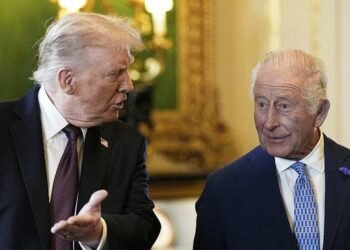 Can King Charles Calm Trump on Key US Visit?
 Border Breakthrough: UK and France Finalize New £662m Small Boats Deal
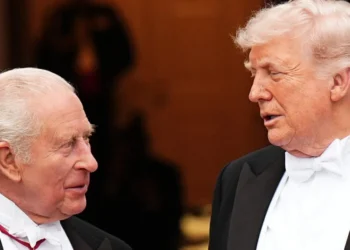 The “Charles Charm” Offensive: Did the Royals Find Their Mojo in D.C.?
 The $126 Spike: Oil Hits Four-Year High as Trump Weighs “Powerful” New Iran Strikes
 “An Endurance Test for the Mind”: British Couple Sentenced to 10 Years in Tehran
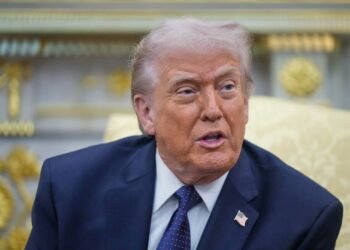 Trump Threatens UN Budget Cuts as US Pushes ‘Trade Over Aid’ Agenda
 US Court Restores Abortion Pill Access Temporarily
 “Community Shield”: Met Police Deploy Specialist 100-Officer Team to Guard London’s Jewish Postcodes
 “The Cost of Conviction”: Palestine Action Activists Found Guilty Over ‘Clinical’ Factory Damage
 “The Local Gavel”: Polls Open Across Hampshire and Isle of Wight in Delayed ‘Milestone’ Vote
 Tensions Emerge in Netanyahu-Trump Alliance
 US Awaits Iran Reply on New Ceasefire Proposal
 Hormuz Talks Near Critical Stage
 Farage and Reform UK Reshape British Politics
 Starmer Leadership Under Pressure After Setbacks
 Trump-Netanyahu Call Fuels Iran Talk Crisis
 Zelensky Invites Putin to Direct Peace Talks
 UK Faces Most Dangerous Era, Military Chief Warns
 Israel Strikes Iran After Missile Attack
 Son Urges Iran Prisoner Exchange for Jailed British Pair
 UK Government Cancels Higher Education Programme for Women and Girls
 Trump Helps Clear Balogun for Belgium World Cup Clash
 Trump’s Major Recruitment Drive Targets Border Patrol Growth
 Trump’s New Vision for 250 Years of US Expansion