Published: 29 July 2026 | The English Chronicle Desk | The English Chronicle Online
Growing tensions between European football authorities and FIFA have sparked speculation that UEFA could consider raising the possibility of a boycott of a future FIFA World Cup if controversial proposals pushed by the global governing body move forward.
While no official decision has been made and no boycott has been announced, reports suggest the issue could be discussed among UEFA’s leadership as disagreements over FIFA’s plans continue to deepen. The prospect of Europe’s football governing body even considering such a measure highlights the seriousness of the dispute and the potential consequences for international football.
If relations continue to deteriorate, the standoff could become one of the most significant governance challenges the sport has faced in recent decades.
The latest tensions stem from FIFA proposals that have reportedly raised concerns among several European football associations.
Although details of the proposals continue to be debated, critics argue that some of FIFA’s recent initiatives place increasing pressure on the international football calendar while expanding commercial competitions without sufficient consultation with clubs, players and continental confederations.

UEFA officials have previously expressed concerns that additional tournaments could lead to fixture congestion, player fatigue and scheduling conflicts with domestic leagues and continental competitions.
European football authorities argue that major structural changes should only proceed after extensive consultation with all stakeholders.
Despite reports suggesting that a boycott may be discussed, UEFA has not formally endorsed such an action.
Officials familiar with the situation say the possibility remains one of several options that could be considered if negotiations fail to resolve the dispute.
Football analysts note that raising the subject of a boycott does not necessarily mean one will occur.
Instead, it may represent a negotiating strategy intended to demonstrate the strength of opposition to FIFA’s proposals.
Any decision to withdraw from a FIFA tournament would require extensive consultation among UEFA member associations and could have enormous sporting, financial and political consequences.
UEFA represents 55 national football associations and includes many of the world’s strongest football nations.
European teams have historically dominated the FIFA World Cup alongside South American nations.
Countries such as England, Germany, France, Spain and Italy are among the sport’s most successful national teams and contribute significantly to the tournament’s global popularity.
A World Cup without European participation would fundamentally change the competition’s sporting quality, television audiences and commercial value.
Many of football’s biggest stars also represent UEFA member nations, making Europe’s involvement central to FIFA’s flagship event.
One of the biggest sources of disagreement concerns the increasingly crowded international football calendar.
Elite players now compete across domestic leagues, domestic cup competitions, continental tournaments and international matches throughout much of the year.
Player unions and club managers have repeatedly warned that the growing number of fixtures increases injury risks and reduces recovery time.
Medical experts say physical and mental fatigue have become increasingly important issues in modern professional football.
Several high-profile players have publicly questioned whether the current schedule is sustainable.
UEFA argues that any expansion of international competitions should carefully consider player welfare.
The FIFA World Cup is among the most valuable sporting events globally, generating billions of dollars through broadcasting rights, sponsorship agreements, ticket sales and commercial partnerships.
European teams, broadcasters and sponsors contribute significantly to those revenues.
Any boycott would therefore carry major financial implications for both FIFA and participating football associations.
Broadcasters have invested heavily in World Cup rights, while sponsors expect the tournament to feature the world’s best players and strongest national teams.
Commercial uncertainty could affect future media contracts and sponsorship negotiations.
The latest disagreement also reflects broader debates over football governance.
FIFA oversees global football, while continental confederations such as UEFA manage competitions within their respective regions.
Although both organizations cooperate on many issues, disagreements occasionally emerge regarding commercial strategy, tournament expansion and regulatory authority.
Critics argue that football’s increasingly crowded calendar reflects commercial priorities rather than sporting considerations.
Supporters of expansion, however, contend that additional competitions create new opportunities for developing football worldwide and generate revenue that supports investment in smaller football nations.
Europe’s leading clubs are closely monitoring developments.
Many clubs already face demanding schedules involving domestic leagues, UEFA competitions and international tournaments.
Managers have repeatedly voiced concerns about player workload, particularly following the introduction of expanded competitions in recent years.
Player unions have also called for greater involvement in decisions affecting the football calendar.
Several organisations argue that players should have a stronger voice when governing bodies consider major scheduling changes.
Supporters remain at the centre of the debate.
Many football fans worry that continued disagreements between governing bodies could damage international competitions.
The FIFA World Cup is widely regarded as the sport’s premier tournament, bringing together the world’s strongest national teams every four years.
A boycott involving UEFA members would significantly alter the competition and disappoint millions of supporters worldwide.
Fans generally hope negotiations will resolve differences before any drastic measures become necessary.
Despite rising tensions, football observers believe dialogue remains the most likely path forward.
Both FIFA and UEFA have strong incentives to maintain cooperation given their shared responsibility for the global development of football.
Negotiations may ultimately produce compromises regarding tournament scheduling, commercial arrangements or governance reforms.
Previous disputes between football authorities have often been resolved through extended discussions rather than direct confrontation.

However, analysts acknowledge that the current disagreement appears more serious than many previous disagreements because it involves long-term strategic direction rather than isolated policy issues.
For now, no boycott has been confirmed, and no UEFA member association has announced plans to withdraw from a FIFA World Cup.
Instead, reports indicate that the possibility may be raised as discussions continue over FIFA’s future proposals.
The coming months are likely to involve intensive negotiations between football’s governing bodies as they seek to balance commercial growth with player welfare, sporting integrity and calendar sustainability.
The outcome will shape not only the future of the FIFA World Cup but also the broader relationship between football’s most influential organizations.
Whether the dispute results in compromise or further confrontation, it highlights the growing challenges facing the world’s most popular sport as governing bodies attempt to balance expanding global interest with the practical realities of an increasingly demanding football calendar.
Related News:
 Rising World Cup Ticket Prices Spark Concern
 Scotland Branded “Unprofessional” in World Cup Fallout as England Build Momentum
 Chinese Football Fans Embrace Referee as Unexpected World Cup Figure
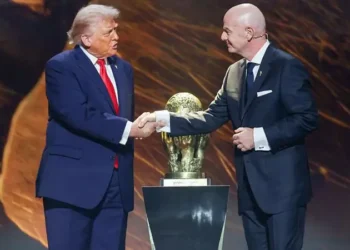 Referee Controversy Raises Questions Over FIFA’s Control of the World Cup
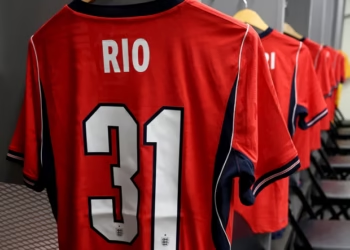 Nike Charges Fans Most for World Cup Replica Shirts
 Saka Playing Through Pain As England World Cup Campaign Looms
 England Cruise Past Costa Rica as World Cup Warm-Up Sharpens Tuchel’s Vision
 ‘We all love him’: Henderson backs Bellingham for England success
 Can France Escape the Ghosts of their 2002 World Cup Nightmare?
 Deschamps Shields Mbappé From Fierce Political Storm
 Messi Equals World Cup Record In Masterclass Victory
 Erling Haaland Double Fires Norway To Victory On Debut
 Iran Files Official Fifa Complaint Over World Cup Travel
 Historic Victory for Canada as They Defeat Nine-Man Qatar
 Heartbreak for Canada as Koné Suffers Horrific Injury
 Declan Rice Facing Burnout as Tuchel Confronts Midfield Crisis
 Rodrygo Reflects On World Cup Pressure And Social Media
 How ‘Little Scotland’ Is Embracing the World Cup Spirit
 Cape Verde Hold Uruguay in Dramatic World Cup Clash
 World Cup 2026: Reclaiming the American Dream
 The Forgotten Hosts Making World Cup History Behind the Scenes
 Great Stories, Little Jeopardy – Does the New World Cup Format Really Work?
 Martinelli Strikes Late as Brazil Edge Past Brave Japan
 Paraguay Shock Germany in Historic Penalty Shootout
 Morocco Beat Dutch in Wild World Cup Penalty Drama
 England Fans Praised for ‘Excellent’ Behaviour During World Cup Campaign
 France Dominate Sweden as Deschamps’ New Era Takes Shape
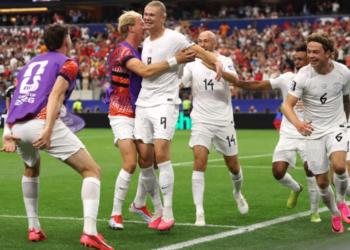 Haaland Heroics Send Norway Into Historic Last 16 Knockout
 Kane Saves Tuchel as England Survive Dramatic Exit
 Ramos Sends Portugal into the Last 16
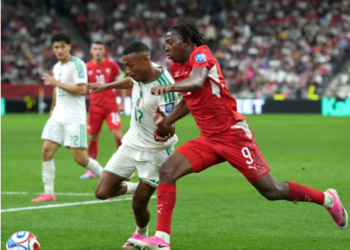 Swiss Star Manzambi Shines in World Cup Victory
 Trump Helps Clear Balogun for Belgium World Cup Clash
 Norway’s Stunning World Cup Victory Over Brazil
 England Triumph in Azteca World Cup Thriller
 Trump’s Red-Card Intervention Hurts the US World Cup
 Trump Intervenes in Fifa World Cup Balogun Ban
 Haaland Makes History as England Prepare for Biggest Test
 England’s 10 Men Hold Firm in World Cup Thriller
 USA World Cup Heartbreak: Belgium Ends Their Dream
 Spanish Late Winner Sends Ronaldo Into Final Sunset
 Belgium Thrashes USA After Red Card Controversy
 Balogun Drama Overshadows USA’s World Cup Exit
 Messi’s Tears and Triumph in Epic World Cup Escape
 Switzerland Advance in Penalty Thriller
 Egyptian Fury After Argentina World Cup Heartbreak
 World Cup 2026 Power Rankings: England on the Rise
 Mbappé Brilliance Leads France Into Semi-Finals
 Belgium Draws Global Support Before Spain Showdown
 Golden Boot Battle Reaches World Cup Boiling Point
 Rollercoaster Semi-Final Leaves Fans Breathless
 Haaland and Bellingham: A Dortmund Bond Tested
 Rice Poised for England Semi-Final Clash Against Argentina
 Teamwork Over Talent: How Spain Outclassed France to Reach the World Cup Final
 Tuchel: England Ready for Historic Argentina Clash
 Tuchel Backs England Stars to Overcome Messi’s Argentina
 Argentina End England’s World Cup Dream With Semi-Final Victory
 Argentina Face FIFA Investigation After Players Display Falklands Banner Following World Cup Victory
 Did Thomas Tuchel’s Defensive Approach Cost England? Tactical Questions Emerge After World Cup Exit
 The Financial Winners and Losers From the World Cup
 England Missing Final Piece of Jigsaw Despite Progress, Says Kane
 Why You Should Care About the World Cup Third-Place Play-Off
 World Cup Stars Who Could Move This Summer
 Who Am I? Guess World Cup Star No 40 – The Mystery Player Captivating Football Fans
 Sir David Beckham Consoled by Victoria After Heartbreaking World Cup Defeat
 World Cup Rings for Winners as Trump Attendance Confirmed
 Thousands of Tickets Still Available for England v France Clash
 More Than 200 Countries Back Gianni Infantino for Fourth FIFA Term Despite Balogun Scandal
 Spain Defeat Argentina to Lift Second FIFA World Cup Title
 Lamine Yamal Crowns Remarkable Rise With World Cup Glory as Argentina’s Support for Messi Comes Under Fire
 Sixteen Titles in Five Years: How Spain Built an Unrivalled Era of Football Dominance
 Fans Bring Flags and Fire to World Cup Scenes
 Fans Invited to Share Scotland World Cup Stories
 Iran Team Arrives in Mexico Amid US Visa Dispute
 “My Drinking Days Are Over” — How to Enjoy an Alcohol-Free World Cup
 Football Regulator Contacts West Ham Over “Serious Allegations” Linked to Sullivan
 Tuchel’s England Mission Goes Beyond Football Success
 Trump Helps Clear Balogun for Belgium World Cup Clash
 Kane vs Haaland: Which Striker Would You Choose?
 Lamine Yamal’s Birthday: Football, Fame, and France
 Zidane Confirmed as France Head Coach After Long Wait