Published: 30 April 2026. The English Chronicle Desk. The English Chronicle Online.
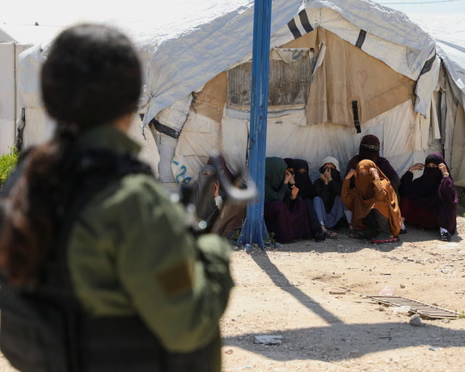
The Trump administration is now putting significant pressure on global allies regarding Syrian detention camps. American officials are currently engaging in active communication with several nations about their stranded citizens. This diplomatic push aims to clear the Roj camp before its expected handover to Syria. Washington maintains that repatriating these individuals is vital for preventing future radicalisation within the region. However, the Australian government remains firm in its refusal to assist its own nationals. Prime Minister Anthony Albanese recently dismissed the American request as a long-standing and familiar position.

This stance has left a group of Australian families in a very precarious legal position. Four women and nine children recently attempted to leave the camp for a journey home. They travelled across Syria to Damascus with the hope of finally reaching Australian soil. Reports suggest they carried travel documents provided through a lawyer by an unidentified private individual. The Syrian government initially facilitated their movement toward the capital for an expected departure flight. However, the group was reportedly turned back before reaching the Damascus international airport this week. Syrian officials claim the Australian government explicitly refused to receive its citizens at the gate. This refusal has left the mothers and children stuck in a legal grey area. The group includes three generations of one family who claim they had humanitarian goals. Seven more Australian women and fourteen children are still waiting inside the Roj camp. Many of these women claim they were coerced or tricked into entering Syrian territory. Some children in the group were born in captivity and have never seen Australia. No members of this specific group have been formally charged with any criminal offences. One woman does face a temporary exclusion order designed to prevent her immediate return. Australian ministers warn that anyone returning will face the full extent of the law. Home Affairs Minister Tony Burke stated the government will provide no repatriation assistance at all. He suggested that citizens must find their own way back without any official state help. This hardline policy contrasts sharply with two successful missions conducted in previous years of 2019. The United States continues to describe these camps as dangerous incubators for extremist ideologies. American officials have offered logistical support to any nation willing to take back their people. They believe that leaving citizens in these squalid conditions creates a long-term global security risk. The Kurdish-led forces managing the camps are also eager to settle these difficult cases soon. Despite this, the Australian government shows no signs of changing its current restrictive border policy. Families of those detained have remained silent following the latest failed attempt to reach home. Supporters who helped in previous years are increasingly worried about this combative federal government stance. The situation remains a tense standoff between two very close and traditional Western security allies. For now, the Australian families remain trapped between a war-torn country and a closed door.

This diplomatic friction highlights the complex legacy of the conflict against the Islamic State group. Every day spent in the camp increases the humanitarian concerns for the young children involved. The world is watching to see if international pressure will eventually break the current deadlock. Future security in the Middle East may depend on how these repatriation cases are handled. Australia’s choice to stand alone on this issue continues to spark intense global debate. One returned woman previously pleaded guilty to entering a proscribed area in a local court. This legal precedent suggests that the Australian judicial system can manage any potential security risks. Yet the political will to bring more families home appears to have completely evaporated. The Trump administration likely views this delay as a direct hindrance to regional stability efforts. Without a clear resolution, these women and children face an uncertain and dangerous future. The Syrian ministry urged international parties to coordinate a solution for these stranded family units. Australia must now decide if it will follow the American lead or stay firm. This ongoing crisis represents one of the most difficult human rights challenges of the decade. Each side remains deeply entrenched in its own legal and moral interpretation of the facts. The English Chronicle will continue to monitor this developing story as more details emerge today.
Related News:
 Gambia Supreme Court Hears Case to Overturn FGM Ban
 Iran Death Toll Crisis Exposed: Bodies, Mass Graves, and Concealment
 Files Link Andrew to Epstein Dinner After Prison Release
 Thousands Protest ICE in New York Against Trump Deportation Campaign
 Concerns rise for Canberra boy amid Iran detention fears
 Brazilian Politician Brothers Sentenced for Marielle Murder
 Anthony Albanese Must Uphold Rights for All Australians
 Woman Executed in Somalia Sparks Debate on Justice System
 Uganda Crackdown: Two Women Arrested for Public Kissing
 Slovenia Election: A Nation at a Crossroads
 Police Seek Immunity in Indigenous Custody Death Case
 Manila Transport Crisis: Fuel Costs Hit Breaking Point
 UN Warns Israeli Death Penalty Bill Could Be a War Crime
 Spain Faces Backlash Over Xenophobic Chants in Egypt Draw
 A Global Voice For Justice: Stephen Lewis Dies At Age 88
 Artist Sues in Paris Over Israeli Strike Killing Parents
 Canadian Mother and Daughter Released From ICE Detention
 Bondi Nanny Adriana Rivas to Face Extradition to Chile
 Queensland Youth Justice Debate: The Data Behind the Law
 Gaza Child Arrives in UK for Life-Changing Care
 Brisbane Rideshare Driver Faces Serious Assault Charges
 Tragedy in the Channel as Four Lives Lost in Boat Sinking
 Kyiv and Odesa Mourn After Deadly Wave of Russian Strikes
 France Urges Release of Elderly Widow Held by ICE
 Trump Weighs Sending Afghan Allies to the Congo
 Prominent Voices Challenge Palestine Action Ban
 Desperation in Odisha: A Brother’s Grim Bank Protest
 Activists allege abuse after Gaza flotilla seizure
 Australia Faces Rising Tide of Modern Antisemitism
 Security Failures and the Road to the Bondi Inquiry
 Mexico’s Missing: State Complicity in a Growing Crisis
 Nobel Laureates Demand Release of Activist Narges Mohammadi
 Plea for Mercy: The Battle to Bring Ahmed al-Doush Home
 Court Upholds Landmark Win for Transgender Rights
 Taliban Codifies Strict New Marriage and Divorce Legislation
 Israeli Strikes in Lebanon Kill 10 Amid Ceasefire Strain
 US judge dismisses Kilmar Abrego Garcia indictment
 Former ICC prosecutor condemns US sanctions
 Trump Faces Legal Blow Over Global Tariffs
 Silenced Stitches: The Cost of Memory in Hong Kong
 Vision Lost Amid the Rubble of Modern Conflict
 Controversial London Property Show Sparks Legal Fury
 US Supreme Court Rejects Trump Attack on Birthright Law
 Gaza Doctor Unrecognisable After Brutal Israeli Detention
 UK Charity Funds Illegal Hebron Settlement Expansion
 Taliban global ties grow as rights fears mount
 Friedman Uninvited From 2024 Adelaide Writers’ Week
 Spoof “Make America Go Away” Caps Rally Denmark Over Greenland
 New Zealand Covid Response Praised Despite Lingering Scars
 Diplomacy on the Brink: Pakistan’s Risky Peace Mission
 Teenage Titan: Sooryavanshi Smashes IPL Records
 Reform UK Pledges To Halt Visas Over Reparations Demands
 US and Iran Agree to Two-Week Provisional Ceasefire
 Israel Defies Ceasefire as Lebanon Operations Persist
 Islamabad Hosts Historic Peace Talks Between Iran and USA
 Trump Signals Hope for New Iran Talks as Ceasefire Fades
 Security Alert Near Israeli Embassy as Police Investigate
 US-Iran Standoff: Will Trump Deploy Ground Troops?
 Investigation Into Anti-Trump Motives After Gala Shooting
 The Burning Lens: An Iranian Artist’s Visual Resistance
 FIFA Confirms Global Ban for Benfica Star Prestianni
 One Nation Candidate’s Surprising Ties to Independents
 Putin Signals War End as Russian Momentum Stalls
 Romania’s Judicial Crisis: A System Under Siege
 Scepticism and tight security as Beijing braces for Trump
 Philippine Senator Flees After Days Under Senate Siege
 Secrecy Down Under: Albanese Faces FoI Scandal
 Tony Abbott Returns as New Liberal Party President
 Discontent grows around Putin amid war strain
 Teaching Machines Right From Wrong in the Digital Age
 Oman Defies US Pressure Over Strategic Strait of Hormuz
 Trump Urged to Condemn UFC Fighter Over Obama Slurs
 US Military Pacific Boat Strike Kills Three People
 Trump’s Mount Rushmore Speech: A Divisive Anniversary
 Trump Swaps Planes Amid Iran Tensions
 Rotterdam Museum Honours Artist With Peanut Butter Floor
 Bangkok Nightclub Blaze Claims 30 Lives Amid Negligence Probe
 Yemen Accuses Iran of Violating National Sovereignty
 Florida Executes One of Its Oldest Death Row Prisoners
 Houthis Strike Saudi Arabia as Middle East Tensions Rise