Published: 14 May 2026. The English Chronicle Desk. The English Chronicle Online.
The narrow alleys of Beijing carry a heavy air of anticipation as the city prepares for a major arrival. Yaoji Chaogan is a modest canteen located near the historic Drum and Bell towers within the old city heart. This humble eatery once served as a symbol of hope for a more cooperative era of global diplomacy. Photographs of Joe Biden once adorned the walls to celebrate his famous visit to the restaurant years ago. That visit sparked a massive wave of positive media coverage across the entire Chinese social media landscape. Local residents fondly remember the term noodle diplomacy which became a viral sensation among the general public. Biden enjoyed a simple meal of traditional Beijing noodles with bean paste during that specific cultural exchange. Those photographs were quietly removed when the restaurant underwent a fresh redecoration a few years back. A visit from a high ranking American leader is no longer seen as a prestigious event. The shift in atmosphere reflects a much deeper change in how the local population views Washington.
Liu Cheng is a local resident who sat down for lunch at the restaurant this Wednesday. He enjoyed a meal consisting of steamed baozi and a fresh salad made of tofu skin. Liu expressed a firm belief that smart politicians should never try to hold China back anymore. His words echo a sentiment that has become increasingly common across the capital city of China. Donald Trump is scheduled to arrive in Beijing on Wednesday for his first state visit since 2017. He returns to a nation that has grown significantly in confidence over the last nine years. The domestic economy is currently facing several difficult struggles and wage growth has slowed down lately. Real terms wage growth in the city of Beijing was less than two percent last year. Despite these economic challenges a very strong sense of bullish nationalism is rising among the people. State propaganda channels frequently fan the flames of this new and assertive brand of Chinese patriotism.
Many citizens now view the United States as a nation sliding into deep chaos and dysfunction. The election of an unconventional leader like Trump is cited as evidence of this American decline. Recent foreign policy decisions made by the American president have caused significant alarm in the region. His controversial actions regarding Venezuela and the conflict with Iran have reinforced a very negative image. Ordinary Chinese people now increasingly view the United States as a primary source of global trouble. The president has lost the novelty value he once possessed during his first term in office. He was once seen as a colorful entertainer who provided amusement to the Chinese public. Today he is viewed as a leader who poses a genuine threat to Chinese national interests. This remains true even though he often refers to Xi Jinping as a truly tremendous guy. Liu believes that the specific identity of the American president does not change much for them.
He suggested that every American leader must eventually face the reality of a rising Chinese power. Most presidents say extreme things during their campaigns but must govern with more caution once inaugurated. The United States is currently struggling to accept the new reality of the global power balance. Washington appears to view the rapid rise of China as a direct threat to its status. Liu predicts it will take at least another decade for America to accept this change. This perspective is shared by many who feel the era of Western dominance is ending soon. Liu Chunlei is a thirty-six year old taxi driver working the busy streets of Beijing. He identified the issue of Taiwanese independence as the main source of tension between superpowers. China maintains a very firm claim over Taiwan as an integral part of its territory. The government is expected to pressure Trump to reduce American support for the self-governing island.
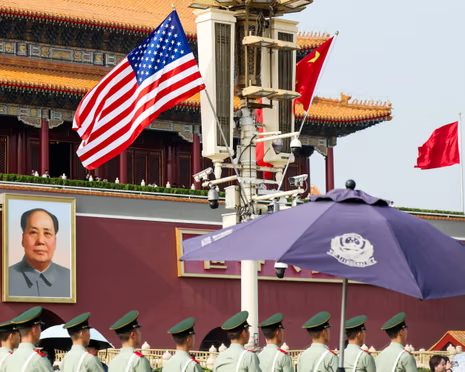
Xi Jinping and Donald Trump are scheduled to hold several high level meetings throughout this week. The taxi driver noted that the visit itself is a positive sign for bilateral relations. He believes the arrival shows that the American attitude is not entirely hostile toward his country. Still the streets of the capital are under incredibly tight security to ensure total order. Every major intersection is guarded by personnel to ensure the visit proceeds without any public disruption. The Temple of Heaven is a magnificent religious complex that dates back to the fifteenth century. It has been closed to all visitors since Tuesday to prepare for a presidential tour. This historic site holds deep symbolic meaning for the shared history of Beijing and Washington. Henry Kissinger visited this very temple during his secret mission to the country in 1971. That pivotal trip eventually paved the way for formal diplomatic relations between the two nations.
One scholar based in Beijing noted that Trump desires to be seen as a trailblazer. He wants to emulate the legacy of Kissinger by reshaping the future of the Pacific region. However many ordinary people on the streets remain deeply sceptical of any lasting diplomatic deals. Social media platforms like Weibo are filled with comments doubting the sincerity of the American president. One user pointed out that there is little point in negotiating complex deals with Trump. They claimed he frequently changes his mind as soon as he returns to his home. Ideas proposed in the morning are often abandoned by the afternoon in the current political climate. This unpredictability creates a sense of caution among Chinese officials who prefer long term stability. The grandeur of the welcoming ceremonies cannot hide the underlying tension between these two global giants. Beijing is a city that remembers its long history while looking toward a future power.
The banners are hung and the red carpets are rolled out for the official arrival. Yet the warmth that once greeted American officials has been replaced by a polite distance. The people of Beijing are watching the news with a mixture of curiosity and deep wariness. They understand that the decisions made this week will impact the global economy for years. Whether this visit leads to a genuine breakthrough or more friction remains to be seen. The security cordons around the Great Hall of the People are tighter than ever before. Every motorcade route is cleared of traffic to provide a seamless path for the visitors. The silence in the restricted zones contrasts sharply with the digital noise on the internet. Millions of people are sharing their opinions on the future of the US-China relationship online. Some hope for a trade deal that will boost the local manufacturing sector again. Others believe that the two nations are on an inevitable path toward more competition.
The spirit of 1971 feels like a very distant memory in the modern world today. China is no longer the junior partner seeking recognition on the stage of world politics. It is a formidable power with its own clear vision for the coming century ahead. Trump must navigate this new reality while balancing the demands of his own political base. The world is watching to see if these two leaders can find common ground. A successful summit could provide much needed stability to the volatile global financial markets recently. Failure to reach an understanding might lead to further escalations in the ongoing trade war. For the diners at Yaoji Chaogan life continues despite the high stakes of global diplomacy. They focus on their bowls of soup while the world leaders discuss their futures. The missing photos of Joe Biden serve as a quiet reminder of changing political winds. Beijing stands ready for the arrival of a president who remains a total enigma. The next few days will define the tone of international relations for the next decade. Everyone is waiting to see what the first meeting of the leaders will produce. History is being written in the heart of the ancient city during this week.
Related News:
 EU Weakens as Trump Targets Venezuela and Greenland
 Venezuela Oil Deal Opens Tensions with US Control
 US Citizens Warned to Venezuela Flee Amid Paramilitary Threats
 Gulf states warn Trump Iran strikes risk wider Middle East war
 Machado Trump medal gesture reshapes Venezuela power struggle
 Greenland defence seen as shared Nato duty amid troop arrivals
 Gulf states warn Trump Iran strikes risk wider Middle East war
 Trump Receives Machado’s Nobel Medal in White House Meeting
 Iran unrest slows under brutal crackdown and global tensions
 Syria President Declares Victory as Ceasefire Reached with SDF
 US Considers Asylum for British Jews Amid Rising Antisemitism
 Thousands Protest ICE Operations in Nationwide US Day of Action
 Epstein Files Reveal Trump Officials’ Emails with Financier
 Thousands Protest ICE in New York Against Trump Deportation Campaign
 Sydney Protest Pepper Spray Clash During Herzog Visit
 Cuba Kills Exiles in Speedboat Attack from US Waters
 Yvette Cooper: UK Must Follow Principles, Not US Pressure
 Saudi Arabia Urging US to Keep Up Iran Attacks
 Washington Enlists Musk to Battle Global Hostility Online
 Teen Girl Charged After Alleged Melbourne Hate Crime Spree
 Macron Urges Stability as Trump Jolts Nato and Iran
 Trump Address Sparks Global Backlash Over Iran War Tactics
 Macron Rebukes Trump Following Mockery of His Marriage
 Trump Sets Tuesday Deadline for Iran to Reopen Vital Strait
 Tragic End to Outback Search as Floods Claim a Life
 Ben Roberts-Smith Arrested Over Alleged War Crimes
 Trump and Tehran Find Common Ground in Landmark Ceasefire
 Netanyahu Vows Continued Lebanon Strikes Amid Peace Talks
 Trump Predicts Rapid Return to Peace Talks in Pakistan
 Reeves Slams Trump Over Iran War Lack Of Exit Plan
 US and Iran Pursue Extension of Ceasefire via Pakistan
 Mexico, Spain and Brazil call for Cuba dialogue amid crisis
 Ukraine Urges UK to Seize Russian Oil Tankers
 US Calls Australia Media Law “Foreign Extortion”
 Oil Prices Surge Above $120 Amid Iran Blockade Fears
 Tragic End to Search for Missing Girl in Alice Springs
 Questions Remain Over The Tragic Bondi Massacre
 Trump orders US troop pullout from Germany
 Activists allege abuse after Gaza flotilla seizure
 Ukraine strikes Tuapse as oil disaster worsens
 Japan Protests Erupt Over Plans to Revise Constitution
 Australia pushes Pacific security pact amid China tension
 Indiana Republicans Defy Trump in Key Vote Test
 Middle East Crisis Escalates as Oil Routes Shake Markets
 FIFA Confirms Global Ban for Benfica Star Prestianni
 New South Wales Wetland Rescue Legislation Passes
 Tensions Emerge in Netanyahu-Trump Alliance
 US and Mexico Face Heatwave as Floods Batter South Africa
 The Long Way Home: Australia’s High-Stakes Virus Mission
 Trump Warns Iran Ceasefire Is Now on Life Support
 Putin Signals War End as Russian Momentum Stalls
 Fear and Betrayal: The Chilling Case of Kouri Richins
 UN Faces Crucial Vote on Landmark ICJ Climate Ruling
 US-Mexico Crisis: Cartel Allegations Push Ties to Brink
 Netanyahu Calls Early Election Amid Coalition Turmoil
 Philippine Senator Flees After Days Under Senate Siege
 Solomon Islands Elects China Critic Matthew Wale as Leader
 Tragedy in the Maldives: Inside the Deep Sea Rescue
 US Ebola Case Sparks Urgent Global Screening Measures
 Xi Hosts Putin in Beijing Days After Landmark Trump Summit
 Fragile Truce Shattered as Violence Escapes Diplomatic Control
 The Hunt for Bato: Inside the Hunt for the Fugitive Senator
 Israeli Strikes in Lebanon Kill 10 Amid Ceasefire Strain
 Zelenskyy warns over Oreshnik threat as Kyiv hit
 Hunger increasingly weaponised in global conflicts
 Discontent grows around Putin amid war strain
 Former ICC prosecutor condemns US sanctions
 Bondi Tragedy Survivors Face Online Abuse After Inquiries
 Japan Suffers Plastic Shortage Due to Middle East Crisis
 Venezuela Opposition Steers Uncharted Path Forward
 Aukus Deal Facing Fierce Backing and Historic Criticism
 Thai Princess Bajrakitiyabha Passes Away at 47
 Sentenced to 30 Years: Former Leader’s Secret Drone Plot
 Kyiv Heritage Blazes After Night of Brutal Russian Strikes
 Iran To Propose New Shipping Fees In Strait Of Hormuz
 Trump’s Iran Legacy Hangs on Tehran Deal
 High Drama in Tehran Over Secret Nuclear Letters
 Houthis Strike Saudi Arabia as Middle East Tensions Rise
 Taliban global ties grow as rights fears mount
 Seoul proposes historic peace talks to replace Korean War armistice