Published: 8 June 2026
The English Chronicle Desk
The English Chronicle Online
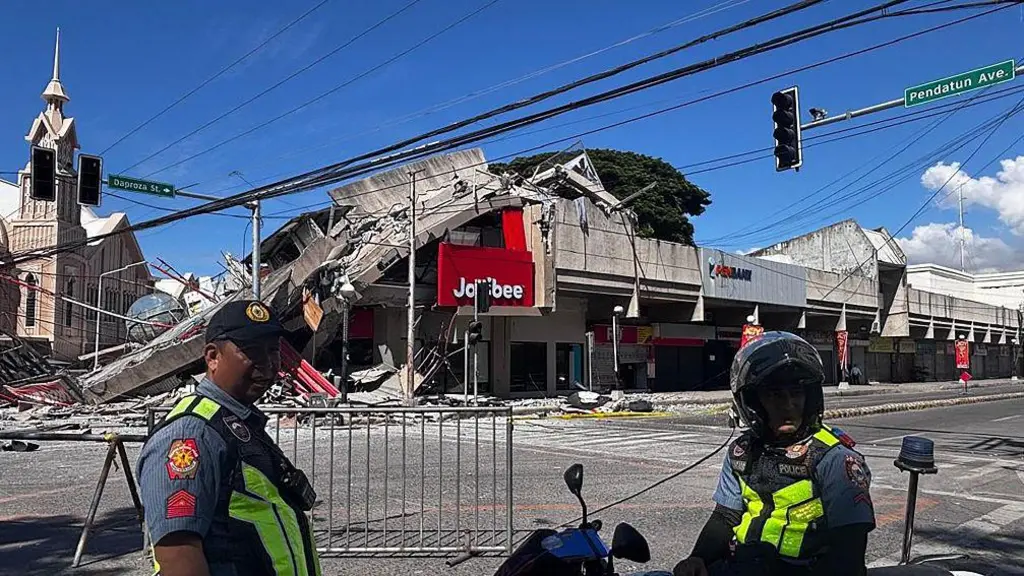
At least three people have died after a powerful earthquake struck the Philippines, causing damage to buildings, triggering panic among residents and prompting emergency response operations across affected areas.
Authorities said several others were injured as rescue teams assessed collapsed structures and searched for possible survivors following the strong tremor.

The earthquake was felt across multiple regions, forcing residents to flee homes, offices and shopping centres as buildings shook violently.
Emergency officials warned of possible aftershocks while urging people to remain cautious around damaged infrastructure.
Local disaster agencies deployed rescue workers, medical teams and assessment units to the worst-affected areas as authorities worked to restore communication and transport services.
Hospitals in several regions were placed on emergency alert amid concerns over additional casualties and structural damage.
The Philippines lies along the Pacific “Ring of Fire”, one of the world’s most seismically active zones, making earthquakes and volcanic activity common in the country.
Seismologists said the quake’s strength and depth contributed to its wide impact, though investigations into the full extent of the damage are still continuing.
Images shared on social media showed cracked roads, damaged buildings and frightened residents gathering in open spaces after the shaking stopped.
Government officials expressed condolences to the families of the victims and pledged emergency assistance for affected communities.
Disaster experts warned that densely populated urban areas remain particularly vulnerable during major earthquakes due to infrastructure pressures and building safety concerns.

Humanitarian agencies are monitoring the situation as authorities evaluate whether additional relief support may be required in damaged regions.
The latest disaster has renewed calls for stronger preparedness measures and improved earthquake-resistant infrastructure across vulnerable parts of Southeast Asia.
Check Out Our Latest News At>>
Related News:
 Asia Prepares for Severe El Niño Threat
 Bodies of Two Chinese Backpackers Found in Floodwaters
 Cyclone Vaianu Forces Mass Evacuations in New Zealand
 The Great May Meltdown: Europe Braces for a Historic Swing from Arctic Chill to Extreme Late-Spring Heat
 “The Body Under Siege”: Understanding the Physiological Impact of Extreme Heat
 “The Climate Multiplier”: Assessing the Dual Threat of Disease-Bearing Mosquitoes and Heat-Related Mortality
 Maldives Cave Diving Tragedy Raises Safety Alarm
 Pope Meets Families in Italy Toxic Waste Zone
 Israeli Strikes Kill 11 in Gaza City
 Everest Climber Recalls Guide’s Six-Day Survival
 Global Chicken Consumption Soars, UN Reports
 Japanese Bear That Injured Four Still Missing
 Costa Blanca Holiday Horror as Food Poisoning Outbreak Hits Four-Star Hotel
 Dozens of Flood Warnings in England After Days of Non-Stop Rain
 After the Landslide: Can India Reset Ties with BNP Bangladesh?

 BRRRITAIN: Met Office Issues Yellow Weather Warning for More Snow
 Japan’s Lost “Tigers” Were Actually Lions, Study Reveals
 Facing a Demographic Catastrophe, Ukraine Is Paying for Troops to Freeze Their Sperm
 Snow and Rain Warnings as Cold Snap Continues in the UK
 Shutting North Sea ‘Will Drive Up Carbon Emissions’
 Eight Skiers Found Dead After California Avalanche
 South Korea’s Ex-President Faces Death Penalty in Insurrection Trial
 How Do You Modernise Mango Farming? India’s Growers Urged to Innovate as Climate Change Hits
 Major 7.1 Earthquake Strikes Off Malaysian Tourist Coast
Storm Hernando: Edinburgh Airport Flights Cancelled in US Travel Chaos
Major 7.1 Earthquake Strikes Off Malaysian Tourist Coast
Storm Hernando: Edinburgh Airport Flights Cancelled in US Travel Chaos
 Drugs, Denial, Stigma: Fiji’s HIV Crisis Hits Children
‘I Wanted to Save Her Life’ — The Moment Twin Sisters Learned They Were Identical
Drugs, Denial, Stigma: Fiji’s HIV Crisis Hits Children
‘I Wanted to Save Her Life’ — The Moment Twin Sisters Learned They Were Identical
 Tick Bite Tragedy Claims Teen in Meat Allergy Case
 Why Asian Firms Are Not Cheering Trump Tariff Ruling
 Could Kim’s Teen Daughter Become North Korea’s Next Leader?
 Not in the Mood to Exercise? These Simple Daily Habits Work Every Time
 Nepal Holds First General Election Since Gen Z Protests Toppled Government
 Study Says Only Two Nations May Survive Nuclear War
 Fuel and Remittances: How Iran Conflict Hits India At Home
 Australia Urged to Shield Iranian Team After Anthem Protest
 China Moves to Enshrine ‘Ethnic Unity’ Law
 Gulf Oil Shock Sends Global Economic Ripples
 Point-Blank Gunshot Misses Indian Politician
 Anti-Regime Iranians Turn Anger Toward Trump
 Dozens Killed After Afghanistan Rehab Centre Struck
 ‘I’m So Ready’: Céline Dion Announces 10-Night Paris Comeback Residency
 ‘The Invisible Killer’: Chiang Mai Air Quality Crisis Sparks Pediatric Health Emergency
 Red Skies and Raging Floods: One Dead as Storm Erminio and Saharan Dust Grip Greece
 Evacuations Ordered as California Wildfires Spread Fast
 “He Was One of the Kindest People I Knew”: The Tragic Death of Oliver Robinson
 Bangladesh Launches Emergency Vaccine Drive After 100 Child Deaths
 A Bridge to Peace? Taiwan’s Opposition Leader Lands in China
 ‘No Gas, No Food’: LPG Shortage Triggers Reverse Migration in Indian Metros
 Moldova River Crisis Exposes War’s Hidden Cost
 “I was fighting two wars”: Ukraine soldiers’ addiction crisis
 Southeast Asia Turns to Russia Amid Energy Crisis
 Escobar’s Hippos May Be Moved to India Zoo
 Capitalism ‘Suicidal’, Warns Petro at Climate Summit
 Coalition pushes fossil fuel phaseout plan
 Giuliani hospitalised in critical condition
 China Fireworks Factory Blast Kills 21 in Hunan
 “The Floating Fever”: WHO Confirms Second Hantavirus Case as Cruise Outbreak Death Toll Reaches Three
 BJP Sweeps West Bengal in Historic Breakthrough
 US Court Restores Abortion Pill Access Temporarily
 “The Heavyweight Hero”: FTD Brothers Smash £1 Million Milestone Mid-Marathon Odyssey
 “The Swap Shop”: Dr Chris van Tulleken Backs Southampton Teens’ Fight Against ‘The Matrix’ of Ultra-Processed Food
 Hantavirus Cruise: Britons Face 45-Day Isolation Order
 “The Bio-Marker Breakthrough”: At-Home Blood Test Could Spot Alzheimer’s Risk Years Before ‘Clinical’ Symptoms
 “The Bio-Security Watch”: Two Britons in Self-Isolation After Bypassing ‘Hantavirus Bottleneck’ on MV Hondius
 The Pathogen Protocol”: Third British National Monitored for ‘Nasty’ Suspected Hantavirus
 Norway Doubles Down on Oil and Gas for Europe Energy Security
 US Awaits Iran Reply on New Ceasefire Proposal
 Crisis in the Canary Islands as Cruise Ship Evacuated
 “The 9,500-Mile Chasm”: Trump Tells Taipei to ‘Cool It’—But Formal Independence Was Never the Island’s Goal
 “The Invisible Shadow”: Fear Grips Eastern DR Congo as Deadly Bundibugyo Ebola Strain Spreads
 “The Invisible Surge”: WHO Warns Ebola Outbreak in DR Congo Spreading Faster Than Anticipated
 “The Critical Intervention”: Essential Steps for Identifying and Treating Heat-Related Emergencies
 Hormuz Talks Near Critical Stage
 Discontent grows around Putin amid war strain
 UN Issues Urgent Warning: Imminent Return of El Niño
 Trump-Netanyahu Call Fuels Iran Talk Crisis
 Family Says Heatwave Drownings Reopen Grief
 Xi Arrives in North Korea for Rare Summit
 Families Grieve Beyond Air India Crash Victims