Published: 8 June 2026
The English Chronicle Desk
The English Chronicle Online
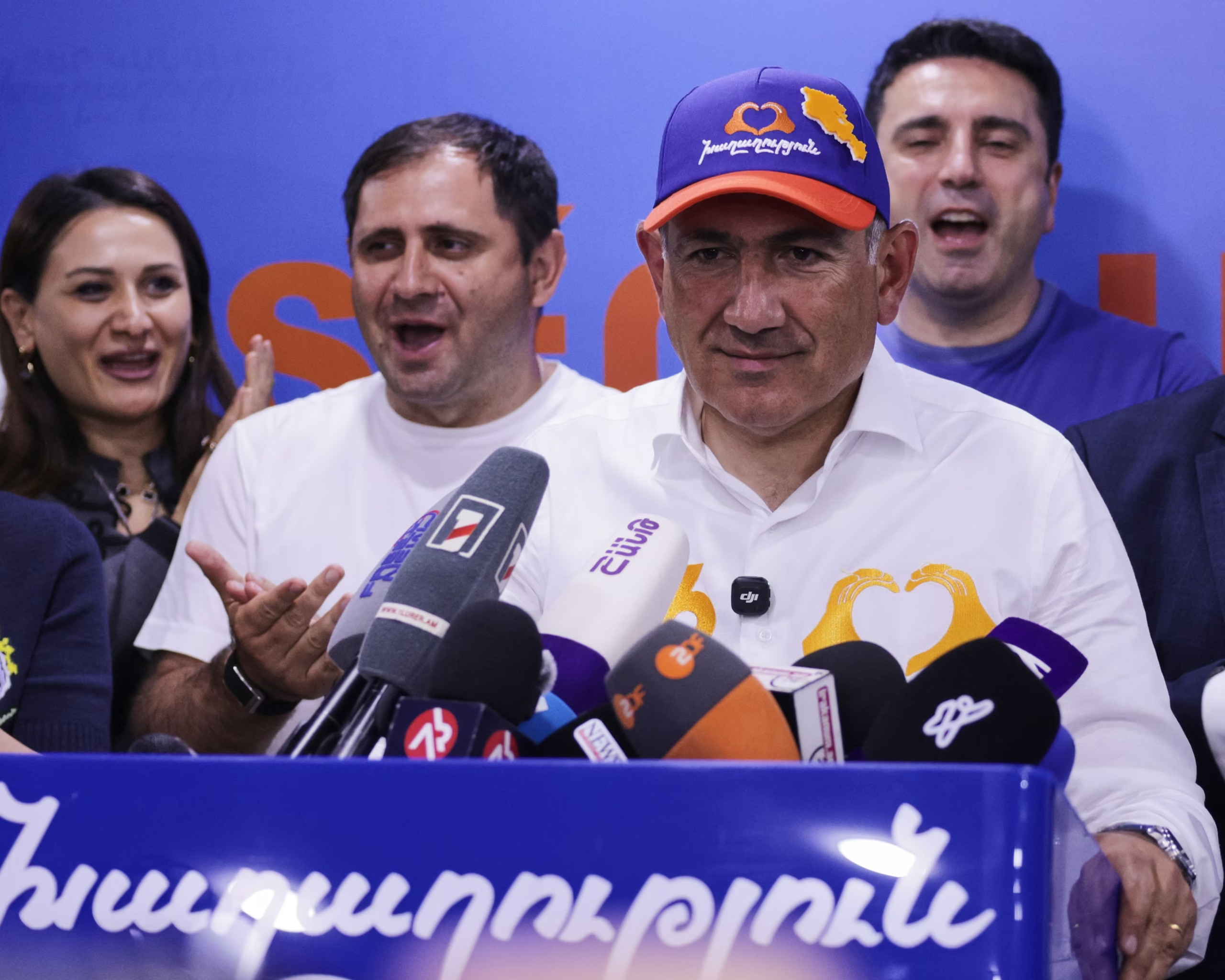
Armenia’s pro-Europe political party has won a decisive election victory, reinforcing the country’s ongoing strategic realignment away from Russia and toward closer ties with European institutions.
Election officials confirmed that the ruling bloc secured a clear mandate following a campaign dominated by national security concerns, economic reform, and foreign policy direction.

The result is expected to accelerate Armenia’s efforts to strengthen cooperation with European partners while reducing long-standing dependency on Moscow in areas such as defence, energy, and trade.
Supporters of the pro-Europe platform described the outcome as a historic step toward political modernisation and deeper integration with Western governance structures.
Opposition figures, however, warned that a rapid foreign policy shift could expose Armenia to heightened regional risks, particularly given its complex security environment in the South Caucasus.
The vote is being closely watched by international observers due to Armenia’s strategic position between Europe, Russia, and broader Eurasian trade corridors.
Political analysts say the result reflects growing public frustration with previous security arrangements and perceptions of insufficient support during regional crises.
Russian officials have not yet issued a formal response, but experts expect the result to further strain already fragile relations between Yerevan and Moscow.
European leaders welcomed the election outcome, calling it a positive step for democratic governance and regional cooperation.
Economists suggest that closer alignment with Europe could open new investment opportunities but may also require significant structural reforms.

The election outcome is likely to influence regional diplomatic dynamics, including energy transit routes and security partnerships across the Caucasus.
Observers say Armenia now faces the challenge of balancing its new geopolitical direction with ongoing regional security pressures and economic dependencies.
Check Out Our Latest News At>>
Related News:
 Ukraine Accuses Hungary of Taking Seven Bank Workers Hostage in Budapest
 Global order shifts amid Trump-era turmoil
 Putin Declares Russia Victory at Scaled Victory Day Parade
 Zelenskyy warns over Oreshnik threat as Kyiv hit
 Former ICC prosecutor condemns US sanctions
 European Allies Set Peace Terms for Ukraine
 Shock US Raid: Maduro Pleads Not Guilty in Manhattan Court
 Israel Dossier Sparks Australian Political Interference Concern
 Trump Says US Will Act on Greenland ‘Whether They Like It or Not’
 Machado Trump medal gesture reshapes Venezuela power struggle
 Trump Receives Machado’s Nobel Medal in White House Meeting
 Iran unrest slows under brutal crackdown and global tensions
 EU weighs response amid Greenland tariff crisis with Trump
 US Considers Asylum for British Jews Amid Rising Antisemitism
 EU Says US Ties Have Suffered ‘Big Blow’ After Greenland Crisis
 Russia Strikes Kyiv and Kharkiv as Peace Talks Enter Day Two
 Emails Show Epstein Funded Mandelson’s Husband After Jail
 Thousands Protest ICE Operations in Nationwide US Day of Action
 Epstein Files Reveal Trump Officials’ Emails with Financier
 Thousands Protest ICE in New York Against Trump Deportation Campaign
 US Must Be Prudent When Supplying Arms to Taiwan, Xi Tells Trump
 Fears of New Arms Race as US-Russia Nuclear Weapons Treaty Expires
 Macron Rebuked in Franco-German Defence Row
 Britain’s Reliance on China Makes Us ‘Weak Link in the West’, Warn MPs
 UK Has Not Given US Permission to Use RAF Bases for Iran Strikes
 Zelensky Says Putin Has Started WW3, Must Be Stopped
 New Russia Sanctions on Hold as Hungary Blocks EU Package Ahead of Fourth Ukraine War Anniversary
 Rob Jetten becomes Netherlands’ youngest ever prime minister
 Ukraine remembers its dead as war enters a fifth year
 Spain Declassifies Files on 1981 Attempted Coup in Effort to Dispel Conspiracy Theories
 Blackouts and Emergency Aid: Why the Cuban Revolution Faces Its Biggest Threat Yet
 UK Will Allow US to Use Bases to Strike Iranian Missile Sites, PM Says
 Cooper: Joining US Strikes on Iran ‘Not in Britain’s Interest’
 Trump’s Iran Endgame Unclear After Mixed Messaging on War Aims
 Israel Launches Fresh Strikes on Tehran & Beirut; US Warns “Hardest Hits” Ahead
 Global Order Is ‘Breaking Down’, Carney Tells Australian Parliament
 Spain’s Sánchez Hits Back at Trump Threat to Sever Trade, Says ‘No to War’
 Macron Finds ‘Freedom Fries’ Redemption in Iran Crisis
 Finland Plans to Lift Decades‑Old Ban on Hosting Nuclear Weapons
 Putin Orders Evacuation at Iran Nuclear Plant Amid ‘Catastrophe’ Fears
 Istanbul Mayor Faces Corruption Trial Amid Political Storm
 Ukraine War Becomes Flashpoint in Hungarian Election
 Yvette Cooper: UK Must Follow Principles, Not US Pressure
 Wary Allies Signal No Easy Path in Iran Crisis
 Israel Announces ‘Limited’ Ground Operations in Lebanon
 Trump Seeks to Delay Meeting With Xi
 Italian Town Buys Mussolini Villa to Keep Away Fascist Fans
 Who Is Viktor Orbán, Hungary’s Long-Serving PM?
 ‘The Soul of Spain’: Politicians Clash Over Renewed Push to Move Picasso’s Guernica
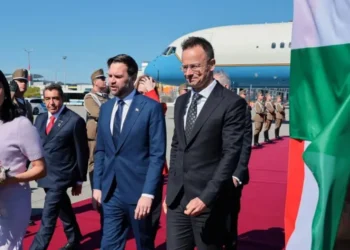 ‘The Fortress of Values’: JD Vance Touches Down in Budapest to Back Viktor Orbán
 ‘Free at Last’: French Teachers Released as Iran Exchanges ‘State Hostages’ for Legal Concessions
 Hungary election: Orbán faces biggest test amid scandal
 US Calls Australia Media Law “Foreign Extortion”
 Oil Prices Surge Above $120 Amid Iran Blockade Fears
 Trump orders US troop pullout from Germany
 Activists allege abuse after Gaza flotilla seizure
 Ukraine strikes Tuapse as oil disaster worsens
 Australia pushes Pacific security pact amid China tension
 Ceasefire Standoff Deepens in Ukraine War
 Indiana Republicans Defy Trump in Key Vote Test
 Middle East Crisis Escalates as Oil Routes Shake Markets
 “The Pakistan Paradox”: Trump’s Peace Hopes Clouded by Blockades and ‘Red Line’ Caveats
 “The 14-Point Ultimatum”: Iran Reviews US Peace Proposal as Trump Predicts War Will Be ‘Over Quickly’
 “The Tightrope Walk”: Lula and Trump Meet at White House to ‘Recalibrate’ Fractured Alliance
 Tensions Emerge in Netanyahu-Trump Alliance
 France Faces Record Presidential Crowded Race Amid Far-Right Surge
 Norway Doubles Down on Oil and Gas for Europe Energy Security
 Discontent grows around Putin amid war strain
 Irish Gangland Figure Fails in Dublin Election Bid
 Deadly Russian Air Raids Strike Across Ukraine
 Zelensky Invites Putin to Direct Peace Talks
 Republicans Defy Trump on Ukraine Aid Bill
 EU Summit to Reaffirm Balkan Membership Goals
 Huge Crowds Gather for Pope’s Open-Air Mass
 Drone Attacks Overshadow Russia Economic Forum
 Armenia Votes Under Pressure From Russia

 Protests in Albania Over Kushner-Linked Development Spark Wider European Debate
 Australian Families Leave Syrian Camp for Home
 “An Endurance Test for the Mind”: British Couple Sentenced to 10 Years in Tehran