Published: 29 June 2026
The English Chronicle Desk
The English Chronicle Online
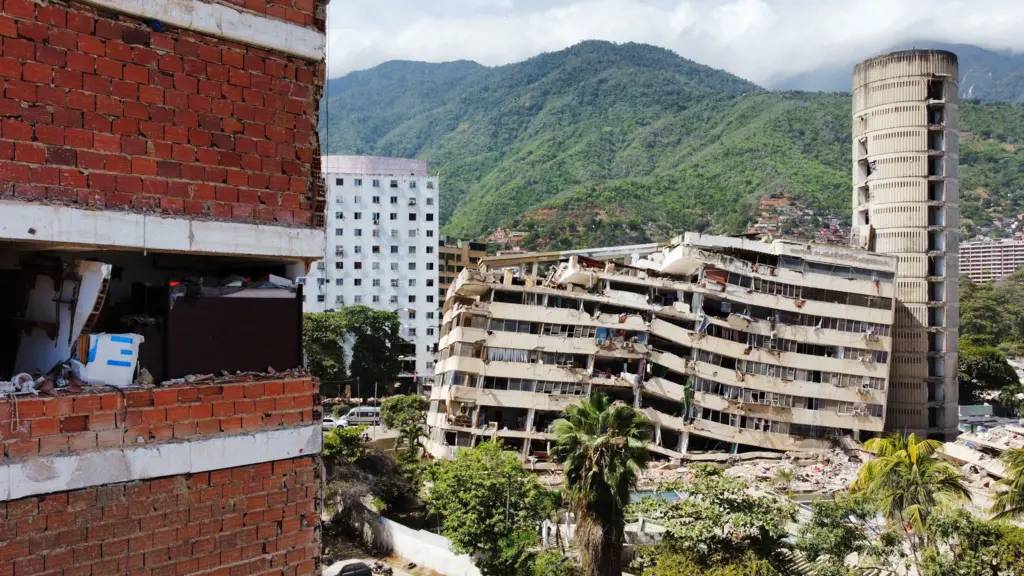
Survivors of the devastating earthquake that struck parts of Venezuela have begun sharing harrowing accounts of their experiences as rescue teams continue searching through collapsed buildings and debris. However, with each passing day, hopes of finding more people alive are fading, and emergency responders are increasingly shifting their focus from rescue operations to recovery efforts.
The powerful quake caused widespread destruction across several communities, damaging homes, schools, hospitals and critical infrastructure. Thousands of residents were forced to flee their properties, while emergency shelters have been established to accommodate those left homeless by the disaster.
 For many survivors, the earthquake struck without warning.
Residents described hearing a loud rumble before buildings began shaking violently. Within seconds, walls cracked, furniture toppled and power supplies were interrupted across affected areas.
“I thought the entire building was coming down around us,” one survivor told local media. “We ran outside as quickly as we could, but many people didn’t have time.”
Similar stories have emerged from towns and cities across the affected region, where families are still attempting to account for missing relatives and neighbours.
Emergency crews have worked around the clock since the disaster, using heavy machinery, search dogs and specialised equipment to locate survivors trapped beneath collapsed structures.
In the immediate aftermath of the earthquake, several dramatic rescues offered moments of hope.
Men, women and children were pulled alive from the rubble after spending hours—or in some cases days—trapped beneath debris.
These rescues captured international attention and provided encouragement to exhausted emergency workers.
However, disaster experts acknowledge that survival chances decline significantly as time passes.
The first 72 hours following a major earthquake are often considered the most critical period for rescue operations. Beyond that window, locating survivors becomes increasingly difficult due to injuries, dehydration, exposure and unstable conditions inside collapsed buildings.
As a result, rescue teams face an emotional challenge as optimism gives way to realism.
Despite the deteriorating odds, many responders have pledged to continue searching for as long as conditions allow.
“We cannot stop while there is still a possibility someone could be alive,” one rescue official said. “Every operation matters because families deserve answers.”
For relatives waiting near disaster sites, the uncertainty has become one of the most painful aspects of the tragedy.
Many have gathered near collapsed buildings, hoping for news about loved ones while rescue workers continue their efforts.
Some families have remained at the scene for days, refusing to leave until searches are completed.
Humanitarian organisations have also mobilised significant resources to support affected communities.
Aid groups are distributing food, drinking water, blankets and medical supplies to people displaced by the earthquake.
Healthcare teams have established temporary treatment centres to care for the injured and provide assistance to those suffering from trauma and shock.
The psychological impact of the disaster is expected to be long-lasting.
Mental health specialists warn that survivors may experience anxiety, grief, depression and post-traumatic stress in the months and years ahead.
Children are considered particularly vulnerable after experiencing major disasters and often require specialised support to help them process what has happened.
The earthquake has also exposed infrastructure vulnerabilities in some areas.
Engineers assessing damaged buildings are working to determine which structures can be repaired and which may need to be demolished entirely.
Authorities face the difficult task of rebuilding communities while ensuring future construction is better able to withstand seismic activity.
Economists predict the recovery process could take years.
In addition to the immediate humanitarian crisis, damaged roads, businesses and public services may create significant financial challenges for affected regions.
Local authorities have appealed for national and international assistance to support reconstruction efforts.
Messages of solidarity have arrived from around the world.
Governments, aid agencies and international organisations have offered condolences, emergency assistance and technical support as Venezuela confronts the aftermath of the disaster.
Natural disaster specialists note that earthquakes remain among the most destructive hazards because they occur with little warning and can affect densely populated areas within seconds.
Although advances in engineering and preparedness have reduced risks in some regions, major earthquakes continue to pose serious threats to communities worldwide.
For survivors, however, the focus remains on immediate needs rather than long-term policy discussions.
Many are coping with the loss of homes, possessions and loved ones while attempting to rebuild their lives.
Some have spoken of neighbours helping one another despite immense hardship, sharing food, shelter and resources during the crisis.
Community leaders say such acts of solidarity have provided hope amid tragedy.
Volunteers have joined rescue efforts, delivered supplies and supported vulnerable residents, demonstrating resilience even in the face of devastating loss.
As rescue teams continue their work, attention is gradually shifting toward recovery and rebuilding.

Yet for many families, the search for missing relatives remains unfinished.
Every update from emergency crews carries the possibility of relief or heartbreak.
While hopes of finding additional survivors may be diminishing, authorities insist that all reasonable efforts will continue until operations are complete.
The disaster has left a profound mark on affected communities, but survivors’ stories of courage, perseverance and mutual support continue to emerge from the rubble.
Their experiences serve as a reminder of both the devastating power of natural disasters and the resilience of those determined to rebuild after tragedy.
Related News:
 Major 7.1 Earthquake Strikes Off Malaysian Tourist Coast
 7.4-Magnitude Earthquake Jolts Eastern Indonesia; Tsunami Warning Lifted
 At Least 19 Killed After Powerful Earthquake Hits Southern Philippines
 UK Must Act with Courage and Clarity on Israel-Palestine Conflict, Says Foreign Affairs Committee Report
 Yvette Cooper Signals Global Momentum Towards Gaza Peace Deal Amid Humanitarian Crisis
 Chaos at Ibrox as Martin’s Rangers Era Comes to an End
 Russia’s Latest Push to Win US Favors Shows Deep Desperation
 BBC to Apologise Over Edited Trump Speech Amid Backlash
 Britain deploys RAF specialists to assist Belgium with drone threats
 Greene Pushes Epstein Files Amid Trump Fallout
 Zelenskyy Signs Fighter Jet Deal Amid Russian Drone Attacks
 Shadow Fleet at Sea: Europe’s Battle Against Illicit Oil Shipping
 US Suspends Afghan Immigration After White House Shooting
 ‘Extinct’ Antelope Returns to Sahara, Bringing Hope
 Sydney Shark Attack Surge Shocks Australia Beaches
 Portugal Election Delivers Socialist Win as Far Right Surges
 Australian Families Leave Syrian Camp for Home
 ‘I Would Scream in My Sleep’: Alawite Women from Syria Tell of Kidnap and Rape
 Epstein Eyed Record Label Investment to Access Women, Files Suggest
 How Do You Modernise Mango Farming? India’s Growers Urged to Innovate as Climate Change Hits
 Ukraine Negotiator Reveals What It Feels Like Facing Russia
 Drugs, Denial, Stigma: Fiji’s HIV Crisis Hits Children
 Hilary Knight speaks out on Trump’s recent hockey remarks
 American Citizen Killed in Cuba Boat Shooting, U.S. Officials Say
 Iran’s Regime Still Intact — Coming Days Will Test Its Survival
 In Maps: Strikes Across Iran and the Middle East
 Brit ‘in Good Spirits’ Amid Dubai Missile Attacks, Stranded but Safe
 Civilian Deaths in Iran Pass 700 Amid Fear of Bombs and Regime Clampdown
 ‘Every Day Feels Like a Month’: Iranians Describe Life Under ‘Constant’ US‑Israeli Strikes
 Petrol Prices Soar as Retailers Accused of Gouging Amid Global Tension
 Penny Wong silent on Australian crew in sub strike
 Finland Plans to Lift Decades‑Old Ban on Hosting Nuclear Weapons
 Minister Meets Crews Who Will ‘Take Out’ Iranian Drones
 Oil Prices Surge Above $100 Amid Iran War
 Trump Pressures Congress Over Save America Act
 Iran War Puts Trump at Political Risk Amid Rising Prices
 Goma Drone Attack Kills Three as Conflict Escalates
 Queensland Protest Laws Spark Free Speech Backlash
 Trump Nato threats expose Iran strategy vacuum
 Trump Facing Backlash from Epstein Survivors Over Files
 UK Forces Ready to Seize Russian Shadow Fleet Vessels
 Trump Considers Military Operation to Seize Iran’s Uranium
 “It Ends With Trial”: Judge Tosses Blake Lively’s Sexual Harassment Claims Against Justin Baldoni
 The Banbridge Rescue: 300 Sheep Saved from Massive Hay Shed Inferno
 Report Says Pezzullo Acted ‘Recklessly’ in Dealings
 Oil and Diplomacy: Russian Refineries Burn as Zelenskyy Secures Middle East Shield
 Electric Shock: Australians Buy Record Number of New EVs as Fuel Crisis Bites
 The Suffocating Silhouette: Why Metal’s Mask Trend is Turning Deadly
 The Great Chokehold: Why the Strait of Hormuz is the Epicenter of the 2026 Crisis
 Moldova River Crisis Exposes War’s Hidden Cost
 Tragedy Strikes Outside Melbourne Comic Con
 The Fog of War and the Ticker Tape: Suspicious Trades Rile Washington
 ‘A Fragile Calm’: Oil Prices Dip as Trump Extends Iran Ceasefire, But Blockade Holds Firm
 Justice and Deceit: High Court Convicts Woman in Hong Kong Blackmail Plot
 “Three-Wheeled Triumph”: Mayor of Erewash Completes 2,000-Mile European Charity Run
 Tragedy in the Red Centre: Outback Search Ends in Discovery of Missing Girl’s Body
 “An Endurance Test for the Mind”: British Couple Sentenced to 10 Years in Tehran
 US to Escort Trapped Ships Through the Strait of Hormuz
 “The Pivot to Pakistan”: Trump Pauses ‘Project Freedom’ in Hormuz Amid Iran Deal Hopes
 “The Digital Frontier”: Scotland’s Papers Grapple with AI Harassment and ‘Mortgage Bottlenecks’
 “The Local Gavel”: Polls Open Across Hampshire and Isle of Wight in Delayed ‘Milestone’ Vote
 “The Blue Light Intersection”: Seventeen-Year-Old Critically Injured in ‘Nasty’ Police Pursuit Crash
 “The Fractured Frontier”: Sir John Curtice Declares the ‘Sacred’ Two-Party Era Over After ‘Milestone’ Results
 US Awaits Iran Reply on New Ceasefire Proposal
 “The End of the Towel War?”: How Hotels are ‘Clinically’ Stopping the Sunbed Dash
 Putin Signals War End as Russian Momentum Stalls
 Philippine Senator Flees After Days Under Senate Siege
 High Street Crisis: Fears Grow Over Post Office Closures
 “Eyes in the Sky, Spikes on the Ground”: Advanced Satellite Imagery and AI Algorithms Deployed Across Britain to Save the Vanishing Hedgehog
 “A Historic Tumble”: Lost 1930s Film Reel Reveals the Untamed Origins of Gloucestershire’s Legendary Cheese-Rolling
 Pope Meets Families in Italy Toxic Waste Zone
 Discontent grows around Putin amid war strain
 UN Issues Urgent Warning: Imminent Return of El Niño
 Israel, Lebanon Agree on Fragile Ceasefire Deal
 UK Faces Most Dangerous Era, Military Chief Warns
 Fans Bring Flags and Fire to World Cup Scenes
 Israel Strikes Iran After Missile Attack
 US Launches Strikes on Iran After Military Helicopter Downed Near Strait of Hormuz
 Air India Crash Pilot’s Father Pledges to Protect Son’s Reputation Amid Investigation
 UK Economy Suffers a Sharp Downturn as Iran Conflict Bites