Published: 6 July 2026 | The English Chronicle Desk | The English Chronicle Online
At least 11 people have been killed and dozens more injured after Russia launched another large-scale aerial assault on Ukraine’s capital, Kyiv, marking the second devastating attack on the city within a week. The overnight strikes caused widespread destruction across several districts, damaging residential buildings, public infrastructure and commercial properties while forcing emergency crews to carry out extensive rescue operations amid burning debris.
The latest bombardment underscores the continuing intensity of Russia’s campaign against Ukraine’s urban centres despite growing international calls for a ceasefire. Ukrainian authorities described the attack as one of the deadliest strikes on Kyiv in recent months, saying rescue workers continued searching through damaged buildings for survivors as fears remained that the death toll could rise further.
Officials reported that the strikes began during the early hours of the morning when air raid sirens echoed across the capital. Residents sought shelter in underground metro stations, basements and designated safe areas as waves of missiles and drones targeted the city.

According to Ukrainian emergency services, at least 11 people lost their lives while scores of others sustained injuries of varying severity. Hospitals across Kyiv admitted victims suffering from burns, blast injuries and wounds caused by collapsing structures and flying debris.
Emergency responders worked throughout the day to extinguish fires and clear rubble from residential neighbourhoods. Heavy construction equipment was brought in to stabilise damaged buildings while specialist rescue teams searched for anyone trapped beneath collapsed sections of apartment blocks.
Witnesses described hearing multiple powerful explosions during the assault, followed by thick clouds of smoke rising above several parts of the city. Residents reported shattered windows, damaged vehicles and widespread disruption to electricity and other essential services in some affected districts.
The attack came only days after another major Russian strike on Kyiv, highlighting what Ukrainian officials describe as an escalating campaign aimed at overwhelming the country’s air defence systems through repeated waves of missiles and drones.
Military authorities said Ukrainian air defence units intercepted a significant number of incoming projectiles. Nevertheless, several missiles and unmanned aerial vehicles penetrated defensive lines and struck targets across the capital, causing extensive destruction.
Officials praised air defence personnel for preventing even greater loss of life, noting that the interception of numerous incoming weapons reduced the overall impact of the assault. However, they acknowledged that the sheer scale and complexity of the attack posed enormous challenges for defensive systems.
President Volodymyr Zelensky condemned the latest bombardment, describing it as further evidence that Russia continues to target civilian areas despite repeated international appeals to halt attacks on populated cities.
He expressed condolences to the families of those killed and praised emergency responders, medical workers and volunteers assisting rescue efforts throughout the capital.
Zelensky also renewed calls for additional international military assistance, particularly advanced air defence systems capable of intercepting increasingly sophisticated missile and drone attacks.
Ukraine has repeatedly argued that strengthening its air defence network remains one of its highest priorities as Russian aerial assaults continue across the country.
The Ministry of Internal Affairs confirmed that multiple residential buildings sustained direct damage during the attack. Fires broke out in apartment complexes, office buildings and industrial facilities after explosions ignited surrounding structures.
Emergency crews faced dangerous conditions while working to rescue survivors, with unstable buildings and the continuing risk of additional explosions complicating operations.
Authorities urged residents to avoid damaged areas while engineers assessed the structural safety of affected buildings.
Public transport services experienced temporary disruption as emergency teams secured impact sites and cleared roads blocked by debris.
Schools and other public institutions in some districts also reported interruptions as local officials assessed damage and ensured public safety.
The Russian Ministry of Defence did not immediately comment on the reported civilian casualties. Throughout the conflict, Moscow has consistently maintained that its military operations target military infrastructure and strategic facilities rather than civilians.
Ukraine and many international observers have repeatedly disputed those assertions, pointing to repeated attacks on residential areas, hospitals, schools and energy infrastructure since the full-scale invasion began in February 2022.
The latest strike has drawn renewed international condemnation.
Western governments expressed concern over the continuing attacks on civilian areas and reiterated support for Ukraine’s sovereignty and territorial integrity.
Several European leaders extended condolences to the victims’ families while calling for continued humanitarian assistance to communities affected by the conflict.
International humanitarian organisations also voiced alarm over the increasing toll on civilians.
Aid agencies noted that repeated attacks on densely populated urban areas continue to place enormous pressure on emergency services, hospitals and humanitarian relief operations. They warned that repeated displacement, infrastructure damage and psychological trauma are having lasting consequences for millions of Ukrainians.
The United Nations has consistently called on all parties to comply with international humanitarian law, emphasising the obligation to protect civilians and civilian infrastructure during armed conflict.
Since the war began more than four years ago, Kyiv has experienced numerous large-scale missile and drone attacks.
Although Ukraine’s air defence capabilities have improved substantially with international assistance, Russia continues to employ evolving tactics involving simultaneous launches of ballistic missiles, cruise missiles and long-range drones intended to stretch defensive resources.
Military analysts say the combination of different weapon systems increases the difficulty of interception and requires rapid coordination between radar operators, missile batteries and command centres.
The continuing attacks also place significant strain on civilian populations.
Residents of Kyiv have grown accustomed to frequent air raid warnings, often spending hours in underground shelters during overnight alerts. Despite the resilience demonstrated by many communities, repeated bombardments continue to affect daily life, education, healthcare and economic activity.
Businesses, schools and public services regularly adapt their operations around security warnings, while families face ongoing uncertainty about future attacks.
Psychologists working with conflict-affected communities warn that prolonged exposure to repeated air raids and missile strikes can produce lasting emotional and mental health consequences, particularly among children.
The destruction of homes and neighbourhoods has also created additional housing challenges for thousands of displaced families.
Ukraine’s emergency services have repeatedly highlighted the extraordinary commitment of firefighters, medical personnel and rescue teams responding to attacks under dangerous conditions.
Many responders have worked continuously throughout the conflict despite facing repeated threats from secondary strikes and unstable structures.
International partners have continued supplying emergency equipment, medical assistance and reconstruction support to help Ukrainian authorities respond to ongoing humanitarian needs.
The latest attack is expected to feature prominently in upcoming diplomatic discussions concerning military assistance and international support for Ukraine.
Several allied governments have already indicated that strengthening Ukraine’s air defence capabilities remains a strategic priority as the conflict continues.

Meanwhile, investigators have begun documenting damage at affected sites as part of ongoing efforts to record the humanitarian impact of the war.
As rescue operations continue, families across Kyiv remain anxiously awaiting news of missing relatives while emergency workers search through damaged buildings in the hope of finding additional survivors.
The attack serves as another stark reminder that, despite years of conflict and repeated diplomatic efforts, the war continues to inflict devastating human costs on civilians far from the front lines.
With at least 11 lives lost and many more changed forever, the latest strikes have once again highlighted the urgent humanitarian challenges facing Ukraine and the continuing international concern over the protection of civilians during one of Europe’s most destructive conflicts in generations.
Related News:
 Five Young People Die in Spain Apartment Block Fire
 Louvre Museum Director Resigns Months After High‑Profile Heist
 Istanbul Mayor Faces Corruption Trial Amid Political Storm
 “Speechless and Determined”: Two Dead, 22 Injured in Leipzig “Vehicular Rampage”
 Irish Gangland Figure Fails in Dublin Election Bid
 Zelensky Invites Putin to Direct Peace Talks
 Hundreds of Migrants Reportedly Kidnapped by Smuggling Gangs During Journey Toward UK
 Russian Artist and Kremlin Critic Shot Dead in Poland
 Northern Ireland Family of Three Shot Dead in Maguiresbridge Home Incident
 Seventeen Dead as Russia Targets Ukrainian Prison in Devastating Airstrike
 Channel Crossings Surge: Over 1,000 People Arrive in the UK in Small Boats in a Single Day
 Cooper Unveils £4m Cyber Plan Against Russian Hackers
 WW2 Pilot’s Long-Lost Crash Site Unearthed in Essex
 Just Stop Oil Protesters Convicted Amid Climate Defence Row
 Indian authorities demolish Kashmir home linked to Red Fort blast
 Greene Pushes Epstein Files Amid Trump Fallout
 Deadly Russian Strikes Hit Western Ukraine, 20 Killed in Ternopil
 Venezuela Threatens Nobel Winner Machado with Fugitive Status
 Two National Guard Soldiers Critically Injured Near White House
 Southern Lebanon reels as Israeli strikes shatter communities
 American Mother Extradited From UK to U.S. on Murder Charges
 EU weighs response amid Greenland tariff crisis with Trump
 Thousands Flee Cambodia Scam Centres Amid Global Pressure
 EU Says US Ties Have Suffered ‘Big Blow’ After Greenland Crisis
 Thousands Left Without Heating in Ukraine Amid Russia Strikes
 Portugal Election Delivers Socialist Win as Far Right Surges
 SA Police Intensify Search in Gus Lamont Case
 Macron Rebuked in Franco-German Defence Row
 Austrian Man Charged Over Foiled Taylor Swift Concert Attack Plot
 Nine Arrested in France Over Death of Far‑Right Student
 Eight Skiers Found Dead After California Avalanche
 South Korea’s Ex-President Faces Death Penalty in Insurrection Trial
 How Much Could Andrew’s Arrest Hurt the Royal Family?
 Epstein Eyed Record Label Investment to Access Women, Files Suggest
 Epstein Files Could Be Just Tip of the Iceberg for Andrew Investigation
 El Mencho Killed as Mexico Faces Violence
 Australian Prosecutors Consider Reopening British Girl’s Cold Case Disappearance
 Sydney kidnapping mystery deepens as grandfather’s remains found after mistaken abduction
 ‘Fear Is Everywhere’: Reports From Mexican City Turned Into War Zone by Drug Cartel Feud
 Orbán Accuses Ukraine of Disrupting Oil Supplies to Hungary
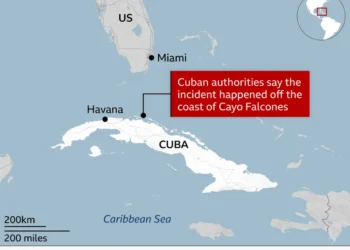 American Citizen Killed in Cuba Boat Shooting, U.S. Officials Say
 Spain Declassifies Files on 1981 Attempted Coup in Effort to Dispel Conspiracy Theories
 Kidnapping of Foreigners Soars in Africa’s Lawless Sahel Region
 Stranger ‘On Drugs’ Stabbed Saudi Student to Death in Cambridge
 Macron Finds ‘Freedom Fries’ Redemption in Iran Crisis
 Finland Plans to Lift Decades‑Old Ban on Hosting Nuclear Weapons
 Alleged Bondi gunman seeks order to suppress family’s identity
 Real Estate Brothers Convicted in Sex Trafficking Trial
 Ukraine War Becomes Flashpoint in Hungarian Election
 Chinese National Arrested Over Attempt to Smuggle 2,000 Queen Ants From Kenya
 Michigan Synagogue Attack Leaves Suspect Dead in Tragic Incident
 Missing Cuba-Bound Aid Ships Spark Urgent Search
 “The Monster of Hull”: Funeral Director Admits to Preventing 30 Burials and Stealing Charity Cash
 ‘I Will Not Abandon Him’: Pauline Hanson Stands by Ben Roberts-Smith After War Crime Charges
 ‘The Soul of Spain’: Politicians Clash Over Renewed Push to Move Picasso’s Guernica
 The Fallen Icon: Ben Roberts-Smith Charged with Five War-Crime Murders
 California fireworks blast: murder charges filed in case
 Arrest Made: Singer D4vd Held Without Bail in Death of 14-Year-Old Girl
 The ‘Big Fish’ Lands: Marcos Confirms Arrest of Key Figure in Flood-Control Scandal
 Rat Poison Found in Baby Food Sparks Major Recall Row
 Struggling to Survive: Millions of Iranian Jobs Lost to Conflict
 Justice and Deceit: High Court Convicts Woman in Hong Kong Blackmail Plot
 OpenAI CEO Apologizes After Canada Shooting Case
 Two Dead in Adelaide Airport Plane Crash Fire
 Tragedy in the Red Centre: Outback Search Ends in Discovery of Missing Girl’s Body
 Cartel crackdown raises fears of fresh violence
 Ukraine strikes Tuapse as oil disaster worsens
 China Fireworks Factory Blast Kills 21 in Hunan
 “Community Shield”: Met Police Deploy Specialist 100-Officer Team to Guard London’s Jewish Postcodes
 “The Blue Light Intersection”: Seventeen-Year-Old Critically Injured in ‘Nasty’ Police Pursuit Crash
 “Untouchable” on TikTok: The Brazen Digital Underworld of Britain’s Teenage Motorbike Thieves
 Pope Meets Families in Italy Toxic Waste Zone
 Israel, Lebanon Agree on Fragile Ceasefire Deal
 European Allies Set Peace Terms for Ukraine
 Spain Tourism Surges as Travellers Avoid Middle East
 Spain Sees Tourism Boom as Travellers Shift Away From Middle East

 Family of British Toddler Voices Frustration as Australian Cold Case Murder Inquiry Opens
 Three-Year-Old Boy Attacked by Crocodile at Zoo as Man Released on Bail
 Former Olympian Indicted Over Alleged Vandalism at Washington’s Reflecting Pool