Published: 07 July 2026. The English Chronicle Desk. The English Chronicle Online.
A British charity is currently funding a religious school located at the heart of expansion plans for an illegal Israeli settlement within the Palestinian city of Hebron. Friends of Yeshivat Shavei Hevron sent nearly two hundred thousand pounds to the school between twenty nineteen and twenty twenty-four. These figures appear in the latest accounts publicly available on the website of the Charity Commission, the official regulator for England and Wales. Construction of a new dormitory for the religious school was approved this past June. The far-right finance minister, Bezalel Smotrich, unilaterally broke a decades-old international agreement on the control of Hebron. This move effectively granted Israel planning authority over this deeply contested and highly sensitive historic urban area. The expansion will certainly increase the population of one of the most extreme Israeli communities in the occupied West Bank. It remains the only settlement built directly in the heart of a densely populated Palestinian city.
Issa Amro is a well-known Palestinian human rights defender who co-founded the group Youth Against Settlements in Hebron. He recently expressed his profound concern regarding the ongoing activities and the influx of foreign funding from abroad. He stated that the public wants British charities to fund peace rather than obstacles that block potential peace. He described the situation as deeply wrong and warned of the dangerous implications for the local Palestinian residents. According to Amro, the students attending this yeshiva are often very aggressive toward those living in the surrounding area. He explained that a new building will inevitably mean more violence directed toward Palestinians, alongside greater restrictions on movement. Furthermore, the expansion will likely necessitate an increased Israeli military presence to secure the area and protect the new facilities.
Israel has built extensive systems of militarised separation to isolate several hundred settlers inside the city from the people they displaced. Palestinians are now barred entirely from some historic streets, while walls and gates divide families who live in areas under Israeli military control. Those areas remain separated from most of the two hundred and thirty thousand Palestinian residents who still live in the wider city. Hagit Ofran, a representative from the Israeli advocacy group Peace Now, highlighted the devastating impact of these persistent settlement activities on the ground. She noted that for this yeshiva to exist, thousands of Palestinians have already lost their shops, their housing, and their daily livelihoods. She further argued that the new dormitory is a significant development because they are adding more settlers in Hebron. She characterized it as the most extreme settlement, noting that a system of apartheid is present everywhere in the city.
International and Israeli leaders, including the late American president Jimmy Carter, have said that Israel has imposed apartheid in the occupied West Bank. Former Mossad head Tamir Pardo and the former attorney general of Israel, Michael Ben-Yair, have also made similar public statements regarding this situation. The Hebron Yeshiva continues to seek funding in other countries that officially consider settlements in occupied Palestine to be completely illegal. They offer donations with receipts in countries such as France and Canada to encourage further financial support from abroad. An Israeli crowdfunding tech company known as Israelgives has also facilitated millions of dollars in funding for various settlements from residents in the United States.
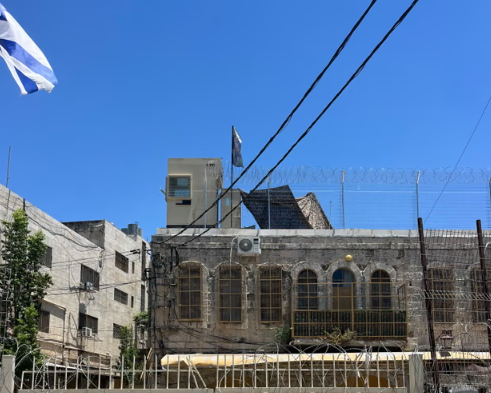
The exterior of the new dormitory is already complete, and the Israeli military has built a new outpost on the roof of the Palestinian home next door. In twenty twenty-three, Friends of Yeshivat Shavei Hevron donated over fifty-eight thousand pounds to the school. The charity even claimed more than two thousand pounds in gift aid from the government agency HMRC, according to its own financial accounts. Interestingly, the charity claims on its own website that it is not actually registered to receive such gift aid. In twenty twenty-four, when it had a lower turnover, it did not file full accounts, but it still managed to send over twenty-one thousand pounds to the school. The donations from Friends of Yeshivat appear to contravene the charity’s own deed of trust, which explicitly refers to educational and charitable work in the state of Israel. Notably, there is absolutely no mention of any charitable work being conducted in Palestine within their official governing documents. Although Israel has never formally defined its own borders, the British government last year officially recognized the state of Palestine, on territory which includes the city of Hebron.
The charity was one of thirty-two registered in England and Wales identified in a letter sent to the commission by the Labour MP Melanie Ward on the first of June. In that letter, she argued that they had collectively donated at least twenty-eight million pounds to Israeli settlements in recent years. The Guardian understands that the Charity Commission passed on details of the letter to the Metropolitan police’s war crimes unit, but no formal investigation is currently under way. On the ninth of June, the foreign secretary, Yvette Cooper, said in parliament that charity systems are clearly being abused to funnel support to illegal settlements. She added that some evidence suggests that established rules are being broken by these organizations. She stated that the Charity Commission had been tasked with investigating these specific links to the illegal settlements.
The commission said in a statement that it shared the concerns raised by the Member of Parliament. It added that this remains a complex and contentious issue, which touches on wider legal principles about charities’ right to operate and support the most vulnerable in parts of the world in which there may be conflict, contested jurisdiction, or lawlessness. Friends of Yeshivat Shavei Hevron provides details of a UK account with Barclays Bank to which donors can transfer funds. A Barclays spokesperson said it could not comment on individual clients but that it does have policies and procedures in place to meet its legal and regulatory obligations, including appropriate due diligence and financial crime controls for charity clients. The charity’s contact email was the professional account of Ari Bloom, a trustee who is a partner at the law firm Solomon Taylor and Shaw. The firm’s switchboard number is listed as the charity’s phone contact, and it is registered to the same north London address used by the law firm. The contact details on the Charity Commission website were changed after the media contacted the law firm and the trustee for comment. The charity itself was also approached for comment.
The current yeshiva building and the expansion are both located at the edge of the Israeli-controlled area of Hebron. Nadav Weiman, the executive director of Breaking the Silence, a group founded by Israeli combat veterans to document military abuses in occupied Palestine, said students often throw stones at Palestinians from their roof. Israeli soldiers, who outnumber the settlers, have turned the rooftops of private Palestinian homes into military posts to guard the yeshiva complex. Weiman stated that if communities fund that new dormitory, they are funding more violence and the next wave of events that will bring death to both Palestinian families and Israeli families. He warned that everything that happens in Hebron first, often happens elsewhere afterwards. Labour peer Helena Kennedy has called for British citizens to be banned from buying property in these illegal Israeli settlements in the occupied West Bank. Speaking in the House of Lords, Kennedy said that the purchase or investment in settlement land would make British citizens complicit in violations of international law. She argued that the country cannot have British citizens being complicit in clear violations of international law, adding that continued settlement expansion was making it impossible for the Palestinians ever to have a state of their own. Kennedy, who serves as the director of the International Bar Association’s Human Rights Institute, urged ministers to match their words with concrete actions by effectively preventing further British involvement in these settlement properties.
Related News:
 Gaza Child Arrives in UK for Life-Changing Care
 Prominent Voices Challenge Palestine Action Ban
 Controversial London Property Show Sparks Legal Fury
 Protest Rights Under Threat Across England and Wales
 Gambia Supreme Court Hears Case to Overturn FGM Ban
 British skier killed in La Plagne avalanche tragedy
 China embassy London approval expected this week
 UK Presses On With Chagos Handover Despite Trump Criticism
 Shinzo Abe’s killer receives life sentence in Japan
 Iran Death Toll Crisis Exposed: Bodies, Mass Graves, and Concealment
 Thousands Protest ICE in New York Against Trump Deportation Campaign
 Sydney Protest Pepper Spray Clash During Herzog Visit
 UK Experts Raise Alarm Over Machinery Export to Armenian Firm
 Concerns rise for Canberra boy amid Iran detention fears
 Brazilian Politician Brothers Sentenced for Marielle Murder
 Anthony Albanese Must Uphold Rights for All Australians
 Woman Executed in Somalia Sparks Debate on Justice System
 Uganda Crackdown: Two Women Arrested for Public Kissing
 UK suspends study visas for four nations to curb asylum
 Jordanian Arrested in Philippines Over Bondi Beach Terror Links
 Ukraine war briefing: Zelenskyy offers help to Saudi Crown prince on combatting Iranian drones
 HMS Dragon to Head to Cyprus Amid Rising Tensions
 Starmer Praised for Stance on Trump and Iran Conflict
 Yvette Cooper: UK Must Follow Principles, Not US Pressure
 Police Seek Immunity in Indigenous Custody Death Case
 Manila Transport Crisis: Fuel Costs Hit Breaking Point
 UN Warns Israeli Death Penalty Bill Could Be a War Crime
 Inside the Deceptive Machine: A Former Producer Speaks Out
 Spain Faces Backlash Over Xenophobic Chants in Egypt Draw
 A Global Voice For Justice: Stephen Lewis Dies At Age 88
 Canadian Mother and Daughter Released From ICE Detention
 Trump Facing Backlash Over Firing of Cabinet Women
 Trump Mocks Starmer and UK Carriers in White House Speech
 Queensland Youth Justice Debate: The Data Behind the Law
 Brisbane Rideshare Driver Faces Serious Assault Charges
 Tragedy in the Channel as Four Lives Lost in Boat Sinking
 Melania Trump Denies Ties to Epstein and Ghislaine Maxwell
 Asylum Seekers Bound in Restraints During Removal Flights
 Kyiv and Odesa Mourn After Deadly Wave of Russian Strikes
 France Urges Release of Elderly Widow Held by ICE
 Stranded Mother Separated From Child Over Home Office Error
 Trump Starts $166bn Tariff Refund Process
 Trump Weighs Sending Afghan Allies to the Congo
 UK Urged to Adopt ‘Trade Bazooka’ Against Tariff Threats
 Standoff Over Syria: Australia Defies Trump Repatriation Plea
 Activists allege abuse after Gaza flotilla seizure
 Asylum deal sparks fears over Syria deportations
 Australia Faces Rising Tide of Modern Antisemitism
 Security Failures and the Road to the Bondi Inquiry
 Mexico’s Missing: State Complicity in a Growing Crisis
 Human Rights Barrister Wins Appeal Over Contempt Charge
 Fear and Betrayal: The Chilling Case of Kouri Richins
 Plea for Mercy: The Battle to Bring Ahmed al-Doush Home
 Court Upholds Landmark Win for Transgender Rights
 The Hidden Cost of Separation for Refugee Families
 Tragedy in the Maldives: Inside the Deep Sea Rescue
 US Ebola Case Sparks Urgent Global Screening Measures
 Uefa Transforms Men’s Major Tournament Qualification
 Taliban Codifies Strict New Marriage and Divorce Legislation
 UK Urged to Build EU Rejoin Consensus, Says Miliband
 Victim says non-custodial rape sentence ‘rock in my face’
 Former ICC prosecutor condemns US sanctions
 Teaching Machines Right From Wrong in the Digital Age
 Silenced Stitches: The Cost of Memory in Hong Kong
 Steel Tensions Rise Between United Kingdom and European Union
 US Condemns ‘Two-Tier’ UK Policing After Student Murder
 Millions in British Charity Funds Linked to Illegal Settlements
 Captain in the Spotlight: The Future of England Cricket
 One Year On: Air India Crash Survivor Demands Answers
 Vision Lost Amid the Rubble of Modern Conflict
 Tragedy in Pakistan Sparks Fury
 Russian Tanker Captain Remanded in UK Court After Channel Seizure
 Kremlin-Backed Saboteurs Target UK Capital and State Democracy
 What Burnham in Number 10 Means for the Future of Britain
 Scouts Introduce Badges For AI And Digital Skills
 Morocco Beat Dutch in Wild World Cup Penalty Drama
 EU Slashes Steel Quotas But Grants UK Favourable Rates
 The Last Stand of English Cricket’s Greatest Partners
 Gaza Doctor Unrecognisable After Brutal Israeli Detention
 Heartbreak After Surrogacy Sperm Mix-Up