Published: 05 August 2026 | The English Chronicle Desk | The English Chronicle Online
Nepal’s mountaineering community is mourning the loss of six of its most accomplished climbers after a devastating avalanche struck Pakistan’s Broad Peak, killing a generation of record-setting guides who transformed the global image of Nepali mountain professionals.
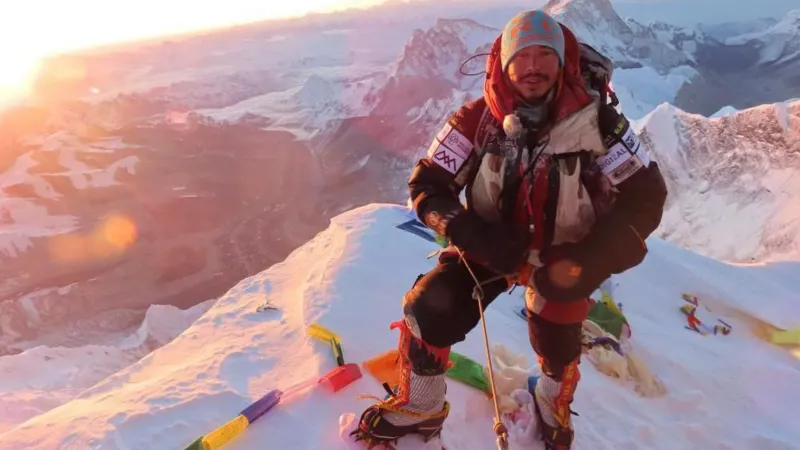
Among those who died was British-Nepali mountaineer Nirmal Purja, widely known as Nims, the climber who achieved one of the greatest feats in modern mountaineering by scaling all 14 of the world’s highest peaks above 8,000 metres in just over six months.
The tragedy has sent shockwaves through the international climbing community, not only because of the loss of exceptional athletes but also because the victims represented a new era in which Nepali guides moved beyond being viewed as support staff and became recognised as elite mountaineers in their own right.
For decades, Sherpas and Nepali mountain workers have played an essential role in Himalayan expeditions, carrying equipment, fixing ropes and guiding climbers through some of the world’s most dangerous environments. The achievements of Purja and his fellow guides helped change that perception forever.

Purja, 43, was leading an international expedition team on Broad Peak, the world’s 12th-highest mountain, when the avalanche struck.
Known globally as Nims, he became a symbol of determination and ambition after completing the so-called “Project Possible” challenge in 2019, climbing the world’s 14 highest mountains in record time.
His achievement broke previous expectations about what was possible in high-altitude climbing.
Beyond his personal records, Purja became an advocate for recognising the skills and contributions of Nepali climbers who had historically received less international recognition despite carrying out some of the most dangerous work on major expeditions.
Ben Ayers, a longtime Everest journalist, described Purja as one of the greatest climbers of his generation.
He said Purja had helped introduce a new era of mountaineering by showing that Nepali climbers could lead major international expeditions and achieve historic records.
Among those killed was Kili Pemba Sherpa, 46, another highly respected figure in the climbing world.
Shortly before his death, Kili Pemba achieved one of mountaineering’s most demanding accomplishments by completing the Grand Slam of climbing all 14 eight-thousanders.
His final summit came in early July, marking the end of a remarkable journey through some of the planet’s most dangerous peaks.
He was already recognised internationally before completing the challenge.
In January 2021, he was part of the Nepali team led by Purja that achieved the first successful winter ascent of K2, the world’s second-highest mountain.
K2 is considered one of the most dangerous mountains on Earth because of its steep terrain, unpredictable weather and limited rescue possibilities.
Colleagues described Kili Pemba as humble, professional and deeply committed to his clients.
His reputation as a careful and skilled guide was strengthened by his successful leadership of climbers with significant physical challenges, including two double amputees who reached the summits of Everest and Manaslu.
Another major loss was Pur Bahadur Gurung, 37, who had climbed 12 of the world’s 14 highest mountains.
Gurung was among a small group of Nepali climbers certified by the International Federation of Mountain Guides Association (IFMGA), one of the highest professional qualifications in mountaineering.
Nepal tourism officials described his death as a significant loss to the country’s climbing community.
Himal Gautam, a spokesman for Nepal’s tourism department, said Gurung’s qualification reflected his dedication, skill and commitment to the profession.
Gurung was also involved in one of the most intriguing discoveries in recent Everest history.
In 2024, he was part of the expedition team that discovered a century-old climbing boot on Everest, believed by some researchers to belong to British climber Andrew Irvine, who disappeared during an attempt to reach the summit in 1924.
The Broad Peak avalanche also claimed the lives of several other talented Nepali guides.
Gyaljen Sherpa was known for climbing Kanchenjunga, the world’s third-highest mountain, three times in a single season, an achievement fellow climbers described as potentially record-breaking.
Nima Sherpa, 36, had climbed four eight-thousanders in 2026 alone before his death.
Nawang Thindu Sherpa represented a younger generation of Nepali climbers emerging as leading figures in international mountaineering.
Together, the six climbers represented decades of experience, ambition and a changing identity for Nepal’s mountain community.
The deaths occurred in Pakistan’s Karakoram mountain range, an increasingly important destination for experienced climbers.
While Nepal remains the centre of global Himalayan tourism, Pakistan’s northern mountains contain some of the world’s highest and most technically difficult peaks.
The region includes five of the world’s 14 mountains above 8,000 metres.
Purja’s achievements helped increase international attention towards Pakistan as a destination for elite mountaineering.
His record-breaking climbs inspired more Nepali guides and international climbers to attempt Pakistan’s challenging peaks.
However, experts say climbing in Pakistan presents unique difficulties.
Unlike Nepal, where popular trekking routes have developed extensive infrastructure including lodges, rescue networks and helicopter access, Pakistan’s Karakoram region remains far more remote.
Nepali guides working in Pakistan often face harsher conditions.
They must frequently fix their own ropes, establish camps and create routes through difficult terrain without the support systems available on Nepal’s most popular mountains.
Young record-holder Nima Rinji Sherpa said expeditions in Pakistan involve a return to traditional mountaineering, where climbers must rely heavily on their own skills and experience.
The remoteness also makes emergency response more difficult.
Helicopter rescues are more complicated because of limited landing areas and the extreme altitude of many camps.
As a result, only highly experienced guides with advanced technical abilities usually undertake work in the region.
The Broad Peak tragedy has renewed debate about safety standards in high-altitude tourism.
Some experts believe disasters should encourage stronger safety measures and better preparation.
However, many mountaineers argue that risk is an unavoidable part of climbing the world’s highest peaks.
Everest journalist Ben Ayers said that while tragedies often create calls for change, the fundamental dangers of extreme mountaineering remain part of what attracts climbers.
Researchers studying high-altitude expeditions say many climbers are motivated by the challenge, uncertainty and possibility of achieving something extraordinary.
The Broad Peak avalanche is not the first disaster to affect Nepal’s climbing community.
In 2014, an avalanche on Mount Everest killed 16 Nepali guides, one of the deadliest incidents in the mountain’s history.
The 2008 K2 disaster also claimed the lives of 11 climbers after an ice collapse.

Experts say previous tragedies have led to discussions about safety but have not significantly reduced the risks associated with extreme climbing.
Although their lives were cut short, the six climbers leave behind a legacy that has changed mountaineering forever.
They proved that Nepali guides were not simply assistants supporting foreign expeditions but world-class athletes capable of achieving the highest accomplishments in the sport.
Their records, leadership and courage helped reshape how the world views Sherpas and Nepal’s mountaineering community.
As Nepal mourns their loss, climbers around the world are remembering not only their achievements but also the dedication and professionalism they brought to one of the most demanding pursuits on Earth.
Related News:
 Inland Australia Town Turns Streets into a Beach for Volleyball Contest
 Passengers on Dubai‑Dublin Flight ‘Never So Happy to Be Home’
 Families Grieve Beyond Air India Crash Victims
 England and Norway Fans Turn Miami Into World Cup Carnival
 Bali Bans Dutch Expats Over Alleged Running Club Exclusion
 Asos Co-Founder Dies After Thailand Balcony Fall
 Austrian Climber Found Guilty After Girlfriend Froze to Death on Mountain
 Inside Kyiv’s resolve as conflict nears five‑year mark
 Australian GP Confident Amid Travel Disruption
 Legendary Notre Dame College Football Coach Lou Holtz Dies at 89
 UK Government’s First Repatriation Flight to Leave Middle East, More Planned
 Boy, 12, Home After Being Stranded in Middle East
 Why Aren’t Our Dirtiest Roads Getting Cleaned?
 Watershed Moment as Russia’s Sporting Exile Ends
 Israel and Iran Launch New Strikes as First UK Flight Bringing Citizens Home Is Delayed
 ‘Every Day Feels Like a Month’: Iranians Describe Life Under ‘Constant’ US‑Israeli Strikes
 Murdered Student ‘Algasim’ Was ‘the Most Special Person’, Friends Say
 The Rewilding Cash Grab Driving Farmers Off the Land
 Alonso Fears ‘Permanent Nerve Damage’ From Aston Martin’s Disastrous Car
 ‘Holiday From Hell’ Leaves UK Couple Stranded in Thailand
 My One-Hour Flight Transfer Left Me Facing 10 Days Stuck in a City Under Attack
 Iranian Players Get Australian Visas After Anthem Protest
 I’ve Lived in a French Village for 35 Years. This is Why They are So Special.
 Peretz Targets FA Cup Upset Amid War Concerns
 ‘Words Are Not Enough’: Quinton Byfield Urges Concrete Action as Hockey Faces New Racism Row
 Black Forest Tragedy Remembered 90 Years On
 Chornobyl Still at Risk 40 Years After Disaster
 “Three-Wheeled Triumph”: Mayor of Erewash Completes 2,000-Mile European Charity Run
 Two Dead in Adelaide Airport Plane Crash Fire
 “The Human Limit Shattered”: Sabastian Sawe Returns to Hero’s Welcome After Historic Sub-Two-Hour Marathon
 The “Final Fence”: A Guide to Navigating the 2026 Badminton Horse Trials
 Search Intensifies for Missing Hiker on WA Bibbulmun Track
 Can World Cup Hosts Overcome Deep Divisions?
 Everest Climber Recalls Guide’s Six-Day Survival
 Rising World Cup Ticket Prices Spark Concern
 Rivalry That Changed Modern Football Forever
 Can Vinicius Win Over Brazil at Last?
 Fans Bring Flags and Fire to World Cup Scenes
 Fans Invited to Share Scotland World Cup Stories
 Iran Team Arrives in Mexico Amid US Visa Dispute
 Spain Tourism Surges as Travellers Avoid Middle East
 Father Continues 10-Lake Swim Challenge for Son
 “My Drinking Days Are Over” — How to Enjoy an Alcohol-Free World Cup
 Spain Sees Tourism Boom as Travellers Shift Away From Middle East
 Catherine Shares Emotional Family Reunion After Three Peaks Challenge
 Mexico’s World Cup Run Brings Joy After ICE Raids
 Bryne Backs Haaland Before England World Cup Clash
 Olympus Awaits Unesco Heritage Recognition
 Japanese Town Debates Identity After Mosque Protests
 Why Wimbledon Is Embracing Indian Flavours and Bollywood Beats
 Nepal Pays Tribute to Mountaineering Icon Nirmal Purja
 Tottenham Takes On Newcastle
 Chaos at Ibrox as Martin’s Rangers Era Comes to an End
 Tiny Curacao Makes History as Smallest Nation to Reach World Cup
 South Africa’s Garden Route Gem Faces Looming Water Crisis
 Snow and Rain Warnings as Cold Snap Continues in the UK
 Epstein Eyed Record Label Investment to Access Women, Files Suggest
 Storm Hernando: Edinburgh Airport Flights Cancelled in US Travel Chaos
 Hilary Knight speaks out on Trump’s recent hockey remarks
 Calls Grow to Remove Billboard Following Lyra McKee Graffiti
 Scotland World Cup Party in Boston Gets Green Light After Security Breakthrough
 ‘The Final Word’: Kathleen Stock’s Polemic Against Assisted Dying Reshapes the UK Debate
 ‘The Cost of Living’: Asia’s Migrant Workers Debate if Gulf Jobs are Worth the Risk of War
 The Suffocating Silhouette: Why Metal’s Mask Trend is Turning Deadly
 The Fallen Icon: Ben Roberts-Smith Charged with Five War-Crime Murders
 Paws on the Wheel: Driver Facing Fine After Dog Photographed on Lap
 Moldova River Crisis Exposes War’s Hidden Cost
 Beyond the Swoosh: Anta Sports Overtakes Rivals to Become Global Top Three
 Tragedy in the Red Centre: Outback Search Ends in Discovery of Missing Girl’s Body
 Premier League drama defines crucial weekend
 “The End of the Towel War?”: How Hotels are ‘Clinically’ Stopping the Sunbed Dash
 Australia Welcomes the Iconic Michelin Guide
“The Price Persistence”: Navigating the UK’s Evolving Cost-of-Living Landscape
Australia Welcomes the Iconic Michelin Guide
“The Price Persistence”: Navigating the UK’s Evolving Cost-of-Living Landscape
 Pope Meets Families in Italy Toxic Waste Zone
 Canada Secure Historic Last 16 Spot with Late Goal
 Trump Helps Clear Balogun for Belgium World Cup Clash
 Girl Survives 32 Hours Under Rubble After Venezuela Quake
 Trump’s Major Recruitment Drive Targets Border Patrol Growth
 London Tube Heat Reaches Dangerous Levels
 Lamine Yamal’s Birthday: Football, Fame, and France