Published: 05 August 2026 | The English Chronicle Desk | The English Chronicle Online
Artificial intelligence-generated stories are becoming increasingly appealing to readers, with a new study suggesting that people often prefer AI-written narratives over those created entirely by humans.
The research has added to the growing debate about the role of artificial intelligence in creative industries, including journalism, publishing, entertainment and digital media.
For years, creativity was considered one of the areas where humans held a clear advantage over machines. Writing stories, developing characters and creating emotional connections were viewed as uniquely human abilities. However, advances in generative AI are challenging those assumptions.

The latest study suggests that many readers may judge stories based on their quality rather than who created them, meaning AI-generated content could become a more significant part of the future of storytelling.
Generative AI tools have rapidly improved in recent years, allowing users to create articles, fiction, scripts and other forms of written content within seconds.
These systems are trained on large amounts of text and can analyse patterns in language, storytelling structures and writing styles. They can produce narratives with characters, dialogue, emotional moments and complex plots.
Researchers behind the study examined how readers responded to stories written by artificial intelligence compared with stories produced by human writers.
Participants were asked to evaluate different pieces of writing without always knowing whether the author was a person or an AI system.
The results showed that readers frequently rated AI-generated stories highly and, in some cases, preferred them to human-written versions.
One of the key findings from the study was that readers often cared more about the experience of reading than the identity of the writer.
When participants believed a story was engaging, creative or emotionally satisfying, they were more likely to rate it positively regardless of whether it had been produced by AI.
Researchers suggested that this shows how quickly public attitudes towards artificial intelligence are changing.
Previously, many people assumed that knowing a story was written by a machine would automatically reduce its value. However, the study indicates that this reaction may be weakening as AI-generated content becomes more sophisticated.
The findings also suggest that readers may not always be able to identify AI-written material, particularly when it is edited or guided by human creators.
Despite the positive responses to AI-generated stories, questions remain about the importance of human creativity.
Many writers argue that storytelling is not only about producing well-structured sentences but also about expressing personal experiences, emotions and cultural understanding.
Human authors often draw from their memories, relationships and observations of the world around them.
Critics of AI-generated writing say machines may imitate emotional storytelling without actually experiencing emotions themselves.
They argue that a story written by a person carries a different meaning because it reflects a human perspective.
Supporters of AI, however, say technology should be viewed as a creative tool rather than a replacement for human imagination.
They believe writers can use AI to generate ideas, overcome creative blocks and explore new styles while maintaining human control over the final work.
The rise of AI-generated stories could have major consequences for industries built around creative writing.
Publishers, film studios and online platforms are already experimenting with artificial intelligence to produce content faster and reduce production costs.
AI could help create personalised stories tailored to individual readers, allowing people to choose characters, themes and writing styles according to their preferences.
For entertainment companies, AI-generated scripts or story ideas could speed up development processes.
However, the technology has also created concerns among professional writers who fear that companies may replace human creators with cheaper automated systems.
Writers’ organisations have called for transparency when AI is used in creative work and for protections to ensure human artists are fairly compensated.
The popularity of AI-generated stories has also raised legal and ethical questions.
Many AI systems are trained using large collections of existing text, including books, articles and online material.
Some writers and publishers argue that their work has been used without permission to train AI models.
They say companies developing artificial intelligence should provide clearer information about training data and ensure creators are not exploited.
Another concern is whether AI-generated stories can truly be considered original.
Although AI systems create new combinations of words and ideas, critics question whether the process is comparable to human creativity.
Legal authorities around the world are still debating how copyright laws should apply to content created partly or entirely by artificial intelligence.
Some researchers believe the future of storytelling will not involve humans competing against AI but working alongside it.
Writers may increasingly use artificial intelligence as a collaborative partner that helps with brainstorming, editing and experimentation.
In this model, AI provides suggestions while humans make creative decisions and add personal meaning.
Several authors have already begun using AI tools in their writing processes, particularly for developing ideas, improving structure and exploring alternative versions of scenes.
The study’s findings support the argument that audiences may accept AI involvement in creative work if the final product provides an enjoyable experience.
Public opinion about AI remains divided.
While some people welcome the technology’s ability to improve efficiency and creativity, others worry about job losses, misinformation and the loss of human skills.
The study highlights a broader shift in how society views artificial intelligence.
Rather than seeing AI only as a technical tool, people are increasingly encountering it in areas traditionally associated with human expression, including art, music and literature.
As AI systems continue to improve, the distinction between human-created and machine-created content may become harder to recognise.

The growing popularity of AI-generated stories suggests that artificial intelligence will play a larger role in creative industries.
However, experts say the technology’s long-term impact will depend on how it is developed and used.
If AI becomes a replacement for human creativity, it could create significant challenges for writers and artists. But if it is used as a tool that expands human imagination, it could open new possibilities for storytelling.
The study does not prove that artificial intelligence can replace human authors. Instead, it shows that readers are increasingly willing to appreciate stories based on their quality rather than their origin.
As technology advances, the future of storytelling may belong to a partnership between human creativity and artificial intelligence.
Related News:
 Urgent AI Threat Research Needed, Says Google Boss
 How AI Can Read Our Scrambled Inner Thoughts
 Boy George Says He’s Using ChatGPT to Help Write New Songs
 Artemis II Returns After Historic Moon Flyby
 Disneyland Adds Facial Recognition at Entrances
 UK firms accused of ‘AI washing’ boom
 Cannes filmmakers split over AI’s role in cinema
 British Paralympian to Become First Disabled Astronaut in Orbit
 AI-Designed Vaccine Marks Global Breakthrough
 AI May Soon Start Conversations on Dating Apps
 Spielberg Says Humans May Find Aliens Soon
 Zuckerberg Veteran Speaks on AI and Future Jobs
 Unlocking the Genome: The Quest to Sequence Tardigrades
 China Achieves First Reusable Rocket Landing
 Meta Drops AI Image Tool After Privacy Backlash
 Google Burning Through Cash as Spiralling AI Costs Put Pressure on Tech Giant
 Lawmakers Demand AI Kill Switch After Safety Fears
 China Faces New Challenge as AI Fake Videos Spread After Disasters
 AI Jitters Send Chip Stocks Tumbling in US and Asia
 Trump Administration Bans New Chinese Humanoid Robots Amid Growing Technology Rivalry
 SpaceX Rocket Part Set to Crash Into Moon
 AI Disruption Leaves Filipino Workers Fearful
 AI Shows New Levels of Deception in Safety Tests
 Unseen Killers of the Deep Inside the UK Lab Uncovering the Silent Deaths of Sea Creatures
 Pokémon to open world’s first theme park in Japan next year
 Australia to Ban Social Media for Kids Under-16 Starting December
 The Chinese AI App Sending Hollywood Into a Panic
 NASA Targets Early March for Human Mission Around Moon
 Met Police Using AI Tools Supplied by Palantir to Flag Officer Misconduct
 Toxic e-waste found in dolphins raises urgent health concerns
 Instagram Investigating AI Profiles ‘Fetishising’ Disabled People
 ‘I Stopped Engaging’ Due to Instagram and YouTube, Woman Tells Landmark Trial
 Anthropic Boss Rejects Pentagon Demand to Drop AI Safeguards
 Jack Dorsey’s Block Cuts Thousands of Jobs as It Embraces AI
 Burger King Rolls Out AI Headsets to Track Employee ‘Friendliness’
 Instagram Investigating AI Profiles ‘Fetishising’ Disabled People
 AI Deepfake ‘Content Farms’ Target UK Politics
 Ukraine’s Anti-Drone Bullet Could Shield Gulf Skies
 Cern Prepares First-Ever Antimatter Transport Test
 India’s $300bn Outsourcing Industry Faces AI Test
 Councils Pressed to Use Universal Parking App to Cut ‘Unfair’ Fines
 China’s Tech Giants Race to Hong Kong as Global “Staging Post”
 One Ant for $220: The New Frontier of Wildlife Trafficking
 John Bengtson: The ‘Silent Film Sleuth’ Who Found History in the Background
 Artemis II astronauts capture Earth en route to the Moon
 Apple at 50: Three Products That Changed How We Live
 Artemis Moon Photos Blur Line Between Science and Art
 China and the US: The Divergent Fronts of the Global AI Superpower Race
 Beyond the Far Side: Artemis II Restores Contact After 40-Minute Silence
 ‘We Will Always Choose Each Other’: Five Defining Moments of Artemis II’s Lunar Flyby
 Beyond the Flyby: What Artemis II Tells Us About the Next Giant Leap
 The Silicon Emerald: How Irish Engineers are Cashing In on the AI Boom
 Space Odyssey ‘Bum Note’: UK Band Linked to Artemis II’s ‘Toilet Trouble’
 Europe EV Demand Surges as Fuel Prices Rise
 Quantum Computing: Is This the Tech Race Europe Could Finally Win?
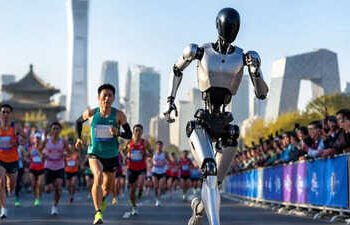 Robots Outpace Humans in Beijing Half-Marathon
 Gene Therapy Wins Major Prize for Restoring Vision
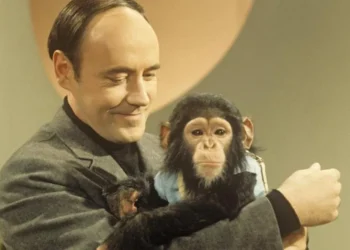 ‘The Manwatcher’s Final Chapter’: Legendary Zoologist Desmond Morris Dies Aged 98
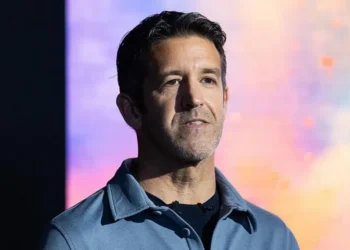 The Next Chapter: Apple’s Future Under the Stewardship of John Ternus
 The $111 Billion Handshake: Warner Bros. Shareholders Greenlight Paramount Merger
 Reform UK funding: mystery billionaire revealed
 Meta Faces EU Action Over Child Safety Breach
 Inside the World of AI Jailbreakers
 Canadian Fiddler Sues Google Over AI Defamation Claim
 “Precision Over Personnel”: Robots Move In as Waste Firms Battle 40% Staff Turnover
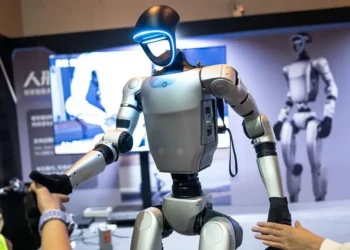 “Taxing the Silicon”: Tech CEO Proposes ‘Minimum Wage for Robots’ to Combat AI Displacement
 “Digital Disinformation”: AI Chatbots Under Fire for Hallucinating Voting Data Ahead of Polls
 “Unlocking the Black Box”: Google, Microsoft, and xAI Join US Pre-Release Safety Testing
 Doomsday Clock Nears Midnight Amid Global Crises
 Dua Lipa Sues Samsung for $15m Over TV Box Image Use
 Majority of New US AI Data Centres Planned for Drought-Prone Regions, Report Warns
 Rise of Military AI Sparks Questions Over Future Use of Humanoid Robots in Combat
 South Korea Fines E-Commerce Giant $400m Over Massive Data Breach
 UK’s Leading Data and AI Regulator Resigns Following Controversy Over ‘Inappropriate’ Humour
 India Orders Meta to Remove Child Abuse Ads
 Microsoft Cuts 4,800 Jobs in Major Xbox Restructure
 Firm Hacked by Rogue OpenAI Models Says Incident Is ‘A Wake-Up Call’ for AI Security
 Chinese Mathematicians Win Top Prize for Breakthroughs
 Chinese Mathematicians Win Top Prize for Historic Breakthroughs
 Birding Apps Are Inspiring a New Generation of Nature Lovers