Published: 31 August 2026. The English Chronicle Desk. The English Chronicle Online.
Rescue teams in Nepal are racing against time to reach more than 900 people believed to be trapped inside hydropower tunnels and underground facilities after catastrophic flash floods devastated parts of the Nepal-Tibet border region.
The disaster has already claimed hundreds of lives and left thousands of people missing, turning remote Himalayan valleys into vast fields of mud, shattered infrastructure and debris. For rescuers now working through damaged tunnels, the operation has become one of the most difficult and urgent stages of the wider emergency response.
Nepalese authorities said the immediate focus on Monday was reaching 933 people reported missing from hydropower project sites in the flood-hit region. Many are feared to have been working inside tunnels or underground areas when the destructive flood swept through mountain valleys last week.

The scale of the disaster is immense. Nepal’s disaster management authority reported 903 confirmed deaths in the country, while 4,247 people remained missing, including hundreds of foreign nationals. Across the border in Tibet, Chinese authorities reported additional deaths and hundreds more missing.
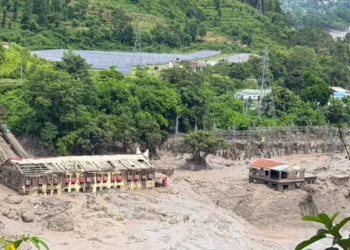
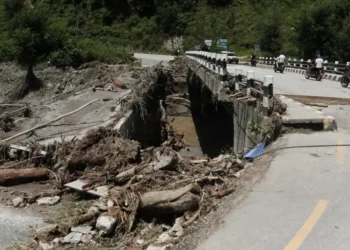
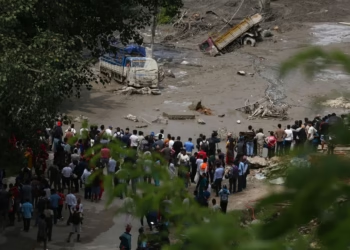
The flash floods carried an extraordinary mixture of ice, rock, mud and debris through the Himalayan landscape, destroying roads, bridges, homes and industrial infrastructure. Entire communities were cut off, while rivers became powerful channels of destruction.
For families waiting for news of loved ones, the situation inside the hydropower tunnels has created a particularly agonising uncertainty. Rescue teams have been unable to establish contact with many of those believed to be underground, while enormous deposits of mud and rock have blocked access to several sites.
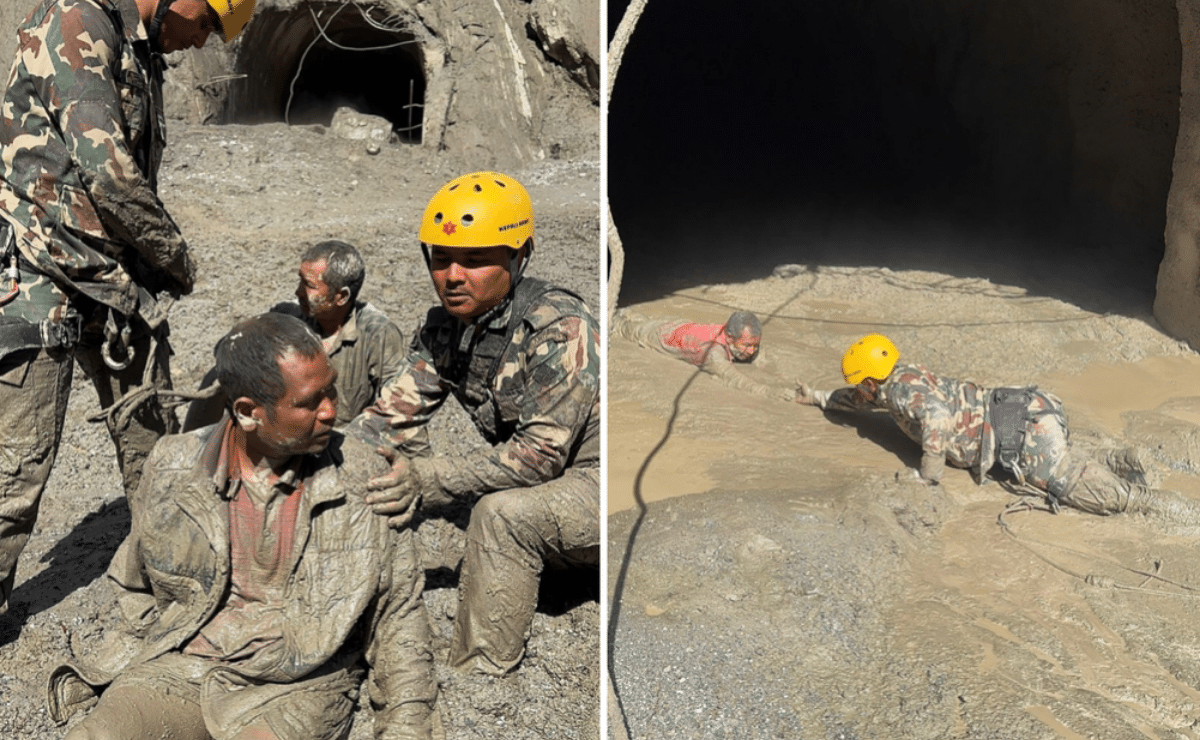
Images released from the disaster zone show excavators and other heavy machinery working to remove debris from tunnel entrances. Soldiers and rescue workers have also been digging through thick mud in an effort to create safe access routes.
Nepal Army spokesperson Raja Ram Basnet said the huge volume of debris was creating one of the biggest obstacles facing the rescue operation. Clearing the tunnels and reaching people who may still be trapped inside has become the central priority.
The conditions faced by rescuers are extremely dangerous. In some areas, mud has accumulated so deeply that teams are struggling even to move through the affected structures. Rescue workers have had to improvise with ropes, wooden planks and makeshift bridges while attempting to enter damaged underground facilities.
One rescue volunteer involved in the operation described the tunnels as being filled with deep mud, making movement exceptionally difficult. Teams working at the Chilime Hydropower site in the badly affected Rasuwa region have been trying to push further into the underground infrastructure despite the hazardous conditions.
There remains hope that some people may have survived inside protected sections of the hydropower facilities. Maps of the underground structures have reportedly been provided to rescuers, raising the possibility that workers may have reached internal safe areas before floodwaters and debris blocked access.
That possibility has intensified the urgency of the operation.
Rescue teams know that every hour matters. The longer access routes remain blocked, the more difficult it becomes to determine whether survivors are still inside. At the same time, unstable ground, damaged structures and the continuing risk of further flooding mean that rescuers themselves face serious danger.
Nepal has mobilised a major national response to the disaster. Prime Minister Balendra Shah described the flooding as an unprecedented and devastating natural disaster, acknowledging that the full scale of the destruction remains difficult to assess.
Nearly 21,000 security personnel have been deployed alongside civilian rescue workers and volunteers. Their efforts have been complicated by mountainous terrain, damaged roads and rapidly changing weather conditions.
Rescue operations were suspended several times in recent days because of poor weather and fears of additional flooding. Authorities have also been monitoring a lake formed near the Nepal-China border after the disaster, amid concerns that overflowing water could create further danger downstream.
Improved weather on Monday allowed rescue operations to gather pace, offering a crucial opportunity for teams trying to reach the missing workers.
The disaster has also brought India and China into the tunnel rescue effort. Nepal has relied primarily on its own personnel for broader search-and-rescue operations but has sought specialist expertise from its two powerful neighbours because of the technical challenges involved in underground rescues.
Chinese authorities have mobilised thousands of rescue personnel and committed substantial resources to relief operations in Tibet. Equipment and emergency supplies have been transported to affected areas, while specialised teams have used life-detection technology in the search for missing people.
The humanitarian impact extends far beyond the hydropower sites.
The Red Cross estimates that more than 90,000 people may have been affected by the catastrophe. Thousands of families have lost homes, while roads and bridges linking remote communities have been severely damaged or completely destroyed.
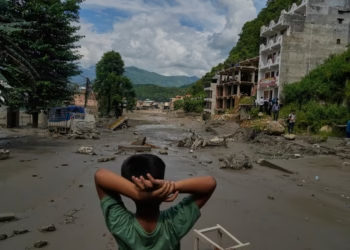
In some of the hardest-hit areas, residents have returned to find little remaining of the places they once called home. Along the banks of the Trishuli River, people have been searching through mud and wreckage for belongings that survived the flood.
The scale of death has also overwhelmed local authorities. Hundreds of bodies have been recovered, with many victims still unidentified after being swept far from their homes by the torrent.
The disaster has once again highlighted the growing vulnerability of Himalayan communities to extreme environmental events. Chinese state media and some experts have linked the catastrophe to glacier instability and the long-term effects of global warming.
Mountain regions are particularly vulnerable as rising temperatures affect glaciers, ice formations and fragile landscapes. Changes in the stability of high-altitude ice and rock can create sudden and devastating consequences for communities living downstream.
Officials are still working to establish a complete picture of what triggered the disaster and the full extent of the destruction. The complexity of the terrain means some remote locations remain difficult to reach, while continuing geological risks could further complicate recovery efforts.
Questions have also emerged over cross-border information sharing and whether greater cooperation on glacier conditions, water levels and environmental risks could help improve disaster preparedness in the future.
For now, however, the immediate focus remains on survival.
Deep beneath the mud and debris, rescue teams are continuing their desperate attempt to reach the hundreds of people still unaccounted for at Nepal’s hydropower projects.
The operation is a race against time, carried out in darkness, unstable tunnels and dangerous conditions. Heavy machinery is clearing blocked entrances while specialist teams search for possible routes into underground facilities.

For relatives waiting outside the disaster zone, every report from the rescue teams carries the possibility of hope or heartbreak.
The coming hours and days will be critical. If survivors remain inside protected areas of the tunnels, reaching them quickly could make the difference between life and death. But with debris blocking access and conditions remaining unpredictable, the rescue effort is among the most challenging Nepal has faced in recent years.
As the death toll continues to rise and thousands remain missing across Nepal and Tibet, the disaster has become a devastating reminder of how quickly life in the Himalayas can be transformed by nature.
Yet amid the destruction, rescue workers continue digging.
Their mission is simple but extraordinarily difficult: to reach those who may still be alive beneath the mountains of mud, rock and broken concrete before time runs out.
Related News:
 Nepal-Tibet Flood Death Toll Rises as 2,478 Remain Missing
 Cyclone Vaianu Forces Mass Evacuations in New Zealand
 Venezuela Quake Death Toll Surpasses 4,000
 Powerful 7.7-Magnitude Earthquake Hits Eastern Indonesia
 Wildfires rage across Europe as hundreds arrested in France
 Heavy Casualties Feared as Flash Flood Sweeps Nepal-Tibet Border
 Australia Races to Find Tourists Missing in Nepal
 Nepal Flood Death Toll Tops 300 as Second Flood Feared
 Storm Leonardo Triggers Election Delay Calls in Iberia
 Nine Killed in Karachi Consulate Protest
 North Korea Fires Missiles Amid US-South Korea Drills
 Evacuations Ordered as California Wildfires Spread Fast
 Queensland Braces for Potential Second Severe Cyclone Hit
 Chornobyl Still at Risk 40 Years After Disaster
 Southeast Asia Turns to Russia Amid Energy Crisis
 Escobar’s Hippos May Be Moved to India Zoo
 Capitalism ‘Suicidal’, Warns Petro at Climate Summit
 Coalition pushes fossil fuel phaseout plan
 China Fireworks Factory Blast Kills 21 in Hunan
 Australia pushes Pacific security pact amid China tension
 BJP Sweeps West Bengal in Historic Breakthrough
 Norway Doubles Down on Oil and Gas for Europe Energy Security
 Doomsday Clock Nears Midnight Amid Global Crises
 US Awaits Iran Reply on New Ceasefire Proposal
 One Nation Stuns Australia With Historic Farrer Win
 Hormuz Talks Near Critical Stage
 China mine blast death toll rises to 90
 Maldives Cave Diving Tragedy Raises Safety Alarm
 Pope Meets Families in Italy Toxic Waste Zone
 Discontent grows around Putin amid war strain
 UN Issues Urgent Warning: Imminent Return of El Niño
 Germany Summons Chinese Envoy Over Russian Troop Training
 Sydney Records Hottest June Since 1859 as Expert Warns New High a ‘Signature’ of Global Warming
 Millions Gather for Khamenei’s Six-Day State Funeral
 Olympus Awaits Unesco Heritage Recognition
 Houthis Strike Saudi Arabia as Middle East Tensions Rise
 Wildfires Force Mass Evacuations in France And Spain
 Taliban global ties grow as rights fears mount
 Seoul proposes historic peace talks to replace Korean War armistice
 Israeli Strike in Southern Lebanon Kills Seven
 Five Years of Taliban Rule Leave Afghanistan in Crisis
 Nepal-Tibet Flood Leaves 270 Dead and 1,400 Missing
 Families Fly to Nepal in Search of 33 Missing Britons
 BBC to Apologise Over Edited Trump Speech Amid Backlash
 Britain deploys RAF specialists to assist Belgium with drone threats
 Greene Pushes Epstein Files Amid Trump Fallout
 Zelenskyy Signs Fighter Jet Deal Amid Russian Drone Attacks
 Shadow Fleet at Sea: Europe’s Battle Against Illicit Oil Shipping
 US Suspends Afghan Immigration After White House Shooting
 ‘Extinct’ Antelope Returns to Sahara, Bringing Hope
 Irish Beach Tragedy: Irish Drown at Whitehaven Beach in Australia
 UK and US Drop in Global Corruption Index Rankings
 Canberra Poster Seizure Sparks Free Speech Row
 Jacinda Ardern Moves To Australia Following Her US Fellowships
 Jacinda Ardern Move Sparks Kiwi Reflection
 Middle East Airspace Crisis Strands Thousands
 Nick Greiner Warns Over Election Review Fallout
 Kelly Wilkinson Inquest Reveals Bail Failure
 Tehran Strikes Mark War’s Most Devastating Night
 Injured Mojtaba Khamenei Elevated as Iran Leader
 Gordon Brown urges court for crimes against children
 The Kill Line: A Shifting Vision of the American Dream
 Pakistan Targets Militant Hideouts in Afghanistan
 ICE detention warning sparks fear among immigrants
 Air Canada CEO Faces Outcry Over Recent Language Misstep
 Extreme Weather: Europe Shivers as Cyclone Narelle Hits
 Asia Turns Back to Coal Amid Middle East Energy Crisis
 Relationship with Trump may be beyond repair, Starmer warned
 Trump’s Six-Week Iranian War: The High Cost of Ignorance
 Artemis II Returns After Historic Moon Flyby
 Trump Brokers Landmark Lebanon Ceasefire Amid Regional Hopes
 Ben Roberts-Smith Denies War Crime Allegations in First Statement
 RFU Backs Borthwick Despite England’s Poor Six Nations
 Infantino Defends Soaring World Cup 2026 Ticket Costs
 Trump Announces 3-Day Russia–Ukraine Ceasefire Deal
 Trump Rejects Tehran Peace Plan as Regional Truce Crumbles
 Britain’s Crowning Butterfly Takes the Nation by Storm
 Fifa Official Under Investigation Over Hand Gesture Controversy
 Grief and Devotion Amidst the Rubble of Nabatieh
 England and Norway Fans Turn Miami Into World Cup Carnival