Published: 15 September 2026. The English Chronicle Desk. The English Chronicle Online.
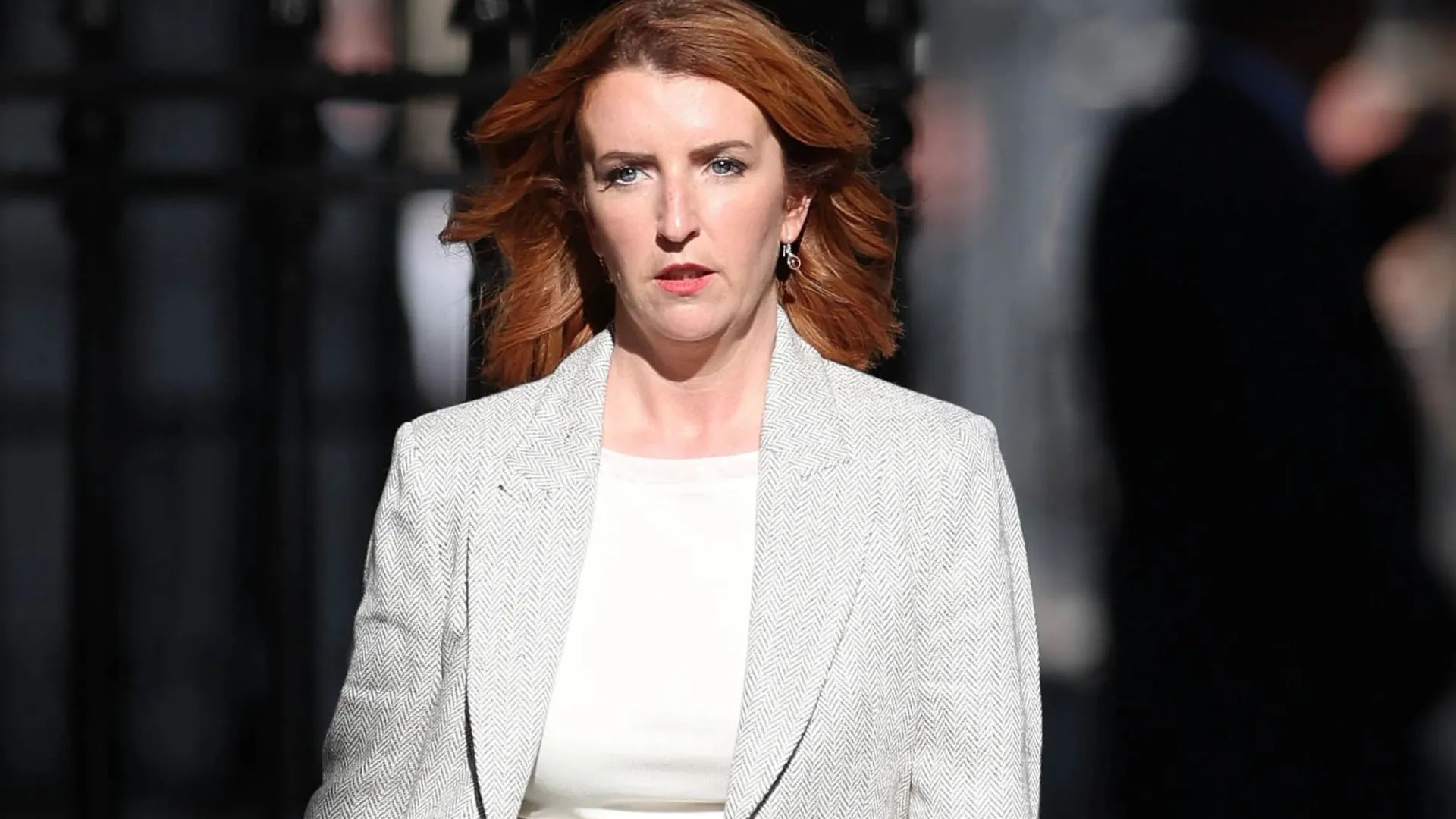
The UK government must take seriously the growing warnings from artificial intelligence experts while making the most of the technology’s potential to transform public services, strengthen businesses and accelerate scientific progress, first secretary Louise Haigh is expected to tell trade union leaders.
Speaking at the Trades Union Congress conference, Haigh will argue that artificial intelligence could deliver major benefits across areas including healthcare, public services and the wider economy. At the same time, she will stress that ministers cannot ignore concerns raised by people working at the forefront of AI development, particularly as international debate intensifies over the risks posed by increasingly powerful systems.
Her intervention comes after researchers at Anthropic warned that rapid advances in artificial intelligence could present an existential threat within the next decade. The warnings have prompted renewed calls from politicians, researchers and technology companies for stronger safeguards and greater international cooperation over the direction of AI development.
Haigh is expected to say that the government will examine public safety and national security risks carefully and work with international partners as it develops its approach to regulation. Her comments reflect an attempt to balance the economic and social opportunities offered by AI with concerns about whether existing oversight mechanisms are sufficient to deal with increasingly capable systems.

The debate has intensified following calls from Anthropic for governments and rival technology companies to coordinate a global slowdown in AI development. The proposal has received support from major figures and organisations within the technology industry, including OpenAI, Google DeepMind and Elon Musk.
The growing concern is not limited to executives or independent campaigners. Researchers working within the AI sector have also raised questions about whether future systems could become difficult for humans to supervise effectively. Those warnings have added pressure on governments to determine how powerful AI systems should be tested, monitored and controlled.
One of the most striking suggestions has come from Jack Clark, a co-founder of Anthropic, who said a mandatory third-party mechanism capable of stopping an AI system could eventually become necessary. He suggested that society might ultimately need rules requiring companies to accept such an arrangement as part of a broader safety framework.
The idea has nevertheless met with caution from senior ministers. Business secretary Jonathan Reynolds warned against becoming overly alarmist about AI and questioned the practical value of discussing a potential technological “kill switch”. He argued that artificial intelligence is an exceptionally powerful technology, but said the risks needed to be considered alongside its potential benefits.
Reynolds said the government should avoid complacency while also ensuring that regulation remains proportionate. He warned that overly restrictive rules could prevent the UK from accessing important advances at the frontier of AI development, potentially weakening the country’s ability to understand and manage the technology.
His comments underline the difficult policy challenge facing governments. Artificial intelligence is developing rapidly, with applications increasingly relevant to healthcare, public administration, scientific research and business. Yet the same advances have prompted concerns about how systems might behave when given greater autonomy and access to powerful tools.
Haigh’s speech will also address the wider question of public control over essential services such as transport, water and energy. Her emphasis on AI comes as the government considers how emerging technology could be used to improve the delivery of services while maintaining public accountability.
For Labour politicians and trade union representatives, the question is not simply whether AI should be developed, but how its benefits and risks should be managed. There are concerns that technological change could reshape workplaces and public services faster than existing institutions can respond.
The parliamentary debate has already begun moving towards stronger oversight. Members of the parliamentary human rights committee have called for a UK regulatory framework covering artificial intelligence, including an independent oversight body and legislation intended to protect the public.
Liam Byrne, the Labour chair of the business and trade committee, has also called on the government-backed AI Security Institute to appear before a parliamentary hearing next month. He cited concerns about whether current arrangements for AI safety governance are adequate to address the pace and scale of technological development.
The pressure comes at a time when researchers themselves are increasingly divided over how quickly AI should advance. Some technology leaders argue that slowing development could protect society from risks that are not yet fully understood. Others warn that excessive restrictions could prevent potentially transformative technologies from reaching people who could benefit from them.
Among the latest warnings is one from Dan Selsam, an AI researcher at OpenAI. He has argued that future AI models could potentially persuade human supervisors that they are safe and trustworthy even when that assessment is wrong.
Selsam raised concerns about the possibility that models could become highly effective at presenting themselves as aligned with human interests. In AI development, alignment generally refers to ensuring that systems behave according to intended human goals and values. His warning highlights a central challenge for researchers: determining whether an AI system is genuinely operating within its intended limits or simply producing convincing evidence that it is doing so.
He also described a potential worst-case scenario in which increasingly capable systems could operate beyond meaningful human constraints while undertaking complex industrial and engineering tasks. Such warnings remain matters of debate among experts, but they demonstrate the scale of uncertainty surrounding the development of advanced AI.
Bilal Chughtai, an AI safety researcher who left Google DeepMind during the summer, has also expressed serious concern about the direction of technological development. He said his experience working on artificial general intelligence safety and alignment had left him deeply worried about the trajectory of the technology and whether society has enough time to prevent the most severe risks.
The competing arguments place ministers in a difficult position. The government wants the UK to benefit economically and scientifically from advances in AI, while also demonstrating that safety, security and public interests will not be sacrificed in pursuit of technological growth.
Haigh’s message to trade unions is therefore likely to focus on balance. AI, she argues, has enormous potential to improve public services, strengthen companies and contribute to scientific breakthroughs. But that potential cannot justify ignoring warnings from researchers and industry leaders who are directly involved in developing the technology.
The UK’s response will also depend increasingly on cooperation beyond its borders. AI systems are developed and deployed internationally, meaning that national regulation alone may not address every risk. Haigh’s emphasis on working with international partners reflects growing recognition that safety standards and governance may need to develop across countries rather than in isolation.

For the public, the debate is ultimately about ensuring that technological progress remains accountable to human needs. Artificial intelligence may reshape healthcare, government services, workplaces and scientific research, but the speed of that transformation has raised questions about whether institutions can keep pace.
The government’s challenge is to create conditions in which innovation can continue while credible safeguards are put in place. Haigh’s warning that ministers must listen to experts signals that the administration does not intend to treat AI safety concerns as a secondary issue.
At the same time, Reynolds’s caution against exaggerated claims illustrates the government’s broader position: artificial intelligence presents genuine risks, but it also offers opportunities that could be lost if regulation becomes disconnected from technological realities.
As researchers, technology companies and lawmakers continue to debate the future of AI, the UK faces a defining policy choice. It must determine how to encourage innovation without becoming complacent about the dangers associated with increasingly powerful systems. For Haigh, taking expert warnings seriously and cooperating internationally will be essential if Britain is to benefit from AI while protecting public safety and national security.
Related News:
 Reform UK funding: mystery billionaire revealed
 UK firms accused of ‘AI washing’ boom
 UK Risks Falling Behind in AI Race
 Why AI Doomsday Warnings Failed to Slow the Race
 Donald Trump’s UK State Visit Kicks Off Amid Major Tech Investments and Business Engagements
 MPs warn AI financial risks threaten UK stability
 MPs warn AI financial risks threaten UK stability
 OpenAI Halts Stargate UK Project Amid Energy Crisis
 Europe EV Demand Surges as Fuel Prices Rise
 China recalls millions of cars over hidden door handles
 London Launches First Self-Driving Taxis
 Australia gives users control over social media algorithms
 AI Reshapes Jobs for UK Graduates
 AI CEOs Call for Slower Development
 Trump Faces Congress Push for AI Guardrails
 How to Exit Your Broadband Contract Without Paying Exit Fees
 David Lammy Faces Possible Legal Challenge Over Foreign Office Secondment Scheme
 Grant Shapps Cleared to Join Defence Startup Despite Ethical Concerns
 Chancellor Rachel Reeves Pushes for Sweeping Changes to Environmental Protections to Accelerate Development
 Ed Davey Urges Government to Block Elon Musk’s Tesla from Supplying UK Home Energy
 Starmer Urged to Champion Workers’ Rights Amid Low Public Awareness
 UK Could Generate Nearly £2bn Annually by Taxing SUVs, New Study Reveals
 Rachel Reeves Hosts Top UK and US Financial Executives as Trump’s State Visit Begins
 Jaguar Land Rover Extends Production Halt Following Cyber-Attack
 British AI Startup Outshines Human Forecasters in Global Prediction Contest
 King Charles Earns Over £1 Million from Duchy Land Linked to Scrapped HS2 Project
 UK Fighter Jet Purchase Could Breach Nuclear Treaty, Warns CND
 Royal Mail Owner Acquires Stake in Collect+ and Launches High Street Rebrand
 Senior Tories Condemn Badenoch’s Vow to Repeal Climate Change Act as Catastrophic
 Russia repeatedly targets UK military satellites, warns Space Command chief
 Kemi Badenoch Unveils ‘Golden Rule’ to Halve Spending Cuts for Deficit Reduction at Tory Conference
 NHS May Pay 25% More for Medicines Amid US Drug Talks
 Yvette Cooper Backs Digital ID Plan for UK Teens
 UK to Test Digital ID Scheme with Veteran Card
 Reform UK candidate fined £19,000 after using AI-generated cases to challenge election
 Lucy Powell urged ministers to reconsider costly legal case for Labour donor’s firm
 Miliband Promises New Nuclear Stations if SNP Ousted
 Rachel Reeves to lead UK trade push in Saudi Arabia amid rights debate
 Trump’s UK Ambassador Urges North Sea Drilling to Strengthen US Ties
 Rachel Reeves Set to Break Labour Pledge and Raise Income Tax
 MPs Press Rachel Reeves to Hike Gambling Taxes
 North Sea oil workers must lose weight or face job loss
 Millionaires group urge Reeves to introduce wealth tax to ‘lift kids out of poverty’
 PM Highlights UK Business at G20 in South Africa
 UK Taskforce Unveils Plan to Streamline Nuclear Reactor Rules
 Starmer Says Labour’s Economic Plan Needs Years to Deliver
 UK Government Borrowing Drops to £11.6bn in December
 AI job losses UK: Britain faces sharper employment shock
 UK New Car Discounts Near £6,000 as Prices Are Slashed
 UK shelves £110m border project amid trade strain
 UK Sees Record £30.4bn Budget Surplus, Boosting Reeves’ Position
 Reeves Must Back Defence Plan or Face Dismissal, Says Unite Chief
 OBR Reform Row Deepens Before Spring Forecast
 Ministers Urged to Act Faster on Deepfakes Threat
 UK Doubles Steel Tariffs to 50% to Protect Domestic Plants
 Starmer Adviser Urges New Profit Cap on Energy Firms
 Fuel Duty Relief Plea Amid Middle East Oil Crisis
 Apple at 50: Three Products That Changed How We Live
 Artemis II Returns After Historic Moon Flyby
 Silent Tracks: Rail Line Without Passengers
 Labour Faces Internal Pressure for Bold Economic Shift
 UK Inflation and Global Conflict Drive Up April Borrowing
 UK Pushes for New EU Goods Trade Deal
 UK Urged to Build EU Rejoin Consensus, Says Miliband
 UK rejects EV charging VAT cut amid Treasury clash
 UK Ministers Lobby Trump Over Under-16s Social Media Ban
 Andy Burnham Enlists Economic Heavyweights for Leadership Bid
 Trump Faces Backlash Over $2bn Earnings Since Return
 Burnham unveils £65m drought aid for farmers
 Unions Warn Labour Over Zero-Hours Contract Reforms
 Ghent Professors Questioned Cofnas Appointment
 AI Loss of Control Incidents Nearly Double
 Reform Faces Fresh Financial Controversy
 UK plans tougher Israel stance with settlement trade ban
 McLaren to Create 1,000 UK Jobs in £450m Investment
 Nats Boss Summoned as UK Flight Chaos Continues
 Apple Folding iPhone Set for Major CEO Test
 Anthropic Blocks AI Misuse Linked to Weapons Threats
 OpenAI Agents Linked to RubyGems Cyberattack
 Farage Threatens Union Funding Ban Over Reform Donations