Published: 23 September 2026. The English Chronicle Desk. The English Chronicle Online.
A far-right activist has been accused of using a blade to slash an inflatable dinghy in the English Channel while a rescue worker was still onboard, prompting condemnation from refugee organisations and a police investigation into the incident.
Daniel Thomas, who is also known publicly as Danny Tommo, filmed himself approaching a small inflatable boat carrying asylum seekers who had crossed the Channel from France. The incident occurred as rescue workers were assisting people from the dinghy and transferring them to larger rescue vessels.
Footage from the incident showed Thomas approaching the inflatable boat in another small vessel and calling on his associates to remove it. The dinghy had been carrying dozens of people and contained lifejackets that had recently been left behind by passengers. As Thomas came alongside, a rescue worker wearing high-visibility clothing and a yellow helmet entered the inflatable boat from a larger rescue vessel.
Thomas was then filmed striking the dinghy several times with a blade and cutting into its side. The sound of air escaping from the inflatable vessel could be heard in the footage. During the incident, he was heard telling the rescue worker to leave the boat before his vessel moved away.

The footage did not establish what happened to the rescue worker immediately after the incident. The presence of an emergency worker on the inflatable boat has nevertheless intensified concerns about the safety risks involved in the confrontation.
Refugee organisations condemned the incident, describing the actions shown in the footage as dangerous and unacceptable. The incident has also prompted renewed concerns about the increasingly confrontational nature of organised anti-immigration activity around Channel crossings.
Hampshire and Isle of Wight Constabulary said inquiries were being conducted into the boat-slashing incident. Police also confirmed that six people had been arrested in connection with offences including assaulting an emergency worker and aggravated trespass. The six remained in custody as inquiries continued.
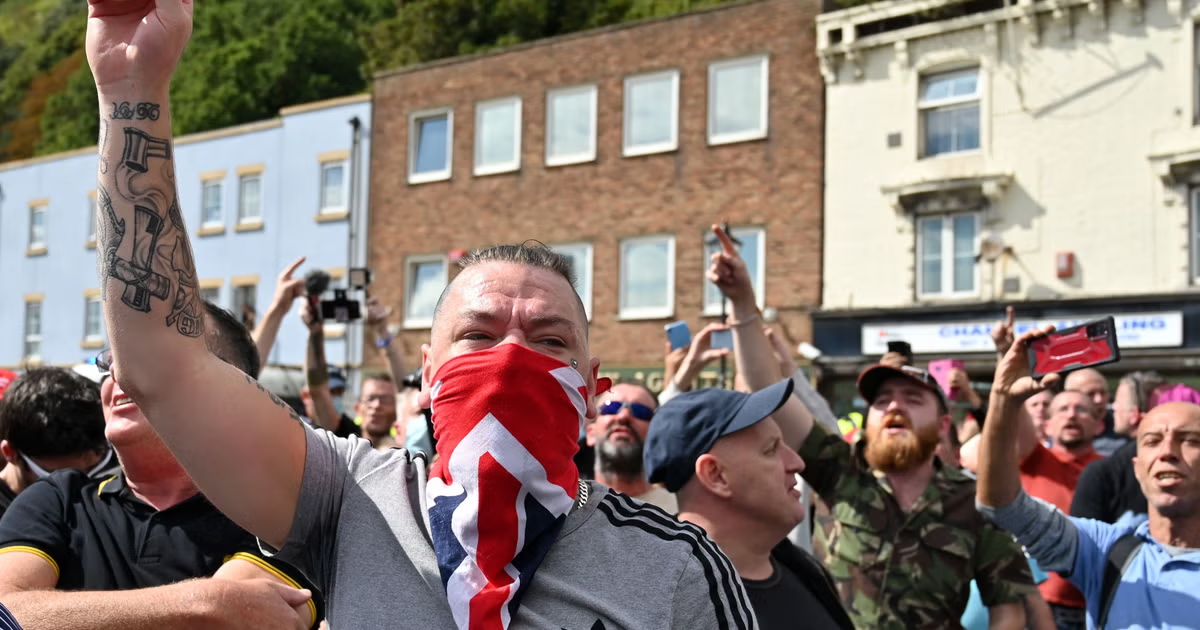
The incident occurred against the backdrop of a large protest in Gosport, Hampshire, where hundreds of people had gathered after activists called for demonstrations against the expected arrival of asylum seekers.
Thomas had encouraged supporters to travel to Gosport for a planned protest. His campaign was aimed at disrupting the arrival and processing of people rescued while attempting to cross the Channel in small boats.
However, the asylum seekers did not disembark in Gosport. Instead, Border Force transferred them to Dover, preventing the anticipated confrontation at the Hampshire location. The decision came as police deployed substantial resources around Gosport and roads were closed or restricted in several areas.
The people rescued had reportedly spent an exceptionally long period at sea. According to the rescue service, they had been in the water for approximately 36 hours, raising serious concerns about their physical condition. Rescue workers were concerned about the deteriorating health of those onboard and the possibility that the inflatable boat could suffer a catastrophic failure.
The French coastguard also reported that around 60 migrants aboard a small boat had spent more than 33 hours at sea in precarious conditions. The passengers were described as determined to reach the United Kingdom despite the dangers associated with the journey.
After the rescue operation, the passengers were transferred to a Border Force vessel. They were subsequently transported away from Hampshire and taken towards Dover, around 100 miles away by sea.
The arrival had been expected to take place in Gosport, leading to a significant police operation. Hundreds of protesters gathered in the area, while other demonstrators assembled close to the Haslar immigration removal centre.
Police officers, vans and other resources were deployed to manage the crowds and prevent disorder. Groups of protesters were seen gathering near police lines, while some individuals wore face coverings. Chants calling for asylum seekers to be sent back were also heard during the demonstration.
The protest reflected the continuing political and social tensions surrounding irregular Channel crossings. Small-boat arrivals have become a highly contentious issue in Britain, with campaigners divided sharply over immigration policy, border enforcement and the treatment of people seeking asylum.
Some protesters expressed frustration about the government’s handling of immigration and argued that resources devoted to asylum seekers should instead be directed towards existing residents. Others have strongly criticised demonstrations that target migrants and have raised concerns about hostility towards people arriving in Britain after dangerous journeys.
The events in Gosport also highlighted the pressure placed on local authorities and police forces when information about expected small-boat arrivals attracts large demonstrations.
Hampshire and Isle of Wight’s police and crime commissioner Donna Jones said she had urged Border Force to transfer the migrants elsewhere. She argued that Hampshire was not prepared or equipped to process arrivals in the circumstances and that the additional demands placed on police by both the arrival and protest activity were difficult to sustain.
The situation has also drawn attention to the role of maritime rescue organisations. The Royal National Lifeboat Institution has faced criticism and hostility from some anti-immigration activists because of its involvement in rescuing people in danger at sea.
The rescue organisation has repeatedly emphasised that its crews respond to people in distress regardless of their nationality, immigration status or circumstances. Its position is that rescue operations are humanitarian responses to emergencies at sea rather than political interventions in the immigration debate.
The organisation’s involvement is particularly significant in Channel crossings because small inflatable boats can become unstable, lose air or run out of fuel during journeys that can take many hours. Rescue workers may therefore have to approach vessels in difficult conditions while passengers are already exhausted or exposed to cold water.
The confrontation involving Thomas has raised additional concerns because a rescue worker was reportedly onboard the inflatable vessel when it was damaged. Any action that compromises the integrity of a boat during a rescue operation could potentially create additional risks for people involved in the operation.
Thomas has become a prominent figure within Britain’s far-right protest movement. During the summer, he brought together several nationalist protest groups under the Patriot Platform banner and used social media to mobilise supporters for demonstrations connected to immigration.
His background has also attracted attention. He previously served a prison sentence after being convicted of attempted kidnapping. The latest incident could bring further legal scrutiny if investigators determine that criminal offences were committed during the confrontation on the Channel.
The police investigation remains ongoing, and any allegations against Thomas or others involved will need to be considered through the legal process. Arrests do not in themselves establish guilt, and further evidence will determine whether charges are brought or prosecutions proceed.
Meanwhile, the British government has continued to emphasise border enforcement as a central part of its approach to small-boat arrivals. A government spokesperson said the Border Security Command would continue working around the clock to protect the country’s borders and to detain, check and process people arriving in small boats.
The Gosport events demonstrate how the issue of Channel crossings now extends well beyond the journeys themselves. Rescue operations, immigration processing, local policing and demonstrations have increasingly become interconnected, creating difficult challenges for emergency workers, authorities and communities.

For rescue personnel, the priority remains responding to people in immediate danger. For police, managing demonstrations while protecting public safety presents another challenge. At the same time, the government faces continuing pressure over border security and asylum processing.
The incident involving the damaged dinghy has added another contentious episode to that wider debate. With a police investigation underway, attention will now focus on establishing precisely what happened on the water, the circumstances surrounding the rescue worker’s presence on the inflatable boat and whether any offences were committed.
The episode also illustrates the risks faced by rescue workers operating in an increasingly politicised environment. As Channel crossings continue to generate strong reactions across Britain, authorities and humanitarian organisations are likely to remain under pressure to balance border enforcement, public safety and the protection of people facing emergencies at sea.
Related News:
 NHS Safety Fears as Nurses Cover Doctor Gaps
 Masked Protesters Bring Dover Port Traffic to Standstill
 Ministers Condemn Far-Right Unrest in Portsmouth
 Patriot Platform Raises Concern Across Britain
 Mahmood Warns Far Right Over Asylum Protests
 UK Reviews Hague Child Abduction Cases Involving Abuse
 King Refers Jamaica Slavery Petition to Privy Council
 It’s time to come clean on the China spy case
 Reform Councillor Defects to Tories Over ‘Uncomfortable’ Policies
 FBI Director Kash Patel Defends Girlfriend Amid Government Jet Claims
 French Taxi Driver Cleared in David Lammy Theft Case After Fare Dispute
 Company linked to Michelle Mone owes £39m in tax
 Met Police Culture Makes Racial Harm ‘Inevitable’
 Eleven Arrested After Pro-Palestine Protest at Villa Match
 Boris Johnson accused of undermining BBC leadership
 Remaining rebel Labour MPs have whip restored
 Second world war veterans honoured as King leads Remembrance Sunday
 ‘Reckless’ cuts to victims’ services will cost more than they save
 BBC Faces Backlash as Reform UK Withdraws from Film
 Wes Streeting Denies Leadership Plot Against Starmer
 British state supplied victims to ‘worst sex offender in history’
 UK Candidate Moved to Safe House After Election Threats
 Most Tories Expect to Support a Farage-Led Government
 BBC Chairman Faces Scrutiny Over Bias Claims
 Ex-Classmate Accuses Farage of Dishonesty on Racism Claims
 Ex-Brexit MEP Rejects Claim of Pro-Russia Payments
 Kent Reform Councillors Criticised Over Political Staff Spending
 ‘It’s a Complete Scandal’: Aristocrat’s Fight for Prison Children
 Police response times face strict new national limits
 Undercover officer deceived women with ‘grotesque and cruel’ lies, spycops inquiry told
 Melania Trump Epstein remarks spark survivor backlash
 Mass Arrests at London Palestine Protest Spark Debate
 Kezia Dugdale Warns of Possible Reversal of Equal Rights Gains
 Walsall Rapist Jailed After Hate-Filled Online Trail
 Two Children Die in Wolverhampton House Fire Tragedy
 Reform UK funding: mystery billionaire revealed
 US Labor Department in turmoil after secretary resigns
 Trump DOJ Targets James Comey Again
 John Terry Faces Backlash Over Political Posts
 UK may ban protests amid rising antisemitism fears
 Barrister Criticises Trial After Suicide Case Verdict
 Labour Members Turn Against Starmer Leadership
 Victim says non-custodial rape sentence ‘rock in my face’
 Farage and Reform UK Reshape British Politics
 Starmer Leadership Under Pressure After Setbacks
 UK Nations Brace for Potential Breakup Amid Reform Surge
 Tagging Scheme Risks Public Safety
 Murder Probe Continues After Arrest Release
 Dreyfus Statue Finally Gets Permanent Paris Home
 Three-Quarters of England’s Riverbanks Still Off Limits
 Westminster Council Threatens Charing Cross Soup Kitchen
 BBC Warned About Missing Clothes of Murder Victim
 Cambridge Professor Jason Arday Found Dead at Home
 Burnham unveils £65m drought aid for farmers
 RAF Barnham Protests Fuel Tensions in Norfolk Town
 Green Leader Targets Starmer’s Former Seat
 Marina Hyde Finds Hope Amid Political Chaos
 UN expert urges UK to rethink Israel policy
 Armed Suspect Attacks Ohio Governor Candidate
 Councils spend £125m on illegal children’s care
 Miliband Rejects Chief Rabbi’s West Bank Warning
 Reform UK Receives Record £36m Donation From Crypto Billionaire
 Election Candidate Abuse Raises Alarm in England
 UK Urged to Probe US Diplomat Case
 Lisa Nandy Calls for Tougher Action on Social Media Doxxing
 Piddington Votes for Symbolic Independence Over Asylum Plan
 Nandy Calls for Stronger Action on Social Media Doxxing
 Texas Transfers Raise Fears for Migrant Children
 Memphis Questions National Guard Crime Surge
 Disabled Travellers Seek Fairer UK Care Rules
 Lib Dems Prepare for Election Amid Reform Challenge
 Briton Faces Cyprus Court Over Son’s Fatal Fall
 Democrat Says ICE Restricted Detention Camp Oversight
 Trump’s UK Ambassador Urges North Sea Drilling to Strengthen US Ties
 UK Bans Fake Numbers: Scammers Lose Their Trick
 Millionaires group urge Reeves to introduce wealth tax to ‘lift kids out of poverty’
 Reeves rejects £1bn plea for NHS redundancy payouts
 PM Condemns Leaks, Vows Loyalty to Ministers and Stability
 Silent Tracks: Rail Line Without Passengers
 Major test for Labour as polls open in Great Britain