Published: 05 October 2026. The English Chronicle Desk. The English Chronicle Online.
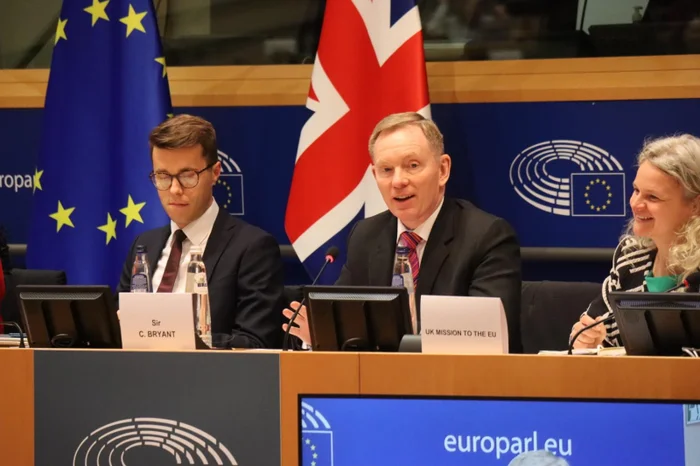
The European Union is ready to engage with the United Kingdom over the future of their relationship, but Brussels is waiting for London to decide how far it wants to go, according to the EU’s newly appointed ambassador to Britain, Jukka Salovaara. His comments come as the government led by Andy Burnham prepares to reconsider Britain’s post-Brexit relationship with the bloc and places a wider range of options, including a possible return to the EU, into the political debate.
Salovaara is expected to become an increasingly prominent figure as discussions develop. Although he will not formally sit at the negotiating table, he is likely to remain close to the process, acting as an intermediary between London and Brussels and helping both sides understand what proposals could realistically be pursued.
The ambassador described his role as that of a “facilitator”, explaining that his task would involve testing ideas, identifying areas where cooperation could be expanded and making clear which proposals might face difficulties. He said the UK remained the EU’s most important partner outside the bloc and argued that agreements between the two sides had historically delivered benefits to both.

The appointment gives Salovaara a particularly interesting perspective because his diplomatic career in Britain began during a very different period. As a young Finnish diplomat in 1996, he worked on European affairs in London at the beginning of the period commonly associated with “Cool Britannia”, when Tony Blair was preparing to enter Downing Street.
Looking back on the 1990s, Salovaara described the period as one of considerable optimism. Global trade was expanding, countries were becoming increasingly interconnected and many policymakers believed that deeper economic ties would strengthen international security. Global institutions and rules appeared to be gaining influence, while the benefits of globalisation were widely expected to spread across societies.
The political atmosphere of that period stands in sharp contrast with the current relationship between Britain and Europe. The UK has since left the EU, introduced new trading arrangements and experienced years of political debate over the consequences of Brexit. Questions about whether the existing settlement is working have now returned to the centre of British politics.
Burnham has been more explicit than his predecessor, Keir Starmer, in arguing that the current arrangements should not necessarily be regarded as permanent. His government has indicated that the full range of possibilities should be considered as Labour prepares for its next election manifesto. That could include closer economic integration, changes to existing agreements and, potentially, the longer-term possibility of seeking EU membership again.
For Brussels, however, the next move rests largely with Britain. Salovaara said the EU did not intend to dictate what Britain should seek from the relationship. Instead, the bloc would wait for the UK to conduct its own debate, assess the available choices and then present a clearer direction.
He said the “ball is very much with the UK”, signalling that Brussels wants London to determine its ambitions before detailed discussions over the future relationship can begin. The approach differs from the gradual, issue-by-issue strategy pursued under the previous government, as Burnham seeks to consider the broader strategic picture before settling on a specific path.
Burnham is expected to attend his first EU summit as prime minister in November, providing an early opportunity for both sides to examine areas where practical cooperation could be improved. While major decisions about the future relationship are unlikely to be reached immediately, several issues could give the meeting political significance.
Food standards are expected to be among the important subjects. Salovaara pointed to the practical advantages of maintaining common standards between Britain and the EU, particularly because of the scale of trade between the two markets. The EU remains a major destination for British food exports, while European countries supply a substantial proportion of food imported into Britain.
Greater alignment could reduce administrative requirements and help businesses avoid some of the border checks and regulatory procedures introduced after Brexit. For companies operating on tight margins, even modest reductions in paperwork and delays could have meaningful consequences.
The two sides are also examining the possibility of linking their carbon emissions trading systems. A closer relationship in this area could have implications for businesses facing carbon costs and for the broader development of climate policy. Youth mobility is another issue attracting attention, particularly among younger Britons and Europeans who have faced greater restrictions on living, working and studying across borders since Brexit.
Negotiations over a proposed youth experience scheme are continuing. Under an initial British proposal, around 50,000 people aged between 18 and 30 could participate each year. EU officials are seeking a significantly larger arrangement, with Brussels reportedly pushing for around 150,000 places annually.
The final structure of such a scheme could determine how easily young people from Britain and EU member states can spend extended periods abroad for work, study or other experiences. The issue has become one of the more visible examples of how Brexit has changed opportunities for younger generations.
Security cooperation is another area where both sides have strong incentives to maintain close links. With Europe facing growing geopolitical challenges, Britain and EU member states continue to share interests in areas including defence, intelligence and responses to international crises. A broader political relationship could therefore extend well beyond trade and regulatory issues.
The debate over Britain’s possible future relationship with the EU is nevertheless complicated by the question of what form closer integration could take. Full membership would represent the most significant change, but it is not the only option being discussed.
Other possibilities include joining the EU single market or customs union, although each would involve different economic and political consequences. There are also emerging ideas around forms of associate membership that could offer countries closer ties without immediately providing all the rights associated with full EU membership.
Canada has been discussed as an example of a country exploring a distinctive relationship with the bloc, while other proposals have considered models that could allow countries to participate in certain European structures while gradually moving towards deeper integration.
Salovaara also highlighted how European relationships can evolve over time. Norway, for example, has long maintained close economic integration with the EU through the European Economic Area, but its relationship with the bloc has increasingly developed political dimensions as European countries respond collectively to major international challenges.
The war in Ukraine has demonstrated this change particularly clearly. Countries that were once primarily concerned with economic integration have increasingly become involved in wider European security and foreign-policy initiatives. Norway’s close cooperation with European partners over Ukraine illustrates how relationships with the EU can become broader than trade and market access alone.
For Britain, this raises a central question about what it ultimately wants from Europe. The debate is no longer simply about reducing trade barriers or resolving individual post-Brexit disputes. It increasingly concerns the country’s place in a changing European political and security environment.
Any attempt to rebuild closer relations will also face domestic political challenges. A move towards a substantially different relationship with the EU could provoke disagreement within political parties and across the wider electorate. Salovaara acknowledged that fundamental changes generally benefit from a strong political consensus, while leaving it to Britain to determine how such consensus should be demonstrated.

The possibility of another referendum on EU membership remains politically sensitive, and there is no indication that Brussels intends to dictate whether Britain should hold one. Instead, EU officials appear focused on responding to whatever proposal eventually emerges from British politics.
The arrival of Salovaara in London therefore comes at a potentially significant moment. His diplomatic experience spans the optimistic European politics of the 1990s and the much more complicated post-Brexit environment of today. As Britain reassesses its relationship with the continent, his role could become increasingly important in translating political ambitions into proposals that both sides can realistically consider.
For now, Brussels is signalling patience. The EU appears willing to explore a broad range of possibilities, but it wants Britain to make the first move by deciding what kind of relationship it seeks. As Burnham’s government prepares for its first major European summit and Labour considers its next election platform, the coming months could provide an early indication of whether Britain’s relationship with the EU is heading towards modest repair, deeper cooperation or a much more fundamental political reset.
Related News:
 UK Presses On With Chagos Handover Despite Trump Criticism
 Shinzo Abe’s killer receives life sentence in Japan
 HMS Dragon to Head to Cyprus Amid Rising Tensions
 Starmer Praised for Stance on Trump and Iran Conflict
 Yvette Cooper: UK Must Follow Principles, Not US Pressure
 Trump Mocks Starmer and UK Carriers in White House Speech
 Aukus Submarine Plan Faces Critical Failures
 Asylum deal sparks fears over Syria deportations
 Global order shifts amid Trump-era turmoil
 Ceasefire Standoff Deepens in Ukraine War
 Putin Declares Russia Victory at Scaled Victory Day Parade
 UK Urged to Build EU Rejoin Consensus, Says Miliband
 Zelenskyy warns over Oreshnik threat as Kyiv hit
 Former ICC prosecutor condemns US sanctions
 Deadly Russian Air Raids Strike Across Ukraine
 EU and UK Set July Date for Critical Post-Brexit Summit
 UK Nations Brace for Potential Breakup Amid Reform Surge
 Farage Defends £5m Gift Amid Threats
 Russian Missiles Intensify Pressure on Kyiv
 Former Diplomats Urge UK and France to Act on Palestine
 Gordon Brown says Ireland will unite in future
 Bayeux Tapestry Revives Franco-British Ties
 Reform Faces Fresh Financial Controversy
 UN expert urges UK to rethink Israel policy
 Europe’s democracies face a growing far-right threat
 Elif Eralp Emerges as Berlin’s Next Political Force
 Ukraine’s New FP-7 Missile Makes Combat Debut
 Half of UK Voters Back Possible EU Return
 Trump’s UK Ambassador Urges North Sea Drilling to Strengthen US Ties
 Millionaires group urge Reeves to introduce wealth tax to ‘lift kids out of poverty’
 Reeves rejects £1bn plea for NHS redundancy payouts
 PM Condemns Leaks, Vows Loyalty to Ministers and Stability
 Major Rent Reform Ends No-Fault Evictions in England
 Starmer Says Labour’s Economic Plan Needs Years to Deliver
 Mandelson apologises over Epstein ties after public scrutiny
 Starmer Challenges US Over Controversial Greenland Deal
 Spoof “Make America Go Away” Caps Rally Denmark Over Greenland
 Labour Blocks Burnham as Party Rift Deepens Ahead of Polls
 Artificial intelligence will cost jobs, admits Liz Kendall
 Mandelson Faces Police Inquiry Over Epstein Leak
 Morgan McSweeney downfall shocks Labour leadership
 Farage Unveils Reform UK Frontbench Team
 Wales Approves Assisted Dying Bill Consent
 Corbyn Leads Your Party in Coordinated Left-Flank Strategy
 Asylum Seekers to Work After Year-Long Wait
 Starmer Row as Greens Demand Apology
 New Zealand Covid Response Praised Despite Lingering Scars
 Gordon Brown urges court for crimes against children
 Inquiry into HMRC child benefit errors launched by NAO
 Farage Faces Backlash Over Crypto Cameo Endorsements
 Relationship with Trump may be beyond repair, Starmer warned
 Unions Raise Concerns Over Doctors’ Pay Dispute
 Reform UK Pledges To Halt Visas Over Reparations Demands
 UK Government Poised to Revive Stalled Hillsborough Law
 Trump Signals Hope for New Iran Talks as Ceasefire Fades
 Investigation Into Anti-Trump Motives After Gala Shooting
 Welsh Labour Faces Potential Historic Election Defeat
 Silent Tracks: Rail Line Without Passengers
 Major test for Labour as polls open in Great Britain
 Keir Starmer Struggles to Secure His Grip on Downing Street
 Fear and Betrayal: The Chilling Case of Kouri Richins
 Farage Faces Standards Probe Over Cash Property Purchase
 Cannes filmmakers split over AI’s role in cinema
 Farage and Reform UK Reshape British Politics
 Minister Criticises Police Guidance Amid Southampton Protests
 Makerfield Voters Demand Real Change as Election Looms
 US Condemns ‘Two-Tier’ UK Policing After Student Murder
 EU Leadership Gathers in Tivat to Renew Balkan Ties
 Millions in British Charity Funds Linked to Illegal Settlements
 Captain in the Spotlight: The Future of England Cricket
 Labour MP Revives Blocked Assisted Dying Bill in Commons
 Starmer Set to Announce Exit Plan as Burnham Eyes No 10
 EU Slashes Steel Quotas But Grants UK Favourable Rates
 Burnham Pledges New Era of Open Debate for Labour MPs
 Meta Under Fire: The Battle Over Addictive Social Media Design
 Security Row Erupts Following Tragic Death
 Unions Warn Labour Over Zero-Hours Contract Reforms
 Tom Watson Takes Senior Role at Palantir
 The Tests Awaiting Andy Burnham After Labour Conference
 Badenoch Raises Prospect of 2027 UK Election