Published: 07 October 2026. The English Chronicle Desk. The English Chronicle Online
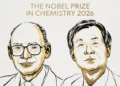
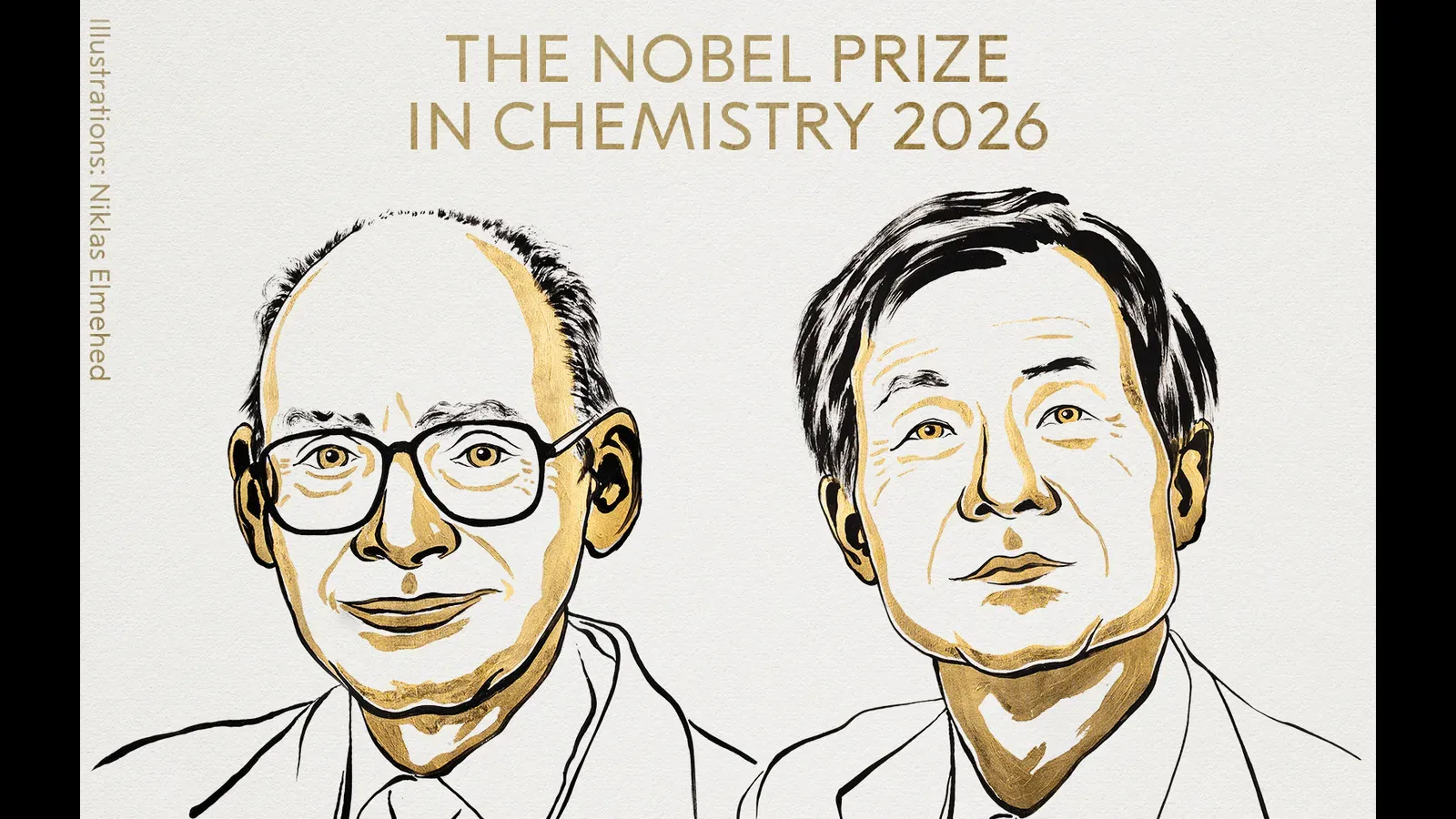
French chemist Henri B. Kagan and Japanese scientist Kenso Soai have been awarded the 2026 Nobel Prize in Chemistry for discoveries that transformed scientists’ understanding of how chemical reactions can favour one mirror-image form of a molecule over another.
The Royal Swedish Academy of Sciences announced the award in Stockholm on Wednesday, marking the third Nobel Prize announcement of the 2026 season following the prizes in physiology or medicine and physics. Kagan and Soai were recognised “for the discovery of non-linear effects and autocatalysis in asymmetric organic synthesis”, work that has helped resolve a long-standing mystery surrounding the chemical origins of molecular handedness.
The prize highlights a fundamental feature of chemistry that is also deeply connected to life itself. Many molecules exist in two forms that are mirror images of each other, much like a person’s left and right hands. Although the two versions may look remarkably similar, they are not identical and can behave differently when interacting with other molecules.

This property is known as chirality, derived from the Greek word for hand. In living organisms, the distinction is particularly important because biological systems often use only one of the two possible mirror-image forms of a molecule.
Amino acids provide one of the clearest examples. They can exist in two mirror-image configurations, yet proteins in living organisms overwhelmingly contain only one of those forms. For generations, chemists have sought to understand how such a strong chemical preference could emerge and how it could be reproduced artificially.
The work of Kagan and Soai provided important answers to that puzzle by showing how chemical reactions can be guided towards one molecular form and how a small initial imbalance can be dramatically amplified.
Kagan, a French chemist associated with Université Paris-Sud, made a major breakthrough in the study of asymmetric synthesis. His research demonstrated ways of influencing chemical reactions so that they produce a greater proportion of one mirror-image molecule than had previously been thought possible.
That discovery became an important foundation for modern asymmetric catalysis, an area of chemistry concerned with controlling the three-dimensional arrangement of molecules produced during chemical reactions.
Soai subsequently made a landmark contribution through his research into autocatalysis. In an autocatalytic reaction, a chemical product can help accelerate the reaction that produces it. This creates the possibility of amplification, meaning that a very small initial difference between two molecular forms can become increasingly pronounced as the reaction continues.
Soai’s work eventually produced a reaction capable of generating essentially one of two possible mirror-image forms under suitable conditions. His research provided scientists with a remarkable experimental demonstration of how chemical asymmetry can emerge and become amplified without relying on biological systems.
Together, the discoveries of Kagan and Soai have helped chemists understand how homochirality can arise. Homochirality refers to the predominance of one molecular handedness in biological systems, a phenomenon that has puzzled scientists for more than a century.
The importance of the research extends well beyond theoretical chemistry. The ability to control molecular handedness is particularly important in pharmaceutical development because different mirror-image forms of the same compound can have very different effects in the human body.
One molecular form may provide the desired therapeutic effect, while its mirror image may be less effective or behave differently. In some cases, controlling the precise structure of a molecule can therefore be essential to developing medicines that are both effective and safe.
Asymmetric synthesis has consequently become a major area of modern pharmaceutical chemistry. Researchers use increasingly sophisticated catalytic techniques to produce complex molecules with greater precision, reducing the need to separate unwanted molecular forms after a chemical reaction has taken place.
The Nobel recognition of Kagan and Soai reflects how fundamental discoveries in chemistry can eventually influence practical technologies and industries. Their work has contributed to a deeper understanding of molecular reactions and has provided tools and concepts used by scientists working on the synthesis of pharmaceuticals and other complex chemical substances.
The research also offers an insight into one of the most intriguing questions surrounding the chemistry of life. Scientists have long wondered why living systems display such a strong preference for one molecular handedness. If ordinary chemical reactions tend to produce mirror-image molecules in roughly equal amounts, how did the strong asymmetry found in living organisms emerge?
There is no single answer to every aspect of that question, but the discoveries recognised by this year’s Nobel Prize demonstrate mechanisms through which a tiny chemical imbalance can be amplified. Such processes provide an important window into possible pathways through which chemical asymmetry could develop.
The Nobel Committee has described the reactions developed and studied by Kagan and Soai as significant in addressing this long-standing chemical mystery. Their work demonstrates that chemical systems can move from a small initial asymmetry towards a much stronger molecular preference through carefully controlled reaction mechanisms.
The recognition is also a reminder that major scientific advances do not always emerge from discoveries with immediate practical applications. In many cases, researchers first investigate fundamental questions about how nature works, with technological and industrial applications becoming clearer only later.
For modern chemistry, understanding and controlling molecular structure has become increasingly important. The development of advanced medicines, materials and chemical processes depends not only on knowing which atoms are present in a compound but also on understanding precisely how those atoms are arranged in three dimensions.
This is where the concept of molecular handedness becomes particularly important. Two molecules can contain the same atoms and chemical bonds while still behaving differently because their three-dimensional arrangements are mirror images.
Kagan’s and Soai’s research helped establish new ways of controlling these differences, strengthening the foundations of asymmetric organic synthesis and expanding scientists’ ability to design chemical reactions with greater selectivity.
The 2026 chemistry award also continues a long Nobel tradition of recognising discoveries that fundamentally alter scientific understanding. The chemistry prize has frequently honoured work that initially appears highly specialised but later becomes essential to medicine, industry or wider scientific research.
Kagan and Soai will receive their Nobel medals and prize at the traditional Nobel ceremonies in Stockholm on 10 December, the anniversary of Alfred Nobel’s death. The chemistry laureates will share a prize of 12 million Swedish kronor.
The Nobel celebrations will continue throughout the week, with the literature and peace prizes scheduled to follow the announcements in chemistry. The Nobel Prize in Economic Sciences will be announced later in the month.
For the scientific community, however, Wednesday’s announcement is particularly significant because it shines a spotlight on a problem that sits at the intersection of fundamental chemistry, the origins of biological asymmetry and modern pharmaceutical science.

The discoveries of Henri B. Kagan and Kenso Soai show how seemingly subtle differences at the molecular level can have profound consequences. By demonstrating how chemical reactions can favour and amplify one mirror-image form, their work has given researchers a powerful framework for understanding one of chemistry’s most enduring puzzles.
Their Nobel Prize therefore recognises not only two distinguished careers but also a broader scientific achievement: revealing how molecular handedness can emerge, be amplified and ultimately be controlled.
In a field where the smallest structural difference can change the behaviour of an entire molecule, that insight has proved both scientifically profound and practically valuable. The 2026 Nobel Prize in Chemistry places that achievement at the centre of global scientific attention and underscores the continuing importance of fundamental research in shaping the future of medicine and chemical science.
Related News:
 How Bringing Forests Into Preschools Boosts Children’s Health
 No link found between paracetamol in pregnancy and autism
 Study Launches Into Brain Injury Risks in Women’s Rugby
 Africa Urged to Transform Universities for Young Talent
 UK Water Firms Ordered to Act Over ‘Forever Chemicals’ Threat
 England Curriculum Review Recommends Major Changes
 Mortgages and AI Set to Feature in English Schools
 Experts Urge Legal Right to Timely Cancer Care
 Patients to Test Health at Home to Ease NHS Winter Pressure
 London’s Childlessness Crisis: Schools Closing as Families Shrink
 North Sea oil workers must lose weight or face job loss
 Government urges schools to ban phones to curb classroom disruption
 NHS frontline staff forced to cover gaps as managers remain scarce
 England schools to receive AI-generated attendance targets
 New Research Explains Severe Diabetes in Children
 Working-Class Men with Prostate Cancer Left Behind by NHS
 Higgs Donates Nobel Medal to His Beloved University
 New AI tool could cut wasted efforts in organ transplants
 From Baby Teeth to Bioengineering: The Future of Self-Healing Teeth
 Healthy Habits in Your 30s That Boost Life in Your 70s
 Scottish Families Take Legal Action Over School CO Leak
 Coffins Now Too Large to Cremate Amid Rising Obesity Crisis
 Thinktank Urges Smaller Hospitals to End NHS ‘Permacrisis’
 NHS paediatric leave parents waiting months for answers
 Ban Social Media for Under-16s, Teachers Demand Action
 Google Removes Some AI Health Summaries Over Safety Concerns
 AI Transforms Lung Cancer Detection in NHS Trial
 Genes May Hold the Secret to Long Life, Scientists Find
 AI breast screening cuts later cancer diagnoses by 12%, study finds
 Autistic Girls Often Missed in Childhood Diagnoses, Study Finds
 Baby rhythm sense found in newborn brains
 Most Statin Side-Effects Are Not Caused by Drugs, Study Confirms
 Reading Habits Linked to 40% Lower Dementia Risk
 Mind AI inquiry sparks mental health safety debate
 Ayahuasca Psychedelic DMT Shows Potential as Depression Therapy
 Zorevunersen Breakthrough for Dravet Syndrome
 Cancer Death Rate in Britain Falls by Nearly a Third
 Taking Multivitamins Daily Could Slightly Slow Ageing, Study Finds
 Social Media Giant Trial Reaches Final Jury Decision
 ‘Drinking from a Fetid Pond’: Superbug Genes in Lough Neagh
 Sperm Struggles in the Final Frontier of Space
 School Plate Revolution: England Bans Fried Menu Classics
 Gene Therapy Wins Major Prize for Restoring Vision
 Canadian astronaut French words ease language row
 NHS Safety Fears as Nurses Cover Doctor Gaps
 New Bacteria Discovery Offers Hope Against Noma
 Older Than Dinosaurs: Secrets of Mayfly Dance Revealed
 WHO approves first malaria drug for babies
 Germany to Return Rare Irritator Dinosaur Skull to Brazil
 FDA Chaos Deepens as Trump Eyes Makary Exit
 Ebola outbreak in DRC overwhelms health system as cases surge
 UK to Expand Prostate Cancer Trials for Black Men
 NHS Approves Landmark Ovarian Cancer Drug
 Tech Trends and the Battle Against Exam Hall Cheating
 The Mystery Behind Why Humans Prefer Walking Anticlockwise
 Failing Systems: The UK Stem Cell Crisis Exposed
 Oura Ring 5 Review: A Massive Leap for Smart Rings
 Deadly H5 Bird Flu Reaches Australia’s East Coast
 UK Schools Struggle as Classrooms Top 40C
 Weight-Loss Drugs Offer Food Savings Mainly to High Earners
 English Hospitals Face Shortage of Health Play Staff
 Headteachers Warn New Ofsted System Is Harming Wellbeing
 Super El Niño Threatens Hundreds of Thousands of Lives
 Drones Could Speed Up Defibrillator Delivery
 Food Industry Mobilises Against the MAHA Movement
 Berlin App Helps Residents Protect City Trees
 Banned Health Coach Faces UK Events Criticism
 Palantir Lobbyist Had Role in Burnham Campaign
 Meta trial over child exploitation claims begins
 Streeting moves on doctor pay to end strike dispute
 Send spending gap leaves deprived areas behind
 Stewart Brand on Musk, Bezos and a Life of Long Thinking
 New Zealand Covid Response Praised Despite Lingering Scars
 The Kill Line: A Shifting Vision of the American Dream
 Palantir Boss Defends NHS Deal Amid Government Break Clause
 Tom Watson Takes Senior Role at Palantir
 British Columbia Sues OpenAI Over School Shooting
 Trump gives Xi red-carpet welcome as trade truce extends
 London Facial Recognition Trial Ends With False Alert
 France Schools Protests Draw 250,000 as Police Clash